
Choosing the right machine can make quilting feel far less intimidating. For beginners, the best options balance stitch quality, control, setup simplicity, and room to grow.
This roundup of longarm quilting machines for beginners also includes a few practical tools and frame options that can help you start quilting with more confidence.
Best 10 Longarm Quilting Machines for Beginners Picks for 2026
Full Frame Starter
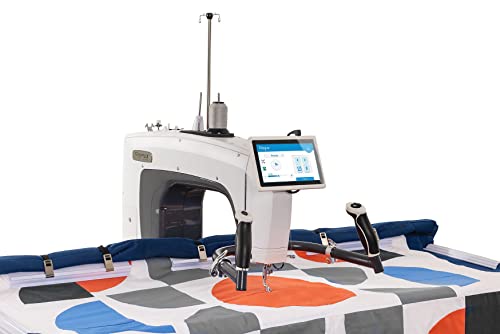
- 16" throat space supports larger quilting patterns.
- 7" touch screen includes built-in help guides.
- Bright lights and simple controls aid visibility and use.
Best For: Beginners ready for a complete longarm frame system
Compact Learning Frame
Mini Quilter Beginner Hoop Frame

- Made to simplify hoop-frame learning for beginners.
- Fits most domestic machines with 8" to 13" throat length.
- Up to 11" x 15" quilting space for small projects.
Best For: Beginners using a home sewing machine to learn frame quilting
Beginner Quilting All-Rounder

- Intuitive controls and simple feature set.
- Needle threader, thread cutter, and speed control included.
- SFS+ helps fabrics move smoothly and evenly.
Best For: Beginners who want one machine for sewing and quilting
Computerized Quilting Starter

- 255 built-in stitches for many sewing and quilting tasks.
- LCD display and push-button selection simplify operation.
- Automatic needle threader helps reduce setup frustration.
Best For: Beginners wanting a versatile computerized machine with easy controls
Precision Workhorse
Janome MC6650 Sewing and Quilting Machine

- 10" throat space supports larger quilt sections.
- Built-in needle threader and bobbin system simplify setup.
- Metal frame and 1000 stitches per minute add stability and speed.
Best For: Beginners who want a durable step-up machine for quilting and sewing.
Beginner-Friendly Stitch Library
Brother HC1850 Sewing and Quilting Machine
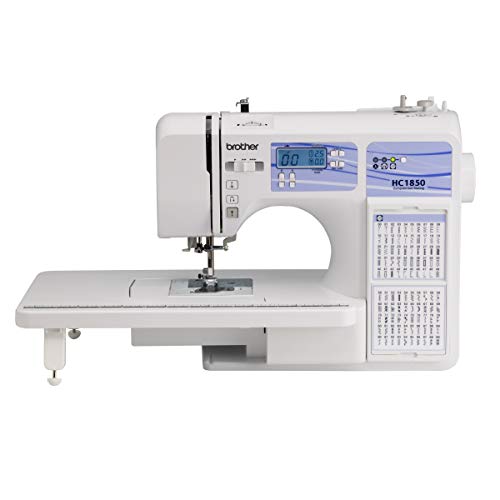
- 185 built-in stitches provide lots of creative options.
- LCD display and advanced needle threader keep operation simple.
- Wide table and 8 included feet support quilting projects.
Best For: New quilters who want an easy-to-use machine with lots of stitch choices.
Quilting Control Aid
Meander Quilting Ruler Template for Sewing Machine, 8x8 inch

- 8x8" acrylic template guides smooth meander and stipple patterns.
- 180-degree rotation helps repeat rows with more consistency.
- Works with many domestic machines using a compatible foot.
Best For: Beginners practicing free-motion quilting on a domestic machine.
Best with Extra Features
SINGER C7290Q Computerized Sewing & Quilting Machine

- 417 stitch applications for sewing and quilting
- Includes an extension table for larger projects
- Comes with walking and free-motion feet
Best For: Beginners wanting a versatile quilting-capable machine
Simple Mechanical Quilter
996P Mechanical Sewing Machine for Quilting with 36 Stitches

- 36 stitches with adjustable length and width
- Wide extension table for larger projects
- Six-point feed system helps with layered fabric
Best For: Beginners who prefer simple mechanical controls
Ruler Work Starter Template
Creative Grids Machine Quilting Tool Slim
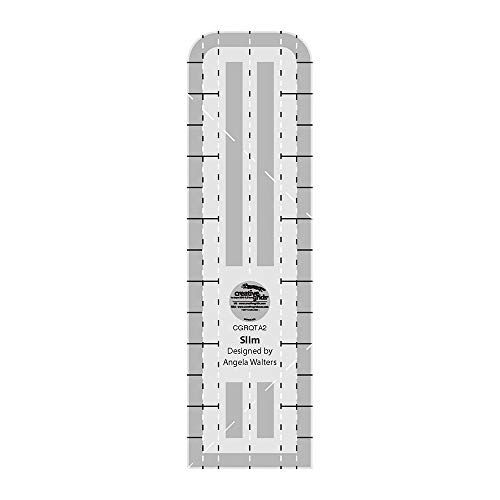
- Non-slip acrylic ruler for guided quilting
- Visible guide lines for easy alignment
- Works with domestic machines and most longarms
Best For: Quilters learning ruler-guided free-motion designs
Full Frame Starter – Easy-Access Longarm Setup
If you’re comparing longarm quilting machines for beginners and want a setup that makes the learning curve feel less intimidating, this Grace 16X Elite and Q-Zone Queen frame combo offers a lot of practical support. The ergonomic handles, simple two-button controls, built-in help guides, and bright throat lighting are all aimed at making quilting easier to manage from the start.
Best For: Beginners who want a full-frame longarm setup with guided controls and clear visibility.
Pros:
- 16" throat space gives you room to work on larger patterns.
- 7" touch screen includes built-in help guides for easier setup and navigation.
- Bright throat and bobbin lights help you see stitches more clearly.
- Smooth carriage system is designed to glide more easily over fabric.
Cons:
- The 8 ft frame takes up a substantial amount of space.
- At 158 pounds, the setup is not designed for portability.
- More machine than many true first-timers may need right away.
This is a strong pick if you want a beginner-friendly path into frame quilting without giving up longarm features. The combination of guided controls, visibility, and a stable steel frame makes it easier to focus on learning technique.
Compact Learning Frame – Mini Quilter Beginner Hoop Frame
For shoppers focused on longarm quilting machines for beginners, this table-top hoop frame is a practical way to learn the motion and workflow without jumping straight into a full-size system. It works with most sewing machines that have an 8" to 13" throat length and is built to simplify the learning process for small projects.
Best For: New quilters who want a compact learning frame for their existing home machine.
Pros:
- Designed specifically to make hoop-frame learning easier for beginners.
- Works with most machines in the 8" to 13" throat-length range.
- Compact 19-pound design is easier to handle than a full longarm setup.
- Provides up to an 11" x 15" quiltable area for small projects.
Cons:
- Smaller quilting area limits larger project work.
- Requires a compatible domestic sewing machine.
- Best suited to learning and smaller quilts, not full production quilting.
This frame is a smart entry point if you want to practice longarm-style quilting on equipment you already own. It keeps the learning curve manageable while still giving you a real feel for frame quilting.
Beginner Quilting All-Rounder – Easy Control Quilting Pick
If you want a practical machine for quilting without going all-in on a longarm, this Janome is a beginner-friendly option for quilting and everyday sewing. It focuses on simple controls, smooth fabric handling, and time-saving features like a needle threader, thread cutter, and speed control slider.
Best For: Beginners who want an easy-to-use sewing and quilting machine for home projects.
Pros:
- Intuitive controls make it easier to focus on sewing and quilting.
- Built-in needle threader, automatic thread cutter, and speed control streamline use.
- SFS+ helps keep fabric moving smoothly to reduce shifting or puckering.
- Portable design includes an extension table and hard cover.
Cons:
- Not a longarm machine, so it won’t replace a frame setup.
- Less specialized for large-scale quilting than dedicated longarm systems.
- Feature set is broad rather than purpose-built for longarm work.
This is a good choice if your priority is learning quilting basics on a machine that stays approachable and versatile. It offers useful automation and smooth feeding without the footprint of a longarm system.
Computerized Quilting Starter – Feature-Rich Beginner Choice
For buyers comparing longarm quilting machines for beginners but considering a versatile sewing machine instead, the Juki HZL-F600 offers a user-friendly start with a lot of built-in capability. The LCD display, automatic needle threader, and accessible stitch selection make it easier to learn while still giving you room to grow.
Best For: Beginners who want a computerized machine with lots of stitches and simple controls.
Pros:
- 255 built-in stitches cover basic, decorative, stretch, and buttonhole needs.
- LCD display and push-button stitch selection keep operation straightforward.
- Automatic needle threader reduces setup frustration.
- Accessories are stored in the tray for convenient organization.
Cons:
- Not a longarm machine, so it’s not a frame-based quilting solution.
- Better for general sewing and quilting than large longarm projects.
- Feature-rich design may feel like more machine than a casual beginner needs.
This machine makes sense if you want beginner-friendly controls with a lot of stitch versatility. It’s a practical option for learning quilting at home before moving to a dedicated longarm setup.
Precision Workhorse – Janome MC6650 Sewing and Quilting Machine
If you’re looking at longarm quilting machines for beginners but want a domestic machine that still feels substantial, the Janome MC6650 is built for accurate, confident quilting. Its 10″ throat space, strong metal frame, and 1000 stitches per minute make it a practical step-up machine for larger quilt sections and mixed sewing tasks.
Best For: Beginners who want a durable, high-speed sewing and quilting machine with more throat space for larger projects.
Pros:
- 10″ throat space gives extra room for quilting blocks and layered projects.
- Built-in needle threader, independent bobbin winder, and top-loading rotary hook bobbin system support easier setup.
- Adjustable presser foot pressure, 7-piece feed dogs, and extra-high presser foot lift help with different fabric types.
- Includes 12 presser feet, specialty plates, speed control, and programmable memory.
Cons:
- More advanced than a basic beginner machine, so there’s a learning curve.
- Best features make the most sense if you plan to quilt and sew regularly.
Overall, the MC6650 is a strong option for beginners who want room to grow. It offers many high-end touches without losing the practical features that make everyday quilting easier.
Beginner-Friendly Stitch Library – Brother HC1850 Sewing and Quilting Machine
Brother HC1850 Sewing and Quilting Machine, 185 Built-in Stitches, LCD Display, 8 Included Feet
Check Price On AmazonFor beginners comparing longarm quilting machines for beginners, the Brother HC1850 is a versatile sewing and quilting machine that prioritizes ease of use. Its large stitch library, LCD display, and included wide table make it a helpful choice for learning quilting basics while still handling a wide range of sewing projects.
Best For: New quilters who want lots of stitch options, simple controls, and beginner-friendly support.
Pros:
- 185 built-in stitches, including sewing stitches, buttonholes, and alphanumeric stitches.
- Advanced needle threader and jam-resistant drop-in top bobbin make setup easier.
- LCD screen lets you select stitches quickly and clearly.
- Wide table and 8 included feet add convenience for quilting tasks.
Cons:
- Designed for US sale only at 120 volts.
- Not a dedicated longarm system, so it’s better for smaller-scale quilting work.
The HC1850 is a practical starter pick if you want flexibility without a complicated machine. It gives beginners plenty of room to experiment with stitches while keeping setup and operation approachable.
Quilting Control Aid – Meander Quilting Ruler Template for Sewing Machine, 8×8 inch
If your goal is to improve free-motion control on domestic machines, this meander quilting ruler is a useful tool to consider alongside longarm quilting machines for beginners. The 8×8″ acrylic template helps guide smooth curves and repeatable meander or stipple patterns with more consistency and less marking.
Best For: Beginners practicing free-motion quilting who want a steadier guide for meander and stipple patterns.
Pros:
- Clear 4mm acrylic makes it easier to see fabric and stitching paths.
- 180-degree rotation helps repeat meander rows with consistent spacing.
- Designed to work with many domestic machines using a free-motion, darning, or ruler foot.
- Useful for patchwork blocks, baby quilts, lap quilts, and wall hangings.
Cons:
- Requires a compatible ruler or free-motion foot.
- Not intended for longarm quilting systems.
This template won’t replace a machine, but it can make quilting practice much more controlled and repeatable. It’s a smart add-on for beginners who want cleaner curves and more confidence with free-motion designs.
Best with Extra Features – SINGER C7290Q Computerized Sewing & Quilting Machine
If you’re comparing longarm quilting machines for beginners, the SINGER C7290Q is more of a computerized quilting-capable sewing machine than a true longarm, but it still gives new quilters a lot to work with. The 417 stitch applications, extension table, and included walking foot and free-motion foot make it a flexible choice for learning core quilting techniques with extra space and control.
Best For: Beginners who want a feature-rich sewing and quilting machine with room to practice quilting basics.
Pros:
- 417 stitch applications for sewing, quilting, home decor, and crafting
- Included extension table adds support for larger quilting projects
- One-touch Start/Stop button and adjustable speed control help with easier pacing
- Comes with useful specialty feet, including an even feed walking foot and free-motion darning foot
Cons:
- Not a true longarm quilting machine
- Feature set may be more than a total beginner needs at first
Overall, this is a practical stepping-stone machine for someone who wants to grow into quilting without jumping straight to dedicated longarm equipment. Its accessory set and extension table make it especially helpful for learning larger projects on a standard machine platform.
Simple Mechanical Quilter – 996P Mechanical Sewing Machine for Quilting with 36 Stitches
For shoppers exploring longarm quilting machines for beginners, the 996P is a straightforward mechanical option that keeps the learning curve manageable. It offers 36 stitch choices, adjustable stitch length and width, a wide extension table, and a simple four-step workflow, making it easier to build confidence on everyday sewing and quilting projects.
Best For: New sewists who want a simple mechanical machine with a bigger workspace for quilting and home projects.
Pros:
- 36 built-in stitches cover straight, zigzag, stretch, and decorative work
- Wide extension table helps support larger quilts and projects
- Four-step buttonhole, reverse sewing, and drop feed add useful flexibility
- Six-point feed system is designed to help move layered fabrics more steadily
Cons:
- Mechanical controls are less automated than computerized machines
- Still a standard sewing machine, not a dedicated longarm
This is a sensible pick if you want a beginner-friendly machine that focuses on control, simplicity, and workspace. The stable feed and extension table make it a solid fit for learning quilting basics, clothing repairs, and larger household projects.
Ruler Work Starter Template – Creative Grids Machine Quilting Tool Slim
If you’re researching longarm quilting machines for beginners, a quilting ruler like the Creative Grids Slim can be a smart add-on for practicing cleaner ruler work on a domestic machine or most longarms. Made from acrylic with non-slip grip and visible dashed guide lines, it helps you follow edges more accurately when quilting geometric patterns, borders, and stitching in the ditch.
Best For: Quilters who already have a compatible machine and want an easy ruler for guided free-motion designs.
Pros:
- Non-slip grip helps reduce shifting while quilting
- Clear dashed guide lines are visible on light and dark fabrics
- Works for stitching in the ditch, echoing, crosshatching, and border designs
- Made in the USA from precision acrylic with needle-stop points
Cons:
- Requires a ruler foot to use properly
- Not a machine, so it won’t help if you still need the quilting hardware itself
This template is best treated as a skill-building accessory rather than a stand-alone quilting solution. For beginners learning ruler-guided quilting on a compatible machine, it adds helpful control and pattern variety without much complexity.
How We Picked the Best Longarm Quilting Machines for Beginners
We focused on beginner-friendly quilting setups that reduce frustration and support steady progress. That means prioritizing ease of use, clear controls, reliable stitch performance, and practical features that matter when you are still learning.
We also considered whether a machine or accessory helps a new quilter get started faster, from compact domestic machines to larger longarm-style setups and helpful quilting rulers or frames.
Quick Comparison
For Longarm Quilting Machines for Beginners, the right choice depends on your space, budget, and how ambitious your projects are. Smaller computerized or mechanical machines are often best for learning basics, while frame-based and longarm systems suit users who want larger quilts and more workspace. Accessories like rulers and quilting frames can improve control and accuracy at any skill level.
Key Buying Factors for Longarm Quilting Machines for Beginners
Workspace and Quilt Size
Think about how much room you have at home and the size of the quilts you want to make. Larger longarm systems need more floor space, while domestic machines are easier to place and move.
Ease of Controls
Look for clear stitch selection, simple tension adjustment, and features that are easy to understand without a steep learning curve. Beginners usually benefit from intuitive menus and straightforward threading paths.
Stitch Stability and Speed Control
Consistent stitches matter more than raw speed early on. A machine that sews smoothly at slower speeds can be easier to manage when practicing free-motion quilting or following rulers.
Included Accessories
Bonus feet, quilting kits, templates, or a frame can add value and shorten the path to your first finished quilt. These extras can also make learning more structured and less expensive.
Room to Grow
If you expect to take on larger quilts later, choose a machine or frame system that will not hold you back too quickly. Beginners often appreciate a model that is approachable now but still capable as skills improve.
Who Should Buy Which Longarm Quilting Machines for Beginners?
If you want the most approachable start, a compact computerized or mechanical sewing-and-quilting machine is usually the best entry point. If your goal is to quilt larger projects with more control, a frame-based or longarm setup may be worth the added space and investment.
Quilters who want better precision without changing machines should consider rulers and template tools. They are especially useful for building confidence with straight lines, curves, and meanders before moving to more advanced free-motion work.
In short, the best choice depends on how you plan to quilt today and how much you want to scale up later. For Longarm Quilting Machines for Beginners, prioritize usability first, then look for the features that support your favorite project style.
