
Keeping modeling clay sorted, protected, and ready for the next lesson is easier with the right containers. The best classroom storage balances visibility, capacity, secure closures, and easy student access.
These 10 options cover small individual portions, shared craft supplies, sensory materials, and larger clay collections, so you can match the container to your classroom routine and available shelving.
Best 10 Clay Storage Containers for Classrooms Picks for 2026
Best for Individual Portions

- 24 clear cups with lids
- Stackable and reusable PP
- Designed for small portions
Best For: Individual clay, slime, and craft portions
Best for Teacher Supply Sorting

- 16 compartments for organized storage
- Rugged plastic cabinet
- Countertop or wall-mount use
Best For: Sorting clay, beads, and small craft supplies
Best for Labeled Craft Kits
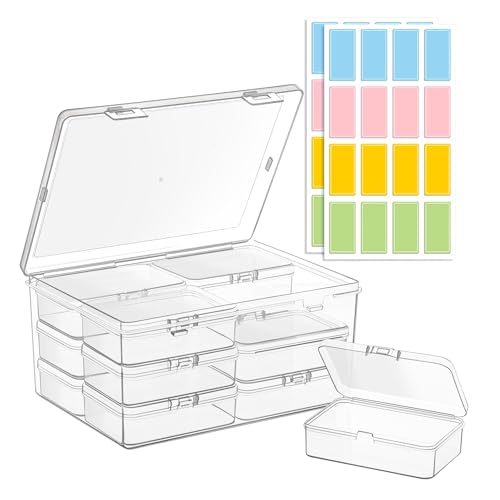
- 12 clear hinged containers
- 32 removable labels included
- Carrying case supports transport
Best For: Labeled clay and craft activity kits
Best for Bulk Classroom Storage

- Four 5-quart storage bins
- Clear, durable PET construction
- Snap lids and stackable design
Best For: Bulk clay and shared art-supply storage
Best Modular Pick

- 18 compact containers for sorting supplies
- Clear, stackable, and portable design
- Snap-tight latch closures
Best For: Small clay tools, embellishments, and craft components
Best Classroom Bin

- Four stackable 3-quart bins
- Clear PET construction for visibility
- Snap-latch lids help contain supplies
Best For: Grouped clay supplies and classroom craft materials
Best Cubby Fit
Candy-Color Bins with Clear Lids

- 12 x 8 x 5-inch classroom bins
- Clear lids and replaceable labels
- Stackable, reusable, and easy to clean
Best For: Larger clay and art-supply groups stored in cubbies
Best Flat Classroom Bins
Vtopmart 6 Qt Clear Storage Bins

- Clear bins make supplies easy to identify
- Snap-on lids help contain small items
- Stackable 6-quart design saves shelf space
Best For: Dry clay tools, craft supplies, and classroom documents
Best Project-Box Classroom Set

- Five matching boxes support project sorting
- Snap-tight latches help secure contents
- Clear, stackable design improves visibility
Best For: Separate clay projects and craft stations
Best Reinforced Classroom Organizer

- Six bins organize supplies by project
- Thickened PP construction supports daily handling
- Reinforced buckles and interlocking stacking add security
Best For: High-use storage of dry clay tools and craft pieces
Best for Individual Portions – Clear Round Clay Cups
For teachers preparing individual clay or slime portions, these clay storage containers for classrooms provide a compact, reusable option. The 24 clear polypropylene cups have lids, stack easily, and make contents visible at a glance.
Best For: Individual portions of clay, slime, beads, and small craft materials.
Pros:
- Includes 24 transparent cups for classroom sets or activity stations.
- Stackable, washable, reusable polypropylene construction.
- Clear design helps identify contents quickly.
- Secure sealing is designed to help prevent leaks and drips.
Cons:
- Small 67 mm diameter by 26 mm height limits capacity.
- Hand-wash care is required.
- Round containers may be less space-efficient than rectangular boxes.
These cups are a practical match for classrooms that distribute small amounts of clay or slime to students. Their compact size favors portion control rather than bulk storage.
Best for Teacher Supply Sorting – 16-Drawer Craft Cabinet
This Akro-Mils cabinet is a strong choice when clay storage containers for classrooms need to support broader supply organization. Its 16 drawers separate small materials, while the cabinet can sit on a counter, stack with another unit, or mount to a wall.
Best For: Teachers organizing polymer clay, beads, craft supplies, and other small classroom materials.
Pros:
- Sixteen drawers provide dedicated compartments for sorting supplies.
- Rugged, high-impact plastic construction made in the U.S.A.
- Drawers include molded dividers, finger-pull tabs, and rear stop tabs.
- Can be used freestanding, stacked, or wall-mounted.
Cons:
- Drawers are intended for small parts, not large quantities of clay.
- Opaque black cabinet does not offer the same visibility as clear containers.
- It is a single cabinet rather than a set of removable storage boxes.
Choose this organizer when the priority is a permanent classroom supply station. It is especially useful for separating colors or small tools, though individual clay portions may still need separate containers.
Best for Labeled Craft Kits – Hinged Organizer Boxes
These 12 clear hinged boxes offer a portable approach to clay storage containers for classrooms. Their compact rectangular format, secure lids, included labels, and outer carrying case make them useful for sorting materials by student, project, or color.
Best For: Labeled classroom kits containing clay, beads, craft components, and small supplies.
Pros:
- Includes 12 clear boxes measuring 3.3 by 2.4 by 1 inch.
- Hinged lids close securely to help prevent spills and mixing.
- Includes 32 removable colorful labels for organization.
- Outer case helps store and transport all 12 boxes together.
Cons:
- One-inch height limits use to relatively small amounts of clay.
- Boxes are not water resistant.
- Rectangular boxes may require more shelf space than round portion cups.
This set works well for teachers who want clearly labeled, portable activity supplies. The included case is particularly helpful when moving materials between classrooms or activity areas.
Best for Bulk Classroom Storage – 5-Quart Lidded Bins
For larger classroom collections, these 5-quart bins provide more capacity than individual clay pots. The clear PET containers have snap-on lids, stack securely, and can hold clay, brushes, fabric scraps, or other shared art supplies.
Best For: Bulk storage of classroom clay, art supplies, toys, and seasonal craft materials.
Pros:
- Four bins provide 5 quarts of storage each.
- Clear PET construction makes contents easy to see.
- Snap-on lids help keep items contained and organized.
- Stackable design supports efficient shelf use.
Cons:
- Each bin has one undivided compartment.
- Larger bins are less suited to distributing individual student portions.
- The listed teal style may add color to the storage system rather than provide fully neutral bins.
These bins are best for shared or reserve supplies rather than fine-grained sorting. Use them to consolidate larger quantities of clay and keep classroom shelves orderly.
Best Modular Pick – Small Clear Craft Containers
For classrooms that need flexible clay storage containers for classrooms, this set offers compact, translucent boxes that make small supplies easy to sort and identify. The stackable design helps keep work surfaces organized, while the latch closures add portability and protection for classroom craft materials.
Best For: Organizing small clay tools, embellishments, beads, and other individual craft supplies in labeled groups.
Pros:
- Includes 18 compact clear containers for sorting supplies.
- Translucent plastic makes contents easy to see without opening each box.
- Stackable, lightweight, portable, and equipped with snap-tight latch closures.
- Multiple size combinations are available to match different storage needs.
Cons:
- The small 5.1 x 5.1 x 2-inch format is better for small items than bulky clay pieces.
- The supplied details do not specify whether the latches are airtight.
This is a practical choice when classroom organization depends on many small, visible compartments. Choose a larger bin if students need to store sizable clay projects or larger tools.
Best Classroom Bin – Clear 3-Quart Craft Storage
These 3-quart bins are a useful middle ground for clay storage containers for classrooms, offering more room than compartment boxes while remaining lightweight enough to move between work areas. Clear PET construction supports quick identification, and the snap-on lids help keep small supplies contained.
Best For: Storing classroom clay supplies, building blocks, markers, school supplies, and other grouped materials.
Pros:
- Each bin measures 10.91 x 7.2 x 3.43 inches and holds 3 quarts.
- Clear PET plastic provides an immediate view of stored contents.
- Snap-latch lids help prevent items from spilling or getting lost.
- Stackable shape supports more efficient shelf or cabinet storage.
Cons:
- Each container has one open compartment rather than divided sections.
- The set includes four bins, which may be limited for a large classroom collection.
This set works well for teachers who prefer one bin per material category rather than many tiny compartments. Its 3-quart capacity is suited to grouped supplies, but larger clay projects may need roomier storage.
Best Cubby Fit – Candy-Color Bins with Clear Lids
For shared classroom storage, these cubby-style containers combine colorful bodies, clear lids, and reusable labels. They are a practical option among clay storage containers for classrooms when bins need to move between shelves, cubbies, cabinets, or workspaces while keeping materials categorized.
Best For: Organizing larger groups of clay, art supplies, books, documents, or shared student materials in cubbies and shelves.
Pros:
- The 12 x 8 x 5-inch bins are sized for daily storage and carrying between rooms.
- Clear lids make contents easier to locate.
- Replaceable stickers support labeling by material, project, or student.
- Durable plastic bins are reusable, easy to clean, and designed for stacking.
Cons:
- The first closing of each latch may be difficult until it is opened and closed a few times.
- The supplied listing details contain an inconsistency between the stated set description and package quantity.
- They are listed as not water resistant.
This option is especially useful for classrooms that rely on cubby organization and visible labels. The larger footprint accommodates more substantial supplies, while the latching lids help keep each category together during routine handling.
Best Flat Classroom Bins – Vtopmart 6 Qt Clear Storage Bins
For teachers seeking clay storage containers for classrooms, this four-pack of clear, flat bins offers an easy way to separate craft materials, documents, and small classroom supplies. The stackable design and snap-on lids help keep shelves organized while making contents easy to identify.
Best For: Classrooms that need lightweight, visible storage for clay tools, art supplies, paper, and other small materials.
Pros:
- Clear PET construction makes stored supplies easy to see.
- Snap-on lids help prevent contents from scattering.
- Flat 6-quart shape fits standard paper and stacks efficiently.
- Four-bin pack supports separate organization by project or material.
Cons:
- Not water resistant, so it is not suitable for wet clay or liquids.
- The shallow 2.83-inch height may limit storage of bulky tools.
These bins are a practical choice for dry clay accessories and classroom craft organization, especially when visibility and stackability matter more than deep capacity.
Best Project-Box Classroom Set – 6 Qt Clear Sensory Bins
This five-pack is a useful option for teachers comparing clay storage containers for classrooms, particularly when supplies need to travel between tables or activity stations. Each clear project box has snap-tight latches, rounded corners, and a stackable lid for organized storage.
Best For: Classrooms organizing separate clay projects, craft materials, documents, or sensory-learning supplies.
Pros:
- Five 6-quart boxes provide multiple dedicated storage spaces.
- Crystal-clear plastic allows quick checks without opening the lids.
- Snap-tight latches help secure projects during transport.
- Thicker PP5 plastic is designed for regular daily use.
Cons:
- Not water resistant, so wet materials and liquids require separate containment.
- The 3.15-inch outer height may not accommodate large clay pieces or tall tools.
With five matching cases, this set works well for assigning one box per student group, project, or material category while keeping classroom shelves visually tidy.
Best Reinforced Classroom Organizer – 6 Qt Clear Storage Bins
For classrooms that need clay storage containers for classrooms with repeatedly handled supplies, this six-pack uses thickened polypropylene and reinforced buckles. The clear, shallow bins fit paper and craft materials while stacking securely to maximize shelf space.
Best For: Busy classrooms storing dry clay tools, sensory-bin fillers, craft pieces, stationery, and task-box materials.
Pros:
- Six bins make it easy to assign storage by class, project, or supply type.
- Thickened PP construction is described as shock-resistant and less prone to shipping cracks.
- Reinforced snap buckles help contain small craft pieces.
- Interlocking stacking design helps prevent sliding on shelves.
Cons:
- Cannot seal liquid, so it is intended for dry storage.
- Shallow dimensions may not suit bulky clay tools or large projects.
This is the strongest fit of the three for high-use classroom organization, offering six visible compartments and sturdier polypropylene construction for repeated handling.
How We Picked the Best Clay Storage Containers for Classrooms
We focused on practical classroom requirements rather than appearance alone. The selected containers were evaluated for capacity, lid security, visibility, stackability, portability, and suitability for organizing clay by color, project, table group, or student. We also included several formats because a kindergarten art station may need different storage than a middle-school ceramics room.
Clear plastic earns priority because teachers can identify contents without opening every container. Smaller cups and compartment organizers work well for portions and color sorting, while larger lidded bins are better for bulk clay, tools, sensory materials, and shared supplies.
Quick Comparison
| Container type | Best use | Main advantage |
|---|---|---|
| Small cups with lids | Individual colors or portions | Low-cost, easy sorting |
| Drawer cabinets | Frequently used small supplies | Fast visual access |
| Hinged-lid organizer boxes | Beads, tools, and small clay pieces | Separate compartments |
| Three- to six-quart bins | Shared clay and craft materials | Higher capacity and stacking |
| Cubby-style containers | Student or table organization | Portable, individual storage |
Key Buying Factors for Clay Storage Containers for Classrooms
Capacity and Portion Size
Choose containers that fit the way clay is issued. Small cups prevent mixed colors and make individual portions easy to distribute. Larger bins reduce the number of containers teachers must refill and are more practical for bulk storage.
Lid Security
A loose lid can lead to drying, spills, and lost pieces. Look for snap-on, hinged, or latching closures that students can operate without excessive force. For very soft clay or frequent transport, a more secure latch is preferable.
Visibility and Labeling
Transparent walls help students find materials quickly and make inventory checks faster. Even clear containers benefit from color labels, student names, project labels, or date markings. Avoid relying on color alone when organizing supplies.
Stacking and Classroom Footprint
Measure shelves, cubbies, and rolling carts before buying. Stackable bins maximize vertical space, while drawer units are often better where containers must remain accessible during lessons. Leave enough room for students to remove a bin safely.
Durability and Cleaning
Classroom storage gets handled frequently, so favor rigid plastic and closures that can withstand repeated use. Smooth interiors are easier to wipe clean, especially when clay residue, glitter, or sensory materials are stored nearby.
Who Should Buy Which Clay Storage Containers for Classrooms?
Choose small round cups when you need inexpensive color-by-color sorting or individual student portions. A drawer cabinet is better for teachers who want frequently used clay tools and small materials visible and immediately accessible.
Hinged organizer boxes suit detailed projects involving small clay pieces, beads, molds, or accessories. Select three-quart bins for compact shared supplies, five- or six-quart bins for larger collections, and latching cubby containers when each student or table needs a portable kit.
Before purchasing, count the colors and project groups you regularly use, measure your storage area, and decide whether students or adults will handle the containers most often. The best Clay Storage Containers for Classrooms are the ones that protect materials while making setup, cleanup, and inventory simpler.