
Small gaps around a studio door can let in distracting noise, drafts, dust, and light. The right seal can improve isolation while preserving easy access for renters, home studios, and temporary recording spaces.
This roundup compares 10 portable studio door seals, including silicone, rubber, foam-style, self-adhesive, and purpose-built acoustic options for different door gaps and installation needs.
Best 10 Portable Studio Door Seals Picks for 2026
Best Complete Kit
Audimute Acoustic Door Seal Kit

- Combines door seal and bottom sweep
- Sized for one standard door
- Designed for studio and apartment use
Best For: Complete sound-gap treatment on a standard-size door
Best for Broad Coverage
Clear Silicone Door Seal Strip

- 33 feet total in a two-pack
- Clear, flexible silicone construction
- Suitable for doors, windows, and glass
Best For: Multi-opening sealing with a less visible finish
Best Compact Silicone Strip

- 20-foot cut-to-size roll
- Flexible silicone with adhesive backing
- Helps reduce noise, dust, and light
Best For: Narrow gaps on an individual door or window
Best for Large Gaps

- Seals gaps from 5/16 to 15/32 inch
- Multi-hole design targets sound reduction
- 18-foot self-adhesive roll
Best For: Larger door gaps requiring flexible EPDM sealing
Best Secure-Fit Pick
Benory T-Shaped Silicone Door Seal

- Two adhesive faces support a stable hold
- Clear, flexible silicone helps reduce drafts and noise
- 20-foot strip is cut to fit
Best For: Exterior doors needing a discreet, secure seal
Best Felt Insulation Pick
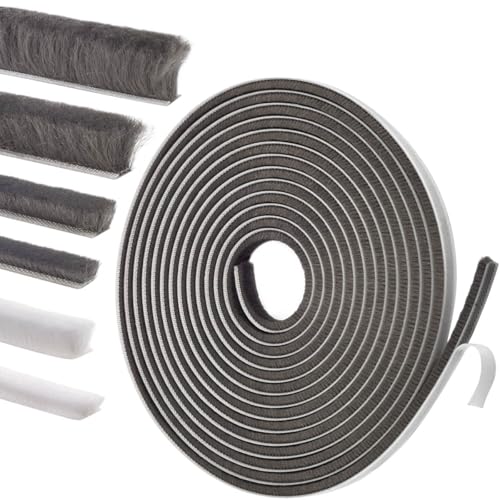
- Felt strip helps limit drafts and outside noise
- Works on doors, sliding doors, jambs, and windows
- 16.5 feet of cut-to-fit material
Best For: Smaller gaps needing a narrow gray felt seal
Best Wide-Gap Value
Holikme Flexible Door Seal Strip

- 1.8-inch width covers gaps up to 1.2 inches
- 33 feet supplied across two rolls
- Flexible TPE also suits shower doors and windows
Best For: Larger gaps and multipurpose sealing projects
Soft-Felt Sound Barrier

- 33 feet of self-adhesive strip
- Soft 5P high-density hair construction
- Helps block drafts, dust, and noise
Best For: Soft, flexible sealing around studio doors, windows, cabinets, and closets
EPDM Compression Seal

- EPDM rubber D-shaped profile
- Fits approximately 3.5–6 mm gaps
- Hollow structure helps dampen noise
Best For: Durable compression sealing for a studio door or smaller frame project
Best Complete Kit – Audimute Acoustic Door Seal Kit
Audimute Soundproofing Acoustic Door Seal Kit - Door Sweep and Seal - (Standard Size)
Check Price On AmazonFor a straightforward portable studio door seals setup, the Audimute kit combines perimeter sealing with a bottom door sweep. It is sized for one standard door and is designed to help block sound traveling through gaps around the door.
Best For: Studios, apartments, and standard-size doors needing both edge and bottom-gap treatment.
Pros:
- Includes both a 25-foot door seal and a 4-foot door sweep.
- Designed to treat one standard-size door.
- Easy to install and made specifically for door sound-gap control.
Cons:
- Standard sizing may not suit unusually large or narrow doors.
- Only one door is covered by the kit.
This is the most complete option in the group for a studio door because it addresses both the frame gaps and the space beneath the door. Choose it when you want a purpose-built kit rather than a seal strip alone.
Best for Broad Coverage – Clear Silicone Door Seal Strip
This clear silicone strip is a flexible choice for portable studio door seals when you also want coverage for windows or other household gaps. The two-pack provides 33 feet total, with a 35mm width and adhesive backing for cut-to-fit installation.
Best For: Multiple doors, windows, glass surfaces, and spaces where a transparent seal is preferred.
Pros:
- Includes 33 feet of total strip across two rolls.
- Clear silicone is flexible and designed to resist cracking, freezing, and deformation.
- Adhesive backing supports a simple measure, cut, clean, and press installation.
- Can help reduce drafts, dust, debris, and unwanted noise.
Cons:
- The wide 35mm profile may be more material than a small door gap requires.
- Installation requires a clean surface and up to 24 hours for the adhesive to cure.
Its long total length and transparent finish make this a versatile pick for treating several openings without a highly visible black strip. It is especially useful when studio sealing is part of a broader weatherproofing project.
Best Compact Silicone Strip – Black 20-Foot Door Seal
For a compact portable studio door seals solution, this black silicone D-shaped strip offers 20 feet of self-adhesive material in a 3/8-inch width and 1/4-inch thickness. It can be cut to fit door or window gaps and is intended to help reduce noise, dust, light, insects, and drafts.
Best For: One door or window project requiring a narrow, cut-to-size silicone seal.
Pros:
- 20-foot roll provides coverage for most individual doors and windows.
- Silicone construction is flexible, dense, and temperature resistant.
- Self-adhesive backing allows tool-free installation after surface cleaning.
- Helps address noise, wind, dust, insects, and light leakage.
Cons:
- The 3/8-inch width is intended for relatively narrow gaps.
- Surface preparation is important for the adhesive to bond properly.
This is a practical choice when you want a manageable roll rather than a larger multi-pack. Its narrow profile works well for modest gaps around a studio door or window, provided the dimensions match the opening.
Best for Large Gaps – VITAM AMO EPDM Door Seal
The VITAM AMO strip is designed for larger door and window gaps from 5/16 to 15/32 inch, making it a useful portable studio door seals option when a slimmer strip will not fill the opening. Its EPDM rubber construction and self-adhesive backing support indoor or outdoor use.
Best For: Doors with larger, uneven gaps that need a flexible seal with added sound-dampening features.
Pros:
- Designed to seal gaps from 5/16 to 15/32 inch.
- Special multi-hole design is intended to reduce sound transmission and closing pressure.
- EPDM rubber is formulated for durability and low-temperature performance.
- 18-foot length can be cut to size without tools or experience.
Cons:
- The 18-foot roll may require an additional roll for larger or multiple openings.
- White color may be more noticeable than a dark studio-door seal.
Choose this model when gap size is the main concern. Its larger-gap range and perforated design distinguish it from basic adhesive strips, while the self-adhesive installation keeps the project simple.
Best Secure-Fit Pick – Benory T-Shaped Silicone Door Seal
For portable studio door seals that need a stable attachment, the Benory T-shaped silicone strip uses adhesive surfaces on both the door side and front. Its clear, flexible construction is suited to reducing drafts, dust, and some outside noise without strongly changing the door’s appearance.
Best For: Exterior, front, back, or garage entry doors where a two-sided adhesive hold and a discreet clear finish are priorities.
Pros:
- T-shaped design uses two adhesive faces for added stability.
- Flexible clear silicone conforms to door gaps and blends with different door colors.
- 20 feet of material can be measured and cut for installation.
- Helps reduce drafts, indoor air loss, dust, and outside noise.
Cons:
- The mounting surface must be thoroughly cleaned and dried first.
- Cold-weather installation may require warming the adhesive with a hair dryer.
- Fit depends on checking the gap size and surface before ordering.
This is a practical choice when secure adhesion matters more than a removable setup. Measure carefully and press both adhesive surfaces firmly into place for the most reliable installation.
Best Felt Insulation Pick – YOCCEK Self-Adhesive Gap Seal
Among portable studio door seals, this YOCCEK felt strip is a narrow gap filler for doors, sliding doors, jambs, and windows. Its weather-resistant design is intended to limit drafts, moisture, air leaks, and outside noise while remaining simple to cut and apply.
Best For: Smaller door or window gaps where a gray felt seal and straightforward self-adhesive installation are suitable.
Pros:
- Weather-resistant material helps address drafts and moisture around doors and windows.
- Felt construction is designed to reduce air leaks and outside noise.
- 16.5 feet can be cut to fit door frames, sliding doors, jambs, or windows.
- Self-adhesive application requires no separate mounting hardware.
Cons:
- The 0.35-inch width and 0.2-inch thickness are intended for relatively small gaps.
- Gray may be more visible than a clear seal on some doors or frames.
- Adhesive performance depends on applying it firmly to a suitable surface.
This option makes sense for compact gaps where sound reduction and insulation are both useful. Confirm the gap dimensions before installation so the narrow profile provides the coverage you need.
Best Wide-Gap Value – Holikme Flexible Door Seal Strip
For portable studio door seals covering wider openings, the Holikme strip measures 1.8 inches wide and provides 33 feet across two rolls. Its flexible TPE construction is designed for gaps up to 1.2 inches and can also be used on shower door bottoms, windows, and several interior door types.
Best For: Larger interior door gaps and multipurpose sealing projects where extra width and length are useful.
Pros:
- 1.8-inch-wide strip suits gaps up to 1.2 inches wide.
- 33 feet total length across two rolls supports multiple installations.
- Flexible material conforms to uneven door gaps and frames.
- Helps block drafts, insects, dust, smoke, and light gaps.
Cons:
- The wider profile may be more noticeable on some doors.
- Installation requires a clean surface and firm pressure for adhesion.
- The product’s recommended uses specifically include windows, so door fit should be checked before purchase.
This is the most versatile choice of the three when coverage area and length are priorities. Its broad profile can address substantial gaps, but measuring first is especially important for a clean, functional fit.
Soft-Felt Sound Barrier – 33-Ft Gray Door Seal
For portable studio door seals, this gray self-adhesive strip is a practical option when you want to cover door, window, cabinet, or closet gaps while also reducing drafts and noise. Its soft 5P high-density hair construction is designed for flexible installation around common household openings.
Best For: Studios and rooms needing a soft, versatile seal for moderate gaps, drafts, dust, and everyday sound reduction.
Pros:
- 33 feet of self-adhesive sealing material for multiple openings.
- Soft, flexible high-density hair construction that bends without deforming.
- Designed to help block drafts, dust, noise, and collisions.
- Suitable for doors, windows, sliding doors, closets, and cabinets.
Cons:
- The 0.35-inch width and thickness should be matched to the measured gap.
- Felt-style material may be less appropriate for large, uneven gaps than a thicker rubber profile.
This is a flexible, multipurpose choice for a studio door project where soft contact and easy cutting matter. Measure the gap first, then cut only the amount needed for a clean installation.
Large-Gap Rubber Shield – 50-Ft Black D-Seal
For portable studio door seals, this 50-foot black D-shaped rubber strip offers extensive coverage and is sized for gaps from 2.5 to 5.5 mm. The self-adhesive backing and included tailor scissors make it convenient for cutting and fitting around door or window frames.
Best For: Larger studio sealing projects that need long-run coverage and a flexible rubber strip for measured frame gaps.
Pros:
- 50 feet of material provides substantial coverage for one or more openings.
- D-shaped rubber profile is intended for gaps between 2.5 and 5.5 mm.
- Includes tailor scissors for cutting the strip to size.
- Designed to help reduce drafts, dust, sound, and temperature transfer.
Cons:
- It is intended for a specific gap range, so measuring is essential.
- The adhesive should be left for 24 hours after installation before relying on its full hold.
This is the most coverage-oriented option in the group and a strong fit when a studio has several frame edges to seal. Its rubber construction is also designed to remain flexible across extreme temperatures.
EPDM Compression Seal – 32.8-Ft Black D-Strip
For portable studio door seals, this black EPDM D-shaped strip combines a compact 32.8-foot roll with a profile designed to compress against door frames and windows. Its adhesive backing supports tool-free installation, while the hollow structure is intended to dampen external sound and door-slamming noise.
Best For: Studio doors needing a durable rubber compression seal with stated sound-dampening and temperature-control benefits.
Pros:
- EPDM rubber is designed to retain elasticity and sealing performance across a wide temperature range.
- D-shaped profile seals gaps approximately 3.5 to 6 mm wide.
- Self-adhesive backing allows installation without extra hardware or tools.
- Helps limit drafts, dust, unwanted airflow, and noise.
Cons:
- Its 3/8-inch width and 1/4-inch thickness require careful gap measurement.
- At 32.8 feet, it provides less material than the 50-foot alternative.
This option balances a durable rubber profile with a practical length for a single door or a smaller studio sealing job. Choose it when the measured gap falls within its stated range and compression is a priority.
How We Picked These Portable Studio Door Seals
We focused on seals suited to home studios, rehearsal rooms, podcast spaces, bedrooms, and other setups where permanent construction is impractical. The selection covers door sweeps, frame seals, D-shaped and T-shaped profiles, clear silicone strips, and self-adhesive weatherstripping. We considered gap coverage, material flexibility, adhesive convenience, available lengths, profile dimensions, and suitability for reducing drafts and everyday sound leakage.
These products are intended to limit air movement through door gaps. They can help reduce high-frequency noise and rattling, but they will not make a hollow-core door or thin wall fully soundproof.
Quick Comparison
- Best purpose-built acoustic option: Audimute Soundproofing Acoustic Door Seal Kit.
- Best for discreet installation: Clear silicone weatherstripping.
- Best for long runs: 33-foot, 50-foot, and 32.8-foot seal strips.
- Best for larger gaps: VITAM AMO, Holikme, or wider-profile options.
- Best for a firm frame seal: D-shaped rubber or T-shaped silicone profiles.
Key Buying Factors for Portable Studio Door Seals
Measure the Gap First
Close the door and measure the largest gap along the jamb and threshold. Compare that measurement with the seal’s stated thickness and compression range. A strip that is too thin may leave a leak, while one that is too thick can prevent the door from latching or increase friction.
Choose the Right Profile
D-shaped rubber seals are useful for compressing against a frame. T-shaped seals can fit channels or specific door-edge designs. Flat silicone strips work well for narrow, irregular gaps, while door sweeps target the space beneath the door. If the bottom gap is the main problem, a frame strip alone may not be enough.
Check Adhesive and Surface Compatibility
Self-adhesive products are convenient for temporary installations, but they bond best to clean, dry, smooth surfaces. Painted wood, metal, glass, and laminate may require different preparation. Test a short section first if you are concerned about residue or paint damage.
Consider Length and Appearance
Measure all sides of the door before choosing a roll length. Extra material allows for mistakes and future repairs. Clear seals are less visible, while black rubber can provide a stronger visual contrast and may better suit utility or rehearsal spaces.
Who Should Buy Which Portable Studio Door Seals?
Choose the Audimute kit if you want a more studio-oriented solution with a coordinated sweep and seal. Choose clear silicone if appearance matters or the seal will be installed on a visible frame. Choose a long roll if you are sealing multiple doors, a wide frame, or keeping replacement material on hand. Choose a wider or large-gap profile when ordinary narrow weatherstripping does not compress against the frame. For renters, prioritize removable installation, careful surface cleaning, and a product that can be trimmed without altering the door.