
Choosing among the best wide-angle camera lenses for professional studios means balancing field of view, edge-to-edge sharpness, distortion control, aperture, and camera-system compatibility. The right lens can make interiors, architecture, products, and large group scenes easier to frame without sacrificing professional image quality.
This roundup compares 10 Canon- and Nikon-compatible options, including full-frame and APS-C lenses, fast primes, stabilized zooms, and budget-friendly choices. Use the buying guide below to narrow the list by sensor format, shooting conditions, and studio priorities.
Best 10 Wide-Angle Camera Lenses for Professional Studios Picks for 2026
Professional Ultra-Wide Pick

- 11–24mm full-frame ultra-wide zoom
- Advanced optics and flare-resistant coatings
- Weather-sealed L-series construction
Best For: Architecture, interiors, and landscapes on Canon EF DSLRs
Fast APS-C Specialist

- Bright constant f/2.8 aperture
- Ultra-wide 11–16mm APS-C coverage
- Includes three-year USA warranty
Best For: Canon APS-C SLR interiors and architecture
Nikon DX Workhorse

- Versatile 10–24mm DX zoom range
- Quiet SWM autofocus
- ED and aspherical elements aid correction
Best For: Nikon DX landscapes, interiors, and architecture
Compact RF Prime

- Bright f/2.8 ultra-wide prime
- Smooth, quiet STM autofocus for video
- Lightweight 163g design
Best For: Canon EOS R video, vlogging, and compact studio setups
Studio Wide-Zoom Pick

- Constant f/2.8 aperture
- Optical Vibration Compensation
- Quick, quiet USD autofocus
Best For: Canon full-frame studio work requiring a fast, stabilized zoom
APS-C Studio Value

- Ultra-wide 10-22mm zoom
- 107.5-degree angle of view
- USM AF with full-time manual focus
Best For: EOS digital SLR studio scenes needing maximum width
Compact Prime Choice

- Fast f/2.8 prime aperture
- Autofocus for Canon EF
- Lightweight 1.1-pound design
Best For: Canon DSLR studios favoring a lightweight fixed ultra-wide
Compact Studio Wide-Angle Zoom

- 10-18mm ultra-wide zoom
- Optical image stabilization
- Quiet STM autofocus for video
Best For: Canon EF-S users shooting wide interiors, landscapes, and video
Professional Canon Ultra-Wide Zoom

- Versatile 17-40mm zoom range
- USM inner focusing system
- 0.28m close focusing distance
Best For: Canon EF photographers needing a flexible studio wide-angle zoom
Low-Light Ultra-Wide Prime
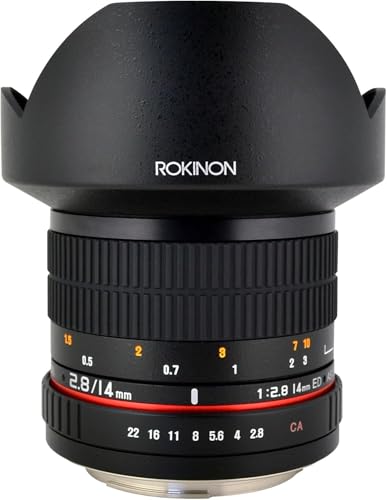
- 115.7° ultra-wide perspective
- Fast f/2.8 maximum aperture
- Manual-focus prime with built-in hood
Best For: Canon EF users shooting expansive or low-light scenes with manual control
Professional Ultra-Wide Pick – Canon EF 11-24mm f/4L USM
For professional studios using full-frame Canon EF DSLRs, this lens is a premium choice among wide-angle camera lenses for professional studios. Its 11–24mm range handles expansive interiors, architecture, and landscapes while maintaining a constant f/4 aperture across the zoom range.
Best For: Architectural, interior, and landscape photography requiring an exceptionally wide field of view and strong edge-to-edge clarity.
Pros:
- Extremely wide 11–24mm full-frame zoom range.
- Advanced UD, Super UD, and aspherical elements help control aberrations and distortion.
- SWC and ASC coatings reduce flare and ghosting.
- L-series sealing, fluorine coatings, and quiet USM autofocus support professional use.
Cons:
- No image stabilization.
- Constant f/4 aperture is less bright than an f/2.8 lens.
- Designed for Canon EF-mount DSLRs rather than RF-mount mirrorless cameras.
This is the strongest option here when maximum width, optical correction, and professional build quality matter most. The included shoulder bag and 64GB card add practical value, though the lens’s specialized EF DSLR compatibility should be confirmed before purchase.
Fast APS-C Specialist – Tokina ATX-i 11-16mm f/2.8
For Canon APS-C SLR users seeking wide-angle camera lenses for professional studios, the Tokina ATX-i 11–16mm f/2.8 emphasizes a bright, constant maximum aperture in a compact zoom. Its wide perspective suits interiors, architecture, and other space-limited subjects.
Best For: Canon APS-C studio and location work where a bright f/2.8 aperture and 11–16mm coverage are useful.
Pros:
- Bright f/2.8 maximum aperture throughout the zoom range.
- 11–16mm ultra-wide coverage with a listed 104-degree real angle of view.
- Multicoated optical design and a nine-blade diaphragm.
- Includes hood, front and rear caps, and an exclusive three-year USA warranty.
Cons:
- Compatible with Canon EF-mount cameras using APS-C sensors, not full-frame bodies.
- Listed as manual focus.
- Not water resistant and has no image stabilization listed.
The Tokina is a practical fast-aperture option for APS-C Canon setups. Its limited zoom range is less flexible than broader alternatives, but the f/2.8 aperture can be valuable when studio or location conditions call for more light.
Nikon DX Workhorse – Nikon AF-S DX 10-24mm
Nikon 10-24mm f/3.5-4.5G ED AF-S DX Nikkor Wide-Angle Zoom Lens for Nikon Digital SLR Cameras
Check Price On AmazonNikon DX photographers looking for wide-angle camera lenses for professional studios can use this 10–24mm zoom for interiors, architecture, landscapes, and cityscapes. It combines broad coverage with close focusing down to 0.8 feet and quiet autofocus.
Best For: Nikon DX studio and architectural work needing a flexible wide-angle zoom and a 109–61-degree angle of view.
Pros:
- Flexible 10–24mm focal-length range for DX cameras.
- SWM autofocus is designed for fast, accurate, and quiet operation.
- ED and aspherical elements help reduce chromatic and other aberrations.
- Close focusing to 0.8 feet supports near-subject compositions.
Cons:
- Designed for Nikon DX cameras rather than full-frame Nikon bodies.
- No image stabilization is listed.
- Variable f/3.5–4.5 maximum aperture is less bright at the long end.
This lens offers a useful balance of reach and width for Nikon DX users. It is a sensible general-purpose studio wide-angle zoom, particularly when quiet autofocus and flexible framing matter more than a constant bright aperture.
Compact RF Prime – Canon RF16mm f/2.8 STM
For Canon EOS R users who need lightweight wide-angle camera lenses for professional studios, the RF16mm f/2.8 STM provides a fixed ultra-wide perspective in a compact 163g design. Its bright f/2.8 aperture and quiet STM focusing also make it suitable for video-oriented studio work.
Best For: Canon RF mirrorless users who want a compact 16mm prime for cinematic video, vlogging, interiors, and close creative compositions.
Pros:
- Bright fixed f/2.8 aperture and 108-degree real angle of view.
- Very compact and lightweight at 163g.
- Gear-type STM supports smooth, quiet continuous autofocus during video.
- 5.11-inch minimum focusing distance and 0.26x magnification expand creative options.
Cons:
- Fixed 16mm focal length offers no zoom flexibility.
- Not water resistant.
- Compatible with Canon EOS R-series mirrorless cameras only.
The RF16mm is the most portable choice in this group and a strong fit for studios that value mobility or video-friendly operation. Choose it when a consistent ultra-wide perspective is preferable to the framing flexibility of a zoom.
Studio Wide-Zoom Pick – Tamron 15-30mm f/2.8 VC
Tamron SP AFA012C700 15-30mm f/2.8 Di VC USD Wide-Angle Lens for Canon EF Cameras
Check Price On AmazonFor professional studios using full-frame Canon DSLRs, the Tamron 15-30mm f/2.8 is a versatile option among wide-angle camera lenses for professional studios. Its constant f/2.8 maximum aperture, optical Vibration Compensation, and 15-30mm zoom range support controlled compositions in spacious interiors and other demanding setups.
Best For: Canon full-frame DSLR users who need a fast, stabilized wide-angle zoom.
Pros:
- Constant f/2.8 maximum aperture for strong low-light capability and depth-of-field control.
- Vibration Compensation helps produce sharper images when camera movement is a concern.
- USD ultrasonic motor provides quick, quiet autofocus.
- 11-inch minimum focus distance and nine-blade rounded aperture add flexibility for close subjects and smooth bokeh.
Cons:
- At 2.5 pounds, it is relatively heavy for extended handheld use.
- It is designed for Canon full-frame DSLR cameras, limiting compatibility with other systems.
The Tamron is the most feature-rich choice here for studios that value speed, stabilization, and zoom flexibility. Its weight is the main trade-off, but the f/2.8 aperture and optical stabilization make it a strong fit for professional Canon full-frame workflows.
APS-C Studio Value – Canon EF-S 10-22mm USM
The Canon EF-S 10-22mm offers an expansive field of view for EOS digital SLR users seeking wide-angle camera lenses for professional studios. Its 10-22mm zoom range, close-focus capability, and full-time manual focus make it practical for interiors, set design, and tightly framed studio scenes.
Best For: EOS digital SLR users who want an ultra-wide zoom with flexible focusing control.
Pros:
- 10-22mm range reaches a broad 107.5-degree angle of view.
- USM autofocus provides strong AF performance and speed.
- Full-time manual focus is available by turning the focus ring.
- Focuses as close as 9.5 inches for filling the frame with small subjects.
Cons:
- The f/3.5-4.5 maximum aperture is slower than the f/2.8 options in this roundup.
- It is intended for EOS digital SLR use rather than full-frame Canon DSLR compatibility.
- The supplied notes list no water resistance.
This Canon is a sensible choice when maximum width and close focusing matter more than a constant fast aperture. Its relatively light 16-ounce design and USM focusing make it especially convenient for studio setups that require frequent repositioning.
Compact Prime Choice – Rokinon 14mm f/2.8 AF
The Rokinon 14mm f/2.8 AF is a compact prime option for Canon DSLR users comparing wide-angle camera lenses for professional studios. Its fixed 14mm focal length provides a consistent perspective, while autofocus, a fast f/2.8 aperture, and water-resistant construction support straightforward studio operation.
Best For: Canon DSLR photographers who prefer a lightweight, fixed ultra-wide lens.
Pros:
- Fast f/2.8 maximum aperture suits dimmer studio environments and creative depth-of-field work.
- Fixed 14mm focal length delivers a consistent ultra-wide perspective.
- Autofocus supports convenient subject acquisition, with automatic and manual exposure control available.
- At 1.1 pounds, it is lighter than the Tamron zoom.
Cons:
- Its prime design does not provide zoom flexibility.
- The 83.6-degree angle of view is narrower than the Canon EF-S 10-22mm’s listed 107.5 degrees.
- It has a one-year Rokinon warranty, shorter than the Tamron’s listed six-year warranty.
The Rokinon makes sense for studios built around a dependable 14mm perspective and a lighter kit. Choose it over a zoom when the fixed focal length is acceptable and portability matters more than framing flexibility.
Compact Studio Wide-Angle Zoom – Canon EF-S 10-18mm IS STM
For studios using compatible Canon EOS EF-S equipment, the Canon EF-S 10-18mm is a practical entry point among wide-angle camera lenses for professional studios. Its ultra-wide zoom range, optical image stabilization, and stepping-motor autofocus support both still photography and quieter video shooting.
Best For: Canon EF-S users photographing wide interiors, landscapes, and video scenes where stabilization and quiet autofocus are useful.
Pros:
- Ultra-wide 10-18mm zoom range for expansive compositions.
- Optical image stabilization helps support handheld shooting.
- STM stepping motor is designed for quiet video autofocus.
Cons:
- Maximum aperture ranges from f/4.5 to f/5.6, limiting low-light capability compared with faster lenses.
- Designed for Canon EF-S compatibility, so mount matching is essential.
- Not water resistant.
This lens is a sensible choice when a studio needs broad coverage in a relatively straightforward zoom. Confirm your camera mount before buying, and consider the variable aperture if your work frequently involves dim conditions.
Professional Canon Ultra-Wide Zoom – Canon EF 17-40mm f/4L
The Canon 17-40mm f/4L offers a versatile ultra-wide-to-wide zoom range for Canon EF systems, making it a strong consideration among wide-angle camera lenses for professional studios. Its inner focusing system, USM autofocus, and 0.28m minimum focusing distance suit architectural, interior, and general studio work.
Best For: Canon EF photographers who need a durable-feeling 17-40mm working range and close focusing without built-in stabilization.
Pros:
- Useful 17-40mm zoom range for wide compositions and moderate perspective.
- Inner focusing system with USM autofocus.
- 0.28m closest focusing distance supports nearby subjects.
- 77mm filter size accommodates compatible filters.
Cons:
- No image stabilization.
- Fixed f/4 maximum aperture may be less flexible in low light.
- This listing is renewed and includes a 90-day limited warranty.
Choose this lens when a Canon EF studio setup benefits from a broader mid-range than a fixed ultra-wide prime can provide. Its lack of stabilization and renewed condition are important trade-offs to weigh against the flexible focal-length range.
Low-Light Ultra-Wide Prime – Rokinon 14mm f/2.8
The Rokinon 14mm f/2.8 is a manual-focus prime built for an expansive perspective, making it a distinctive option among wide-angle camera lenses for professional studios. Its 115.7-degree angle of view and fast f/2.8 aperture are suited to real estate, landscapes, astrophotography, and other scenes requiring broad coverage or improved low-light performance.
Best For: Canon EF photographers who want a very wide fixed perspective and prefer manual control for architectural, landscape, or low-light work.
Pros:
- Very wide 115.7-degree angle of view for expansive scenes.
- Fast f/2.8 aperture supports low-light shooting.
- Aspherical elements are designed to reduce distortion and aberrations.
- Built-in petal-type lens hood is included.
Cons:
- Manual focus requires deliberate focusing by the photographer.
- No image stabilization.
- Fixed 14mm focal length offers less framing flexibility than a zoom.
This prime makes the most sense when maximum width and a faster aperture matter more than autofocus or zoom convenience. Its manual operation can be an advantage for controlled studio setups, but it demands a workflow comfortable with precise focus adjustments.
How We Picked the Wide-Angle Camera Lenses for Professional Studios
We focused on lenses suited to controlled commercial, architectural, interior, product, and group photography. The selection includes ultra-wide zooms for flexible composition, fast primes for low-light work and subject separation, and affordable lenses for crop-sensor DSLR systems. We also considered maximum aperture, focal-length range, autofocus behavior, optical stabilization where available, full-frame or APS-C compatibility, and each lens’s likely usefulness in a professional workflow.
Because wide-angle performance depends heavily on camera format and shooting distance, compatibility is just as important as specifications. Check the mount and sensor coverage before buying, especially when adapting older DSLR lenses to newer mirrorless bodies.
Quick Comparison
| Best For | Recommended Type | Why It Makes Sense |
|---|---|---|
| Architecture and large interiors | 11–24mm or 15–30mm zoom | Flexible framing without changing lenses |
| Low-light studio and event work | f/2.8 prime or zoom | More light and faster shutter speeds |
| APS-C Canon or Nikon DSLRs | 10–24mm crop-sensor zoom | Useful ultra-wide coverage on smaller sensors |
| Portable full-frame setups | 14mm or 16mm prime | Compact design with a broad perspective |
| Value-focused buyers | Older EF or EF-S ultra-wide zoom | Lower cost with practical everyday coverage |
Key Buying Factors for Wide-Angle Camera Lenses for Professional Studios
Focal Length and Distortion
Ultra-wide lenses show more of a room but can exaggerate foreground objects and stretch faces near the edges. For architecture and interiors, a zoom offers useful control; for deliberate dramatic perspectives, a 14mm or 16mm prime may be preferable. No wide-angle lens replaces careful camera positioning and post-processing.
Sensor Format and Mount
Full-frame lenses generally provide their stated angle of view on full-frame cameras, while APS-C lenses are designed for smaller sensors and may not cover a full-frame image area. Confirm whether the lens uses Canon EF, EF-S, RF, Nikon F, or another mount, and verify adapter support for your camera body.
Aperture, Stabilization, and Focusing
A wider aperture such as f/2.8 benefits dim locations, moving subjects, and handheld work. For tripod-based studio photography, a smaller aperture may be acceptable, making sharpness, flare resistance, and distortion control higher priorities. Image stabilization helps with static subjects but does not freeze motion.
Who Should Buy Which Wide-Angle Camera Lenses for Professional Studios?
Choose a premium ultra-wide zoom if you photograph interiors, real estate, architecture, or large installations and need fast framing changes. Select a fast f/2.8 zoom or prime for dim venues, environmental portraits, or handheld professional work. Crop-sensor Canon and Nikon users should prioritize dedicated 10–24mm-class lenses for genuinely wide coverage. A compact 14mm or 16mm prime suits full-frame photographers who value portability and a simple, dramatic perspective. Finally, budget-conscious studio owners can save with older EF or EF-S designs, provided their camera and adapter setup is fully compatible.