
Choosing among paint spray gun systems for beginners can be confusing when product listings mix HVLP, LVLP, cordless, and automotive-focused equipment. The right choice depends on your project size, paint type, available power, and how much setup and cleanup you want to handle.
This roundup compares 10 options ranging from compact electric sprayers to complete auto-painting kits, helping you narrow the field before considering nozzles, controls, portability, and finish quality.
Best 10 Paint Spray Gun Systems for Beginners Picks for 2026
Best High-Power Starter

- 1000W motor with 1400 ml container
- Three patterns and four copper nozzles
- Includes flow control and cleaning tools
Best For: DIYers handling furniture, cabinets, fences, and larger home projects
Best Auto-Painting Starter Kit
DeVilbiss StartingLine HVLP Kit

- Purpose-built for auto painting and priming
- Gravity-feed HVLP configuration
- Focused alternative to general DIY sprayers
Best For: Beginners learning automotive coating and priming
Best Easy-Setup Option

- Tool-free assembly for beginner-friendly setup
- Four brass nozzles and three spray patterns
- Includes flow control and cleaning accessories
Best For: First-time users painting furniture, walls, doors, and fences
Best Cleaning-Focused Choice
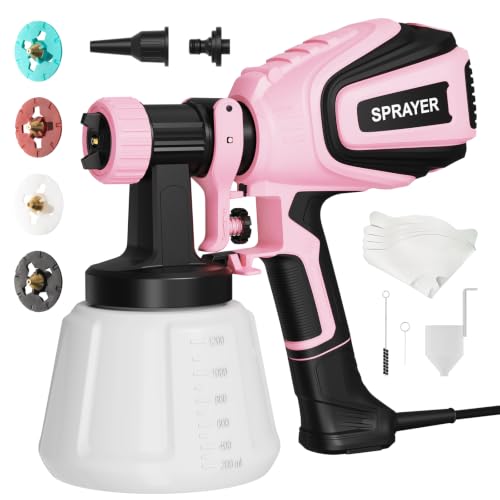
- 700W HVLP design with four nozzles
- Three patterns and adjustable flow control
- Includes dust-blowing and cleaning accessories
Best For: Beginners prioritizing easy preparation and cleanup
Best Beginner Kit

- Tool-free assembly with beginner instructions
- Four brass nozzles and three spray patterns
- Dust-blowing and quick-flush cleaning accessories
Best For: First-time DIY painters wanting a complete setup
Best Cordless Option
Battery Paint Sprayer with Two Batteries

- Two 4.0Ah batteries for cordless operation
- Five nozzles and three spray patterns
- Adjustable flow with tool-free cleaning setup
Best For: DIYers needing portable, cord-free painting
Best Balanced HVLP Pick
BATAVIA 700W Split-Design Sprayer

- Four nozzles and three spray patterns
- Lightweight spray gun with shoulder strap
- Includes cleaning tools and 24-month warranty
Best For: Beginners tackling varied home painting projects
Best Air-Powered Detail Option

- Two-stage trigger and included air regulator
- Three nozzles for varied coating viscosities
- Designed for automotive and detailed finishes
Best For: DIYers with a compressor seeking controlled spraying
Best High-Power Starter – 1000W HVLP Paint Sprayer
For beginners comparing paint spray gun systems for beginners, this 1000W HVLP model offers a broad setup for furniture, cabinets, fences, and other DIY jobs. Its 1400 ml container, three spray patterns, four copper nozzles, and adjustable flow and width controls give new users room to learn and fine-tune coverage.
Best For: DIYers who want one versatile electric sprayer for projects ranging from smaller furniture pieces to larger fence panels.
Pros:
- 1000W motor and 1400 ml container support extended painting sessions.
- Three spray patterns and four copper nozzles handle different surfaces and coating types.
- Tool-free disassembly, cleaning brush, and unclogging needle simplify maintenance.
- Includes a viscosity cup, filters, gloves, and other startup accessories.
Cons:
- It is corded, so use requires access to an AC outlet.
- The plastic construction may be less rugged than a metal-bodied professional sprayer.
- Thicker paints may require viscosity adjustment or thinning.
This is a feature-rich entry point for beginners who want adjustable control rather than a bare-bones sprayer. The larger container and included measuring and cleaning tools are particularly useful when tackling several DIY surfaces in one session.
Best Auto-Painting Starter Kit – DeVilbiss StartingLine HVLP Kit
Among paint spray gun systems for beginners, the DeVilbiss StartingLine kit is the specialized option for users focused on automotive painting and priming. Its HVLP gravity-feed design is aimed at controlled application, while the complete kit format gives beginners a more purpose-built starting point than a general household sprayer.
Best For: Beginners learning automotive painting and priming who prefer a gravity-feed HVLP setup.
Pros:
- Designed specifically for auto painting and priming.
- Uses a high-volume, low-pressure spray approach.
- Gravity-feed configuration is suited to automotive coating work.
- Complete StartingLine kit format provides a focused entry point.
Cons:
- The supplied notes do not list nozzle sizes, container capacity, or included accessories.
- Its automotive focus may be less convenient for general furniture or fence projects.
- Beginners may need additional information or equipment depending on their painting setup.
This kit stands apart by targeting automotive work rather than broad household use. Choose it when priming and auto paint are the priority; for fences, cabinets, or general DIY surfaces, a handheld electric model may offer a simpler fit.
Best Easy-Setup Option – W60 Electric Paint Sprayer
If you are looking for paint spray gun systems for beginners with straightforward setup, this corded W60 sprayer is a practical choice. It assembles without tools and combines three patterns, four brass nozzles, adjustable flow, and cleaning accessories for common furniture, cabinet, wall, door, and fence projects.
Best For: First-time users who want an easy-to-assemble sprayer for varied indoor and outdoor DIY painting.
Pros:
- Tool-free assembly helps simplify first-time setup.
- Four brass nozzles and three patterns provide flexible application options.
- Adjustable flow control helps manage output and overspray.
- Detachable parts plus a cleaning connector, brush, and needle support cleanup.
Cons:
- It requires a corded electrical connection.
- The supplied notes do not specify motor wattage or container capacity.
- Latex, acrylic paint, and stains may need proper thinning before use.
The W60 is a sensible beginner model when convenience matters most. Its tool-free assembly and included maintenance accessories reduce the friction of getting started, while the nozzle range keeps it useful beyond a single type of project.
Best Cleaning-Focused Choice – VONFORN 700W HVLP Sprayer
For beginners comparing paint spray gun systems for beginners, the VONFORN 700W HVLP sprayer emphasizes setup and cleanup as much as spraying flexibility. It includes four nozzle sizes, three patterns, adjustable flow, tool-free assembly, a dust-blowing joint, and a cleaning connector for projects such as furniture, cabinets, fences, doors, and garden chairs.
Best For: DIY beginners who value guided setup and a cleaning-oriented accessory package.
Pros:
- Four nozzle sizes and three patterns cover a range of DIY applications.
- Tool-free assembly and an included user manual support new users.
- Dust-blowing joint helps clear loose debris before spraying.
- Cleaning connector, brush, needle, filters, and pot lid provide a well-equipped maintenance package.
Cons:
- Its 700W motor is lower-powered than the 1000W model in this roundup.
- It is AC-powered, so it needs access to an outlet.
- Proper cleaning after each project is still necessary to reduce residue and blockage.
The VONFORN is a strong fit for beginners who want practical help before and after painting, not just spray controls. The dust-blowing and flushing accessories add useful workflow support, especially for users still developing good surface-preparation and cleanup habits.
Best High-Power Pick – 1000W Adjustable Paint Sprayer
For beginners comparing paint spray gun systems for beginners, this 1000W handheld model offers a strong starting point for projects ranging from furniture and cabinets to walls, decks, and fences. Its large tank, adjustable flow control, six nozzles, and three spray patterns provide useful flexibility as you learn to match settings to different surfaces and coatings.
Best For: DIYers who want broad nozzle selection and fast coverage for medium to large home projects.
Pros:
- 1000W motor and up to 1,200 ml/min adjustable output support fast, even coverage.
- Six nozzle sizes from 0.5mm to 2.5mm accommodate detail work and larger surfaces.
- Detachable design, cleaning brush, and unclogging needle simplify maintenance.
- Large 1,400ml container reduces the need for frequent refills.
Cons:
- Cleaning after every use is important to prevent residue and clogging.
- The corded AC/DC design does not provide cordless mobility.
- The plastic body may feel less durable than a heavier-duty professional sprayer.
This is a versatile beginner option when coverage speed and setup flexibility matter most. The extensive nozzle range is helpful, but new users should spend time adjusting flow and cleaning thoroughly after each session.
Best Beginner Kit – 700W Starter Paint Sprayer
This 700W model is one of the more approachable paint spray gun systems for beginners because it combines tool-free assembly, a viscosity cup, cleaning accessories, and detailed instructions. The dust-blowing attachment and quick-flush connector add practical preparation and cleanup features for furniture, cabinets, walls, fences, and other DIY projects.
Best For: First-time users who value guided setup, convenient cleaning, and a complete accessory package.
Pros:
- Tool-free assembly and detachable parts make setup and cleanup beginner-friendly.
- Four brass nozzles and three spray patterns support different coatings and applications.
- Dust-blowing attachment helps clear surface debris before spraying.
- Includes a 1,200ml tank, viscosity cup, container lid, filters, and quick-flush connector.
Cons:
- Heavy coatings may need thinning and straining before use.
- The 1,200ml tank is slightly smaller than some competing models.
- Immediate rinsing is required to help prevent dried paint from clogging the sprayer.
The included preparation and maintenance tools make this a sensible choice for learning the basics without buying many extras. Its 1-year replacement warranty and 24/7 support also provide useful reassurance for new operators.
Best Cordless Option – Battery Paint Sprayer with Two Batteries
For shoppers who prioritize mobility in paint spray gun systems for beginners, this battery-powered sprayer avoids the restrictions of a power cord. It includes two 4.0Ah batteries, five nozzles, three spray patterns, and adjustable flow control, making it suitable for furniture, doors, walls, garden tables, fences, and other DIY work.
Best For: Beginners painting in areas where cord-free movement and quick battery swapping are more convenient than continuous corded operation.
Pros:
- Two 4.0Ah batteries provide about 20–25 minutes of spraying each.
- Quick-swap batteries support continued work while the other battery charges.
- Five nozzle sizes and three spray patterns offer application flexibility.
- Tool-free assembly and included cleaning tools make maintenance straightforward.
Cons:
- Each battery provides a limited 20–25 minutes of spraying.
- Battery runtime may require work breaks or charging for larger projects.
- It does not list a tank capacity above its 1,200ml electric-sprayer specification in the supplied details.
This cordless model is especially convenient for outdoor touch-ups and spaces without easy outlet access. Its battery runtime makes it better suited to manageable DIY jobs than uninterrupted, large-scale spraying.
Best Balanced HVLP Pick – BATAVIA 700W Split-Design Sprayer
For beginners comparing paint spray gun systems for beginners, the BATAVIA 700W HVLP model offers a practical balance of reach, control, and included accessories. Its split design separates the motor from the lightweight spray gun, while four nozzles and three patterns help cover furniture, cabinets, walls, fences, and other home projects.
Best For: Beginners handling varied home painting and furniture projects who want a portable HVLP system with multiple setup options.
Pros:
- 700W motor with four nozzle sizes from 1mm to 3mm.
- Three spray patterns: horizontal, vertical, and circular.
- Split design, shoulder strap, and 6.5-foot hose help reduce arm fatigue and improve reach.
- Includes cleaning tools, ETL certification, and a 24-month warranty.
Cons:
- Paint may need viscosity adjustment depending on the coating.
- Its plastic construction may feel less substantial than a metal-bodied professional sprayer.
The BATAVIA is a strong all-around starting point for home users. Its accessory range and separate motor design make it approachable for beginners, while the adjustable nozzle and pattern selection provide room to refine technique.
Best Beginner-Friendly Refill Design – Tilswall Shark800 HVLP Sprayer
The Tilswall Shark800 is one of the more convenient paint spray gun systems for beginners because its side-feed design makes refilling simpler without removing the entire container. It combines an 800W motor, adjustable flow, four brass nozzles, and a split body suited to walls, furniture, cabinets, fences, and other household projects.
Best For: New users who prioritize easy refilling, extended reach, and broad coating compatibility for home improvement work.
Pros:
- Side-feed design allows quicker, cleaner paint additions.
- Four brass nozzles and three spray patterns support both coverage and detail work.
- Long 98-inch hose and 118-inch power cord provide useful mobility.
- Includes a viscosity cup, cleaning tools, seals, and shoulder strap.
Cons:
- Paint should be thinned to the proper viscosity for best performance.
- Requires prompt cleaning within 15 minutes after use to help prevent clogging.
- The included warranty is one year.
The Shark800 is a practical choice when convenience matters most. Its side-fill container and flow adjustment can make the learning curve less frustrating, though beginners still need to follow the thinning and cleaning guidance carefully.
Best Air-Powered Detail Option – AEROPRO R500 LVLP Spray Gun
Unlike the electric HVLP models above, the AEROPRO R500 is an air-powered LVLP spray gun for beginners who already have, or plan to use, a compatible compressor. Its two-stage trigger, air regulator, gravity-feed cup, and three nozzle sizes provide more hands-on control for automotive finishes, furniture, cabinets, varnish, and top coats.
Best For: DIY users working with a compressor who want controlled spraying for automotive or smaller finishing projects.
Pros:
- Two-stage trigger helps separate airflow and paint delivery control.
- Includes 1.3mm, 1.5mm, and 1.7mm nozzles for different coating viscosities.
- LVLP design uses approximately 3.0–3.9 CFM at 2.0–3.5 bar.
- Teflon-coated body, stainless steel nozzle and needle, 600cc cup, and regulator are included.
Cons:
- Requires a separate air compressor and suitable air hose.
- Its controls may involve a steeper learning curve than an electric handheld system.
- The nozzle range is narrower than the two HVLP systems in this roundup.
The R500 is a good introduction to compressor-based spraying rather than a grab-and-go household sprayer. Choose it if you value trigger control and automotive-style finishing; otherwise, an electric HVLP system may be simpler for occasional home use.
How We Picked the Best Paint Spray Gun Systems for Beginners
We focused on features that matter most to first-time users: straightforward controls, useful nozzle and spray-pattern options, manageable capacity, cleaning convenience, and suitability for common home or automotive tasks. The selection includes corded HVLP sprayers, a cordless model, a dedicated automotive HVLP kit, and an LVLP spray gun so you can compare different system types rather than one narrow category.
Specifications such as wattage, container size, included accessories, hose length, and battery configuration were considered alongside the intended use. Higher power does not automatically mean a better finish, so treat it as one indicator of potential material handling rather than a guarantee of performance.
Quick Comparison
- Best for general home projects: A corded HVLP sprayer with adjustable flow and multiple patterns.
- Best for furniture and cabinets: A model with fine-flow control and smaller nozzles for more precise application.
- Best for automotive work: A dedicated kit such as the StartingLine HVLP system or the AEROPRO LVLP gun, provided you already have suitable air-compressor equipment where required.
- Best for mobility: The cordless sprayer with dual batteries, especially when outlets or extension cords are inconvenient.
- Best for broad coverage: Higher-powered HVLP units with larger cups and wider spray patterns.
Key Buying Factors for Paint Spray Gun Systems for Beginners
Spray Technology and Power
HVLP systems are generally approachable for home users because they apply paint at high volume and relatively low pressure, helping reduce overspray compared with more forceful systems. LVLP guns can use less air, but they typically depend on a compatible compressor and require more attention to setup. Electric wattage can indicate motor capacity, but paint viscosity, thinning, and nozzle size also affect coverage.
Nozzles, Patterns, and Controls
Multiple nozzle sizes let one sprayer handle thinner finishes, latex-style wall paint, primers, and detail work. Adjustable flow is especially helpful for beginners because it allows you to start conservatively and reduce runs. Horizontal, vertical, and round patterns make it easier to match the tool to walls, trim, furniture, or narrow surfaces.
Capacity, Cleaning, and Portability
Larger cups mean fewer refills but can add weight. Look for removable containers and accessible paint passages, since dried material can quickly affect spray consistency. Corded models provide continuous runtime, while cordless systems offer freedom of movement but depend on battery capacity and charging time.
Compatibility and Safety
Check whether the sprayer is designed for your coating and whether thinning is required. Automotive guns may need an air compressor, regulator, filters, and appropriate protective equipment. Always ventilate the work area, wear eye and respiratory protection suited to the coating, and test on scrap material first.
Who Should Buy Which Paint Spray Gun Systems for Beginners?
Choose a simple corded HVLP unit if you are painting rooms, fences, furniture, or occasional DIY projects and want the lowest learning curve. Pick a model with several nozzles and precise flow control for mixed projects. A cordless system suits outdoor work and touch-ups where portability matters more than uninterrupted runtime. For vehicle panels, primers, or more controlled automotive finishes, choose a dedicated automotive kit or LVLP gun only if you are prepared to match it with the right compressor and supporting equipment. Beginners should prioritize controllability and easy cleanup over maximum power.