
A compact camera slider system can add controlled movement, repeatable time-lapse motion, and more polished production value without the bulk of a full studio rig.
We selected 10 portable and motorized options ranging from short phone-friendly sliders to longer carbon-fiber systems, so you can match travel needs, camera weight, shooting style, and budget.
Best 10 Compact Camera Slider Systems Picks for 2026
Best Compact Motorized Pick

- 15.8-inch motorized slider with 360° pan
- App control and multiple creative modes
- Designed for lightweight cameras and DJI Pocket 3
Best For: Travel, tabletop, and solo creator video
Best Manual Travel Slider
Zecti 24-Inch Carbon Fiber Slider

- Lightweight 24-inch manual track
- Four bearings for quiet, stable movement
- Adjustable legs and multiple mounting angles
Best For: Travel photography and small-camera rigs
Best Smartphone-Friendly Mini Slider
IFOOTAGE Shark Slider PICO Pro

- 15.7-inch motorized mini slider
- Supports phones, action cameras, and Pocket 3/4
- Payload rated up to 2.4 pounds
Best For: Mobile creators and lightweight camera rigs
Best Long-Track Motorized Option

- 31.5-inch motorized carbon-fiber rail
- Supports up to 11 pounds horizontally
- App, manual, video, and time-lapse modes
Best For: Product video and higher-capacity setups
Best for Easy Setup
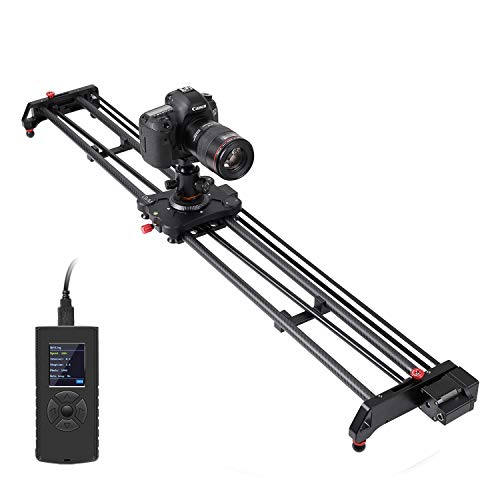
- 48-inch carbon-fiber rail
- Adjustable motion and auto-loop controls
- Includes battery, cables, remote, and bag
Best For: Long tracking shots and programmable time-lapse setups
Most Portable Pick

- 1.9-pound body fits in a 20L backpack
- Supports phones, action cameras, and DJI Pocket devices
- Seven-hour battery with quiet motor operation
Best For: Travel filmmaking and lightweight mobile camera setups
App-Controlled Value Pick
GVM 48-Inch Carbon Fiber Slider

- iOS and Android app control
- Multiple ports for flexible mounting angles
- Six shooting modes and adjustable motion settings
Best For: Long motorized shots with smartphone-based control
Best Multi-Axis Pick

- 360-degree pan and dual-axis motorized control
- 7kg horizontal payload with quiet operation
- App, touchscreen, waypoint, and AI tracking control
Best For: Advanced multi-axis filmmaking and live production
Best Long-Track Option
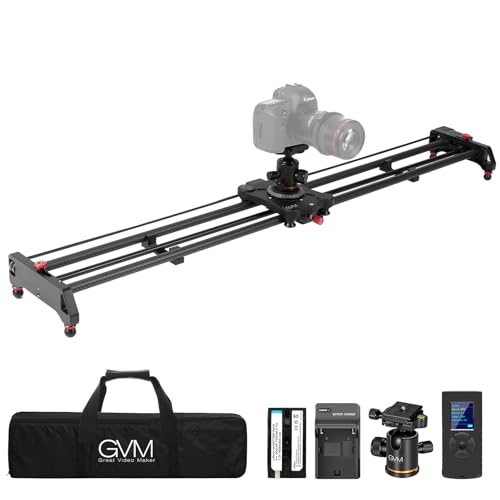
- 48-inch/120cm carbon-fiber rail
- Video, tracking, panorama, and time-lapse modes
- Remote control with programmable endpoints and loops
Best For: Long camera moves and programmable studio shooting
Best Portable Value
NEEWER ER1-80 Motorized Slider

- 31.5-inch rail with 5kg horizontal capacity
- App control and included 4400mAh F750 battery
- Supports video, time-lapse, panorama, and 45-degree tilt
Best For: Portable video and outdoor photography setups
Best Compact Motorized Pick – IFOOTAGE PICO
For creators seeking compact camera slider systems, the IFOOTAGE PICO combines a 15.8-inch rail with motorized movement and 360° panning. App control and dedicated time-lapse, stop-motion, panorama, and multi-point modes make it suited to repeatable solo-production shots.
Best For: Travel creators, tabletop filming, product videos, vlogging, and lightweight DJI Pocket 3 or camera setups.
Pros:
- Compact 15.8-inch design for desks, travel kits, and small studios.
- Provides two-axis motion with 360° panning.
- App control supports repeatable moves and creative shooting modes.
- Compatible with DJI Pocket 3, action cameras, mirrorless cameras, and smartphones.
Cons:
- Its compact format is aimed at lightweight creator rigs rather than large camera setups.
- Video capture resolution is listed as 1080p.
The PICO is a strong choice when portability and automated movement matter more than a long travel distance or heavy payload capacity.
Best Manual Travel Slider – Zecti 24-Inch Carbon Fiber Slider
The Zecti 24-inch model is a manual option among compact camera slider systems, using a carbon-fiber rail, four precision bearings, adjustable legs, and non-skid feet. Its multiple mounting holes support horizontal, vertical, diagonal, and sideways operation.
Best For: Photographers and videographers who want a lightweight, non-motorized slider for travel and small-camera setups.
Pros:
- 24-inch/60 cm track weighs about 654 g and includes a carrying bag.
- Carbon-fiber rail and four bearings are designed for stable, quiet movement.
- Supports multiple operating angles with adjustable legs and rubber feet.
- Compatible with cameras, camcorders, smartphones, and action cameras.
Cons:
- Manual operation does not provide automated or app-controlled moves.
- The supplied notes warn that overtightened screws can cause noise or rough movement.
- Maximum recommended load is 4.4 pounds.
Choose the Zecti if you value a relatively light travel track and flexible positioning, provided you are comfortable adjusting the carriage and controlling movement manually.
Best Smartphone-Friendly Mini Slider – IFOOTAGE Shark Slider PICO Pro
The IFOOTAGE Shark Slider PICO Pro is a 15.7-inch motorized option for compact camera slider systems, built around smooth automated movement in a small format. It supports smartphones, DJI Osmo Pocket 3/4 models, action cameras, and cameras up to 2.4 pounds.
Best For: Smartphone users, action-camera owners, and creators making cinematic shots with DJI Osmo Pocket cameras.
Pros:
- Compact 15.7-inch design is easy to integrate into a small creator kit.
- Supports phones, action cameras, DJI Osmo Pocket 3/4, and other cameras.
- Handles payloads up to 2.4 pounds according to the supplied notes.
- Motorized movement is intended to produce smoother footage than handheld shooting.
Cons:
- Its 2.4-pound payload limit restricts heavier camera and lens combinations.
- The short 15.7-inch travel length is less suited to larger tracking moves.
This PICO Pro makes the most sense for mobile-first creators who want automated camera movement without building a larger slider system.
Best Long-Track Motorized Option – NEEWER ER1 31.5-Inch Slider
The NEEWER ER1 is a longer motorized choice among compact camera slider systems, with a 31.5-inch carbon-fiber rail, app control, and manual, video, and time-lapse modes. It supports substantial horizontal loads while offering tripod mounting and 45-degree tilt capability.
Best For: Product videos, time-lapse work, and creators who need more travel and payload capacity than mini sliders provide.
Pros:
- 31.5-inch rail provides more travel than the compact 15.7- to 15.8-inch models.
- Supports up to 11 pounds horizontally and 5.5 pounds at a 45-degree tilt.
- App control, manual operation, and optional 2.4G remote compatibility offer flexible control.
- Includes a 4400mAh NP-F750 battery and uses four roller bearings for balance.
Cons:
- At 8.7 pounds, it is substantially heavier than the smaller slider options.
- The 2.4G remote is not included.
- The supplied notes mention that minor shake may occur during macro photography.
The ER1 is the better fit when you want a longer motorized path and stronger stated load capacity, but its weight makes it less convenient for lightweight travel kits.
Best for Easy Setup – GVM 48-Inch Automatic Slider
For creators who need extended travel in compact camera slider systems, this 48-inch GVM model offers motorized movement, adjustable endpoints, and automatic looping. Its carbon-fiber rail, adjustable feet, and included carrying bag support controlled setups for video, time-lapse, and panoramic work.
Best For: Long tracking shots, time-lapse sequences, and users who want both manual and motorized operation.
Pros:
- 48-inch carbon-fiber rail provides substantial travel.
- Supports tracking, time-lapse, video, and 120-degree panoramic shooting.
- Offers adjustable speed, interval, stop time, photo count, and automatic looping.
- Includes a battery, charger, remote, shutter cables, extension cable, and carrying bag.
Cons:
- At 11.8 pounds and 48 inches long, it is less portable than shorter sliders.
- It is not water resistant.
This is a feature-rich option when maximum rail length matters more than packability. Its broad control settings and multiple mounting ports make it adaptable, but the large folded size is worth factoring into transport plans.
Most Portable Pick – iFootage Shark Slider PICO
The iFootage Shark Slider PICO is a compact camera slider system for creators who prioritize portability and quiet operation. Its 15.8-inch body weighs 1.9 pounds, fits in a 20-liter backpack, and supports cameras, phones, action cameras, and DJI Pocket devices.
Best For: Travel creators, smartphone users, and compact setups requiring repeatable motion or clean audio.
Pros:
- Lightweight 1.9-pound aluminum-alloy construction fits easily into a backpack.
- Supports video, time-lapse, stop motion, panorama, and multi-target modes.
- Offers up to eight programmable points through the app.
- 5000mAh battery provides up to seven hours of operation and supports 30W PD charging.
Cons:
- Its 15.8-inch travel length is shorter than the 48-inch GVM options.
- The listed payload is 2.4 pounds, limiting heavier camera setups.
PICO stands out among compact camera slider systems for mobile production. Direct USB-C integration with DJI Pocket devices, Bluetooth/NFC phone pairing, and quiet motor operation make it especially practical for lightweight travel kits and audio-sensitive shoots.
App-Controlled Value Pick – GVM 48-Inch Carbon Fiber Slider
This GVM 48-inch slider combines a long carbon-fiber rail with smartphone app control, making it a practical choice for programmable camera movement. Multiple 1/4-inch and 3/8-inch ports, adjustable legs, and support for horizontal, vertical, and 45-degree positioning expand its setup flexibility.
Best For: Studio or field users who want long motorized travel with app-based control and versatile mounting options.
Pros:
- Supports tracking, panoramic, time-lapse, video, and follow-focus-style shooting workflows.
- App control works through iOS and Android smartphones or tablets.
- Multiple mounting ports support horizontal, vertical, and 45-degree shooting.
- Includes six shutter cables, an extension cable, adjustable legs, and a carrying bag.
Cons:
- The 4 kg weight and 120 cm folded length reduce portability.
- Battery life is listed at approximately two hours.
- It is not water resistant.
Choose this model when app control and mounting flexibility are more important than a lightweight travel footprint. It offers the reach of a full-size slider and extensive motion settings, though its weight and stated battery life suit planned shoots better than extended handheld travel.
Best Multi-Axis Pick – IFOOTAGE Shark Nano II 660
For creators looking at compact camera slider systems with advanced motion control, the IFOOTAGE Shark Nano II 660 combines a 17-inch travel range with motorized slider and pan movement. It supports up to 7kg horizontally, offers app or touchscreen control, and is designed for quiet, precise operation.
Best For: Professional filmmakers, live streamers, and solo creators who need synchronized multi-axis movement, AI tracking, or DJI gimbal integration.
Pros:
- Supports 360-degree pan movement and dual-axis motorized control.
- Handles up to 7kg horizontally and operates below 20dB.
- Offers touchscreen and smartphone-app control with up to eight waypoints.
- Includes USB-C PD 60W support, F970 battery compatibility, and AI tracking through the app.
Cons:
- DJI gimbal integration requires a separate gimbal and sufficient 60W power supply.
- The advanced feature set may be more than casual users need.
The Nano II 660 is the most feature-rich option here for controlled, repeatable motion. Its shorter travel range favors portability and multi-axis creativity over long linear moves.
Best Long-Track Option – GVM 48-Inch Motorized Slider
The GVM 48-inch slider is a practical choice among compact camera slider systems when you need extended camera travel. Its 120cm carbon-fiber rail supports tracking, horizontal, panoramic, video, and time-lapse modes, with remote adjustment for repeatable moves.
Best For: Studio and production setups that prioritize a long 48-inch travel range, programmable time-lapse moves, and broad camera or tripod compatibility.
Pros:
- Provides a 48-inch/120cm folded rail for longer linear movements.
- Supports tracking, horizontal, 120-degree panoramic, video, and time-lapse shooting.
- Remote control adjusts endpoints, speed, dwell time, pauses, shot count, and looping.
- Multiple 1/4-inch and 3/8-inch ports support different tripod setups.
Cons:
- At 5.42kg, it is heavier than a highly portable slider system.
- It is not water resistant.
Choose the GVM when reach and programmable motion matter more than minimal carry weight. The long rail is especially useful for sweeping product shots and extended time-lapse sequences.
Best Portable Value – NEEWER ER1-80 Motorized Slider
The NEEWER ER1-80 balances portability and automated movement for creators comparing compact camera slider systems. Its 31.5-inch rail supports video, time-lapse, tracking, panoramic, horizontal, and 45-degree tilt shooting, while app control and a supplied F750 battery simplify mobile setups.
Best For: Outdoor photographers, DSLR users, and video creators who want a relatively lightweight slider with app control, quiet motion, and built-in battery power.
Pros:
- Offers 31.5 inches/80cm of travel with a 5kg horizontal payload.
- Includes a 4400mAh NP-F750 battery and supports USB-C power.
- Provides app control, manual mode, video mode, and time-lapse functions.
- Supports tracking, 120-degree panoramas, horizontal moves, and 45-degree tilts.
Cons:
- The battery charger is not included.
- The optional RT-08 remote control is not included.
- Its 2.5kg payload at a 45-degree tilt is lower than its horizontal capacity.
The ER1-80 is a flexible middle ground: longer than a short travel slider but more manageable than the 48-inch GVM. Account for the missing charger and optional remote when budgeting.
How We Picked These Compact Camera Slider Systems
We focused on the features that matter most in real shooting situations: slider length, portability, motorized control, camera compatibility, battery operation, repeatability, and support for time-lapse or panoramic work. The lineup includes compact mini sliders for phones and lightweight cameras, as well as 31.5-inch and 48-inch systems for longer tracking shots.
We also considered control methods. App and remote operation can make programmed moves easier, while manual or simpler motor systems may be quicker to set up. Because listed configurations and included accessories can vary, verify the current package, payload rating, power requirements, and mounting hardware before ordering.
Quick Comparison
| Best For | Look For | Typical Choice |
|---|---|---|
| Travel and small setups | Short rail, low weight, compact battery system | PICO or Shark Nano II |
| Phone and lightweight camera work | Simple mounting, smooth motor control, easy app operation | Mini motorized sliders |
| General video production | Longer travel, stable carbon-fiber rail, adjustable speed | 31.5-inch systems |
| Wide cinematic moves | 48-inch travel, stronger support, programmable motion | GVM 48-inch models |
Key Buying Factors for Compact Camera Slider Systems
Rail Length and Portability
Short sliders pack easily and work well for tabletop videos, product shots, interviews, and travel content. Longer rails create more visible camera movement but need more room, stronger support, and a larger carrying case.
Camera Payload and Stability
Check the slider’s rated load with your complete setup, including the camera, lens, cage, microphone, and fluid head. A system that technically supports your camera may still produce vibration if it is near its limit or placed on an unstable surface.
Motor, App, and Shooting Modes
Look for adjustable speed, direction control, automatic round trips, time-lapse programming, and panoramic modes if you need repeatable motion. App control is useful for precise programming, but a remote or onboard control may be more dependable when a phone connection is inconvenient.
Power and Setup
Battery capacity affects how long you can shoot away from an outlet. Also check charging time, battery format, charger inclusion, tripod-mount options, leveling needs, and whether the system can be used manually when the motor is off.
Who Should Buy Which Compact Camera Slider Systems?
Choose a PICO or Shark Nano II if portability is your priority and you mainly use a phone, compact camera, or lightweight mirrorless setup. These shorter systems suit creators who value fast setup over maximum travel.
Choose a 31.5-inch NEEWER slider for a practical middle ground between portability and noticeable camera movement. App control and a longer rail make this format versatile for product videos, interviews, and time-lapse work.
Choose a 48-inch GVM slider when you need broader motion for studio, event, or cinematic shots. Confirm that your support stands and payload handling are adequate before choosing the longest models.
For most buyers, the best compact camera slider system is the one that matches the camera’s real weight, available shooting space, and preferred control method—not necessarily the longest or most feature-rich option.