
The right record cabinet does more than hide your vinyl. It keeps albums upright, protects them from clutter and sunlight, and gives your turntable a stable, accessible home.
These 10 record storage cabinets for home studios range from compact cube bookcases to large stands with doors, adjustable shelving, lighting, and integrated power features. Use the guide below to narrow your choice by capacity, layout, style, and room size.
Best 10 Record Storage Cabinets for Home Studios Picks for 2026
Large-Capacity Pick
3-Tier Vinyl Record Storage Table

- Two tiers for up to 200 records
- Adjustable dividers for flexible sorting
- Broad top for turntable and audio gear
Best For: Large collections and open studio setups
Dust-Protected Media Pick

- Tempered-glass doors help shield electronics
- Adjustable shelves fit varied AV gear
- Rear ports support cleaner cable management
Best For: Compact studios with mixed equipment
Connected Mid-Century Pick

- Built-in AC, USB, and USB-C power
- Three-color LED lighting
- Center storage holds up to 250 records
Best For: Feature-rich studios and living spaces
Heavy-Duty Steel Pick

- Powder-coated steel construction
- Magnetic-lock doors and ventilation holes
- Adjustable or removable shelf
Best For: Durable enclosed studio utility storage
Best Mid-Century Cube Storage
Crosley Liam 6-Cube Record Storage Bookcase
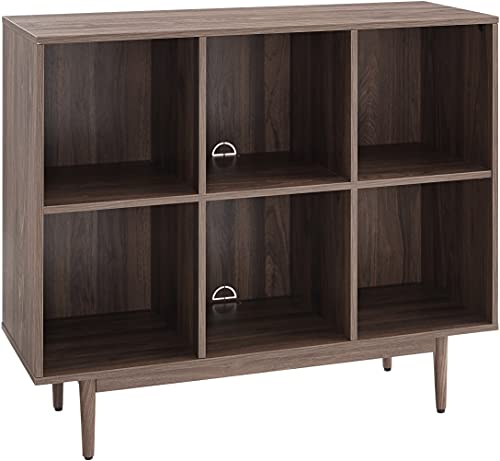
- Six cubbies hold up to 360 records
- Cable holes support record-player use
- Walnut finish with adjustable levelers
Best For: High-capacity open vinyl storage with mid-century style
Best Flexible Record-Player Stand
ThreeHio Record Player Stand with Vinyl Storage

- Reversible two-tier shelf configuration
- Five tiers for vinyl organization
- 110-pound tabletop capacity
Best For: Adaptable turntable and vinyl storage in a compact setup
Best Enclosed Mid-Century Cabinet
Modway Render Vinyl Record Storage Display Cabinet

- Sliding door conceals stored items
- Two drawers organize media accessories
- 37-inch walnut mid-century design
Best For: Polished, partially enclosed vinyl and media storage
High-Capacity Pick
IRONCK 47" Record Player Stand

- Stores 500+ albums
- 330-pound capacity with anti-tipping design
- Two drawers, compartments, and cabinet storage
Best For: Large vinyl libraries and spacious home studios
Best Connected Storage

- Holds up to 350 albums
- Built-in AC outlets and USB ports
- Adjustable shelves and removable dividers
Best For: Studios needing flexible storage and device charging
Best for Easy Browsing

- Six compartments for 7-, 10-, and 12-inch records
- Approximate capacity of 350–450 albums
- 47.2-inch desktop for audio equipment
Best For: Visible, easy-to-browse vinyl organization
Large-Capacity Pick – 3-Tier Vinyl Record Storage Table
For home studios that need dedicated record storage cabinets for home studios, this freestanding table combines a broad equipment surface with tiered vinyl storage. Its adjustable dividers make it easier to sort a collection while keeping a turntable and other audio gear within reach.
Best For: Large vinyl collections and studio setups that need an open turntable surface.
Pros:
- Two spacious record tiers with capacity listed at up to 200 records.
- Six adjustable dividers and pre-drilled holes allow flexible compartment sizing.
- Iron-and-wood construction with sturdy support legs is designed for stability.
- Top surface provides room for audio equipment and decor.
Cons:
- Open shelving offers less dust protection than a closed cabinet.
- The 39.37-inch width requires more floor space than compact media furniture.
- Assembly is required.
This is a practical choice when accessible, high-volume record storage matters more than concealed storage. The tiered layout and customizable dividers are especially useful for organizing an expanding collection.
Dust-Protected Media Pick – HOMCOM 4-Tier Stereo Cabinet
This HOMCOM cabinet is a versatile option among record storage cabinets for home studios, combining adjustable shelving with tempered-glass doors. Its enclosed design helps shield equipment from dust while rear cable ports keep a studio or entertainment area more organized.
Best For: Compact studios that need enclosed AV storage and flexible shelf placement.
Pros:
- Tempered-glass doors allow remote signals to pass through while covering electronics.
- Two three-level adjustable shelves accommodate turntables, cable boxes, and subwoofers.
- Rear cable ports help hide and organize cords.
- Anti-tipping hardware supports safer placement in the home.
Cons:
- The 21.25-inch width provides less dedicated record capacity than wider stands.
- Engineered-wood construction may not suit buyers seeking solid wood furniture.
- Assembly is required.
Choose this cabinet when protecting electronics and managing cables are priorities. Its adjustable interior is better suited to mixed AV equipment than to storing a very large vinyl collection.
Connected Mid-Century Pick – 47.2-Inch Record Player Stand
For a modern home studio, this wide record stand combines open equipment storage, enclosed side cabinets, and built-in power features. It is one of the more feature-rich record storage cabinets for home studios, with lighting, charging ports, and center dividers for vinyl organization.
Best For: Users who want a statement piece with integrated power, lighting, and mixed storage.
Pros:
- Two AC outlets, two USB ports, and one USB-C port power connected equipment.
- Three-color LED lighting adds adjustable ambient illumination.
- Center storage with metal dividers holds up to 250 records.
- Sliding side cabinets provide enclosed storage, while open shelves fit gear or decor.
Cons:
- The 47.2-inch width needs substantial wall or floor space.
- Particleboard construction is supported by solid wood legs rather than being solid wood throughout.
- Assembly is required.
This stand makes sense for a studio where convenience and visual presentation are equally important. Its combination of record capacity, charging, lighting, and cable holes can reduce the need for separate accessories.
Heavy-Duty Steel Pick – Two-Door Music Studio Cabinet
This steel cabinet offers a more secure alternative to open record furniture for home studios. Its two doors, magnetic locks, adjustable shelf, and ventilation holes make it useful for storing accessories, media supplies, or equipment that benefits from enclosed organization.
Best For: Music studios needing durable, enclosed utility storage with a flexible interior.
Pros:
- Steel construction with an electrostatic powder coating is built for long-term use.
- Adjustable or removable shelf accommodates different storage arrangements.
- Two doors with magnetic locks keep contents enclosed.
- Ventilation holes support airflow inside the cabinet.
Cons:
- Its 25.2-inch height may limit storage for tall equipment or large record stacks.
- The orange glossy finish may not blend with every studio décor.
- It has one adjustable shelf, so the interior is less configurable than multi-shelf media cabinets.
Consider this cabinet when durability and enclosed utility storage outweigh turntable-display features. Its compact height and strong weight capacity make it a useful secondary cabinet for studio organization, though buyers should verify that its dimensions suit their records and gear.
Best Mid-Century Cube Storage – Crosley Liam 6-Cube Record Storage Bookcase
Crosley Furniture Liam 6-Cube Record Storage Bookcase | Vinyl Record Holder and Bookshelf, Walnut
Check Price On AmazonThe Crosley Liam is a practical choice for record storage cabinets for home studios when you want generous capacity with a furniture-style presentation. Its six cubbies fit standard 12-inch records, while the walnut finish, tapered legs, adjustable levelers, and cable-management holes help it work as both vinyl storage and a record-player station.
Best For: Home studios needing high-capacity, freestanding cube storage with mid-century styling.
Pros:
- Six record-sized cubbies can store up to 360 records.
- Walnut finish and tapered legs suit mid-century, rustic, industrial, and modern rooms.
- Cable-management holes support use as a record-player stand.
- Adjustable levelers and a 100-pound overall weight limit add stability.
Cons:
- The backless design offers less dust protection than an enclosed cabinet.
- Assembly is required.
- Each cubby has a 20-pound weight limit.
Choose this model if your priority is maximum organized capacity in an open, modular layout. It is less suited to studios that need enclosed storage or a compact footprint.
Best Flexible Record-Player Stand – ThreeHio Record Player Stand with Vinyl Storage
The ThreeHio stand fits record storage cabinets for home studios that need a compact, adaptable setup for a turntable and albums. Its two-sided shelving can be configured with the two-tier section on either side, while the metal-and-MDF construction provides a practical combination of storage and support.
Best For: Studios wanting a versatile record-player table with configurable shelving and a vintage-inspired look.
Pros:
- Two installation options let you position the two-tier shelf on the left or right.
- Five shelf tiers provide space for organizing and displaying vinyl.
- Tabletop supports up to 110 pounds.
- Metal and MDF construction is designed to resist scratching, moisture, and water damage.
Cons:
- Its 30.04-inch width and 11.81-inch depth provide less storage volume than larger cabinets.
- Assembly is required.
- The open shelving offers limited protection from dust.
This is a useful choice when flexibility and a relatively compact footprint matter more than enclosed storage. The configurable shelf layout also makes it easier to adapt the stand to your room.
Best Enclosed Mid-Century Cabinet – Modway Render Vinyl Record Storage Display Cabinet
Modway Render Mid-Century Modern Vinyl Record Storage Display Cabinet, 37 Inch, Walnut
Check Price On AmazonThe Modway Render is a strong option among record storage cabinets for home studios when you want vinyl storage that looks like finished furniture. Its walnut cabinet combines a sliding slatted door, two drawers, and internal dividers, giving you more concealed organization than an open cube shelf while leaving room on top for a record player.
Best For: Home studios seeking an enclosed, mid-century-style cabinet for records and media accessories.
Pros:
- Sliding slatted door helps conceal stored items.
- Two drawers add separate storage for media essentials and accessories.
- Wood-grain laminate and tapered legs deliver a mid-century appearance.
- 100-pound maximum weight capacity supports practical equipment and storage use.
Cons:
- Its 37-inch width offers less stated capacity than the Crosley six-cube unit.
- Assembly is required.
- Particleboard and engineered-wood construction may be less substantial than solid wood furniture.
Select this cabinet if you prefer a more polished, partially enclosed presentation for records and studio accessories. Its drawers and sliding door make it especially useful where visual clutter is a concern.
High-Capacity Pick – IRONCK 47" Record Player Stand
For home studios that need substantial record storage cabinets, the IRONCK stand combines a wide 47.24-inch surface with space for more than 500 albums. Its drawers, compartments, and cabinet provide a mix of display and concealed storage for records and audio equipment.
Best For: Large vinyl libraries and studio setups needing a multifunctional media cabinet.
Pros:
- Designed to accommodate 500+ vinyl records across four compartments, two divided drawers, and a cabinet.
- 330-pound maximum weight capacity and an anti-tipping base support a stable setup.
- Waterproof, scratch-resistant surface is easy to clean.
- Can also function as a TV stand, display cabinet, or general storage unit.
Cons:
- At 83.8 pounds, it is a substantial piece to move and assemble.
- The 47.24-inch minimum required door width may limit delivery access.
This is the strongest capacity-focused option of the three, especially if your collection is growing quickly. Its broad footprint and mid-century black finish make it better suited to a dedicated music room or larger living space than a compact studio.
Best Connected Storage – 48" Flip-Out Record Cabinet
This 48-inch cabinet is a practical choice among record storage cabinets for home studios when quick browsing and connected equipment matter. Its flip-out record storage, adjustable shelving, sliding door, and built-in charging ports help organize both albums and studio accessories.
Best For: Home studios that want flexible record organization plus convenient power and cable management.
Pros:
- Flip-out cabinet stores up to 350 albums and lets you browse records face-up.
- Four-height adjustable shelves and removable dividers allow customized organization.
- Includes two AC outlets, two USB ports, and cable-management openings.
- Scratch-resistant, waterproof coating and elevated legs simplify upkeep.
Cons:
- Its stated capacity is lower than the largest cabinet in this roundup.
- The feature-rich design may require more setup than a basic open shelf.
The charging station gives this model a useful advantage for studios with multiple powered devices. Choose it if flexible storage, concealed organization, and cleaner cabling are more important than maximum album capacity.
Best for Easy Browsing – BROTTAR 47.2" Vinyl Cabinet
The BROTTAR emphasizes quick album access, making it a practical option for home studios where browsing is part of the listening routine. Six open-front compartments on smooth metal rails accommodate common 7-, 10-, and 12-inch records while keeping the collection visible.
Best For: Vinyl-focused rooms that prioritize visible organization and easy album retrieval.
Pros:
- Six open compartments fit 7-, 10-, and 12-inch records and hold approximately 350–450 albums.
- Smooth metal rails support easy viewing and retrieval.
- 47.2-inch desktop provides room for a turntable, game console, or DVD player.
- Raised legs allow easier floor cleaning, while the included anti-tipping device improves stability.
Cons:
- Actual capacity varies with record thickness, gatefolds, box sets, and protective sleeves.
- After loading it, opening more than three drawers at once is not recommended because the center of gravity can shift.
- The engineered-wood construction requires assembly.
This cabinet suits listeners who want their collection organized like a browsable library rather than hidden behind doors. Its warm brown mid-century finish also blends readily with modern, retro, or minimalist interiors.
How We Picked These Record Storage Cabinets for Home Studios
We focused on the features that matter most in a working listening space: usable vinyl capacity, record-friendly storage dimensions, cabinet stability, accessibility, assembly practicality, and overall versatility. The selection includes open shelving for quick browsing, enclosed cabinets for a cleaner appearance, and larger console-style stands for listeners building a complete media station.
Capacity claims can vary depending on record thickness, sleeves, and how tightly albums are packed. Treat stated limits as maximums and leave enough room to remove records without forcing them against dividers or side panels.
Quick Comparison
- For maximum capacity: Choose one of the larger 47- to 48-inch stands advertised for roughly 450 to 500 or more albums.
- For visible browsing: Open cube shelving or adjustable-divider designs make it easier to organize records by genre, artist, or year.
- For concealed storage: Glass doors, sliding doors, and fluted or solid cabinet fronts reduce visual clutter and help keep dust away.
- For a complete setup: Look for models with turntable space, power outlets, USB-C ports, or integrated lighting.
Key Buying Factors for Record Storage Cabinets for Home Studios
Capacity and Layout
Measure your collection before shopping, then add room for future purchases. Dividers, adjustable shelves, and flip-out compartments can make a cabinet easier to organize than one large undivided cavity. Confirm that shelves are deep and tall enough for standard 12-inch records stored vertically.
Stability and Record Safety
Vinyl should stand upright rather than lean, which can place uneven pressure on sleeves and discs. Favor a wide, solid base and shelves that do not bow under load. If the cabinet is tall or placed in a busy room, use the included anti-tip hardware or secure it to the wall according to the manufacturer’s instructions.
Dust, Light, and Equipment Placement
Open shelves provide convenience but expose records to dust. Doors offer a tidier barrier, while glass may still allow light exposure. Keep the turntable on a level, vibration-resistant surface and avoid placing the cabinet beside radiators, heating vents, or direct sunlight.
Size, Style, and Assembly
Check the cabinet’s external width, depth, and height against your room and listening position. Mid-century finishes, industrial metal designs, and modern fluted fronts can complement different studio setups, but appearance should not outweigh load capacity and structural support. Review assembly requirements, especially for larger units.
Who Should Buy Which Record Storage Cabinets for Home Studios?
New collectors and smaller studios should consider cube shelving or a compact three-tier stand that leaves space to expand. Growing collections benefit from high-capacity cabinets with dividers or flip-out storage. Design-conscious listeners may prefer walnut-style consoles, fluted doors, or glass-front display storage. Tech-focused setups should prioritize stands with outlets, USB-C charging, or built-in lighting, while dust-conscious owners will generally be happier with enclosed doors.