
As a designer, you know the importance of accurate color representation in your work. In 2025, the best color calibration monitors are set to redefine your creative process. With advanced technology and features designed specifically for professionals, these monitors can elevate your projects to new heights. Curious about which models made the top ten list and how they can enhance your workflow? Let’s explore what each one has to offer.
CRUA 27″ 2K QHD IPS Computer Monitor

The CRUA 27″ 2K QHD IPS Computer Monitor is an excellent choice for designers who demand exceptional color accuracy and visual performance. With its 2560×1440 resolution and 120% sRGB color coverage, you’ll see vibrant, true-to-life colors in your work. The 120Hz refresh rate and AMD FreeSync technology guarantee smooth visuals, whether you’re editing photos or gaming. Plus, the blue light filter protects your eyes during long sessions. Its sleek white design fits perfectly in any modern workspace, and built-in speakers add convenience. Just keep an eye out for occasional quality control issues, and you’ll enjoy a fantastic visual experience.
Best For: Designers and gamers seeking a monitor with exceptional color accuracy and smooth visual performance.
Pros:
- High 120Hz refresh rate and AMD FreeSync technology enhance gaming and editing experiences by reducing screen tearing.
- 120% sRGB color coverage ensures vibrant and true-to-life colors, ideal for photo editing and media viewing.
- Sleek white design with built-in speakers adds aesthetic appeal and convenience for modern workspaces.
Cons:
- Some users report quality control issues, such as dead pixels.
- USB-C compatibility may not be optimal for Mac devices, leading to potential connectivity concerns.
- Occasional problems with menu access can affect user experience.
27 Inch FHD 1080p 144Hz Computer Monitor

For graphic designers and gamers alike, the 27-inch FHD 1080p 144Hz computer monitor stands out with its impressive refresh rate and vibrant color accuracy. Featuring a crystal-clear resolution of 1920×1080, this monitor delivers vivid colors and sharp details thanks to its IPS panel. The 144Hz refresh rate guarantees smooth gameplay, while Adaptive Sync technology prevents screen tearing. Its lightweight design and VESA mount compatibility make it versatile for various setups. With multiple connectivity options like HDMI and VGA, it’s perfect for both office work and gaming. Users rave about its affordability, ease of installation, and overall performance.
Best For: This monitor is best for gamers and graphic designers seeking high-quality visuals and smooth performance in a versatile setup.
Pros:
- Crystal-clear image quality with vibrant colors thanks to the IPS panel.
- High 144Hz refresh rate ensures smooth gameplay and reduces motion blur.
- Multiple connectivity options (HDMI, VGA, DP) make it compatible with various devices.
Cons:
- Some users report issues with unstable stands.
- Connectivity problems have been noted with specific devices like MacBook Pro.
- Limited warranty information available upon request.
datacolor SpyderPro – Computer and Laptop Screen Calibrator

Looking to guarantee your photos and videos maintain color accuracy? The datacolor SpyderPro is your go-to screen calibrator for both computers and laptops. It’s user-friendly, ensuring color consistency for all skill levels. With its DevicePreview TM Beta, you can simulate photos on calibrated screens effortlessly. Calibration takes just 90 seconds, making it quick and efficient. Plus, the StudioMatch feature lets you calibrate multiple monitors side-by-side, essential for visual storytelling. While some users report software issues, many praise its speed and accuracy. Weighing only 5 ounces, it’s a compact solution for achieving the perfect color match.
Best For: Photographers and videographers seeking reliable color accuracy for their computer and laptop displays.
Pros:
- User-friendly interface suitable for both beginners and professionals.
- Quick calibration process takes only 90 seconds.
- StudioMatch feature ensures consistent color across multiple monitors.
Cons:
- Some users have reported software crashes and functionality issues.
- Calibration failures may occur during multi-monitor setups.
- A few users experienced challenges with software registration.
Calibrite Display Pro HL (CCDIS3HL)
Setting a new standard in calibration devices, the Calibrite Display Pro HL (CCDIS3HL) is perfect for designers who demand precise color accuracy across a variety of advanced display technologies. This device accurately measures and calibrates LCD, mini-LED, OLED, and Apple XDR panels, reaching up to 3,000 nits with its high luminance sensor. The included Calibrite PROFILER software offers customizable features like White Point and Gamma adjustments, ensuring tailored results for your projects. With USB-C connectivity and compact, recyclable packaging, it’s easy to take on the go. Upgrade to the Calibrite Display Pro HL for high-quality editing and design work.
Best For: Designers and professionals who require precise color accuracy and calibration for high-end display technologies.
Pros:
- Accurate calibration for a wide range of display types, including OLED and mini-LED.
- High luminance sensor capable of measuring up to 3,000 nits for enhanced color performance.
- Compact, portable design with USB-C connectivity and recyclable packaging.
Cons:
- May be overkill for casual users or those with standard display needs.
- Requires knowledge of calibration processes for optimal use.
- Limited to specific software compatibility, which may not suit all users.
Calibrite Display 123 Colorimeter (CCDIS123)

The Calibrite Display 123 Colorimeter (CCDIS123) stands out as an ideal choice for designers and creative professionals who demand precise color accuracy in their work. Its user-friendly interface makes color correcting monitors effortless, whether you’re editing photos, gaming, or shopping for clothes. You can easily support two displays and switch between Native and Photo brightness settings, ensuring you get the best visual experience. This device caters to both professional and casual users, providing reliable color representation across various applications. With the Calibrite Display 123, you’ll enhance your visual experiences and elevate your creative projects to new heights.
Best For: Designers and creative professionals seeking precise color accuracy for editing, gaming, and casual color-sensitive tasks.
Pros:
- Easy-to-use interface for effortless color calibration.
- Supports dual displays for enhanced productivity.
- Offers Native and Photo brightness settings for tailored visual experiences.
Cons:
- May be overkill for casual users who don’t require high precision.
- Limited to two displays, which may not suffice for multi-monitor setups.
- Some users may find the price point higher compared to basic calibration tools.
Datacolor Spyder X Elite Monitor Calibration

For expert photographers and motion imagemakers, the Datacolor Spyder X Elite offers unparalleled monitor calibration with its groundbreaking features. You’ll appreciate the calibration speed, taking just 1-2 minutes, thanks to its intuitive step-by-step assistant. The lens-based color engine enhances color accuracy across multiple monitors, while room-light monitoring and automatic profile changing guarantee perfect results. With the SpyderProof functionality, you can easily evaluate your display before and after calibration using your own images. Plus, it’s future-proof, supporting the latest screen types and resolutions, so your investment remains relevant as monitor technologies evolve. Elevate your creative work effortlessly!
Best For: Expert photographers and motion imagemakers seeking precise monitor calibration for optimal color accuracy.
Pros:
- Fast Calibration: Takes only 1-2 minutes to complete calibration, saving time for busy professionals.
- Enhanced Color Accuracy: The innovative lens-based color engine ensures high precision across multiple monitors and projectors.
- Future-Proof Design: Supports the latest screen types and resolutions, making it a long-term investment.
Cons:
- Cost: May be considered expensive for casual users or hobbyists.
- Complexity for Beginners: The features and settings might be overwhelming for those new to monitor calibration.
- Limited to Specific Use Cases: Primarily designed for photographers and videographers, which may not appeal to general users.
Calibrite Display Plus HL (CCDIS3PLHL)
Designed for professionals who demand precise color accuracy, the Calibrite Display Plus HL (CCDIS3PLHL) stands out with its advanced HL sensor, capable of measuring up to 10,000 nits. This device is compatible with LCD, mini-LED, and OLED displays, including Apple XDR panels, making it versatile for various setups. It comes with Calibrite PROFILER software, allowing you to customize White Point, Gamma, and more. Although users appreciate its performance, some report challenges with software settings and positioning on vertical monitors. Overall, when calibrated correctly, it greatly enhances color accuracy for video editing and design applications.
Best For: Professionals in video editing, high-quality still image editing, and design applications who demand precise color accuracy.
Pros:
- Advanced HL sensor measures up to 10,000 nits for superior color accuracy.
- Compatible with various display types, including LCD, mini-LED, and OLED panels.
- Customizable features via Calibrite PROFILER software enhance user experience.
Cons:
- Some users experience challenges with software settings and color temperature adjustments.
- Difficulties reported in positioning the device on vertical monitors.
- Inconsistent luminance measurements noted, requiring multiple corrections for accurate calibration.
Calibrite ColorChecker Studio (CCSTUDIO)
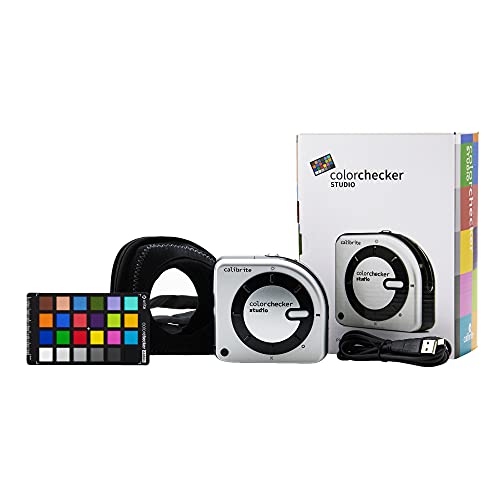
Calibrite ColorChecker Studio (CCSTUDIO) stands out as a top choice for designers seeking precision in color calibration. This device replaces the X-Rite i1Studio and measures 5 x 4 x 2 inches, making it portable at just 14.5 ounces. With intelligent iterative profiling, it optimizes color accuracy on various displays. The ambient light measurement feature automatically adjusts your display’s luminance for print comparisons. However, some users report software compatibility issues, especially with Windows 11 and MacBook Pro. Despite these challenges, many appreciate the effective calibration results and improved color accuracy after use. A one-year warranty is included for peace of mind.
Best For: Designers and photographers seeking precise color calibration for their displays and prints.
Pros:
- Effective calibration results leading to improved color accuracy.
- Intelligent iterative profiling adapts to unique display characteristics for optimized performance.
- Portable design at just 14.5 ounces, making it easy to carry for on-the-go calibration.
Cons:
- Software compatibility issues reported, particularly with Windows 11 and MacBook Pro.
- Lack of user manual and instructions, causing frustration for some users.
- Customer support challenges, with mixed experiences in resolving technical difficulties.
Calibrite Creator Kit – Display 123 and Passport Video 2 (CC123-PPV2)

The Calibrite Creator Kit – Display 123 and Passport Video 2 (CC123-PPV2) is an essential tool for creative professionals seeking unparalleled color accuracy in their work. With its streamlined software, you can easily set white points, adjust exposure, and create custom profiles tailored to your video and photo workflows. The Display 123 calibrates up to two monitors via USB-C, ensuring reliable color accuracy even in mixed lighting. Meanwhile, the Passport Video 2 provides targets for precise in-camera white balance and exposure settings, enhancing your editing confidence and visual consistency in the final output. This kit truly elevates your creative process.
Best For: Creative professionals seeking precise color calibration and enhanced editing workflows.
Pros:
- Streamlined software allows for easy adjustments of white points and exposure settings.
- Supports calibration of two monitors via USB-C, ensuring consistent color accuracy.
- Includes Passport Video 2 for accurate in-camera white balance and exposure, improving overall workflow.
Cons:
- May have a learning curve for users unfamiliar with color calibration tools.
- Higher price point compared to basic calibration kits, which might not be suitable for casual users.
- Limited to specific workflows, primarily focused on video and photo editing professionals.
DKK 5 x 7 White Balance and Color Calibration Charts (Set of 2)

For photographers and designers seeking precision in their color representation, the DKK 5 x 7 White Balance and Color Calibration Charts are essential tools. This set includes two charts, each measuring 5 x 7 inches, featuring precise 12% and 18% Gray reference cards along with 18 color patches. The colors are arranged in three rows for easy reference, making your calibration process efficient. Made from archival quality materials, these charts come with a protective paper frame for convenience and easy display. Compatible with software like Adobe Photoshop and Lightroom, you’ll also find a user guide included to maximize their utility.
Best For: Photographers and designers who require accurate color representation and precise white balance in their work.
Pros:
- High-quality archival materials ensure durability and longevity.
- Includes both gray reference cards and a variety of color patches for comprehensive calibration.
- Convenient protective paper frame allows for easy tabletop display during use.
Cons:
- Limited to a size of 5 x 7 inches, which may not suit all preferences or needs.
- Requires knowledge of color calibration techniques for effective use.
- Compatibility is primarily focused on specific software like Adobe Photoshop and Lightroom, which may limit usability for some users.
Factors to Consider When Choosing a Color Calibration Monitor for Design
When you’re selecting a color calibration monitor for design, there are several key factors to keep in mind. You’ll want to take into account resolution and screen size, as well as color accuracy standards that meet your needs. Additionally, think about panel technology types, calibration speed, and the connectivity options available to guarantee a seamless workflow.
Resolution and Screen Size
Choosing the right resolution and screen size can greatly impact your design workflow. A higher resolution, like 2K QHD (2560×1440), delivers sharper images and more detail, which is critical for precise color accuracy. Opt for a monitor around 27 inches; this size enhances your visual workspace, allowing you to view more content at once and minimizing scrolling. Large displays with wide color coverage, such as 120% sRGB, let you see a broader range of colors, essential for tasks like photo editing. Stick with the standard 16:9 aspect ratio for a balanced viewing area that suits various content formats. Finally, a refresh rate of 120Hz or higher improves the fluidity of visual shifts, boosting your efficiency across applications.
Color Accuracy Standards
A monitor’s color accuracy greatly influences your design outcomes, especially when working on projects that demand precise color representation. Look for monitors with high color space coverage percentages, like sRGB or Adobe RGB, to guarantee a broader range of displayed colors. Calibration devices should meet standards like Rec. 709 for video and Rec. 2020 for HDR content, maintaining color consistency across various media. Professional-grade monitors often feature hardware calibration capabilities, letting you fine-tune internal settings for accurate color reproduction. Don’t overlook the importance of ambient light measurement; it can markedly affect perceived color accuracy. Display technologies such as OLED or mini-LED enhance color accuracy and contrast, making them ideal for critical color management in your design work.
Panel Technology Types
Understanding the different panel technologies is essential for selecting the right color calibration monitor for your design work. IPS panels shine with superior color accuracy and wide viewing angles, making them perfect for tasks where color fidelity matters. On the other hand, TN panels offer faster response times but fall short in color accuracy and viewing angles, making them less ideal for professional design. VA panels provide better contrast ratios and deeper blacks, enhancing visual depth, but they may lack the color precision of IPS. OLED panels deliver vibrant colors and true blacks, although they can be pricier. Finally, Mini-LED and HDR displays achieve higher brightness and improved color range, ideal for detailed design work needing precise color grading.
Calibration Speed and Ease
When evaluating color calibration monitors, calibration speed and ease of use can greatly impact your workflow. Look for devices that complete calibration in as little as 90 seconds, allowing quick adjustments without significant downtime. Intuitive calibration software with step-by-step guides can make the process smoother for both novices and professionals alike. Advanced tools may offer room-light monitoring and automatic profile changes, enhancing convenience and accuracy. If you work with multiple monitors, choose a device that supports simultaneous calibration to maintain consistent color across all displays. Finally, effective calibration tools should include evaluation features, letting you compare before-and-after results to assure ideal color accuracy in your designs. Your efficiency and output quality depend on these factors.
Connectivity Options Available
Choosing the right connectivity options can greatly enhance your design workflow, especially when you’re working with multiple devices. Look for monitors that feature a variety of ports like HDMI, DisplayPort, and USB-C. These options allow you to connect different computers and peripherals seamlessly. It’s also essential to guarantee your monitor supports the latest standards, such as HDMI 2.0 or DisplayPort 1.4, to achieve higher resolutions and refresh rates, which improve color accuracy and performance. Monitors with multiple ports offer flexibility, making your setup easier. Additionally, consider VESA mount compatibility for better ergonomic positioning in multi-monitor configurations. Built-in USB hubs can further simplify your workspace, letting you connect peripherals without cluttering your desk.
Ergonomics and Design
After considering connectivity options, it’s important to focus on ergonomics and design when selecting a color calibration monitor for your workspace. Look for features like adjustable height, tilt, and swivel to guarantee comfortable viewing positions, reducing strain during those long design sessions. A sleek, modern aesthetic enhances your workspace’s visual appeal, promoting productivity and creativity. Monitors with frameless or ultra-slim designs maximize screen real estate, offering a more immersive experience for editing or designing. Pay attention to weight and dimensions; lighter monitors are easier to reposition or mount for peak angles. Additionally, wall-mountable designs offer flexibility in arranging your workspace, helping you create a more spacious and efficient environment tailored to your design needs.
Price and Value Assessment
Price plays an essential role in your decision-making process when selecting a color calibration monitor for design work. The average price varies widely based on features like resolution, refresh rate, and built-in calibration software. Evaluate the cost-to-performance ratio by comparing calibration accuracy and features at each price point; higher-priced models often offer advanced color management capabilities. Additionally, consider warranty and customer support options, as these can add long-term value and reduce future maintenance costs. Look for monitors that balance color accuracy (like sRGB coverage) and user-friendly calibration options, greatly impacting overall value for design professionals. Investing in a higher-quality monitor may lead to long-term savings by maintaining color accuracy and reducing the need for frequent replacements or additional tools.
Software Compatibility Features
When selecting a color calibration monitor for design work, ensuring software compatibility is essential for achieving accurate color profiling. Look for monitors that integrate seamlessly with popular imaging applications like Adobe Photoshop and Lightroom. Many calibration devices come with proprietary software that allows you to customize settings for white point, gamma, and profile validation, tailoring results to your specific display type. It’s also vital to choose monitors compatible with both Windows and macOS, especially if you work across different platforms. If you use multiple monitors, opt for tools that support consistent color accuracy across all displays. Finally, make sure the calibration software is user-friendly and backed by solid documentation or support resources for troubleshooting.