
Choosing the right serger machine for quilting can make edge finishing faster, neater, and far less frustrating. The best models help you trim, stitch, and secure fabric layers with more control.
Below, we focus on practical features that matter for quilters: threading ease, stitch versatility, feed control, and overall stability.
Best 10 Serger Machine for Quilting Picks for 2026
Best for Fast Heavy-Duty Serging
Brother 1034D Heavy-Duty Serger

- Sturdy metal frame for stable everyday use
- Fast 1,300 stitches per minute
- Easy color-coded threading system
Best For: Quilters and sewists who want a fast, durable serger for dependable seam finishing.
Best for Easy Threading

- Air threading speeds up looper setup
- 1300SPM for fast, consistent stitching
- Extension table and LED light support quilting
Best For: Quilters who want a fast, easy-to-thread serger with pro-level control.
Best Budget
SINGER S0100 Metal Frame Serger
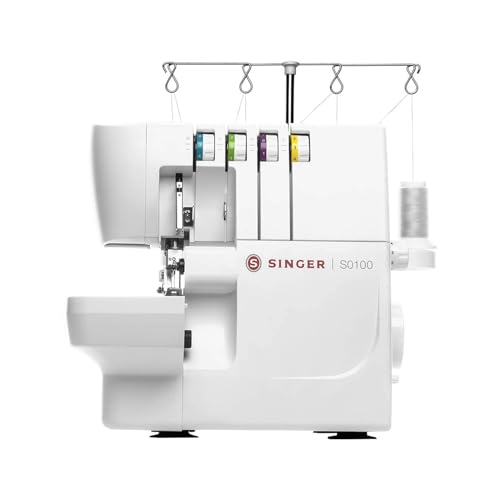
- 2-, 3-, and 4-thread options add flexibility
- Differential feed helps reduce puckering and waves
- Pre-threaded with useful starter accessories
Best For: Quilters and sewists who want fast, clean serging with simpler setup.
Best for Small Spaces

- Air threading simplifies looper setup
- MTC helps fine-tune stitch results
- Large workspace suits quilting projects
Best For: Quilters and sewists who want quick setup, precise stitches, and room for larger projects.
Best for Easy Setup
SINGER S0230 Navy Blue Overlock Serger
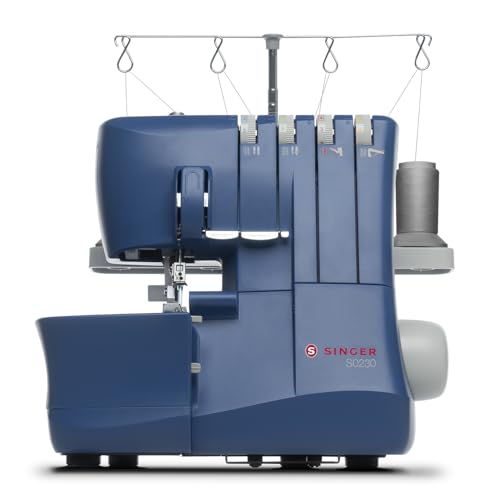
- 2/3/4-thread flexibility for seams, hems, and decorative edges
- Color-coded threading makes setup more beginner-friendly
- Differential feed helps control stretch and puckering
Best For: Quilters and home sewists who want fast, easy-to-set-up seam finishing on varied fabrics.
Best for Everyday Use
Bernette B64 Airlock Overlocker

- Automatic air threading speeds up looper setup.
- Micro Thread Control supports consistent stitch quality.
- LED lighting and a roomy 130mm workspace aid precision.
Best For: Quilters and sewists who want fast threading and dependable stitch control.
Best for Fast Edge Finishing
VEVOR 1250 SPM 2-3-4 Thread Serger

- 2/3/4-thread flexibility for seams, finishing, and hems
- Differential feed helps prevent stretching and puckering
- Fast 1,250 SPM output for quicker project turnaround
Best For: Quilters and home sewists who want clean, fast edge finishing across varied fabrics.
Best 2-in-1 Serger
Bernette B48 Funlock Serger Coverstitch

- 23 stitch options with serger and coverstitch functions
- 1300 stitches per minute for fast, heavy-duty sewing
- LED light and color-coded threading for easier setup
Best For: Quilters and sewists who want one machine for serging, coverstitching, and heavy-duty finishing work.
Best for Heavy-Duty Quilting

- 2-, 3-, and 4-thread overlock stitching
- Up to 1,300 stitches per minute
- Differential feed helps prevent puckering
Best For: Quilters and home sewers who need fast, professional edge finishing on layered or stretchy projects.
Best Simple Pick

- 23 stitch functions for overlock, coverstitch, and chain stitch work
- Up to 1300 stitches per minute for fast project completion
- LED light and adjustable controls help with precision on thick fabrics
Best For: Quilters and advanced beginners who need a versatile serger for heavy-duty sewing.
Best for Fast Heavy-Duty Serging – Brother 1034D Heavy-Duty Serger
If you need a reliable serger machine for quilting that can keep up with frequent piecing, edge finishing, and mixed-fabric projects, the Brother 1034D is a strong practical pick. Its metal frame, easy color-coded threading, and fast 1,300-stitch-per-minute speed make it a good fit for quilters who want clean results without a complicated setup.
Best For: Quilters and sewists who want a sturdy, fast serger for finishing seams on layered or varied fabrics.
Pros:
- Durable metal frame helps the machine feel stable on heavier projects
- 1,300 stitches per minute supports efficient finishing work
- Color-coded threading and lower looper threading system simplify setup
- Differential feed helps produce smoother results on stretch or thin fabrics
Cons:
- Not as feature-rich as higher-end sergers for advanced stitch options
- Best results may take a little practice if you are new to serging
- US-only 120V use limits international buyers
For quilters who want a dependable, no-nonsense serger machine for quilting and general sewing, the Brother 1034D stands out for speed, durability, and straightforward operation. It is especially appealing if you want solid everyday performance without paying for extra bells and whistles.
Best for Easy Threading – Bernette B64 Airlock Serger
If you want a serger machine for quilting that cuts setup time and keeps stitches consistent, the Bernette B64 Airlock is a strong pick. Its air-threading looper system, 1300 stitches per minute speed, and bright LED-lit workspace make it easier to handle long seams, layered fabrics, and detailed finishing work.
Best For: Quilters and home sewists who want fast threading, smooth fabric control, and a reliable overlocker for thick or multi-layer projects.
Pros:
- Air threading makes looper setup quick and less frustrating
- 1300SPM speed handles quilting and edge-finishing efficiently
- Free Hand System helps keep fabric steady while stitching
- Extension table and LED light improve control on larger projects
Cons:
- Higher-end features may be more machine than casual beginners need
- Serger learning curve still applies if you’re new to overlocking
For anyone comparing a serger machine for quilting, this model stands out for convenience and precision rather than bargain pricing. It’s a practical choice if you want cleaner finishing, faster setup, and enough power for serious sewing projects.
Best Budget – SINGER S0100 Metal Frame Serger
If you want a serger machine for quilting that can handle edge finishing, knits, and quick project prep without a steep learning curve, the SINGER S0100 is a practical pick. It offers 2, 3, and 4-thread options, differential feed, and a color-coded threading system that makes setup less frustrating.
Best For: Quilters and home sewists who want fast, clean seam finishing with beginner-friendly setup.
Pros:
- 2-, 3-, and 4-thread versatility for a range of finishing and decorative edges
- Differential feed helps prevent puckering and wavy seams on tricky fabrics
- Arrives pre-threaded with included accessories for quicker startup
- 1,300 stitches per minute supports fast, efficient project finishing
Cons:
- Not a dedicated sewing machine, so it only covers serging tasks
- May still take practice for users new to serger threading and tension adjustments
Overall, the S0100 stands out as a straightforward serger machine for quilting and general finishing work, especially if you value speed, smooth stitching, and a setup that is easier to manage than many entry-level overlock machines.
Best for Small Spaces – Bernette B64 Airlock Serger
If you want a serger machine for quilting that cuts setup time and handles a wide range of fabrics, the Bernette B64 Airlock is a strong pick. Its air threading system makes looping fast and frustration-free, while Micro Thread Control helps you dial in cleaner seams on quilting layers, knits, and heavier materials.
Best For: Quilters, beginners, and sewists who want fast threading, reliable overlock stitches, and enough workspace for larger projects.
Pros:
- Air threading system makes looper setup quick and easier for beginners
- Micro Thread Control helps fine-tune stitch quality on quilts and mixed fabrics
- Large workspace and bright LED lighting support larger sewing projects
- Free arm and free-hand system add flexibility for cuffs, sleeves, and detailed work
Cons:
- Higher price than basic sergers
- May be more machine than casual sewists need
- Learning the settings can still take some practice
For shoppers comparing a serger machine for quilting, the Bernette B64 Airlock stands out because it combines speed, precision, and a beginner-friendly threading experience. It’s a good fit if you want a dependable overlocker that can move between quilting, stretch fabrics, and heavy-duty sewing without constant rethreading.
Best for Easy Setup – SINGER S0230 Navy Blue Overlock Serger
If you want a serger machine for quilting that also handles garments, the SINGER S0230 is a practical pick. Its 2/3/4-thread options, color-coded threading, and differential feed make it easier to set up and more forgiving on tricky fabrics.
Best For: Quilters and home sewists who want fast seam finishing, simple threading, and reliable control on knits and lightweight materials.
Pros:
- 2/3/4-thread capability adds flexibility for seams, hems, and decorative edges.
- Color-coded threading helps reduce setup frustration, especially for newer users.
- Differential feed helps prevent puckering and stretching on delicate or stretchy fabrics.
- 1300 stitches per minute speeds up finishing work on larger projects.
Cons:
- Not a dedicated quilting machine, so it’s mainly for edge finishing and garment construction.
- May take some practice if you are completely new to sergers.
- Best results depend on dialing in settings for each fabric type.
Overall, the SINGER S0230 is a strong choice if you need a serger machine for quilting-adjacent finishing and sewing projects that benefit from speed, clean edges, and easier threading. It’s especially appealing for makers who want polished results without a steep learning curve.
Best for Everyday Use – Bernette B64 Airlock Overlocker
If you want a serger machine for quilting that cuts setup time and keeps stitches consistent, the Bernette B64 Airlock is built around convenience. Its automatic air threading, bright LED lighting, and Micro Thread Control make it a strong fit for sewists who want cleaner results on quilting, embroidery, and heavy-duty projects.
Best For: Quilters and hobbyists who want fast threading, clear visibility, and reliable stitch control for a range of fabric weights.
Pros:
- Automatic air threading makes looper setup quick and frustration-free.
- Micro Thread Control helps maintain even stitches across different fabrics.
- Five LED lights and a 130mm workspace improve visibility and handling.
- Free arm design is useful for cuffs, sleeves, and other tubular sewing.
Cons:
- Higher-priced than basic sergers, so it may be more machine than beginners need.
- Large footprint is less ideal if you have very limited sewing space.
For buyers comparing a serger machine for quilting, the B64 stands out for ease of use and stitch consistency more than raw simplicity. It’s a practical upgrade if you want a capable overlocker that can handle quilting, finishing, and heavier fabrics without constant rethreading.
Best for Fast Edge Finishing – VEVOR 1250 SPM 2-3-4 Thread Serger
If you want a serger machine for quilting that can also handle garment seams and hemming, this VEVOR model is built for speed and versatility. Its 2/3/4-thread setup, adjustable differential feed, and free arm make it a practical pick for finishing quilt edges, working with knits, and sewing through layered fabrics.
Best For: Quilters and home sewists who want fast, clean edge finishing with enough flexibility for mixed fabric projects.
Pros:
- 2/3/4-thread options give you flexibility for basic seams, finishing, and decorative hems
- 0.7–2.0 differential feed helps reduce puckering on stretchy or lightweight fabrics
- Up to 1,250 stitches per minute speeds up large sewing and quilting prep jobs
- Free arm, LED light, and color-coded threading make setup and control easier
Cons:
- Not as specialized as a dedicated quilting machine for piecing or free-motion work
- Serger threading can still feel technical for absolute beginners
- Heavier build may be less convenient for frequent moving or storage
For shoppers comparing a serger machine for quilting, this VEVOR stands out more for finishing than for core quilting tasks. It makes sense if your priority is durable seams, neat edges, and faster cleanup on multi-fabric projects.
Best 2-in-1 Serger – Bernette B48 Funlock Serger Coverstitch
If you want a serger machine for quilting that can also coverstitch hems and finishes, the Bernette B48 Funlock is built for flexible, high-speed sewing. It combines multiple stitch types, clear threading paths, and a strong motor, making it a practical choice for layered projects and polished edge finishing.
Best For: Quilters and sewists who want one machine for serging, coverstitching, and heavy-duty finishing work.
Pros:
- 2-in-1 serger and coverstitch setup with 23 stitch options
- Fast 1300 stitches per minute performance for thick fabrics and layers
- LED lighting, color-coded threading, and included accessories help simplify setup
Cons:
- More complex than a basic serger, so beginners may need time to learn it
- Bulkier and more feature-heavy than a simple edge-finishing machine
Overall, the B48 stands out as a versatile serger machine for quilting if you want speed, stitch variety, and coverstitch capability in one package. It’s a strong fit for users who will take advantage of its extra functions rather than just basic overlocking.
Best for Heavy-Duty Quilting – Bernette Funlock B44 Serger
If you want a dependable serger machine for quilting that can also handle hems, seams, and edge finishing, the Bernette Funlock B44 is built for practical everyday use. Its 2-, 3-, and 4-thread overlock options, differential feed, and included extension table make it a solid fit for clean results on both delicate and thicker fabrics.
Best For: Quilters and home sewers who want fast, professional-looking finishing on stretch fabrics, layered projects, and heavier materials.
Pros:
- 15 built-in stitches with rolled hem, flatlock, and stretch overlock options
- Up to 1,300 stitches per minute for fast edge finishing
- Differential feed helps reduce puckering on lightweight or stretchy fabric
- LED light and included accessories make setup easier
Cons:
- Serger stitching is helpful for finishing, but it does not replace a quilting sewing machine
- Learning curve may be steeper than a basic sewing machine
- Best suited to users who will actually use serger features regularly
This is a strong pick if you need a serger machine for quilting projects that also has enough speed and control for garment finishing. It stands out most for users who want cleaner edges, better stretch-fabric handling, and a more professional finish on mixed sewing tasks.
Best Simple Pick – Bernette B48 Funlock Serger
If you want a serger machine for quilting that can also handle overlock, coverstitch, and chain-stitch work, the Bernette B48 Funlock is built for versatile, high-speed stitching. With 23 stitch options, up to 1300 stitches per minute, and bright LED lighting, it’s a practical pick for sewists who need clean seams and strong performance on thicker materials.
Best For: Quilters and advanced beginners who want one machine for serging, coverstitching, and heavy-duty sewing.
Pros:
- 23 stitch functions cover overlock, coverstitch, and chain stitch needs
- High speed up to 1300 SPM helps move through larger projects faster
- LED lighting and adjustable controls improve visibility and stitching precision
- Handles heavier fabrics well for quilting and mixed-use sewing
Cons:
- Learning curve may be steeper than a basic serger
- Manual threading features may slow setup for first-time users
- Not the simplest choice if you only need basic overlocking
This is a strong serger machine for quilting if you value range and power over simplicity. It makes the most sense for users who want professional-style results, reliable fabric handling, and enough stitch variety to support multiple sewing tasks.
How We Picked the Best Serger Machine for Quilting
We prioritized models that balance speed, stitch quality, and ease of use for quilting projects. Features like differential feed, free-arm access, adjustable tension or micro thread control, and sturdy metal-frame construction matter because quilting fabric can shift, stretch, or pile up at seams.
We also considered whether a Serger Machine for Quilting offers enough thread paths and stitch options for finishing quilt edges, garment-style quilting projects, and decorative edge work without making setup overly complicated.
Quick Comparison
For most buyers, the biggest differences come down to threading convenience and how much control you want. Air-threading models are the easiest to set up, while manual-threading machines often cost less and can still deliver excellent results. High-speed options are useful if you finish lots of quilts, but beginners may prefer a simpler machine with clear threading guides and a dependable differential feed.
Key Buying Factors for a Serger Machine for Quilting
Threading System
Air threading is a major time-saver if you change threads often or dislike complicated setup. Color-coded threading can also reduce mistakes for newer users. If you quilt occasionally, a standard threading system may be perfectly fine.
Differential Feed
This is one of the most important features for quilting. Differential feed helps prevent waviness on knits and puckering on lightweight fabrics, which is useful when your quilting includes mixed materials or decorative edge finishing.
Stitch Options and Thread Capability
Look for 2/3/4-thread capability or multiple overlock stitches if you want more flexibility. More options are helpful for edge finishing, rolled hems, and varied project types, but they are only useful if the machine is easy enough to adjust confidently.
Stability, Speed, and Workspace
A heavy-duty frame improves vibration control, especially at higher speeds. Free-arm design and bright LED lighting can make a noticeable difference when handling smaller quilt components or detailed finishes.
Who Should Buy Which Serger Machine for Quilting?
Beginners should look for a Serger Machine for Quilting with simple threading, clear controls, and reliable differential feed. If you want the fastest setup possible, choose an air-threading model. If you need a budget-conscious machine for occasional finishing work, a simpler overlock serger may be enough.
More experienced quilters and frequent makers should consider higher-end machines with stronger adjustability, better stitch variety, and smoother free-hand operation. The best choice is the one that matches how often you sew, how much you value convenience, and how much control you want over the finish.