
The best dash cameras make it easier to document collisions, parking incidents, and unexpected moments on the road. Today’s options range from compact front cameras to multi-channel systems that cover the cabin and sides of your vehicle.
This roundup compares 10 dash cameras with 2K and 4K recording, GPS, Wi-Fi, parking surveillance, and wide-angle coverage. Use the guide below to match the camera layout and features to your driving habits.
Best 10 Dash Cameras Picks for 2026
Best Balanced Dual-Camera Pick

- Upscaled 4K front and 1080P rear recording
- STARVIS 2 sensor with HDR for low-light footage
- 128GB card, GPS, and fast 5.8GHz Wi-Fi included
Best For: Drivers wanting capable front-and-rear coverage with GPS
Best Full-Coverage Option
Icesky S03 4K 4-Channel Dash Cam

- Records front, rear, left, and right views
- 4K front video with 1080P additional channels
- 128GB card, GPS, and Wi-Fi 6 app control
Best For: Drivers needing broad coverage around the entire vehicle
Best Triple-Channel Choice

- Front, rear, and interior recording
- STARVIS 2 sensor with WDR and HDR
- Flexible 4K front mode when the cabin camera is off
Best For: Families and rideshare drivers needing cabin footage
Best Value 360-Degree Setup

- Front, rear, side, and interior coverage
- Includes 128GB card with 2.5K front mode
- 5GHz Wi-Fi app control and two parking modes
Best For: Buyers wanting broad coverage without GPS
Best Overall 4K Dual-Camera Pick
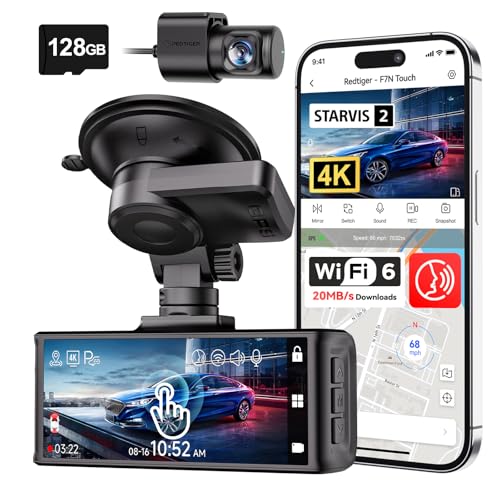
- 4K front plus 1080P rear recording
- Touchscreen, voice control, GPS, and 5.8GHz Wi-Fi
- 128GB card included; 18-month guarantee
Best For: Drivers wanting feature-rich front-and-rear coverage
Best Value Dual-Camera Option
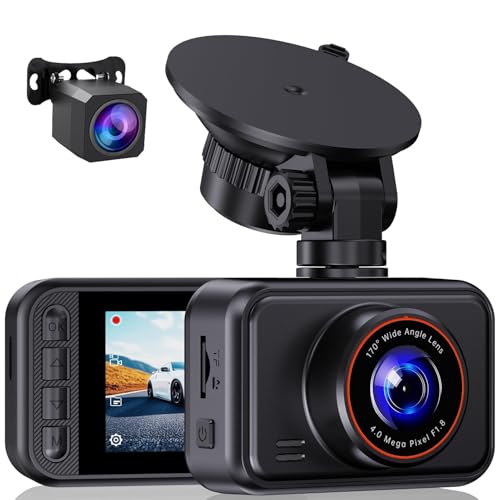
- 2.5K front and 1080P rear recording
- 2-inch IPS screen with 360-degree mount
- SD card and hardwire kit sold separately
Best For: Simple front-and-rear coverage on a budget
Best Compact Screen-Free Camera

- 4K front recording with a 160-degree lens
- Screen-free, compact design for fewer distractions
- 5GHz Wi-Fi and 32GB card included
Best For: Drivers wanting discreet, app-based recording
Best Dual-4K Coverage
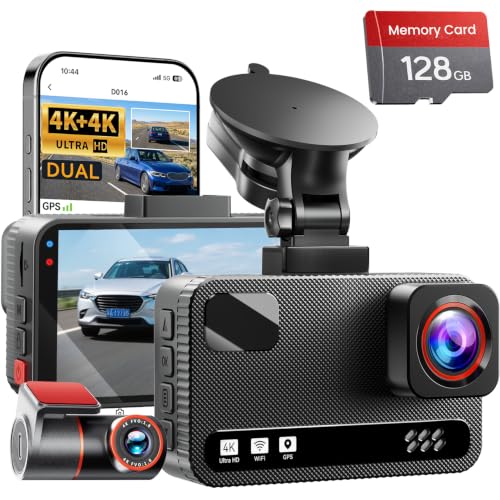
- 4K recording from both front and rear cameras
- Starlight sensor, f/1.5 aperture, and WDR
- 5GHz Wi-Fi, GPS, and 128GB card included
Best For: Drivers prioritizing detailed front-and-rear footage
Best Blind-Spot Coverage

- Four cameras cover front, rear, left, and right
- 4K front camera with three 1080P lenses
- 5GHz Wi-Fi, GPS, infrared night vision, and 64GB card
Best For: Drivers wanting broad coverage around the vehicle
Best Value 4-Channel Setup

- Four 1080P cameras record all sides
- Time-lapse recording helps save storage
- 128GB card, 5GHz Wi-Fi, WDR, and infrared lights
Best For: Drivers wanting practical all-around Full HD coverage
Best Balanced Dual-Camera Pick – ROVE R2-4K Dual Dash Cam
For drivers seeking practical dash cameras with front-and-rear coverage, the ROVE R2-4K Dual combines an upscaled 4K front recording mode with 1080P rear video. Its STARVIS 2 sensor, GPS, included memory card, and fast Wi-Fi make it a well-equipped everyday option.
Best For: Drivers who want strong low-light performance, GPS evidence, and a straightforward two-camera setup.
Pros:
- Front camera uses a STARVIS 2 IMX675 sensor with HDR and a wide F1.5 aperture.
- Includes a 128GB microSD card and supports cards up to 1TB.
- Built-in GPS records routes, locations, speeds, and compass data.
- 5.8GHz Wi-Fi supports downloads of up to 20MB/s through the app.
Cons:
- The advertised 4K front footage is intelligently upscaled from 2.5K rather than native 4K.
- Parking mode requires a separately purchased hardwire kit.
The ROVE is a sensible choice when you want detailed front-and-rear coverage without adding interior or side cameras. Its included card and GPS reduce setup friction, while the upscaled front resolution and STARVIS 2 sensor target everyday clarity in varied lighting.
Best Full-Coverage Option – Icesky S03 4K 4-Channel Dash Cam
The Icesky S03 stands out among dash cameras by recording four directions at once: front, rear, left, and right. It pairs 4K front video with 1080P coverage elsewhere, giving drivers a broad view of incidents that may happen outside the forward-facing frame.
Best For: Rideshare drivers, commercial users, and anyone prioritizing 360-degree coverage over a simpler installation.
Pros:
- Four-channel recording covers the front, rear, left, and right sides simultaneously.
- Built-in GPS records speed, route, location, and time.
- Includes a 128GB card and supports up to 512GB.
- Wi-Fi 6 with 5.8GHz connectivity supports downloads up to 20MB/s.
Cons:
- The four-camera setup is more involved than a basic front-and-rear dash camera.
- 24-hour parking mode requires a separately purchased hardwire kit.
Choose the S03 if reducing blind spots is more important than keeping the system compact. Its multi-view display, side cameras, and infrared assistance for left and right recording provide broader evidence, while GPS and app access add useful convenience.
Best Triple-Channel Choice – REDTIGER F17 4K 3CH Dash Cam
The REDTIGER F17 is a flexible dash camera for drivers who want front, rear, and cabin recording. Its STARVIS 2 front sensor, HDR, GPS, and 5.8GHz Wi-Fi support both everyday driving and situations where interior footage matters.
Best For: Families, rideshare drivers, and drivers who want cabin coverage alongside front-and-rear video.
Pros:
- Three-channel configuration records front, rear, and interior views.
- STARVIS 2 IMX675, WDR, and HDR are designed to improve low-light clarity and dynamic range.
- Can switch to 4K front plus 1080P rear recording when the interior camera is disabled.
- Includes GPS, 5GHz Wi-Fi, a 64GB card, and an 18-month guarantee.
Cons:
- Using all three channels changes the recording configuration from the maximum front-resolution mode.
- Parking monitoring requires an additional hardwire kit.
The F17 offers useful flexibility: keep the cabin camera active for three-channel protection, or disable it to prioritize higher-resolution front recording. It is particularly practical when interior events are relevant, while the supercapacitor is intended to support operation in extreme temperatures.
Best Value 360-Degree Setup – IIWEY N5 4-Channel Dash Cam
The IIWEY N5 is a broad-coverage option among dash cameras, recording front, rear, side, and interior views. It includes a 128GB card, 5GHz Wi-Fi, and multiple recording modes, but its specific power and connectivity requirements are important to understand before buying.
Best For: Drivers who want four-camera coverage and app access at a practical feature level.
Pros:
- Four cameras provide front, rear, side, and interior coverage.
- Offers either 1080P across all channels or a 2.5K front plus 1080P multi-camera mode.
- Includes a 128GB card and supports up to 256GB.
- 5GHz Wi-Fi enables app-based preview, downloading, and sharing.
Cons:
- It has no GPS function.
- It must use the original cigarette-lighter charger and cannot be powered by USB or Type-C.
- Parking mode requires a separately sold hardwire kit.
The N5 makes the most sense for buyers who value all-around visibility and included storage more than GPS data or installation flexibility. Its supercapacitor and multiple parking modes add practicality, but the required original car charger and wired rear-camera connection should factor into installation plans.
Best Overall 4K Dual-Camera Pick – REDTIGER F7N TOUCH
For drivers comparing dash cameras with extensive features, the REDTIGER F7N TOUCH combines 4K front recording with 1080P rear coverage, a touchscreen, voice control, GPS, and fast 5.8GHz Wi-Fi. Its included 128GB card also lets you begin recording without buying storage separately.
Best For: Drivers who want high-resolution front-and-rear coverage with convenient controls and built-in GPS.
Pros:
- 4K front and 1080P rear recording with wide-angle lenses, WDR, HDR, and enhanced night vision.
- Voice commands, touchscreen controls, physical buttons, built-in GPS, and 5.8GHz Wi-Fi.
- Includes a 128GB memory card and an 18-month guarantee with 24/7 customer support.
Cons:
- Parking monitoring requires a separate hardwire kit.
- The feature-rich design may be more than drivers seeking a basic camera need.
This is a strong all-around option when image quality, rear coverage, storage, and app connectivity matter. The separate hardwire-kit requirement is the main extra cost to consider for parking surveillance.
Best Value Dual-Camera Option – E-YEEGER S60
The E-YEEGER S60 is a practical choice among dash cameras for everyday coverage, recording in 2.5K at the front and 1080P at the rear. Its 2-inch IPS screen and adjustable 360-degree suction mount make setup and basic operation straightforward.
Best For: Budget-conscious drivers who want front-and-rear recording with an on-camera display.
Pros:
- 2.5K front and 1080P rear video with a 170-degree front viewing angle.
- WDR, starlight night vision, and a six-layer glass lens support low-light recording.
- 2-inch IPS screen, 360-degree suction mount, loop recording, and G-sensor clip locking.
Cons:
- MicroSD card is not included.
- 24-hour parking monitoring requires a compatible Type-C hardwire kit, which is not included.
- Its 1-year replacement warranty is shorter than some competing options.
The S60 keeps the essentials visible and accessible without adding Wi-Fi or app features. It is a sensible fit for drivers who prioritize simple installation and dual-camera coverage, provided they budget for a memory card.
Best Compact Screen-Free Camera – galphi 4K Mini Dash Cam
The galphi 4K Mini Dash Cam is one of the more discreet dash cameras, using a compact, screen-free design that minimizes visual distractions. It records in 4K, includes a 32GB card, and adds 5GHz Wi-Fi for transferring clips through its app.
Best For: Drivers who want a small front-facing camera that starts recording out of the box without an on-camera screen.
Pros:
- 4K UHD recording with a 160-degree lens, F/1.6 aperture, WDR, and night-vision support.
- Compact screen-free design helps reduce dashboard distraction and obstruction.
- 5GHz Wi-Fi, app connectivity, loop recording, G-sensor protection, and a 32GB card included.
Cons:
- This is a front-only camera, not a dual-camera system.
- 24-hour parking mode requires a separate Type-C hardwire kit.
- The included card is 32GB, while longer storage may require a separately purchased card.
The galphi is well suited to first-time buyers, family vehicles, and rideshare drivers who prefer a subtle installation. Its lack of a screen keeps the design compact, but reviewing footage depends on the companion app or another device.
Best Dual-4K Coverage – 4K+4K Front and Rear Dash Cam
For drivers comparing dash cameras, this model stands out with simultaneous 4K recording from both the front and rear cameras. Its wide-angle lenses, starlight-level sensor, WDR, GPS, and included 128GB card make it a well-equipped option for documenting everyday driving in varied conditions.
Best For: Drivers who want maximum front-and-rear video detail and convenient app-based file management.
Pros:
- Records both front and rear video in 3840x2160P 4K resolution.
- Starlight sensor, f/1.5 aperture, and WDR support clearer low-light footage.
- 5GHz Wi-Fi, GPS, app control, and a 128GB card are included.
- Offers emergency video locking, collision detection, and optional 24/7 parking mode.
Cons:
- Parking mode requires a separately purchased hard-wiring kit.
- The feature-rich setup may take more time to configure than a basic camera.
This is a strong choice when image detail is the priority, especially for drivers who want matching 4K footage from both ends of the vehicle. The included storage and fast wireless transfers add practical convenience.
Best Blind-Spot Coverage – 4-Channel 360° Dash Cam
This 4-channel dash camera is designed for broad vehicle coverage, recording the front, rear, left, and right sides at the same time. A 4K front camera, three adjustable 1080P cameras, 5GHz Wi-Fi, GPS, and infrared night vision give it a comprehensive feature set for drivers concerned about blind spots.
Best For: Drivers who want simultaneous coverage around the vehicle, including side views.
Pros:
- Four synchronized cameras cover the front, rear, left, and right sides.
- Combines a 4K front camera with three adjustable 1080P lenses.
- Includes 5GHz Wi-Fi, GPS, app control, and a pre-installed 64GB card.
- Infrared lamps and WDR are designed to improve visibility in challenging lighting.
Cons:
- 24-hour parking monitoring requires a separately purchased hardwire kit.
- Three of the four cameras record at 1080P rather than 4K.
- Installing and positioning four cameras is more involved than setting up a front-only unit.
Choose this model if coverage around the sides of the vehicle matters more than having 4K resolution on every channel. Its incident-locking G-sensor and app-based access make reviewing relevant footage straightforward.
Best Value 4-Channel Setup – 360° Full HD Dash Cam
For shoppers seeking versatile dash cameras without requiring 4K on every channel, this four-camera system records the front, rear, left, and right sides in Full HD 1080P. It adds WDR, infrared lighting, 5GHz Wi-Fi, a supercapacitor, time-lapse recording, and a 128GB card for practical everyday coverage.
Best For: Drivers who want all-around Full HD recording, efficient storage use, and a longer assistance period.
Pros:
- Four 1080P channels provide simultaneous front, rear, left, and right coverage.
- Time-lapse parking recording helps conserve memory card space.
- Includes 5GHz Wi-Fi, WDR, infrared lights, a supercapacitor, and a 128GB card.
- Loop recording and incident locking help preserve important footage.
Cons:
- Optional GPS functionality requires purchasing a separate GPS logger.
- Parking mode requires an optional ACC hardwire kit.
- Maximum supported storage is listed as 256GB.
This model makes sense for drivers who value comprehensive coverage and storage-conscious parking recording over ultra-high-resolution video. Its broad vehicle compatibility and 24-month product assistance period add flexibility for varied installations.
How We Picked These Dash Cameras
We selected models that cover the most important needs in a modern dash camera: useful image resolution, dependable coverage, practical storage, night-recording features, and convenient file transfer. The lineup includes front-only, dual-camera, three-channel, and four-channel systems so you can compare simple setups with broader vehicle protection.
We also considered included memory cards, GPS availability, Wi-Fi performance, screen design, parking-monitoring support, and installation complexity. A higher channel count is not automatically better; it can mean more wiring, larger storage requirements, and a more involved installation.
Quick Comparison
| Camera Type | Best For | Main Advantage | Potential Trade-Off |
|---|---|---|---|
| Front-only | Simple evidence recording | Compact installation | Limited rear and cabin coverage |
| Front and rear | Everyday drivers | Balanced road coverage | Requires rear-camera wiring |
| Three-channel | Rideshare and family vehicles | Road and interior recording | More storage and setup demands |
| Four-channel | Maximum vehicle visibility | Front, rear, side, and cabin views | Most complex installation |
Key Buying Factors for Dash Cameras
Resolution and Night Quality
4K can reveal more detail in daylight, but sensor quality, HDR or WDR processing, lens quality, and exposure control matter just as much. For nighttime driving, look for strong low-light performance and infrared lighting when interior recording is important.
Coverage and Camera Placement
Decide whether you need only the road ahead or evidence from behind, inside, and beside the vehicle. Dual-camera systems are a practical choice for most drivers, while four-channel Dash Cameras suit rideshare drivers, commercial vehicles, and anyone who wants broader incident coverage.
Storage, Wi-Fi, and GPS
High-resolution video fills memory quickly, so a generous included card or support for a high-endurance microSD card is valuable. Wi-Fi makes clips easier to download to a phone, while GPS can record location and speed data that may help organize footage after an incident.
Parking Mode and Installation
Parking monitoring typically requires a hardwire kit or another continuous power source. Confirm whether the kit is included, whether your vehicle supports the installation, and whether the camera has impact detection, motion detection, or time-lapse recording.
Who Should Buy Which Dash Cameras?
Choose a front-only model if you want the least noticeable installation and primarily need forward-facing evidence. Choose a front-and-rear camera for the best balance of coverage, price, and everyday usability.
Choose a three-channel camera if you drive for work, transport passengers, or want the cabin documented. Choose a four-channel system when side visibility and near-360-degree coverage matter more than simple installation. Before buying, verify windshield regulations, rear-camera cable length, app compatibility, and microSD-card requirements for your vehicle.