
Leather can shift, drag, or mark under the wrong machine. The right choice depends less on a headline speed rating than on how the machine feeds material, what shape you sew, and how much setup you can handle.
These 10 options span walking-foot flatbeds, a portable machine, a cylinder arm, a post bed, and straight-stitch models. Use the guide below to narrow them by project before checking each listing’s specifications.
Best 10 Industrial Sewing Machine for Leather Picks for 2026
Best for Upholstery Work

- Compound-feed walking foot
- 10 mm maximum stitch length
- Table and servo motor included
Best For: Dedicated leather and upholstery workstation
Best Head-Only Option
JUKI DDL-8700H Heavy-Material Head
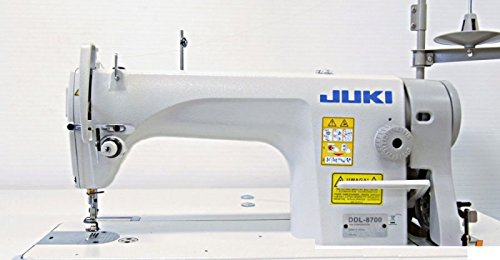
- Head only; no table or motor
- Up to 4,000 rpm
- Not a walking-foot machine
Best For: Buyers assembling their own heavy-material setup
Best Portable Walking Foot

- Portable 42-pound design
- Built-in 110 V motor
- Leather capacity not specified
Best For: Mobile walking-foot sewing setups
Best Complete JUKI Setup
JUKI DDL-8700H with Table and Servo Motor

- Table and servo motor included
- Assembly required
- Up to 5 mm stitch length
Best For: Buyers wanting an assemble-at-home JUKI workstation
High-Speed Walking Foot Setup

- Walking-foot material feed
- Rated for up to 0.4-inch materials
- Table and digital controls included
Best For: Workshops handling leather and large upholstery pieces
Control-Focused Commercial Set

- 550W servo motor
- LCD speed and needle controls
- Wide table and LED light
Best For: Buyers wanting adjustable controls for mixed materials
Upholstery Walking-Foot Pick

- Unison-feed walking foot
- Safety mechanism and large hook
- Table and servo motor included
Best For: Leather and vinyl upholstery projects
Best for Shoe Details

- 7-inch post bed
- Roller foot for tight curves
- Table and servo motor included
Best For: Shoe uppers and curved leather accessories
Best for Upholstery
Consew P1206RB Walking-Foot Machine
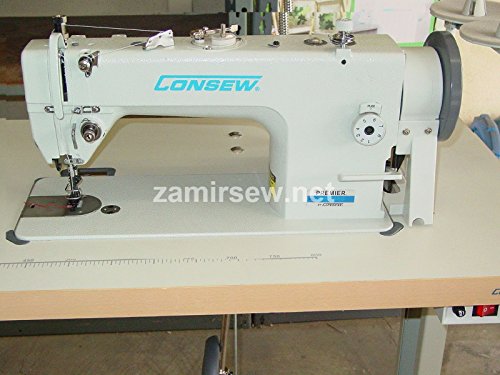
- Walking foot and needle feed
- Table and servo motor included
- Adjustable oil-flow system
Best For: Leather upholstery and auto or marine work
Best for Bags
Yamata FY335A Cylinder-Arm Machine

- Cylinder arm for tubular items
- Walking-foot feed
- Table and servo motor included
Best For: Leather bags and tubular projects
Best for Upholstery Work – Consew 206RB-5 Walking Foot
Consew 206RB-5 Walking Foot Industrial Sewing Machine with Table and Servo Motor
Check Price On AmazonIf you need an industrial sewing machine for leather alongside upholstery, auto, marine, or canvas work, the Consew 206RB-5 offers compound (triple) feed and comes with a table and servo motor.
Best For: A dedicated workstation for leather and upholstery projects.
Pros:
- Walking-foot compound feed is suited to the listed leather and upholstery applications.
- Maximum 10 mm stitch length and 14 mm foot lift.
- Includes a table and servo motor.
Cons:
- At 200 pounds, it is not a portable option.
- Its listed 45 x 50-inch footprint calls for dedicated space.
This is the most complete walking-foot workstation in this group if you have room for a full industrial setup.
Best Head-Only Option – JUKI DDL-8700H Heavy-Material Head
JUKI DDL8700H High-Speed Lock-Stitch Sewing Machine for Heavy Material DDL-8700H- Head Only
Check Price On AmazonThe JUKI DDL-8700H is a head-only industrial sewing machine for leather buyers who already have, or plan to source, a compatible table and motor. Its listing names some leathers, jeans, curtains, and boat canvas among its intended materials.
Best For: Buyers building a heavy-material straight-stitch setup around a separate table and motor.
Pros:
- Rated for a maximum sewing speed of 4,000 rpm.
- Maximum 5 mm stitch length and presser-foot lift of 5.5–13 mm.
- Includes accessories such as a thread stand, bobbin winder, oil pan, and knee lifter.
Cons:
- Table and motor are not included.
- Not a walking-foot machine.
Consider it for the listed heavier materials, but choose a walking-foot model if that feed mechanism is essential to your work.
Best Portable Walking Foot – Consew CP206RL
The Consew CP206RL is a portable walking-foot option for shoppers comparing an industrial sewing machine for leather. The supplied specifications identify its feed style and portability, but do not specify a leather thickness or capacity rating.
Best For: Sewing in different locations when a portable walking-foot machine is preferable to a full table setup.
Pros:
- Portable 42-pound design with a longer arm.
- Built-in 110 V AC motor and included foot pedal.
- Reverse stitching and a horizontal oscillating hook.
Cons:
- The notes do not state a maximum stitch length or foot lift.
- No leather thickness capacity is specified.
Its main advantage is a walking-foot design you can move between workspaces; check your material requirements against the missing capacity details before buying.
Best Complete JUKI Setup – JUKI DDL-8700H with Table and Servo Motor
This JUKI DDL-8700H listing bundles a heavy-material straight-stitch machine with a table and servo motor. If you are shopping for an industrial sewing machine for leather, note that the supplied description does not state a leather thickness rating or identify this model as a walking-foot machine.
Best For: Buyers who want the listed heavy-material JUKI head, table, and servo motor in one purchase and can assemble the setup.
Pros:
- Includes a table, servo motor, belt, and listed setup accessories.
- Up to 5 mm stitch length and 11-inch arm space.
- Listing states a speed of up to 5,500 stitches per minute.
Cons:
- Assembly is required, and the setup arrives in three boxes.
- The notes do not specify leather thickness capacity.
Choose this package over a head-only listing if you need the table and motor included; confirm that its straight-stitch feed meets your leather-project needs.
High-Speed Walking Foot Setup – 5000 RPM Machine With Table
If you’re comparing an industrial sewing machine for leather with room to handle larger projects, this walking-foot setup includes a worktable, stand, pedal assembly, and integrated motor. Its stated capacity is up to 0.4 inches of material, with speed rated at 5000 RPM.
Best For: Workshops sewing leather, canvas, vinyl, or upholstery that also need a full-size table.
Pros:
- Walking-foot feed helps control material movement.
- Rated for materials up to 0.4 inches thick.
- Includes a spacious table and digital speed controls.
Cons:
- At 127.9 pounds, the complete setup is not easily portable.
- Requires space for the table and stand.
This is a practical choice when work surface and material-feeding control matter as much as speed; check that its stated thickness capacity suits your leather projects.
Control-Focused Commercial Set – 550W Servo Leather Machine
This industrial sewing machine for leather pairs a 550W servo motor with an LCD control panel and a wide sewing table. It is rated for materials up to 0.4 inches thick and speeds up to 5000 stitches per minute, giving buyers both capacity and adjustable operation.
Best For: Commercial or personal projects that call for adjustable settings when sewing leather, denim, canvas, and larger fabric pieces.
Pros:
- LCD controls cover speed, direction, and needle positioning.
- Includes a knee lift, reverse function, and automatic thread cutter.
- Wide table, LED light, and accessory drawer support day-to-day use.
Cons:
- Ships in separate machine-head and table packages, so setup is required.
- Its 110-pound weight makes relocation less convenient.
Choose this set if accessible controls and workflow features are priorities. The supplied notes list leather compatibility, but do not specify a leather-specific needle or feed mechanism.
Upholstery Walking-Foot Pick – Juki DNU-1541S
For buyers seeking an industrial sewing machine for leather and upholstery, the Juki DNU-1541S offers unison feed, a walking foot, and a single-needle lockstitch design. This listing pairs the machine with a table and DC servo motor, while specifying a maximum sewing speed of 2500 stitches per minute.
Best For: Upholstery, bags, covers, and other light- to heavy-weight leather, vinyl, or canvas projects.
Pros:
- Unison-feed walking-foot design is intended for material control.
- Includes a safety mechanism and double-capacity hook.
- Listing includes a table, servo motor, lamp, and knee lifter.
- Specifications list up to 9 mm stitch length and 16 mm clearance under the foot.
Cons:
- Table setup is required; the listing notes professional assembly may be needed.
- Its 125-pound weight limits portability.
The stated feed system and application range make this a focused option for upholstery work. Plan for assembly and confirm that its listed clearance meets the needs of your layered projects.
Best for Shoe Details – Yamata FY810 Post-Bed Machine
If you need an industrial sewing machine for leather shoe work or curved accessories, the Yamata FY810’s 7-inch post bed and roller presser foot give you a compact work surface for turning tight corners. It is a single-needle, drop-feed lockstitch machine supplied with a table, legs, and servo motor.
Best For: Shoe uppers, handbags, and other leather work that benefits from a post bed and tight-curve handling.
Pros:
- Roller presser foot helps with sharp corners and tight curves.
- Reverse feed and a stated maximum speed of 3,000 stitches per minute.
- Kit includes a servo motor, table components, LED light, and hardware.
Cons:
- Ships as a knockdown kit that requires assembly.
- Its specified 6 mm presser-foot clearance is worth checking against your material stack.
The post-bed layout is the reason to choose this model over a flat-bed setup. Check the clearance and drop-feed configuration against your leather projects before ordering.
Best for Upholstery – Consew P1206RB Walking-Foot Machine
The Consew P1206RB is an industrial sewing machine for leather upholstery and other light- to heavy-weight materials, including vinyl and canvas. Its listed drop feed, needle feed, and walking foot make it a practical option to consider for furniture, auto, and marine projects.
Best For: Leather upholstery, vehicle interiors, covers, and other larger sewn goods.
Pros:
- Walking foot, needle feed, and drop feed are listed for material handling.
- Includes a table and servo motor.
- Oil-pump system has an oil pan and adjustable oil flow.
Cons:
- Arrives unassembled in three separate boxes.
- Listed weight is 185 pounds, so plan for a substantial setup.
This is the upholstery-oriented pick of the group. Budget time and space for assembly, and account for its oil-pump system when planning upkeep.
Best for Bags – Yamata FY335A Cylinder-Arm Machine
For bag construction, the Yamata FY335A is an industrial sewing machine for leather goods with a cylinder arm designed to reach tubular items. Its walking-foot feed is intended for thick materials, and the kit includes a servo motor and industrial table setup.
Best For: Leather bags and other tubular or hard-to-position sewn items.
Pros:
- Cylinder arm provides access for sewing tubular pieces.
- Walking-foot feed is intended for thick materials.
- Includes table components, servo motor, LED light, drawer, belt, and hardware.
Cons:
- Ships as a knockdown kit and requires assembly.
- Listed weight is 150 pounds, so allow room for setup.
Choose this model when access around a bag or tubular piece matters more than a broad flat work surface. Confirm that the cylinder-arm layout fits the shapes you sew most often.
How We Picked the Best Industrial Sewing Machine for Leather
We compared the selected machines by feed mechanism, bed shape, included equipment, and stated assembly requirements. Those differences matter when sewing layered leather, keeping long seams aligned, or reaching around a three-dimensional item. This is a comparison of the listed configurations, not a hands-on durability test; verify the exact package and specifications before ordering.
Quick Comparison: Match the Machine to the Work
For flat panels and upholstery-style seams, start with the walking-foot flatbeds: the Consew 206RB-5, Juki DNU-1541S, and the listed Consew upholstery machine. The CP206RL is the portable walking-foot option when a full-size table is impractical. The FY335A cylinder arm is the shape to investigate for bags and other tubular work; the Yamata FY810 post bed offers access around raised or curved pieces. The JUKI DDL-8700H and other straight-stitch listings warrant a closer feed-system check before you choose them for layered leather. Compare the remaining table-and-motor packages on their documented features, not their speed claims alone.
Key Buying Factors for an Industrial Sewing Machine for Leather
Feed System and Material Handling
A walking foot helps move grippy layers together; a combination of walking foot and needle feed can give additional control over shifting seams. A drop-feed-only machine may suit certain flat, manageable jobs, but do not assume it will handle bulky multilayer assemblies as easily. Check the maker’s stated material limits and whether you can test your actual leather, lining, and thread combination.
Bed Shape, Clearance, and Stitch Setup
Choose a flatbed for broad panels, a cylinder arm for narrow openings and bag bodies, or a post bed when access around shaped pieces is the priority. Confirm foot lift, usable workspace, needle system, supported thread sizes, and stitch-length range against your project. The thickest point of a seam—not the average panel thickness—should guide your choice.
Motor, Package, and Ownership Costs
A servo motor can make slow, deliberate stitching easier to control. Check whether the price covers the head, motor, table, lamp, and accessories: one listed JUKI is head-only, while several packages require assembly. Budget for appropriate needles, thread, adjustments, shipping, and a technician if you cannot set up or service an industrial machine yourself.
Who Should Buy Which Industrial Sewing Machine for Leather?
Choose a walking-foot flatbed if you mostly sew flat leather goods, upholstery, or layered seams. Look at the cylinder-arm model for bag construction, or the post-bed model for access around shaped components. Consider the portable Consew when space and transport matter more than a full-size workstation. If your work is predominantly straight, flat seams, compare the straight-stitch machines—but confirm their leather and feed capabilities first. For any Industrial Sewing Machine for Leather, prioritize a machine that handles your real seam stack at a controllable speed over the one with the highest advertised RPM.