
Thick leather can make a folded edge bulky or a seam difficult to stitch. A skiving machine removes material where you need a thinner, more flexible finish—but the right setup depends on the work you do.
These 10 picks span compact manual tools, wider hand-operated splitters, and an electric machine. Use the buying guide below to narrow your choice by cutting width, control, workspace, and volume.
Best 10 Leather Skiving Machine Picks for 2026
Wide-Capacity Pick
WUTA Large Manual Leather Skiver

- 18 cm stated working width
- Adjustable depth and blade lock
- G-clip and 20 blades included
Best For: Wider belts and strap-thinning projects
Compact Strap Pick
WUTA Black Manual Leather Skiver
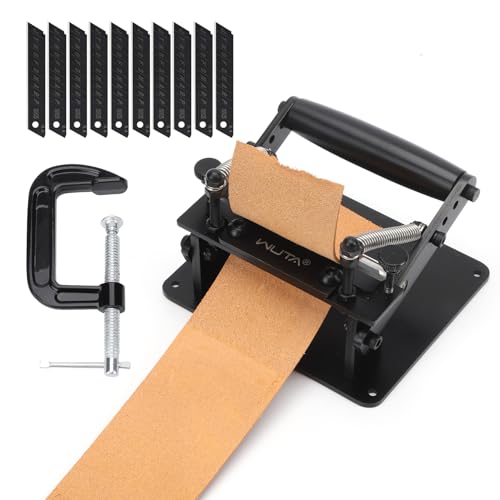
- 8 cm maximum skiving width
- Dual-bearing roller and wooden handle
- 10 blades and G-type clip included
Best For: Narrow belts and watch straps
Bench-Mount Pick
- G-type clip for table mounting
- Adjustable cut; 8 cm width limit
- 10 blades included
Best For: Table-mounted thinning of small leather strips
Veg-Tan Pick
YaeTek 6-Inch Leather Skiver Splitter

- Designed for vegetable-tanned strips
- Adjustable thinning thickness
- Not recommended for ultra-soft skins
Best For: Narrow vegetable-tanned leather strips
Electric Workshop Pick

- 110V, 600W electric operation
- Automatic knife sharpening
- Three presser-foot widths included
Best For: Powered skiving with multiple presser-foot sizes
Two-Hand Pull Pick

- Adjustable cutting thickness
- Side lock enables two-handed pulling
- For tanned leather up to 7 cm wide
Best For: Manual thinning of narrow tanned leather pieces
Wide-Strip Manual Pick

- Up to 7-inch stated skiving width
- End screws adjust thickness
- Includes five blades
Best For: Manual skiving of wider, firm leather strips
Accessory-Rich Kit

- Includes 18 blades and three rollers
- Strong metal construction
- Working width not specified
Best For: Buyers wanting a manual skiver with spare blades and rollers
Wider-Width Pick
Singring Adjustable Leather Splitter

- Up to 3.5-inch stated peeling width
- Side-screw thickness adjustment
- Leather must be pulled through by hand
Best For: Adjustable thinning of leather pieces up to 3.5 inches wide
Guided Starter Kit
Manual Leather Splitter Peeling Machine
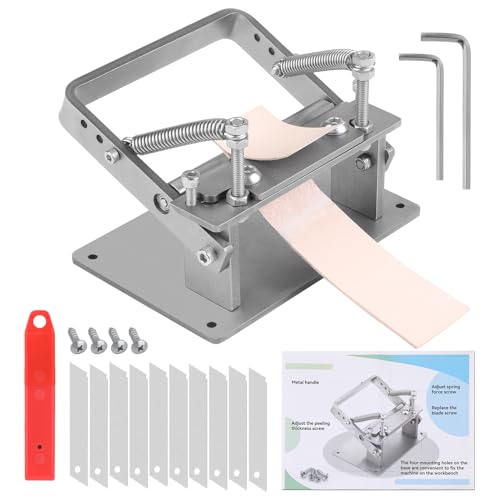
- Includes instructions and 10 blades
- Adjustable thinning thickness
- 3.15-inch maximum leather width
Best For: Beginners thinning leather pieces no wider than 3.15 inches
Wide-Capacity Pick – WUTA Large Manual Leather Skiver
This WUTA leather skiving machine is the wider option in this group, with a stated 18 cm (7.08-inch) working capacity for thinning straps and other leather pieces. Its adjustable depth, dual-bearing rollers, and blade lock give you control over manual passes.
Best For: Leatherworkers who need more working width for belts, straps, or watch bands.
Pros:
- Stated 18 cm (7.08-inch) width capacity.
- Adjustable skiving depth down to about 0.5 mm, depending on the leather.
- Includes a G-clip for mounting and 20 blades.
Cons:
- Manual operation requires you to pull the leather through.
- At a listed 7.41 pounds, it is heavier than the smaller WUTA models here.
Choose this model when width is the deciding factor; for narrow strap work, a smaller manual skiver may take up less space.
Compact Strap Pick – WUTA Black Manual Leather Skiver
This WUTA leather skiving machine is intended for narrower pieces, with a stated maximum skiving width of 8 cm (3.15 inches). A wooden handle and dual-bearing roller help guide the manual pull-through process, while screws at both ends adjust the cut.
Best For: Makers thinning small belts, watch straps, and other leather strips.
Pros:
- Adjustable thickness; the maker says slightly soft, well-greased leather can be thinned to about 0.5 mm.
- Blade-positioning device helps keep the blade in place.
- Includes 10 blades and a G-type clip for table mounting.
Cons:
- 8 cm width limit rules out wider panels.
- Harder leather may not thin as much as softer leather.
This is a practical choice for repeatable narrow-strip work, provided your projects fit its stated width limit.
Bench-Mount Pick – WUTA Upgraded Black Skiver
This WUTA leather skiving machine pairs an adjustable manual cutting setup with a G-type clip, so you can secure it to a table while pulling leather through. Its stated 8 cm (3.15-inch) maximum width makes it a tool for straps rather than broad panels.
Best For: DIY leatherworkers who want a table-clipped skiver for small straps and belts.
Pros:
- Adjusting screws at both ends control the thinning setting.
- Dual-bearing roller, wooden handle, and blade-positioning device.
- Includes 10 blades and a G-type clip.
Cons:
- Not intended for leather wider than 8 cm.
- The stated approximately 0.5 mm result depends on softer, sufficiently greased leather; harder leather may finish thicker.
It offers the same core narrow-strip features listed for the other small WUTA model here, so check the exact listing and price rather than expecting a clear difference in capability.
Veg-Tan Pick – YaeTek 6-Inch Leather Skiver Splitter
The YaeTek leather skiving machine is a manual splitter aimed at vegetable-tanned leather strips. Although its blade is listed at about 15 cm (6 inches), the stated working application is strips under roughly 7–8 cm (about 3 inches) wide.
Best For: Workshop users thinning or splitting narrower vegetable-tanned leather strips.
Pros:
- Adjustable mechanism lets you set the thinning thickness.
- Stainless-steel construction and blade.
- Includes a handle, two L-keys, and four screws for assembly.
Cons:
- Not recommended for ultra-soft skins.
- Despite the 6-inch blade, the stated strip application is less than about 3 inches wide.
- Manual operation requires handling and feeding the material yourself.
Its key distinction is material suitability: consider it for controlled veg-tan strip work, not for very soft hides or full-width use of the blade.
Electric Workshop Pick – SM-801 600W Leather Skiver
If you need a powered leather skiving machine for workshop use, the SM-801 pairs a 110V, 600W motor with an automatic knife-sharpening device. Its three included presser feet give you options for different skiving widths.
Best For: Leatherworkers who want powered skiving with multiple presser-foot sizes.
Pros:
- Automatic sharpening helps keep the round knife sharp during operation.
- Includes 1.57-, 0.98-, and 0.59-inch presser feet; maximum single-pass skiving width is 1.57 inches.
- Includes automatic chip removal and a round-knife finger guard.
Cons:
- Requires a 110V power connection.
- Its 24.41-by-16.54-by-16.54-inch dimensions call for dedicated workspace.
This is the powered option of the three, but check that its maximum skiving width and footprint suit your projects before buying.
Two-Hand Pull Pick – Manual 6-Inch Blade Skiver
This manual leather skiving machine uses a 6-inch high-speed steel blade and lets you adjust the cutting thickness. A side lock holds the handle so you can pull leather with both hands.
Best For: Manually thinning tanned leather pieces up to 7 cm wide.
Pros:
- Adjustable cutting thickness.
- Side handle lock allows two-handed pulling.
- Stainless steel shaft is designed to help form an even peeled layer.
Cons:
- Specified for tanned leather no wider than 7 cm.
- Not suitable for skiving ultra-soft leather.
Choose this model when its stated leather-type and width limits match your work; its handle lock is the practical distinction for manual pulling.
Wide-Strip Manual Pick – 7-Inch Stainless Steel Skiver
For wider strips, this manual leather skiving machine has a stated maximum skiving width of 7 inches. Its 304 stainless steel construction, end-mounted thickness-adjustment screws, and included spare blades make it worth considering for strap and belt work.
Best For: Manually thinning straps, belts, watch bands, and other firm leather strips.
Pros:
- Supports leather up to 18 cm (7 inches) wide.
- Adjustment screws at both ends control peeling thickness.
- Comes with five blades, four screws, and two L-keys.
Cons:
- Beginners are advised to start with widths no greater than 13 cm (5 inches).
- Achievable thinness varies with the leather’s grease content and hardness.
The wider stated capacity is its main draw, but expect to adjust your approach to the leather: the supplied notes indicate that harder, less-greasy material may remain thicker after skiving.
Accessory-Rich Kit – YaeTek Manual Leather Skiver
The YaeTek leather skiving machine is a manual option for buyers who want spare blades and roller choices included. Its metal construction and 2.44-pound listed weight make it a compact tool to consider for a leatherworking setup.
Best For: Buyers who want a manual skiver supplied with multiple blades and rollers.
Pros:
- Includes 18 blades, three special rollers, and a spanner.
- Strong metal construction.
- Described as easy to use for beginners and experienced users.
Cons:
- No maximum leather width is specified in the supplied details.
- Requires manual operation.
The included accessories are its clearest advantage. Check whether its unspecified working width suits your projects before choosing it for wider pieces.
Wider-Width Pick – Singring Adjustable Leather Splitter
The Singring leather skiving machine offers a stated maximum peeling width of 3.5 inches (90 mm) and side screws for adjusting thickness. It operates by placing leather between the roller and blade, then pulling the material through by hand.
Best For: Leatherworkers who need an adjustable manual splitter for pieces up to 3.5 inches wide.
Pros:
- Side screws let you adjust the thinning thickness.
- Stated maximum peeling width is 3.5 inches (90 mm).
- Stainless-steel construction is described as rust-resistant.
Cons:
- You must pull the leather through manually.
- Wider pieces and softer leather can be harder to handle, according to the supplied guidance.
The specified width makes this model easier to assess for belts and other strips. Material firmness still matters: the supplied guidance says moderately hard, well-oiled leather is easier to handle.
Guided Starter Kit – Manual Leather Splitter Peeling Machine
This manual leather skiving machine comes with instructions, 10 blades, four screws, and two L-keys. Its side screws adjust thinning thickness, while its stated leather-width limit is 3.15 inches (8 cm).
Best For: Beginners who want instructions and included blades for thinning narrower leather pieces.
Pros:
- Includes an instruction manual and 10 blades.
- Side screws provide thickness adjustment.
- Stainless-steel construction is described as resistant to rust.
Cons:
- Not suitable for leather wider than 3.15 inches (8 cm).
- Very hard or very soft leather can be difficult to handle.
The instructions and included blades make this a practical starting point for manual thinning. For an easier first attempt, the supplied guidance recommends leather of moderate hardness.
How We Picked These Leather Skiving Machines
We organized the selected products around the decisions that matter most at the bench: manual versus electric operation, stated cutting width, blade and thickness adjustment, and the space needed to use each tool. Several listings have similar names, including two identical WUTA entries, so check the exact model and included parts before buying. Product titles alone do not establish cutting performance or long-term durability.
Quick Comparison: Which Type Fits Your Work?
Compact manual skivers suit occasional edge thinning, strap ends, and small projects when you want direct control without a powered setup. Wider manual splitters, including listings described as 6-inch machines, are worth considering for straps or panels that need a more consistent thickness across their width. The SM-801 electric skiver is the powered option in this selection; consider it if you process leather regularly and can accommodate a machine, its power requirements, and a learning curve.
A splitter reduces thickness across a piece, while edge skiving tapers leather near a fold, seam, or overlap. Listings often use both terms loosely. Match the tool’s intended cut to the result you need rather than relying on the product name.
Key Buying Factors for a Leather Skiving Machine
Cutting Width and Project Size
Start with the widest piece you need to thin. A narrow tool may be enough for wallet edges, but long straps and broad panels call for more usable blade width. Confirm whether a quoted width is the blade width or the maximum leather width the machine accepts.
Thickness Control and Blade Access
Look for an adjustment you can set and repeat without difficulty. A sharp, correctly positioned blade is essential to an even cut, so check how replacement blades are sourced and how safely you can access the cutting area for maintenance. Test settings on scrap from the same leather before cutting a finished piece.
Leather, Workspace, and Power
Leather firmness and thickness affect how easily it feeds and cuts; do not assume every machine handles soft, stretchy, or very heavy hides equally well. Manual splitters need a stable surface and room to pull material through. For an electric model, verify voltage, plug compatibility, footprint, and whether any setup or additional equipment is required.
Who Should Buy Which Leather Skiving Machine?
Occasional hobbyist: choose a manual skiver if you mainly taper edges and value a simple, space-saving setup. Strap or panel maker: prioritize a wider manual splitter with suitable width and adjustable thickness. Frequent production user: consider the electric option when output and repeatability justify the added setup, maintenance, and cost. If you need both uniform splitting and a feathered edge, confirm that your chosen machine can perform both cuts—or plan on separate tools.