
A good strap cutter helps turn a leather hide into consistent strips for belts, handles, fringe, and other projects. The right choice depends on the widths you need, the leather you cut, and whether you prefer a handheld tool or a clamped setup.
These 10 options cover straightforward wooden cutters, metal hand tools, and tabletop designs. Use the buying guide below to narrow the field before choosing a tool for your workspace.
Best 10 Leather Strap Cutter Picks for 2026
Best for Thick Leather
WUTA 60mm Leather Strip Cutting Machine

- Cuts firm leather 2–8 mm thick
- Adjustable width under 60 mm
- Includes clamp and 10 blades
Best For: Narrow strips from thick, firm leather
Best for Wider Straps
BESTNULE Adjustable Wooden Strap Cutter

- Adjusts up to 4 inches wide
- Best suited to 2.5–4.5 mm leather
- Includes three blades
Best For: Wider straps with a straight starting edge
Best for Multiple Thin Strips
Goodcrafter Leather Strip Cutter Set
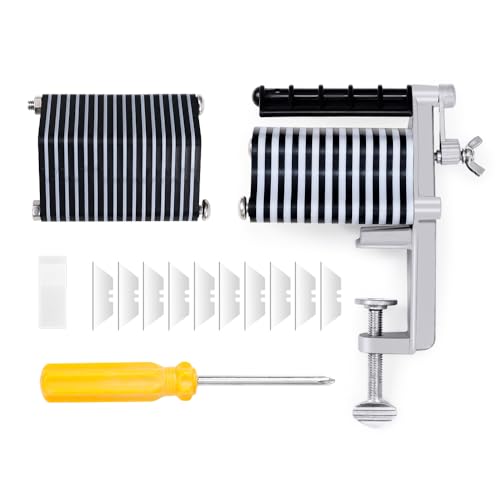
- Cuts up to eight thin strips at once
- Includes two cutter sizes
- Comes with 10 replacement blades
Best For: Repeat cutting of thin leather laces and strips
Best for Straight Repeat Cuts

- Adjustable width guide
- Compact manual design
- Uses replaceable blades
Best For: Long, straight straps cut by hand
Best for Lace and Fringe

- Cuts lace, fringe, and braiding strips
- Includes five reversible blades
- Recommended for firm 3–5 oz leather
Best For: Narrow strips from firm leather
Widest Cutting Range
OwnMy Aluminum-Handle Strap Cutter

- Cuts strips up to 4 inches wide
- Laser-engraved stainless steel gauge
- Includes three cutting pieces
Best For: Measured, wider leather strips
Compact Adjustable Pick

- Cuts strips up to 2 inches wide
- Specified for 3–5.5 mm leather
- Includes three blades; tool-free assembly
Best For: Adjustable cuts with a straight starting edge
Widest Marked Range

- Cuts straps up to 4 inches wide
- Inch and centimeter markings
- Includes five replacement blades
Best For: Leatherworkers wanting dual-unit markings and spare blades
Metal Handle Pick

- Aluminum handle and stainless bar
- Cuts up to 4 inches wide
- Three replaceable blades included
Best For: Crafters seeking a metal-handled cutter with spare blades
Compact Alloy Option

- Compact aluminum alloy body
- Adjustable manual cutting
- Best suited to firmer leather
Best For: Crafters cutting firmer leather in a compact workspace
Best for Thick Leather – WUTA 60mm Leather Strip Cutting Machine
This leather strap cutter is a compact, manual option for making strips from firm, thick leather. Its adjustable cutting width is under 60 mm, and the recommended leather thickness is 2–8 mm.
Best For: Cutting narrow strips from vegetable-tanned, bridle, belt, or other firm leather.
Pros:
- Includes 10 blades, a G-clamp, and two hex wrenches.
- Can be held by hand or clamped to a table.
- Stainless-steel and aluminum-alloy construction.
Cons:
- Not intended for soft, thin leather.
- Cutting width is limited to less than 60 mm.
Choose the WUTA if you mainly work with substantial leather and want a cutter that comes with mounting and blade-change accessories.
Best for Wider Straps – BESTNULE Adjustable Wooden Strap Cutter
If you need wider cuts, this wooden leather strap cutter adjusts for strips up to 4 inches (102 mm) wide. It accepts leather 1–5 mm thick, with a stated sweet spot of 2.5–4.5 mm.
Best For: Crafters cutting wider straps from leather with at least one straight edge.
Pros:
- Adjustable cutting width up to 4 inches.
- Includes three blades.
- Assembles manually without tools.
Cons:
- Requires at least one straight leather edge for proper cutting.
- Its preferred thickness range is narrower than its full 1–5 mm capacity.
The wider adjustment range is the main draw here; check your leather’s thickness and starting edge before choosing it.
Best for Multiple Thin Strips – Goodcrafter Leather Strip Cutter Set
This leather strap cutter set is geared toward repeat work with thin leather. Its adjustable blade spacing and two differently sized tabletop cutters offer options for making laces, tassels, and braided straps.
Best For: Crafters who want to cut several thin leather strips in one pass.
Pros:
- Can cut up to eight pieces of thin leather at once.
- Includes two cutter sizes and 10 replacement blades.
- Blade spacing is adjustable.
Cons:
- The stated multi-strip capability is for thin leather; no thickness range is provided.
- Cast-aluminum surfaces may have visible manufacturing marks.
It is a useful match for repetitive lace and strip cutting, but the supplied specifications do not establish how it handles thicker leather.
Best for Straight Repeat Cuts – Tandy Craftool Strap Cutter
The Tandy Craftool is a manual leather strap cutter with an adjustable width guide for making consistent, straight strips. Its compact design suits routine belt, handle, and watch-band projects.
Best For: Leatherworkers who regularly cut long, straight straps by hand.
Pros:
- Adjustable guide helps maintain a consistent strap width.
- Rigid frame and balanced manual design support controlled cutting.
- Replaceable blades help extend its working life.
Cons:
- Requires manual pulling rather than powered cutting.
- The supplied notes do not specify a maximum width or leather-thickness range.
Consider this a straightforward workshop tool for repeat strap work, especially if an adjustable guide matters more to you than a stated capacity range.
Best for Lace and Fringe – BESTNULE Tabletop Lace Cutter
If your leather strap cutter needs are centered on narrow pieces, this tabletop tool is designed for lace, fringe, braiding strips, and belts. Feed the leather in one side and pull it through manually; the maker recommends firm 3–5 oz leather.
Best For: Cutting lace, fringe, and braiding strips from firm 3–5 oz leather.
Pros:
- Tabletop format supports manual pull-through cutting.
- Includes five blades.
- Blades can be replaced or reversed when dull.
Cons:
- Requires manual feeding and pulling.
- Recommended leather is limited to firm 3–5 oz stock.
Choose this one for repetitive narrow-strip work, especially if replaceable, reversible blades matter more than a handheld format.
Widest Cutting Range – OwnMy Aluminum-Handle Strap Cutter
This leather strap cutter pairs an aluminum grip with a laser-engraved stainless steel inch gauge. Its 4-inch scale lets you set strip widths up to 4 inches, making it a useful option when your projects call for wider cuts.
Best For: DIY leatherworkers who want a handheld cutter with a marked gauge for strips up to 4 inches wide.
Pros:
- Laser-engraved 4-inch gauge provides a clear width reference.
- Aluminum handle has a grip-oriented design.
- Includes three replaceable cutting pieces and assembly accessories.
Cons:
- Arrives as separate components that require assembly.
- Cutting pieces need careful handling to avoid scratches.
The marked gauge is the main reason to pick this kit; expect a little setup before making your first cut.
Compact Adjustable Pick – BESTNULE Nylon Strap Cutter
This adjustable leather strap cutter uses a nylon body and two bars to guide the material. It is specified for strips up to 2 inches (52 mm) wide and leather 3–5.5 mm thick, with three blades included.
Best For: Cutting strips up to 2 inches wide from leather within the stated 3–5.5 mm thickness range.
Pros:
- Adjusts for strip widths up to 2 inches (52 mm).
- Includes three blades.
- Assembles manually without tools.
Cons:
- Needs at least one straight leather edge for the intended cut.
- Its stated fit is 3–5.5 mm thick leather.
This is a straightforward choice if its width and thickness limits match your material; check that you have a straight starting edge before cutting.
Widest Marked Range – Weaver Wooden Strap Cutter
This wooden leather strap cutter lets you set widths up to 4 inches using a crossbar marked in both inches and centimeters. Its adjustable thickness bar helps accommodate different types of leather.
Best For: Leatherworkers who want dual-unit width markings and spare blades included.
Pros:
- Adjustable cutting width up to 4 inches (10 cm).
- Thickness bar adjusts for different leather.
- Includes five easy-to-replace blades.
Cons:
- Cannot set widths beyond 4 inches.
- Wood construction may not suit buyers seeking a metal tool.
Choose this one if clear width markings and the included blade supply matter more to you than a metal body.
Aluminum Alloy Strip and Strap Leather Belt Cutter Leather Hand Cutting Tool with 3 Blades
Check Price On AmazonThis leather strap cutter pairs an aluminum alloy handle with a stainless steel crossbar marked in inches. It cuts straps up to 4 inches wide and includes three replaceable blades.
Best For: Crafters who prefer a metal-handled cutter with spare blades.
Pros:
- Aluminum alloy handle and stainless steel bar.
- Inch-marked crossbar supports cuts up to 4 inches wide.
- Includes three blades that are easy to replace and clean.
Cons:
- Width markings are listed in inches only.
- Limited to straps up to 4 inches wide.
It is a practical alternative to a wooden cutter if a metal handle is your priority; the supplied details do not specify a thickness adjustment.
The SiiRo leather strap cutter has an aluminum alloy body and a smaller form than the wooden models described by its maker. It is intended for adjustable, manual strap cutting across projects such as watch bands and luggage straps.
Best For: Crafters cutting firmer leather who want a compact tool.
Pros:
- Compact aluminum alloy construction is easy to handle and store.
- Adjustable design suits different strap projects.
- Ergonomic grip is intended to make manual cutting easier.
Cons:
- The maker warns that very soft leather may not produce ideal results.
- The supplied details do not state a maximum cutting width or included spare blades.
This is the better fit when storage space and firmer leather are your priorities; check the unstated width range before buying for a specific strap size.
How We Picked These Leather Strap Cutters
We compared the selected tools by cutting style, advertised width adjustment, blade arrangement, included accessories, and likely fit for common leatherworking tasks. The lineup includes handheld strap cutters, metal-bodied options, and clamp-on or tabletop tools. We did not treat blade counts or product titles as proof of cutting performance; check the current listing for dimensions, blade compatibility, and setup requirements before buying.
Quick Comparison: Which Style Fits Your Work?
Adjustable handheld cutters are a practical starting point for occasional belts, bag straps, and other straight strips. They take little storage space, but keeping an even edge requires a steady pull and a properly positioned guide. Metal hand tools may appeal if you prefer a different grip or construction; compare their adjustment range rather than assuming they cut wider material. Clamp-on and tabletop cutters suit a dedicated bench and repeat cutting, though they need room for the tool and leather to feed through. Lace-focused cutters are worth considering for narrow strips, fringe, or braiding rather than wide belt blanks.
Key Buying Factors for a Leather Strap Cutter
Width Range and Adjustment
Start with the strip widths your projects call for. A broad advertised range is less useful if the guide is difficult to set precisely at your preferred width. For repeat batches, look for an adjustment that can be secured firmly and checked against a ruler. If you make both narrow laces and wide belts, one cutter may not handle both jobs equally well.
Leather Thickness, Edges, and Blade Access
Check whether the tool can accommodate the thickness of your leather and whether its guide needs a straight reference edge. Strap cutters generally follow the edge presented to them; an uneven starting edge can lead to an uneven strip. Also check how blades are installed, replaced, and purchased. Included spare blades are useful, but readily available replacements matter more over time.
Workspace and Handling
A handheld cutter makes sense if you work at different benches or have limited storage. A clamped cutter needs a stable surface and enough clearance to feed the leather without bunching or twisting. Whichever style you choose, plan to test the setting on scrap first and keep hands clear of exposed blades.
Who Should Buy Which Leather Strap Cutter?
Beginners and occasional makers: Start with a simple adjustable handheld cutter if your main goal is straight, consistent straps without dedicating bench space. Belt and bag makers: Prioritize the width range you actually use, a secure guide, and easy blade changes. Lace, fringe, and braiding makers: Consider a lace-oriented tabletop tool when narrow, repeated cuts dominate your work. Frequent batch cutters: Compare clamp-on machines for bench fit and repeatable setup, while confirming the tool accommodates your leather thickness. The best Leather Strap Cutter is the one that matches your material and workflow—not necessarily the one with the most accessories.