
The right paint brush cleaner can remove dried or wet paint more effectively than soap and water alone while helping bristles stay flexible and usable.
We compared cleaners, combs, rinsing tools, and restorative formulas for artists, DIY painters, and anyone who wants to reduce brush waste.
Best 10 Paint Brush Cleaners Picks for 2026
Best Overall Brush Soap

- Cleans oils, acrylics, watercolors, and varnishes
- Works on sable, bristle, and synthetic brushes
- One-step cleaning, restoration, and preservation
Best For: Artists using multiple paint mediums
Best Cleaning Tool

- Two-sided design for cleaning and reshaping
- Brass bristles tackle heavy paint buildup
- 12-pin stainless steel comb speeds rinsing
Best For: DIY and professional paintbrush maintenance
Best Portable Formula
The Masters 1-Ounce Brush Cleaner

- Cleans and conditions in one step
- Non-abrasive for natural and synthetic hair
- Fume-free, low odor, and portable
Best For: Artists needing gentle brush care on the go
Best for Large Jobs
Krud Kutter Brush-Wash Cleaner

- 32-ounce liquid formula for brushes and rollers
- Handles latex and oil-based paint residue
- Helps revive stiff and hardened bristles
Best For: Frequent painters and large cleanup projects
Deep-Restoration Liquid

- Handles dried acrylic, oil, gouache, inks, and water-based paint
- Works with brushes, airbrushes, and art tools
- 16-ounce bottle for repeated cleaning
Best For: Restoring heavily dried paint from art brushes and tools
Multi-Tool Cleanup Pick
4-in-1 Brush and Roller Cleaner

- Cleans flat and angled brushes of various sizes
- Fits roller covers from 2 to 18 inches
- Rinses clean and includes a hanging hole
Best For: DIY painters cleaning both brushes and roller covers
Conditioning Brush Care

- Cleans oils, acrylics, and watercolors
- Also preserves and conditions brushes
- Non-toxic, acid-free, and leaves no greasy residue
Best For: Artists prioritizing routine cleaning and brush preservation
Natural Deep-Cleaning Pick

- Handles wet or dry paint across several paint types
- Plant-based, biodegradable, and non-toxic formula
- Also cleans epoxy, caulking, dirt, and stains
Best For: Artists and DIYers wanting a versatile formula cleaner
Compact Water-Saving Station
Upgraded Art Rinse Brush Cleaner

- Combines rinser, holder, and tray functions
- 450 ml tank can last about 30 washes
- Suitable for small-to-medium brushes and many paints
Best For: Students, classrooms, and compact painting setups
Portable All-in-One Station
Water Circulation Brush Cleaner
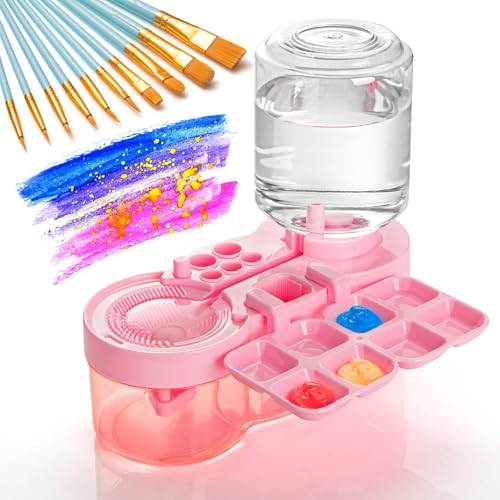
- Includes rinser, holder, palette, and 10 brushes
- One-button circulation helps switch dirty water
- Portable design supports home, classroom, and outdoor use
Best For: Beginners and artists wanting a complete portable station
Best Overall Brush Soap – The Masters Brush Cleaner
For artists seeking versatile paint brush cleaners, GENERAL’S The Masters offers a simple one-step process for cleaning, restoring, and preserving brushes. Its solid, unscented formula is designed for oil, acrylic, watercolor, varnish, glaze, and most synthetic finishes.
Best For: Artists who want one cleaner for natural and synthetic brushes used with multiple paint types.
Pros:
- Works with oil, acrylic, watercolor, varnish, glaze, and stains.
- Suitable for sable, bristle, and synthetic brushes.
- Combines cleaning, restoration, and preservation in one step.
- Unscented, non-toxic, and formulated with antimicrobial features.
Cons:
- The 2.5-ounce container is smaller than bulk liquid cleaners.
- A bar format may be less convenient for users who prefer a pourable cleaner.
This is a strong all-purpose choice when brush care matters as much as paint removal. The compact jar is particularly practical for studio use and artists working across several mediums.
Best Cleaning Tool – Wooster Painters Brush Comb
The Wooster Painters Brush Comb is a hands-on option among paint brush cleaners, helping remove buildup and speed the wash-and-rinse process. Its two-sided design combines brass bristles for heavy paint deposits with a stainless steel comb for cleaning and reshaping.
Best For: DIY painters and contractors who need a durable tool for cleaning and reshaping reusable brushes.
Pros:
- Non-rusting brass bristles help remove heavy paint buildup.
- Stainless steel comb has 12 pins to assist washing and rinsing.
- Can help reshape brushes before storage.
- Works with water-based, oil-based, and acrylic paint.
Cons:
- It is a mechanical cleaning tool rather than a soaking cleaner or soap.
- The brass bristles may be less suitable for very delicate brush care than a gentle conditioner.
Choose this comb when physical removal of paint residue is your priority. The long polypropylene handle and two-sided layout make it useful for routine maintenance and heavier cleanup jobs.
Best Portable Formula – The Masters 1-Ounce Brush Cleaner
This 1-ounce version of The Masters is a compact pick among paint brush cleaners for artists who need cleaning and conditioning in one step. The non-abrasive, fume-free formula is made for natural and synthetic hair brushes and can address paint, ink, dye, stain, and varnish.
Best For: Artists who want a portable, low-odor cleaner for delicate natural-hair or synthetic brushes.
Pros:
- Formulated for oil, acrylic, watercolor, gouache, tempera, ink, dye, stain, and varnish.
- Non-abrasive formula is suitable for Kolinsky sable and other natural or synthetic hair brushes.
- Can loosen old dried paint when allowed to sit for several hours.
- Fume-free, low odor, reusable, and portable.
Cons:
- The 1-ounce size offers less product for large brush collections.
- Removing dried paint may require an extended soaking period.
This compact cleaner is a practical studio or travel choice where gentle conditioning and portability are important. Its broad paint compatibility also reduces the need for separate products.
Best for Large Jobs – Krud Kutter Brush-Wash Cleaner
Krud Kutter Brush-Wash is a practical bulk option among paint brush cleaners, with a 32-ounce liquid formula designed for brushes and rollers. It helps remove residue from latex and oil-based paint, loosen hardened bristles, and restore tools through a soak-and-rinse process.
Best For: DIYers, contractors, and frequent painters cleaning multiple brushes or rollers.
Pros:
- Works with both latex and oil-based paint.
- Helps remove dried paint, coatings, and residue.
- Can loosen stiff, hardened brush bristles.
- Large 32-ounce concentrated, biodegradable, xylene-free formula.
Cons:
- The large bottle may be more than occasional users need.
- Requires soaking, working the solution through bristles, and rinsing.
- Its liquid format may be less convenient for compact travel than a solid brush soap.
For larger cleanup sessions, this cleaner offers useful capacity and broad paint compatibility. It is especially suited to maintaining brushes and rollers after DIY or professional projects.
Deep-Restoration Liquid – U.S. Art Supply Brush Cleaner
For dried-on acrylic, oil, gouache, ink, and water-based paint, this 16-ounce liquid is one of the more intensive paint brush cleaners in the roundup. Brushes can be soaked as needed, with heavily dried paint requiring up to 24 hours before softened residue is wiped or brushed away.
Best For: Artists restoring heavily paint-loaded brushes, airbrush parts, and other art tools.
Pros:
- Works on dried acrylic, oil, gouache, inks, and water-based paints.
- Suitable for brushes, airbrushes, and various art tools.
- The 16-ounce bottle provides a generous supply for repeated cleaning.
Cons:
- Heavy buildup may require soaking for up to 24 hours.
- Brushes should be washed with mild soap and water afterward.
- The whole airbrush should not be soaked in the cleaner.
This is the strongest fit when restoring neglected brushes matters more than quick routine rinsing. Its soaking process takes patience, but it is designed for paint that ordinary cleanup may not remove.
Multi-Tool Cleanup Pick – 4-in-1 Brush and Roller Cleaner
This reusable tool takes a mechanical approach to paint brush cleaners, using long teeth to separate brush bristles and curved sections to remove paint from roller covers. It also includes can- and bottle-opener functions for added utility during painting projects.
Best For: DIY painters who need one lightweight tool for cleaning brushes and roller covers from 2 to 18 inches.
Pros:
- Comb section helps separate bristles and remove paint without damaging them.
- Curved cleaning areas accommodate small and large roller covers.
- Lightweight plastic design has a non-slip grip and hanging hole.
- Rinses clean for repeated use.
Cons:
- It is a manual comb and scraper-style tool rather than a soaking solution.
- Its extra opener functions may be unnecessary if you only need brush cleaning.
Choose this option for fast, hands-on cleanup after painting jobs. Its broad roller compatibility makes it more versatile than a brush-only comb, especially for users cleaning both brushes and covers.
Conditioning Brush Care – Pink Soap Brush Cleaner
Pink Soap combines cleaning with brush care, making it a practical choice among paint brush cleaners for artists who want to preserve their tools. The 12-ounce formula is intended for oils, acrylics, and watercolors and is described as free of solvents, alcohol, chlorides, and phosphates.
Best For: Artists seeking a cleaner that also helps preserve and condition brushes.
Pros:
- Designed for oils, acrylics, and watercolors.
- Acts as a cleaner, preserver, and conditioner.
- Leaves no greasy residue according to the supplied product notes.
- Non-toxic and acid-free material features.
Cons:
- The 12-ounce bottle is smaller than the 16-ounce liquid cleaner in this roundup.
- The notes do not specify a soaking time or detailed removal process for dried paint.
Pink Soap is a well-rounded maintenance choice when extending brush life is a priority. Its conditioning role sets it apart from a basic paint-removal tool, though users with severely hardened paint may prefer a cleaner with explicit deep-soak directions.
Natural Deep-Cleaning Pick – Green Piece Brush Cleaner
For painters who want paint brush cleaners that handle both fresh and dried buildup, Green Piece offers a versatile 18-ounce formula. The plant-based cleaner is designed for acrylic, latex, oil, and shellac, while also being suitable for direct use on hands and other surfaces.
Best For: Artists and DIYers looking for a non-toxic, multi-paint cleaner with a citrus scent.
Pros:
- Works on wet or dry acrylic, latex, oil, and shellac paint.
- Plant-based, biodegradable formula made from fruit extracts and minerals.
- Can also tackle epoxy, caulking, dirt, and stains on various surfaces.
- Conditions brushes and is designed to be gentle on hands.
Cons:
- It is a liquid cleaner rather than a dedicated rinse station.
- The broad surface-cleaning capability may be more than needed for simple brush washing.
Choose this option when cleaning power and formula versatility matter more than having an integrated brush-washing container. Its shellac compatibility and ability to address dried paint make it especially useful for varied projects.
Compact Water-Saving Station – Upgraded Art Rinse Brush Cleaner
This compact station is one of the more practical paint brush cleaners for artists who prefer rinsing tools at the desk. It combines a brush holder and tray with one-touch water changing, letting you flush dirty water while fresh water flows from the 450 ml tank.
Best For: Students, classrooms, home art spaces, and artists using small-to-medium brushes.
Pros:
- Combines cleaning, brush holding, and tray functions in one unit.
- Freshwater bottle is rated for about 30 washes.
- Works with oils, acrylics, watercolors, varnish, glazes, and other listed finishes.
- Lightweight, compact, and made from stain-resistant plastic.
Cons:
- The 450 ml tank requires periodic refilling.
- Designed for small-to-medium brushes rather than very large tools.
- Its multiple compartments may take more setup than a basic rinse cup.
This is a strong fit when you want a contained, portable cleanup setup instead of repeatedly changing a traditional water cup. Its classroom-friendly design also suits shared art spaces and outdoor painting.
Portable All-in-One Station – Water Circulation Brush Cleaner
For painters seeking paint brush cleaners with extra workspace, this third-generation station combines brush washing, storage, and organization. It includes a 13.5-fluid-ounce water bottle, built-in holder, mixing palette, and 10 bonus paint brushes, with one-button water circulation for rinsing.
Best For: Beginners, students, and artists who want a portable painting station with included brushes.
Pros:
- Combines a water rinser, brush holder, organizer, and mixing palette.
- One-button circulation switches dirty water to clean water.
- Portable ABS construction suits home, classroom, studio, and outdoor use.
- Includes 10 bonus paint brushes.
Cons:
- The 13.5-fluid-ounce water bottle is smaller than some dedicated rinse systems.
- The all-in-one design may be less suitable for painters who already own a palette and brush set.
- Its included brushes may not replace specialized brushes for advanced work.
This model makes the most sense for beginners or gift buyers who want several painting essentials in one portable unit. The circulation feature helps streamline rinsing, while the palette and included brushes reduce the need for separate accessories.
How We Picked the Best Paint Brush Cleaners
We evaluated this roundup across several practical criteria: the types of paint each option can handle, whether it works on wet or dried residue, ease of use, brush-conditioning benefits, container size, and suitability for common brush materials. We also included both liquid cleaners and physical tools because the best choice depends on whether you need deep restoration, routine rinsing, or faster cleanup between colors.
Because product formulas and tool designs serve different jobs, this list includes options for acrylic, watercolor, latex, oil-based paint, and general studio or household use. Always check the manufacturer’s directions and test an unfamiliar cleaner on an inexpensive brush first.
Quick Comparison
| Best For | Look For |
|---|---|
| Artists using several paint types | A versatile cleaner and preserver |
| Dried paint on bristles | A restorative formula plus gentle combing |
| Fast cleanup during projects | A brush comb, washer, or circulation tool |
| Large household painting jobs | A bigger bottle designed for latex or oil paint |
| Conditioning delicate brushes | A cleaner that also softens and preserves bristles |
Key Buying Factors for Paint Brush Cleaners
Paint Compatibility
Start with the paint you use most. Watercolor and acrylic brushes may need a gentler cleaner, while oil-based and latex coatings can require a stronger formula or longer soaking time. A multipurpose product is convenient, but confirm that it is explicitly rated for your paint type.
Wet Versus Dried Paint
Fresh paint is usually easier to remove with a rinse and comb. Dried residue calls for a cleaner formulated to soften or dissolve buildup. Do not assume every brush cleaner can restore severely hardened bristles, and avoid leaving brushes submerged longer than directed.
Brush Safety and Conditioning
Look for non-toxic or skin-conscious formulas if you clean brushes frequently, but remember that “non-toxic” does not mean harmless if swallowed or used improperly. Conditioning ingredients can help prevent brittle bristles, split ends, and loss of shape.
Tool Design and Cleanup Speed
Combs help work paint out from the base of the bristles, while brush washers and circulating rinsers can speed up repeated cleaning. These tools are especially useful for artists changing colors often, but they may not replace a dedicated cleaner for hardened paint.
Size and Storage
Choose a small container for occasional art projects or a larger bottle for studios and home renovation work. A secure lid, clear usage directions, and manageable dispensing are useful features that reduce spills and product waste.
Who Should Buy Which Paint Brush Cleaners?
Artists who work across acrylic, oil, and watercolor should prioritize a versatile cleaner-preserver. Painters dealing with dried residue may benefit from pairing a restorative liquid with a brush comb. DIY users cleaning latex or oil-based paint should choose a product labeled for those coatings and sized for frequent use.
If speed matters most, select a comb, roller-cleaning tool, or water-circulation washer for routine project cleanup. Those with delicate or expensive brushes should favor gentle conditioning formulas and careful hand cleaning. Whichever option you choose, clean brushes promptly, reshape the bristles afterward, and store them only when completely dry.