
The right AV cabinet does more than hide clutter. It protects receivers, amplifiers, players, and accessories while improving airflow, cable routing, and everyday access.
We compared 10 premium component organizer cabinets across construction, shelf flexibility, ventilation, door design, and capacity to help you choose a setup that fits your equipment and room.
Best 10 Premium Component Organizer Cabinets Picks for 2026
Premium Enclosed Pick
BDI Corridor 8172 Audio Cabinet

- Enclosed walnut cabinet with louvered doors
- Flow-through ventilation and cable routing
- Remote-friendly doors with rear access panels
Best For: Audiophiles wanting refined, concealed AV storage
Heavy-Duty Open Pick
Monolith 4 Tier Audio Stand XL

- Four thick maple MDF shelves
- Up to 350-pound total capacity
- Open design supports airflow and access
Best For: Large AV systems needing sturdy, ventilated shelving
Adjustable Cabinet Pick

- Shelves adjust in one-inch increments
- Perforated door supports ventilation and IR
- Removable rear panels ease access
Best For: Enclosed home theater storage with flexible positioning
Space-Saving Glass Pick
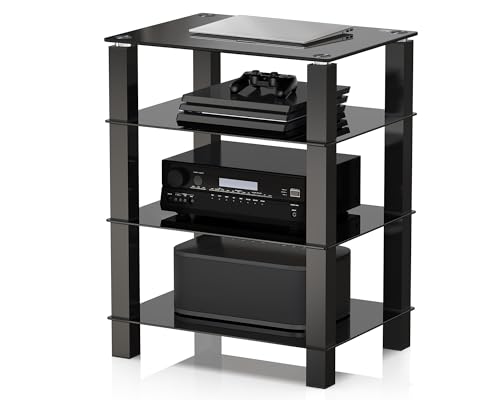
- Four tempered-glass shelves with steel frame
- Compact 23.6-by-17.9-inch footprint
- Top shelf supports up to 88 pounds
Best For: Compact modern spaces needing open AV organization
Rustic Ventilated Pick
Modern Slatted Audio Component Cabinet

- Four 40-pound-capacity tiers
- Ventilated slatted door supports airflow and IR access
- Four cable-routing holes keep wiring organized
Best For: Rustic living rooms, turntables, receivers, and gaming equipment
Adjustable Glass Rack

- Adjustable shelf spacing accommodates varied components
- Tempered-glass shelves with aluminum tube legs
- Cable holes help keep the rear of the rack tidy
Best For: Open, modern AV and gaming setups with adjustable storage needs
Enclosed Storage Pick
Audio Stereo Cabinet with Glass Doors

- Double tempered-glass doors provide dust-conscious display storage
- Adjustable shelves offer 2.5 inches of height flexibility
- Four 40-pound shelves support substantial equipment
Best For: Enclosed stereo, vinyl, gaming, and office storage
Best Compact Pick
HOMCOM Glass-Door Media Cabinet

- Tempered glass supports remote-signal access
- Adjustable shelves fit varied AV gear
- Rear ports and anti-tipping kit included
Best For: Compact living rooms, offices, and apartment setups
Best Metal Mobility Pick

- Cold-rolled steel construction
- Adjustable shelves and cable holes
- Locking swivel wheels aid repositioning
Best For: Flexible home office, meeting, or recording-room layouts
Best Heavy-Duty Cooling Pick
Wheeled Tempered-Glass Media Cabinet

- 4mm tempered-glass doors protect and display gear
- 60mm-adjustable shelves support varied components
- Rear airflow channels and locking wheels included
Best For: Larger stereo systems needing airflow and mobility
Premium Enclosed Pick – BDI Corridor 8172 Audio Cabinet
For shoppers seeking premium component organizer cabinets, the BDI Corridor 8172 combines enclosed storage with thoughtful ventilation and cable-control features. Its walnut finish, louvered doors, adjustable shelves, and tempered-glass top give a polished look while keeping AV equipment accessible.
Best For: Audiophiles and home theater setups that need concealed component storage, remote access, and organized cabling.
Pros:
- Flow-through ventilation is integrated into the bottom panels, shelves, and rear access panels.
- Routing channels and removable or sliding rear panels simplify cable management and component access.
- Louvered doors allow infrared remote control use while keeping equipment out of sight.
- Walnut construction, a satin-etched tempered-glass top, and adjustable shelving create a refined presentation.
Cons:
- At 127.9 pounds, it is substantially heavier than open-frame alternatives.
- Its 44.75-inch height and 22-inch depth require significant floor space.
This is a premium, furniture-style organizer for buyers who value appearance and concealed storage as much as equipment access. The enclosed design is especially useful when you want a tidy room without sacrificing ventilation or remote operation.
Heavy-Duty Open Pick – Monolith 4 Tier Audio Stand XL
Monolith by Monoprice Heavy Duty 4 Tier Audio Stand XL 1 inch Shelf Thickness Maple
Check Price On AmazonThe Monolith 4 Tier Audio Stand XL is a practical choice among premium component organizer cabinets when airflow, load capacity, and easy access matter most. Its open architecture, thick maple MDF shelves, and steel support tubes provide a sturdy display for larger AV systems.
Best For: Component-heavy systems that need strong, open shelving and generous airflow rather than enclosed storage.
Pros:
- Four one-inch-thick shelves support up to 75 pounds each, with one shelf rated for up to 150 pounds.
- The stated total weight capacity reaches 350 pounds.
- Open shelving promotes airflow, cooling, and easy access to components.
- Modular construction allows the stand to be configured with as many of the four shelves as needed.
Cons:
- Open shelves leave equipment and cables visible and provide no dust barrier.
- The stand has a modern maple-and-silver appearance that may not suit traditional rooms.
Choose this stand when equipment weight and ventilation take priority over a cabinet-style appearance. The modular layout and additional support bar make it particularly adaptable for substantial audio components.
Adjustable Cabinet Pick – Salamander Synergy 402
The Salamander Designs Synergy 402 suits shoppers comparing premium component organizer cabinets with a clean, structured form. Its perforated door insert supports ventilation and infrared signals, while adjustable shelves, removable rear panels, and leveling feet make installation and equipment access more manageable.
Best For: Home theater or living-room systems that need a compact enclosed cabinet with flexible shelf positioning.
Pros:
- Shelves adjust on one-inch centers for flexible component placement.
- The perforated door insert permits IR signals and adds ventilation.
- Removable rear panels provide access to connections and components.
- Heavy-duty, non-marking leveling feet help stabilize the cabinet.
Cons:
- The supplied details list one shelf, so storage capacity may be limited for larger systems.
- At 105 pounds, it is not a lightweight cabinet to reposition.
The Synergy 402 is a strong middle ground for buyers who want enclosed presentation without giving up ventilation or rear access. Its adjustable layout is useful when component sizes change over time, though shoppers with many devices should verify the shelf configuration meets their needs.
Space-Saving Glass Pick – FITUEYES 4-Tier Media Stand
For a more compact take on premium component organizer cabinets, the FITUEYES 4-Tier Media Stand pairs tempered-glass shelves with a solid steel frame. Its four-tier layout provides open access for consoles, players, speakers, and other accessories while fitting comfortably into corners or smaller spaces.
Best For: Modern living rooms, offices, and compact entertainment areas that need visible multi-tier storage.
Pros:
- Four tempered-glass shelves provide organized space for AV equipment and accessories.
- The top shelf supports up to 88 pounds, while lower shelves support up to 33 pounds each.
- Its 23.6-inch width and 17.9-inch depth suit corners and remaining floor space.
- Assembly is designed to be completed in about 30 minutes without tools.
Cons:
- Lower shelves have substantially less capacity than the top shelf.
- The backless, open design does not conceal cables or protect equipment from dust.
- Glass shelves may be less suitable for very heavy components than the Monolith stand.
This stand is a sensible option when footprint and clean visual organization matter more than enclosed storage. Its tiered glass-and-metal design keeps components easy to see and reach, while the uneven shelf capacities make careful load planning important.
Rustic Ventilated Pick – Modern Slatted Audio Component Cabinet
For shoppers seeking premium component organizer cabinets with character, this freestanding wood cabinet combines four equipment tiers with a ventilated slatted door. Its rustic brown finish suits living rooms, music corners, and home offices while cable-routing holes help maintain a cleaner setup.
Best For: Turntables, receivers, gaming consoles, printers, and other standard-size components in warm or vintage-inspired rooms.
Pros:
- Four shelves provide approximately 7.4 inches of clearance each.
- Each shelf supports up to 40 pounds.
- Slatted door promotes airflow and allows IR remote signals through.
- Four pre-drilled cable-management holes help route wires by tier.
Cons:
- The engineered-wood cabinet weighs 54 pounds, so moving it may take effort.
- Its 23.6-inch width and 19.7-inch depth require more floor space than a compact rack.
This is a strong choice when appearance matters as much as equipment storage. Choose it for sturdy, enclosed organization with ventilation, but confirm its fixed overall dimensions and shelf clearances suit your components.
Adjustable Glass Rack – 4-Tier AV Media Cabinet Stand
This FITUEYES stand is a practical option among premium component organizer cabinets for buyers who prefer an open, modern design. Tempered-glass shelves, aluminum tube legs, adjustable spacing, and rear cable holes create a flexible rack for entertainment equipment without enclosing components.
Best For: AV receivers, game consoles, DVD or Blu-ray players, and compact setups in living rooms, bedrooms, or home offices.
Pros:
- Four shelves have adjustable spacing for different equipment heights.
- Tempered-glass shelves and aluminum legs provide a contemporary appearance.
- Rear cable-management holes help hide and organize wires.
- The top shelf supports up to 66 pounds; lower shelves support up to 33 pounds each.
Cons:
- The open design does not provide dust protection or concealed storage.
- It is intended to hold TVs up to 25 inches, limiting larger-display use.
- Assembly is designed for hand tightening rather than a tool-assisted setup.
Choose this rack when adjustability and visible equipment access are more important than cabinet-style concealment. Its lighter 33-pound construction and open shelves make it easier to position, while the glass surface calls for regular wiping.
Enclosed Storage Pick – Audio Stereo Cabinet with Glass Doors
For buyers comparing premium component organizer cabinets with dust protection, this black holzart cabinet offers four tiers behind double tempered-glass doors. Adjustable top and bottom shelves, ventilation, cable holes, and a 160-pound total capacity make it suitable for substantial media and office-storage setups.
Best For: Stereo components, vinyl records, turntables, gaming consoles, books, and printers that benefit from enclosed, display-friendly storage.
Pros:
- Double tempered-glass doors help protect equipment and records from dust.
- Top and bottom shelves adjust by 2.5 inches for more flexible storage.
- Each inner shelf supports up to 40 pounds, for a stated 160-pound total capacity.
- Large rear openings support cable management and airflow.
Cons:
- At 29.5 inches wide, it needs more horizontal space than narrower stands.
- The 15.7-inch depth may not suit especially deep components.
- Its enclosed engineered-wood construction weighs 54 pounds before equipment is added.
This is the most cabinet-like choice of the group, balancing display visibility with dust-conscious storage. It is especially compelling for mixed media collections, though shoppers should measure deeper receivers and confirm the available floor width.
Best Compact Pick – HOMCOM Glass-Door Media Cabinet
For shoppers seeking premium component organizer cabinets in a compact format, the HOMCOM media cabinet combines tempered-glass protection with adjustable storage for everyday AV equipment. Its four compartments, rear cable ports, and relatively slim footprint suit living rooms, offices, bedrooms, and apartments.
Best For: Compact home entertainment setups with receivers, turntables, cable boxes, or subwoofers.
Pros:
- Tempered-glass doors allow remote signals through while helping protect equipment from dust.
- Two three-level adjustable shelves accommodate different component sizes.
- Rear cable ports help conceal and organize wiring.
- Includes an anti-tipping kit and has a 66-pound maximum weight capacity.
Cons:
- Engineered-wood construction may be less rugged than a metal cabinet.
- Assembly is required.
- The 15.75-inch depth may limit fit for especially deep components.
This is a practical choice when space and appearance matter as much as component storage. The adjustable shelving and cable management make it flexible, while the freestanding design keeps installation straightforward.
Best Metal Mobility Pick – Rolling Metal Stereo Cabinet
This metal media cabinet is a strong contender among premium component organizer cabinets for buyers who want sturdy construction and convenient repositioning. Four shelves, adjustable shelving, cable-management holes, and a combination of locking and non-locking swivel wheels support flexible AV setups.
Best For: Home offices, meeting rooms, recording spaces, and setups that need occasional mobility.
Pros:
- Cold-rolled steel construction is designed for durability and resistance to deformation.
- Three adjustable shelves provide flexibility for differently sized equipment.
- Four tempered-glass doors help protect and display stored components while permitting signals through.
- Wheels include two locking casters for mobility with added stability.
Cons:
- Assembly is required, and the product notes recommend viewing the installation video first.
- At 61.7 pounds, it is relatively heavy to move without using the casters.
- The cabinet is deeper and wider than a compact furniture-style media stand.
Choose this model if durable metal construction and mobility are priorities. Its larger 19.69-inch depth offers useful room for components, while the caster system makes rearranging the cabinet easier.
Best Heavy-Duty Cooling Pick – Wheeled Tempered-Glass Media Cabinet
For buyers comparing premium component organizer cabinets for heavier or heat-producing equipment, this four-tier metal cabinet adds 4mm tempered-glass doors, adjustable shelving, rear airflow channels, and four wheels. Its powder-coated finish and dust-protection features suit organized entertainment and stereo storage.
Best For: Larger stereo or media systems that benefit from adjustable storage, airflow, and easy repositioning.
Pros:
- 4mm tempered glass provides a clear view and is designed to break into granular pieces rather than sharp shards.
- Three shelves adjust vertically by 60mm for different equipment sizes.
- Rear airflow channels help direct heat away from stored components.
- Four locking wheels support movement and stability.
Cons:
- Assembly is required, despite the labeled components.
- Its 19.69-inch depth and 61-pound weight require more floor space than compact cabinets.
- The product provides three adjustable shelves rather than four adjustable shelves.
This cabinet stands out for buyers who want a sturdier, mobile enclosure with ventilation-oriented design details. It is especially useful when equipment size, dust protection, and airflow are more important than a small footprint.
How We Picked the Best Premium Component Organizer Cabinets
We evaluated these Premium Component Organizer Cabinets by focusing on the details that matter after installation: usable shelf space, weight support, ventilation, cable management, door and panel access, adjustment options, and overall footprint. We also considered how well each cabinet suits different systems, from compact streaming setups to larger receivers, amplifiers, turntables, and multiple source components.
Because product specifications and assembly details can vary, verify interior dimensions, maximum shelf loads, and clearance requirements before ordering. Your equipment should fit with room for ventilation and cable bends—not merely slide through the front opening.
Quick Comparison
| Priority | Look for | Best suited to |
|---|---|---|
| Maximum airflow | Open shelves, ventilated doors, or flow-through construction | Receivers, amplifiers, and heat-producing components |
| Hidden equipment | Solid, louvered, or glass doors | Living rooms where appearance and dust control matter |
| Flexible storage | Adjustable shelves and multiple height positions | Mixed-size AV systems that may expand |
| Heavy equipment | Thick shelves and reinforced metal or wood construction | Large receivers, power amplifiers, and media collections |
| Easy installation | Simple assembly and accessible rear cable openings | Renters, frequent reconfigurations, and first-time buyers |
Key Buying Factors for Premium Component Organizer Cabinets
Dimensions and Weight Capacity
Measure every component, including knobs, plugs, and ventilation clearance. Check shelf width, depth, and vertical openings separately. A cabinet may have a generous exterior footprint but limited usable space behind its doors.
Ventilation
Heat buildup can shorten electronics life and trigger protection circuits. Open-back designs, slatted panels, louvered doors, and flow-through ventilation are preferable for receivers and amplifiers. Leave the clearance recommended by each component manufacturer.
Cable Management and Access
Rear openings should be large enough for power cords, HDMI cables, speaker wire, and network connections. Look for routing space that prevents tight bends and keeps cables from blocking vents or shelves.
Shelf Design and Adjustability
Adjustable shelves make a cabinet more useful as your system changes. Tempered glass can provide a lighter visual appearance, while thick wood or metal shelves may better suit heavier equipment. Confirm whether shelves are fixed, removable, or height-adjustable before buying.
Doors, Visibility, and Maintenance
Glass doors show equipment and remote-control displays while helping contain dust. Solid or louvered doors create a cleaner look and may offer better concealment. Check hinge clearance, ventilation openings, and how easily the rear of the system can be reached.
Who Should Buy Which Premium Component Organizer Cabinets?
Choose an open or highly ventilated stand if you run a hot amplifier, large AV receiver, or frequently access your components. A glass-door cabinet is a strong fit for buyers who want dust protection without hiding displays and equipment. Louvered or slatted designs suit rooms where concealed storage and airflow are equally important.
For changing systems, prioritize adjustable shelves and multiple height settings. Buyers with heavier components should focus on shelf thickness, frame strength, and published weight limits rather than appearance alone. If your priority is a neat living-room presentation, choose the cabinet whose dimensions, cable openings, and ventilation match your equipment—not simply the one with the most shelves.