
Cloudy edges and visible sanding marks can keep a finished resin project from looking finished. The right tool helps you smooth cured resin and polish it with more control, whether you make jewelry, cast pieces, or 3D prints.
These 10 picks span compact cordless kits, rotary tools, and a corded sander. Use the guide below to choose the format and accessories that fit your projects.
Best 10 Resin Polishing Machine Picks for 2026
Best for Resin Crafts
LET'S RESIN 4-in-1 Sander and Polisher

- Four sanding, grinding, and polishing setups
- Handheld or suction-cup base use
- Cordless and wired power options
Best For: Shaping and finishing cast resin crafts
Fastest Listed Speed
35,000 RPM Acrylic Resin Polishing Kit

- 35,000 RPM listed speed
- USB-C rechargeable pen-style tool
- Includes grinding bits
Best For: Targeted work on hard acrylic dental appliances
Pink Portable Pick
30,000 RPM Acrylic Resin Polisher

- Adjustable 1,000–30,000 RPM speed
- Listed 0.25 lb weight
- 11 attachments and travel case
Best For: Portable finishing of hard acrylic edges
Gray Kit with Listed Bits
30,000 RPM Acrylic Resin Polisher

- Adjustable 1,000–30,000 RPM speed
- File and 10 polishing bits listed
- Cordless kit with case and clear guide
Best For: Detail work on hard acrylic with a specified bit set
Best for Cordless Detail Work

- 58 included attachments
- Three speeds: 12,000–17,000 RPM
- USB-C charging; up to 130-minute runtime
Best For: Detail finishing on cured resin prints
Best for Small Flat Castings

- Seven adjustable speeds
- 26 sandpaper pieces included
- Compact base with non-slip feet
Best For: Sanding craft-sized resin castings
Best for Resin Jewelry
Resiners 52-Piece Cordless Rotary Kit

- Eight speeds: 8,000–16,000 RPM
- LED light and 52 accessories
- Storage box; up to 1.5-hour runtime
Best For: Detail work on resin jewelry and keychains
Most Accessories
Antstone Electric Resin Polishing Kit

- 287 included accessories
- Stepless speed adjustment
- Chuck fits 0.3–4 mm bits
Best For: Resin crafters tackling varied detail work
Best Cordless Pick
Tepy-C 3D Resin Print Finishing Kit
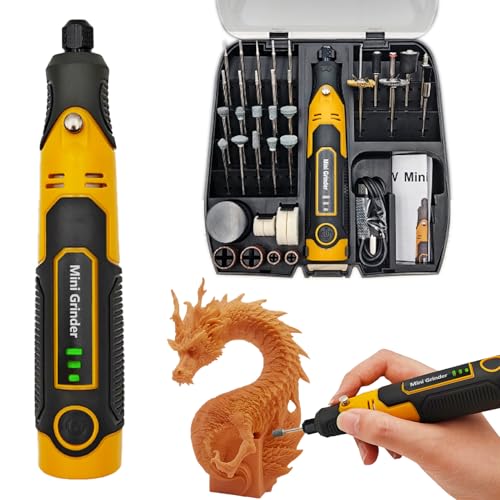
- Cordless, Type-C rechargeable
- Three speeds up to 17,000 rpm
- 58 accessories and storage case
Best For: Portable finishing of cured 3D resin prints
Best Slim Grip
Winartton Electric Resin Drill Kit

- Slim 3.5-inch tool body
- Stepless 8,000–20,000 rpm
- 110 included accessories
Best For: Detailed resin work near a power outlet
Best for Resin Crafts – LET'S RESIN 4-in-1 Sander and Polisher
If you want a resin polishing machine for cast pieces rather than a small detail drill, this LET’S RESIN kit combines 2- and 3-inch sanding discs, a 3-inch grinding wheel, and a cotton polishing wheel. It can be used handheld or on its suction-cup base.
Best For: Sanding, shaping, and polishing resin jewelry, coasters, dice, and other cast projects.
Pros:
- Four sanding, grinding, and polishing setups in one compact tool.
- Three speeds and an LCD showing speed, battery level, and power mode.
- Cordless operation for about 1.5 hours under stated conditions, plus a wired power option.
Cons:
- Polishing paste is sold separately.
- Sanding discs wear out and need periodic replacement.
Choose this one when flat surfaces and varied resin shapes are your main workload. The base is useful for steadier bench work; the handheld mode gives you more freedom around contours.
Fastest Listed Speed – 35,000 RPM Acrylic Resin Polishing Kit
This pen-style resin polishing machine is aimed at hard acrylic items such as false-teeth bases, hard liners, retainers, and clear aligners. Its listed 35,000 RPM speed and included grinding bits make it a compact option for targeted edge work and surface polishing.
Best For: Detail finishing on hard acrylic dental appliances, not broad craft-resin surfaces.
Pros:
- Listed 35,000 RPM speed for focused grinding and polishing.
- USB-C rechargeable, battery-powered design.
- Includes grinding bits and an LCD-equipped aluminum body.
Cons:
- Not intended for soft items or real teeth.
- The supplied details do not specify a case or battery runtime.
Its narrow form favors localized adjustments over sanding a coaster or resin block. For any dental appliance, follow its care instructions or consult a dental professional before removing material.
Pink Portable Pick – 30,000 RPM Acrylic Resin Polisher
If portability matters, this pink resin polishing machine pairs a cordless aluminum-alloy body with USB charging and a travel case. Its adjustable 1,000–30,000 RPM range is intended for tasks from coarse grinding to fine polishing on hard acrylic resin.
Best For: Portable edge smoothing and finishing on hard acrylic bases and liners.
Pros:
- Adjustable speed from 1,000 to 30,000 RPM.
- Weighs a listed 0.25 lb and includes a travel case.
- Comes with 11 attachments for varied finishing tasks.
Cons:
- Not intended for soft materials.
- Its pen-style attachments are less suited to broad, flat sanding than a disc sander.
This is the more compact approach for detailed hard-acrylic work, with additional stated uses in jewelry, crafts, and home repairs. Use care before modifying any dental appliance’s fit.
Gray Kit with Listed Bits – 30,000 RPM Acrylic Resin Polisher
This gray resin polishing machine is a cordless, USB-C rechargeable detail tool for hard acrylic bases and liners. It offers adjustable 1,000–30,000 RPM speed, and its supplied component list spells out a file, 10 polishing bits, a clear guide, and a storage case.
Best For: Buyers who want a portable hard-acrylic finishing kit with its bits clearly listed.
Pros:
- Adjustable speed supports grinding through fine polishing.
- Includes a file, 10 polishing bits, clear guide, and case.
- Listed 0.25 lb aluminum-alloy body for cordless handling.
Cons:
- Not intended for soft materials.
- Small bits are not a substitute for sanding discs on large, flat resin pieces.
Pick this kit for close-up edge and surface work rather than large craft castings. If working on a dental appliance, check its care guidance or ask a dental professional before changing its fit.
Best for Cordless Detail Work – 3.6V Mini Rotary Tool Kit
If your search for a resin polishing machine is really about finishing small, cured 3D prints, this cordless pen-style rotary tool is a compact option. Its 58 attachments support sanding and polishing alongside drilling and engraving.
Best For: Hobbyists smoothing edges and refining details on cured resin models.
Pros:
- Three selectable speeds: 12,000, 14,000, and 17,000 RPM.
- Pen-style cordless design for maneuvering around small details.
- USB-C charging and a stated runtime of up to 130 minutes.
Cons:
- Its minimum speed is 12,000 RPM, leaving no lower-speed setting for especially cautious finishing.
- Handheld format is less suited to broad, flat surfaces than a tabletop sander.
Choose this kit when portability and precise access matter more than quickly sanding large resin pieces. Start on its lowest setting when working near delicate features.
Best for Small Flat Castings – 90W Electric Resin Sander
This corded resin polishing machine uses a rotating sanding surface to reduce the handwork involved in finishing castings. Its seven speed settings and included sandpaper make it particularly relevant for coasters, jewelry, and other small resin pieces.
Best For: Crafters sanding small to medium resin castings, especially pieces with accessible flat surfaces.
Pros:
- Seven adjustable speeds for different sanding stages.
- Includes 26 hook-and-loop sandpaper pieces across eight varieties.
- Compact 5.5-by-4.3-by-2.4-inch body with padded, non-slip feet.
Cons:
- Not recommended by the seller for very large projects such as resin tables.
- Corded operation requires a nearby outlet.
This is the most directly focused sanding station of the three. Its compact working area makes more sense for repeatable craft-sized pieces than for oversized castings.
Best for Resin Jewelry – Resiners 52-Piece Cordless Rotary Kit
For jewelry makers who need a resin polishing machine that can also drill and shape details, this Resiners cordless rotary kit offers eight speeds from 8,000 to 16,000 RPM. The pen-style tool pairs an LED light with 52 accessories for small to medium DIY projects.
Best For: Finishing resin earrings, pendants, keychains, and similar detailed crafts.
Pros:
- Eight speed settings offer more adjustment than a basic three-speed tool.
- Built-in light helps illuminate the immediate work area.
- Includes an organized storage box and a rechargeable battery rated for up to 1.5 hours of continuous use.
Cons:
- Manufacturer notes that it is not suitable for heavy-duty work.
- Battery needs recharging; the stated charge time is two hours.
Its broad accessory set and lower starting speed make it a flexible choice for detail-oriented resin crafts. For extensive flat-surface sanding, a dedicated tabletop machine is a better match.
Most Accessories – Antstone Electric Resin Polishing Kit
If you want a resin polishing machine that can handle more than buffing, the Antstone kit pairs a variable-speed pencil-style rotary tool with 287 accessories for drilling, sanding, cutting, and polishing.
Best For: Resin crafters who want a broad attachment selection for detailed projects.
Pros:
- Includes 287 accessories, such as drills, sanding needles, wool wheels, and brush heads.
- Stepless speed control helps match the tool to different finishing tasks.
- Three-jaw steel chuck accepts bits from 0.3 to 4 mm.
Cons:
- The large assortment may be more than you need for occasional polishing.
- No rotational-speed range is specified in the supplied details.
The extensive accessory set makes this a flexible choice, particularly if your resin workflow includes drilling and shaping as well as polishing.
For finishing cured 3D resin prints away from an outlet, this compact resin polishing machine uses a rechargeable rotary tool with three selectable speeds and 58 accessories.
Best For: 3D resin print makers who prioritize cordless sanding and deburring.
Pros:
- Three speed settings: 12,000, 14,000, and 17,000 rpm.
- Includes 58 accessories in a hard plastic case.
- Type-C charging and a stated battery life of up to 130 minutes.
Cons:
- Three preset speeds offer less granular adjustment than stepless control.
- The supplied notes focus on cured 3D resin prints rather than larger casting projects.
Its portable case and cordless design suit small finishing jobs; check which of the included 2.35 mm and 3.2 mm collets fits your preferred attachments.
The Winartton resin polishing machine has a slim 3.5-inch tool body and stepless speed adjustment, making it worth considering when hand control matters for resin jewelry and other small crafts.
Best For: Crafters seeking a compact, corded tool for detailed resin work.
Pros:
- Includes 110 accessories for tasks such as sanding, drilling, and polishing.
- Stepless adjustment covers a stated 8,000–20,000 rpm range.
- Three-jaw steel chuck clamps bits from 0.3 to 4 mm.
Cons:
- Listed power source is corded electric, limiting use away from an outlet.
- No manufacturer warranty is listed in the supplied details.
This is a practical option if you prefer a narrow pencil-style grip and adjustable speed over cordless portability.
How We Picked the Best Resin Polishing Machine
We focused on the buying differences apparent from the listed products: corded versus cordless power, advertised speed options, tool format, and included accessories. A dedicated sander may suit broad surfaces, while a slim rotary tool is easier to position around jewelry edges, holes, and detailed 3D prints. Accessory counts are useful for judging what comes in the box, but they do not establish attachment quality or how well a tool polishes. Treat stated RPM figures as specifications, not proof of performance under load.
Quick Comparison
For larger flat or gently curved pieces, start by comparing the dedicated resin sander and polishing kits. For pendants, small castings, and print details, compare the compact rotary tools and resin drills. A USB-C rechargeable kit can be convenient at a craft table or away from an outlet; a corded model avoids charging breaks. Check each listing for the exact pads, bits, charging equipment, and replacement consumables included, especially when similarly named kits offer different bundles.
Key Buying Factors for a Resin Polishing Machine
Match the Tool to the Surface
A broad sanding head can help keep pressure even on larger faces. Small rotary attachments reach edges and recesses but can leave dips if held in one spot. If you work on both, prioritize a kit with suitable heads rather than choosing by maximum RPM alone.
Look for Usable Speed Control
Variable speed makes it easier to begin gently near thin edges or small details. High advertised speeds may help with some tasks, but excessive pressure or speed can mark resin or generate heat. Practice on a scrap casting before touching a finished piece.
Check the Abrasive Progression
Polishing cannot reliably erase deep sanding scratches. Look for sanding media in progressively finer grits and a polishing attachment appropriate for cured resin. Confirm whether the kit includes these consumables or whether you will need to buy them separately. Keep abrasives clean so coarse grit does not scratch a surface you have already refined.
Consider Handling and Cleanup
Weight, grip, charging method, and cord placement matter during detailed work. Sanding cured resin creates fine dust: follow the resin and tool manufacturers’ safety instructions, control dust, and use suitable eye and respiratory protection. Verify that both the resin and the tool allow a wet-sanding method before introducing water near any electrical equipment.
Who Should Buy Which Resin Polishing Machine?
Jewelry makers: Choose a manageable rotary kit with small attachments for edges and holes. 3D-print finishers: Favor precise speed control and accessories that fit detailed geometry. Makers of larger castings: Consider a dedicated sander for broad areas, with a smaller tool for corners. Occasional crafters: A versatile rechargeable kit may cover sanding, polishing, and light drilling without a permanent bench setup.
The best Resin Polishing Machine is the one that fits your piece size and gives you a clear path from sanding to final polish—not simply the kit with the most bits or the highest stated speed.