
Choosing the right curing setup can make or break print consistency, production speed, and final durability. If you’re comparing a screen printing conveyor dryer for a small shop or growing print business, the key is matching belt size, heat output, and throughput to your workflow.
This guide helps you narrow the field quickly so you can focus on the models that fit your space, ink types, and daily order volume.
Best 10 Screen Printing Conveyor Dryer Picks for 2026
Best High-Heat Capacity
US Stock 20x24 6000W Flash Dryer

- 20" x 24" heating area for larger prints
- 6000W IR heat with 250℃ max temperature
- Stable compact base with double-fan design
Best For: Screen printers needing a powerful flash dryer for larger garments and faster curing.
Best for Small Shops
220V 4800W Small Conveyor Dryer
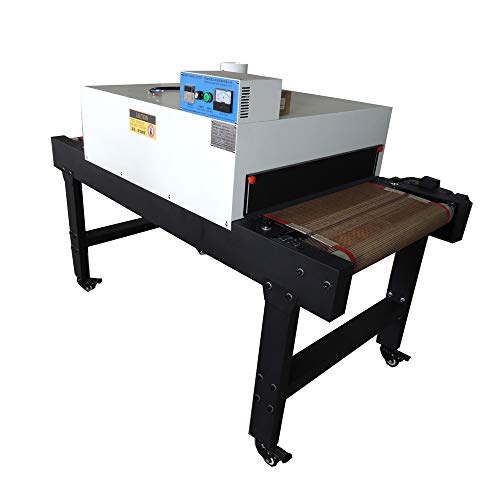
- 4800W IR heating for steady curing
- Digital speed and temperature controls
- Sized for small-shop textile printing
Best For: Small print shops and startups needing a compact tunnel dryer for garment ink curing.
Best for Medium Shops
US Stock 220V 4800W Conveyor Dryer
- Strong 220V/4800W IR curing performance
- Adjustable speed and temperature controls
- 2-year heater warranty for added confidence
Best For: Small to mid-size print shops needing a durable conveyor dryer with consistent curing power.
Best for Production Throughput
- 4800W power for faster heat-up and steady curing
- Adjustable belt speed for different inks and garments
- PTFE-coated fiberglass belt for smoother production use
Best For: Shops that need a full-size conveyor dryer for consistent textile curing.
Best for Small Production Runs
220V 4800W Small T-Shirt Conveyor Dryer

- 4800W heating with adjustable speed and temperature
- 25.6" belt and 39" heating area for wider coverage
- Fire-resistant belt, digital speed meter, and exhaust fan
Best For: Small print shops and startup screen printers needing a compact, adjustable tunnel dryer.
Best for High-Volume Shops
- 25.6" x 39" heating area for larger print runs
- 220V / 4800W with adjustable belt speed
- Works with plastic, silicone, paste, and water-based inks
Best For: Print shops that need consistent curing on a higher-volume textile printing workflow.
Best for Comfort
POVOKICI 3500W Small T-Shirt Conveyor Dryer
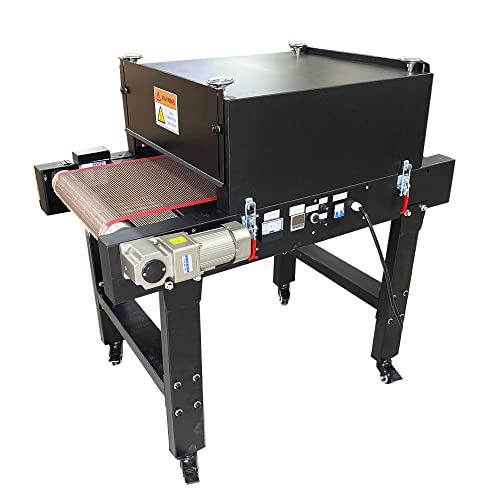
- Compact footprint for tighter workspaces
- Adjustable height, angle, heat, and speed
- Works with plastisol, discharge, and DTF
Best For: Small shops and startups that need a space-saving conveyor dryer for light-to-moderate production.
Best for Heavy-Duty Output
220V 4800W T-Shirt Conveyor Dryer

- Wide 25.6" x 39" heating area
- Digital speed and temperature control
- IR heating with PTFE-coated belt
Best For: Print shops and decorators needing a high-output conveyor dryer for garment ink curing.
Best for Compact Shops
FOKOCALI 3500W Small Tunnel Dryer
- Compact footprint for small print areas
- Adjustable heater and belt-speed controls
- Supports plastisol, discharge, and DTF curing
Best For: Small print shops and startup studios that need a space-saving conveyor dryer for mixed production.
Best Simple Pick
FOKOCALI 4800W Small Conveyor Tunnel Dryer
- 4800W heat with adjustable temperature and belt speed
- IR heating supports even curing across a 25.6" x 39" area
- Good fit for small shops using screen print and DTF inks
Best For: Small print shops and DTF users who need a compact, adjustable tunnel dryer.
Best High-Heat Capacity – US Stock 20×24 6000W Flash Dryer
If you need a screen printing conveyor dryer alternative for smaller shops, this 20" x 24" flash dryer delivers a large curing area and fast IR heat for moving jobs along between colors or into final cure. The 6000W, 220V setup and 250℃ max temperature make it a strong fit for printers who want serious output without jumping to a full conveyor system.
Best For: Screen printers who want a high-heat flash dryer for faster curing, larger platen coverage, and shop production work.
Pros:
- Large 20" x 24" heating area covers bigger shirts and prints
- 6000W IR output helps speed up flash drying and final curing
- Compact, stable base is designed to resist tipping if bumped
- Double-fan design supports more even heat distribution
Cons:
- Requires 220V wiring and does not include a plug
- Flash dryer format is not a true conveyor dryer for continuous production
- Heavier build may be less convenient for very small workspaces
For shops that want a practical screen printing conveyor dryer substitute for spot curing, this model stands out for its size, heat output, and straightforward production utility. It is a better match for batch work and multi-color printing than for automated continuous drying.
Best for Small Shops – 220V 4800W Small Conveyor Dryer
If you need a practical screen printing conveyor dryer for compact production runs, this 220V unit gives you a 25.6-inch belt, IR heating, and adjustable speed control in a relatively small footprint. It’s built to handle common textile inks with steady belt transport and digital temperature control for more consistent curing.
Best For: Small shops, startup print businesses, and makers who want an affordable tunnel dryer for shirts and other textile prints without moving up to a larger industrial machine.
Pros:
- 4800W IR heating with constant heat circulation for more even drying
- Digital speed meter and temperature control for easier, more accurate setup
- PTFE-coated fiberglass belt and steady transport help support routine production
- Works with plastic ink, silica gel ink, paste, and water-based ink
Cons:
- 220V single-phase power may require the right shop wiring
- Small-capacity design is better for light to moderate output than high-volume runs
- Longer 74-inch machine size still needs dedicated floor space
This screen printing conveyor dryer is a good fit if you want straightforward curing performance and adjustable controls in a compact package. It’s not the biggest tunnel dryer, but it covers the essentials well for small-scale garment printing.
Best for Medium Shops – US Stock 220V 4800W Conveyor Dryer
If you need a dependable screen printing conveyor dryer for curing textile inks at a higher output level, this H-E unit offers a practical 220V/4800W setup with adjustable speed and temperature control. It’s aimed at shops that want consistent drying performance for plastisol, silicone, paste, and water-based inks without stepping up to a much larger industrial system.
Best For: Small to mid-size print shops that want a durable, high-heat conveyor dryer with adjustable controls and a compact footprint.
Pros:
- 220V/4800W IR heating gives strong curing power for textile printing
- Adjustable belt speed and temperature help dial in different inks and garments
- Digital speed meter and constant-temp control improve repeatability
- Made for long-term use with a 2-year heater warranty
Cons:
- No plug included, so it requires wiring by a qualified user or electrician
- 210 kg weight makes it less convenient to move or reposition
- Not the best fit for ultra-small home setups
Overall, this screen printing conveyor dryer is a solid pick if your priority is consistent curing, simple controls, and a machine built for regular production rather than hobby-level use. The tradeoff is installation effort, but the output and adjustability make it a strong value for active print shops.
Best for Production Throughput – 4800W Conveyor Tunnel Dryer
If you need a screen printing conveyor dryer that can keep up with regular textile production, this 4800W tunnel unit is built for higher-volume ink curing and steady belt-fed workflow. It offers a 25.6″ x 39″ heating area, adjustable belt speed, and a wide temperature range for drying plastisol, silicone, paste, and water-based inks.
Best For: Shops that want a full-size conveyor dryer for consistent curing on shirts and other textile prints, with adjustable speed and temperature control.
Pros:
- 4800W output and IR heating help it reach operating temperature quickly.
- Digital speed control makes curing more consistent across different inks and garment types.
- PTFE-coated fiberglass belt and constant heat circulation support smoother production runs.
- 2-year heater warranty adds peace of mind for shop use.
Cons:
- 220V hardwired setup means it is not plug-and-play.
- Large footprint and 462 lb shipping weight make it better for dedicated workspaces.
For shops comparing a screen printing conveyor dryer, this model stands out for its practical production-ready features rather than compact size or portability. It is a good fit when consistent curing speed matters more than easy setup.
Best for Small Production Runs – 220V 4800W Small T-Shirt Conveyor Dryer
If you need a screen printing conveyor dryer for a compact shop or low-to-mid volume production, this 220V 4800W unit offers a practical mix of heat, belt control, and usable drying width. The adjustable temperature and speed make it easier to match different inks and print loads without overcomplicating the setup.
Best For: Small print shops, startup screen printers, and shops that need a compact tunnel dryer with flexible settings for mixed ink types.
Pros:
- 220V/4800W output gives solid drying power for everyday garment runs.
- Adjustable heat and belt speed help dial in curing for different inks and fabrics.
- Wide 25.6" belt and 39" heating area support larger prints and better coverage.
- Includes digital speed readout, exhaust fan, and a fire-resistant belt for safer operation.
Cons:
- 220V power requirement may limit where it can be installed.
- Not ideal for high-volume production lines that need a larger industrial dryer.
Overall, this screen printing conveyor dryer stands out as a straightforward option for shops that want adjustable curing performance without stepping up to a massive industrial footprint. It’s a sensible pick if you value control, compact size, and dependable heat for routine production.
Best for High-Volume Shops – 25.6" Conveyor Tunnel Dryer
If you need a screen printing conveyor dryer built for larger production runs, this 220V, 4800W tunnel unit offers a generous 25.6" x 39" heating area, adjustable belt speed, and a wide 0-250°C temperature range. It’s designed to help cure textile inks consistently on T-shirts and other garments without constant babysitting.
Best For: Print shops and serious hobbyists curing plastic, silicone, paste, and water-based inks on a higher-volume workflow.
Pros:
- Large heating area and 5.9 ft. machine length suit bigger garments and steady throughput
- Digital speed control and temperature display make setup more precise
- IR heating, PTFE fiberglass belt, and constant heat circulation support even curing
- Short warm-up time and 2-year heater warranty add practical value
Cons:
- Requires 220V power and licensed electrical installation; no plug included
- Heavy 462 lb. shipping weight makes it a serious shop machine, not a portable unit
- Lamp is excluded from the heater warranty
For shops that want a dependable screen printing conveyor dryer with broader heating coverage and adjustable belt control, this model is a strong production-focused pick. It’s less about portability and more about consistent curing speed for textile printing work.
Best for Comfort – POVOKICI 3500W Small T-Shirt Conveyor Dryer
If you need a screen printing conveyor dryer that fits a tighter workspace without giving up basic curing control, the POVOKICI 3500W is built for entry-level production. Its 18.5-inch belt, adjustable height/angle, and variable speed make it a practical fit for shops handling plastisol, discharge, or DTF jobs.
Best For: Small print shops and startup decorators that want an affordable, space-saving conveyor dryer for light-to-moderate output.
Pros:
- Compact footprint helps it fit into smaller work areas
- Adjustable heater height, angle, heat intensity, and belt speed
- Six infrared lamps provide even curing across the belt
- Handles multiple print types, including plastisol, discharge, and DTF
Cons:
- 220V power requirement limits plug-and-play portability
- Not ideal for high-volume production compared with larger dryers
- Heavy unit may be difficult to move once installed
This screen printing conveyor dryer stands out most as a compact, controllable option for shops that need reliable curing in a smaller footprint. It is a sensible buy if your priority is versatility and workspace efficiency rather than maximum throughput.
Best for Heavy-Duty Output – 220V 4800W T-Shirt Conveyor Dryer
If you need a screen printing conveyor dryer for higher-volume textile work, this 220V 4800W tunnel unit offers a long belt, adjustable speed, and a wide heating area for consistent curing. It is designed for ink drying on garments and includes digital temperature control for more precise setup.
Best For: Print shops and garment decorators that want a high-output conveyor dryer for curing plastisol, silicone, and water-based inks.
Pros:
- Large 25.6″ x 39″ heating area supports bigger production runs
- Digital speed meter and temperature control help dial in drying settings
- IR heating lamp and silicon carbide tube aim for fast, efficient curing
- PTFE-coated fiberglass belt and steady transport improve durability
Cons:
- No plug included, so it must be wired by the buyer
- Heavy 210 kg build makes it less convenient to move
- 2 customer reviews and a middling rating make long-term reliability harder to gauge
Overall, this screen printing conveyor dryer stands out more for output capacity and adjustable controls than for portability or plug-and-play convenience. If your priority is dependable garment curing in a production setting, it has the spec sheet to justify a closer look.
Best for Compact Shops – FOKOCALI 3500W Small Tunnel Dryer
If you need a screen printing conveyor dryer that fits a tight work area without giving up useful output, the FOKOCALI 3500W model is worth a look. It combines a compact footprint with a 18.5-inch belt, adjustable controls, and infrared heating for curing plastisol, discharge, and DTF jobs.
Best For: Small print shops, startup studios, and operators who need a tabletop conveyor dryer for mixed garment and DTF production.
Pros:
- Compact footprint under 9 sq. ft. makes it easier to place in small shops.
- Adjustable heater height, angle, heat intensity, and belt speed add useful control.
- Six infrared lamps help deliver even heating across the curing area.
- Handles multiple print types, including plastisol, discharge, and DTF film sheets.
Cons:
- 220V power means it is not plug-and-play for every workspace.
- The 18.5-inch belt is practical, but still limits max garment width.
- At 323 lb, it is not a lightweight unit to move around often.
For buyers prioritizing space savings and straightforward production versatility, this screen printing conveyor dryer offers a solid entry-level setup. It is a better fit for smaller-volume shops than for high-speed industrial lines, but the controls and heating layout make it a capable everyday curing machine.
Best Simple Pick – FOKOCALI 4800W Small Conveyor Tunnel Dryer
If you need a screen printing conveyor dryer for a smaller shop or a growing side hustle, the FOKOCALI 4800W unit offers a practical mix of heat output, belt control, and a compact footprint. Its adjustable temperature range and variable belt speed make it easier to match curing settings to different inks and production runs.
Best For: Small print shops, DTF users, and screen printers who want a controllable tunnel dryer without jumping to a larger industrial machine.
Pros:
- 4800W heating with adjustable temperature from 0–482℉ for flexible curing
- Variable belt speed helps dial in drying time for different ink types
- Uniform IR heating across a 25.6″ x 39″ surface supports consistent results
- Fire-resistant belt, exhaust fan, and digital speed readout improve usability
Cons:
- Requires 220V power and arrives without a plug, so electrician installation is needed
- At 462 pounds, it is not easy to move once installed
- Warranty details vary in the listing, so buyers should confirm coverage before ordering
Overall, this screen printing conveyor dryer is a strong fit if you want dependable curing control in a small-to-mid production setup. It is especially appealing for users who value adjustable settings and even heating more than portability.
How We Picked the Best Screen Printing Conveyor Dryer
For this roundup, we prioritized practical shop needs: dependable temperature performance, usable belt dimensions, realistic power requirements, and the kind of footprint that works in a small production area. We also looked for options that make sense for both screen printing and, in some cases, DTF or textile curing workflows.
Quick Comparison
The main trade-off is capacity versus space. Compact units are easier to place and are better for lower-volume work, while longer-belt models generally support steadier output and more consistent curing across back-to-back garments. A Screen Printing Conveyor Dryer with a wider or longer belt usually gives you more flexibility, but it also needs more room and more electrical planning.
Key Buying Factors for a Screen Printing Conveyor Dryer
Heat Output and Curing Stability
Wattage matters, but only in context. Higher wattage can help maintain temperature under continuous use, yet even heating and good airflow are just as important for consistent cure results. Look for a unit that matches your ink chemistry and garment thickness.
Belt Size and Conveyor Length
Belt width affects what garment sizes you can run comfortably, while conveyor length influences dwell time. A larger belt is helpful for bigger prints and easier handling, but a smaller system may be enough if you mainly print single garments or short runs.
Shop Space and Electrical Requirements
Before buying, measure your production area and confirm voltage compatibility. Many units in this category require 220V power, so installation planning is essential. Also leave room for loading, unloading, and safe heat clearance around the machine.
Workflow and Volume
If you cure a few dozen pieces a day, a compact conveyor may be plenty. If you’re trying to reduce bottlenecks during rush orders, choose a Screen Printing Conveyor Dryer that can keep pace with your press output without forcing constant adjustments.
Who Should Buy Which Screen Printing Conveyor Dryer?
Smaller shops and start-ups should lean toward compact conveyor tunnel dryers that balance price, footprint, and adequate curing speed. Higher-volume users should focus on longer-belt models with better throughput potential and more room for repeatable operation. If you need the simplest path for quick spot curing rather than full conveyor throughput, a flash dryer may be the better fit.
In short, the best choice is the one that matches your print volume, space, and power setup—not just the highest wattage on the spec sheet.