
Intarsia calls for clean curves, tight-fitting pieces, and control through changing grain and thickness. The right scroll saw makes those cuts easier to manage without forcing you to fight the blade or the workpiece.
These 10 picks span compact, approachable saws and larger machines with more room for detailed projects. Use the buying guide below to match a saw to your workspace, materials, and cutting style.
Best 10 Scroll Saw for Intarsia Picks for 2026
20-Inch Precision Pick
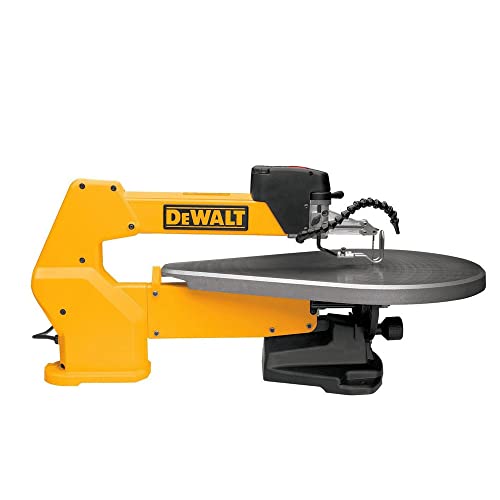
- 20-inch cutting capacity
- Double parallel-link arm
- Variable-speed control
Best For: Detailed wood cuts on a dedicated bench
Lighted Worktable Pick
16-Inch Adjustable Speed Scroll Saw

- Built-in LED work light
- Steel table tilts to 45°
- 400–1,600 strokes per minute
Best For: Lit work on wood or acrylic pieces
Easy-Access Blade Pick

- Flip-open blade-access panel
- Tool-free blade changes
- 16-inch throat; 45° bevel
Best For: Detailed projects with frequent blade changes
Large-Table Pick

- 20-inch capacity
- 16-by-24-inch cast-iron table
- Lift-and-lock upper arm
Best For: Larger patterns and supported detailed cuts
Flexible Cutting Pick
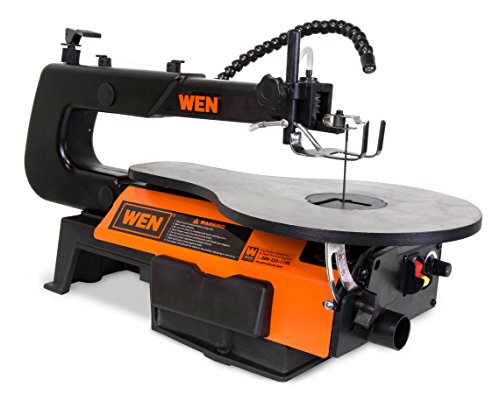
- Two blade orientations
- 400–1,600 strokes per minute
- Flex light and dust port
Best For: Detailed wood cuts and long rip cuts
Best for Everyday Use
JET JWSS-18B 18-Inch Scroll Saw
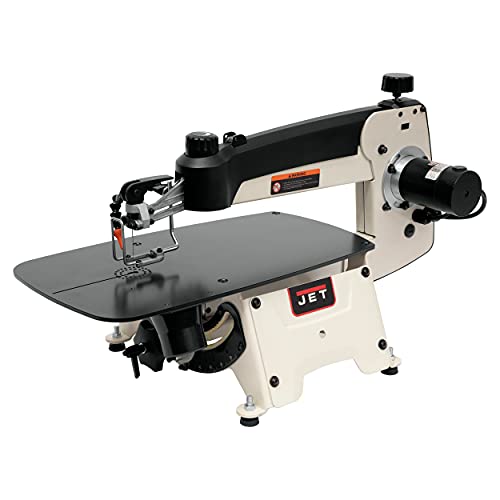
- 18-inch throat
- Large, thick steel table
- Lift-up arm aids blade access
Best For: Frequent interior cuts and larger work surfaces
Easy-Access Pick
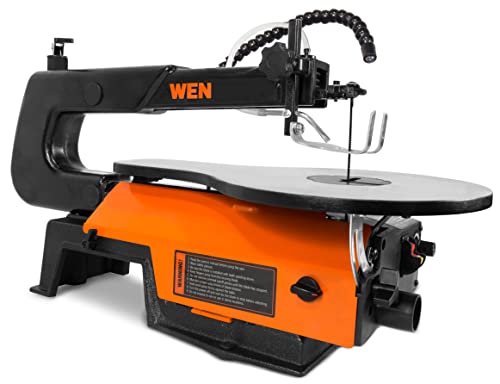
- Flip-open blade-access panel
- 550–1,600 strokes per minute
- Work light and dust port
Best For: Convenient blade access on detailed cuts
Portable Pick
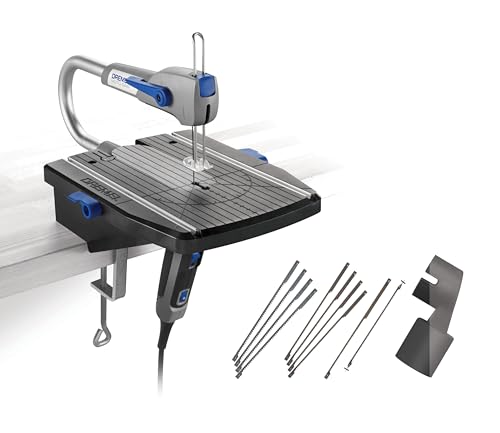
- Detaches for handheld coping cuts
- Variable speed and quick-change tensioning
- Clamp base and dust port adapter
Best For: Portable hobby cutting and handheld coping work
Visibility Pick
SKIL SS9503-00 16-Inch Scroll Saw

- LED light and integrated dust removal
- Keyless changes with on-tool blade storage
- 16-by-10-inch table tilts to 45 degrees
Best For: Bench woodworking with clear cut-line visibility
Speed-Range Pick
Garvee 16-Inch Variable Speed Scroll Saw
- Adjustable 500–1600 SPM speed
- Table tilts left from 0 to 45 degrees
- Dust port connects to a vacuum
Best For: Home-workshop patterns in wood and acrylic
20-Inch Precision Pick – DEWALT DW788 Scroll Saw
DEWALT Scroll Saw, 1.3 Amp, 20 in Steel Blade, With Variable-Speed Trigger, For Precise Cuts (DW788)
Check Price On AmazonIf you’re shopping for a scroll saw for intarsia, the DEWALT DW788 offers a 20-inch capacity and a double parallel-link arm design for precision cutting. Its 1.3-amp motor and variable-speed control make it a substantial option for a dedicated woodworking setup.
Best For: Woodworkers who want a 20-inch saw for detailed wood cuts.
Pros:
- 20-inch capacity accommodates larger patterns.
- Double parallel-link arm design supports precise cutting.
- Variable-speed control lets you adjust the cutting pace.
Cons:
- At a listed 30 kg, it is not a lightweight saw.
- Its 29.5-by-19.5-inch footprint needs dedicated bench space.
The DW788 is worth considering when capacity and controlled cutting matter more than portability. Check that its size fits your workspace before choosing it.
For a scroll saw for intarsia, this 16-inch model combines a 400–1,600-strokes-per-minute speed range with an LED work light and an extra-large steel table. The table tilts from 0° to 45°, giving you support for angled pieces as well as straight cuts.
Best For: Crafters who want built-in lighting and a tilting table for wood or acrylic projects.
Pros:
- LED light illuminates the work area.
- Extra-large steel table tilts to 45°.
- Hold-down shoe, blade guard, and debris port are included.
Cons:
- Its 16-inch capacity offers less room for large patterns than a 20-inch saw.
- The supplied specifications list both 1A power and a 0.9A motor, so verify the motor rating before buying.
This model’s appeal is its combination of visibility, workpiece support, and adjustable speed. Confirm the specifications that matter to your projects before ordering.
The WEN 3922 is a practical scroll saw for intarsia when your patterns call for frequent blade changes. Its side panel opens for blade access, while a thumb-screw adapter allows tool-free changes. The 16-inch throat and 550–1,600-strokes-per-minute speed range suit a range of smaller wood projects.
Best For: Woodworkers making detailed pieces who value convenient blade access.
Pros:
- Flip-open side panel improves access during blade changes.
- Thumb-screw adapter allows tool-free blade changes.
- 16-by-10-inch table bevels up to 45°.
- Includes an air pump, dust port, and three 5-inch blades.
Cons:
- 16-inch throat limits the size of patterns you can maneuver.
- Table bevel is listed up to 45°, without a stated tilt direction.
Choose the 3922 if easier blade changes are high on your list; its cast-iron base and included accessories add useful support for a workshop setup.
If your scroll saw for intarsia needs room to support and turn larger workpieces, the Delta 40-694 pairs a 20-inch capacity with a 16-by-24-inch cast-iron table. Its 400–1,750-strokes-per-minute speed range and table tilt up to 45° left or right offer flexibility for varied cuts.
Best For: Woodworkers who need broad table support and easy blade repositioning for detailed patterns.
Pros:
- Upper arm lifts and locks for blade changes or fretwork positioning.
- Single-lever, tool-free blade tensioning.
- Large cast-iron table tilts left and right.
- Speed dial, dust blower, and tensioning lever are positioned up front.
Cons:
- Listed weight varies between 60 and 70 pounds in the supplied specifications; confirm it if portability matters.
- Large table and 20-inch capacity require substantial workspace.
The 40-694 makes the strongest case for buyers prioritizing table support and accessible adjustments. Plan for its size and verify the listed weight before purchase.
Flexible Cutting Pick – WEN 3921 16-Inch Scroll Saw
The WEN 3921 is a scroll saw for intarsia projects that call for varied cuts and occasional larger workpieces. Its blade mounts in the standard position or at 90 degrees, while the 16-inch throat and variable speed give you room to plan detailed wood cuts.
Best For: Woodworkers who want flexible blade orientation and a work light for detailed cutting.
Pros:
- Accepts blades in two directions, including a 90-degree position for long rip cuts.
- Runs from 400 to 1,600 strokes per minute.
- Includes a flex light, air pump, dust port, and tool-free blade adapter.
Cons:
- Table bevels to the left only.
- Its 16-inch throat is smaller than the JET 18-inch model’s.
Choose this model if blade-orientation flexibility matters more to you than a larger throat or two-direction beveling.
The JET JWSS-18B is a scroll saw for intarsia makers who want a larger, stable cutting surface. Its 18-inch throat, thick steel table, and variable speed suit detailed wood cutting, while the lifting arm helps when moving the blade between interior cuts.
Best For: Woodworkers who prioritize table space, arm access, and frequent blade changes.
Pros:
- 11-5/8-by-21-inch steel table is designed to limit vibration.
- Spring-loaded arm lifts 10 inches and stays raised until pulled down.
- Upper mechanism clamps and tensions the blade together; the slotted table eases changes.
- Arm tilts 45 degrees right and 30 degrees left.
Cons:
- At 54 pounds, it is the heaviest of these three models.
- Reaching a 45-degree left tilt requires removing the dust port.
Its blade-change features and generous table make it a strong fit for patterns with repeated interior cuts, provided you have room for its weight and footprint.
WEN Variable Speed Scroll Saw, 16-Inch with Work Light and Easy Access Blade Changes (3923)
Check Price On AmazonThe WEN 3923 is a scroll saw for intarsia work where blade access can interrupt your cutting rhythm. Its flip-open side panel and tool-free blade adapter simplify access during changes, and its variable speed covers 550 to 1,600 strokes per minute.
Best For: Woodworkers who want straightforward blade access in a 16-inch scroll saw.
Pros:
- Side panel opens for easier blade changes.
- Cuts wood up to 2 inches thick with a 16-inch throat.
- Includes a work light, air pump, dust port, and cast iron base.
Cons:
- Its 550-stroke-per-minute minimum is higher than the 400-stroke minimum of the other two models.
- The 16-by-10-inch table is smaller than the other listed tables.
Pick the 3923 if convenient blade access is your priority; check the table size and speed range against the projects you plan to cut.
Portable Pick – Dremel MS20-01 Moto-Saw
If you need a compact scroll saw for intarsia and want to move between bench work and cuts at the workpiece, the Dremel MS20-01 offers a detachable handheld coping function. Its clamp base lets you set it up on a table or bench.
Best For: Hobbyists who value portability and a handheld cutting option.
Pros:
- Detaches for handheld coping work.
- Variable speed helps match the cut to different materials.
- Auto-tensioning quick-change mechanism simplifies blade changes.
- Dust port adapter helps keep the cut line visible.
Cons:
- The supplied blade length is 3.8 inches, so check that its cutting setup suits your planned pieces.
- Blue edge-guide locking levers shown on the packaging are not included.
Choose this one for its flexible setup rather than a conventional fixed workshop layout; its portable design is the main distinction.
Visibility Pick – SKIL SS9503-00 16-Inch Scroll Saw
SKIL 1.2 Amp 16 in. Variable Speed Scroll Saw with LED Work Light for Woodworking - SS9503-00
Check Price On AmazonFor a scroll saw for intarsia, the SKIL SS9503-00 pairs a 16-by-10-inch tilting worktable with an LED light and integrated dust removal system. Those features are useful when following detailed cut lines at the bench.
Best For: Woodworkers who want workpiece visibility and tool-free blade changes.
Pros:
- LED worklight and dust removal help keep the cut line visible.
- Electronic variable speed provides cutting control across materials.
- Keyless blade changes and on-tool blade storage keep blades accessible.
- Worktable tilts from 0 to 45 degrees for angled cuts.
Cons:
- At 24.7 pounds, it is less convenient to move than the compact Dremel model.
- The table tilts to 45 degrees, not beyond it.
This is a practical bench setup if lighting, dust control, and frequent blade changes are priorities for your pattern work.
Speed-Range Pick – Garvee 16-Inch Variable Speed Scroll Saw
The Garvee 16-inch model is a scroll saw for intarsia shoppers who want a stated 500–1600 SPM speed range for matching the cut to solid wood, plywood, or acrylic. Its table also tilts left from 0 to 45 degrees for angled work.
Best For: Home-workshop crafters cutting patterns in wood and acrylic.
Pros:
- Adjustable 500–1600 SPM speed range.
- Left-tilting table supports cuts up to 45 degrees.
- Dust port can connect to a vacuum cleaner.
- LED light is listed among its features.
Cons:
- The table is described as tilting left, so confirm that direction fits your bevel plans.
- At 26.8 pounds, it is better suited to a set workshop spot than frequent carrying.
Its appeal is the combination of a specified speed range, angled-cut capability, and a vacuum-compatible dust port; check your blade requirements before choosing it for detailed patterns.
How We Picked the Best Scroll Saw for Intarsia
For intarsia, useful specs go beyond motor amperage. We focused on cutting capacity, variable-speed control, blade-change access, table support, and features that help you see and guide a cut. The selection includes compact saws, several 16-inch models, and larger 18- and 20-inch options so buyers can compare machines suited to different project sizes. Listed features are a starting point; check current specifications and blade compatibility before ordering.
Quick Comparison
The Dremel MS20-01 Moto-Saw is the compact option for small projects and limited storage. The WEN 3921, 3922, and 3923, along with the SKIL SS9503-00, Garvee 16-inch saw, and listed 16-inch adjustable-speed model, give shoppers a range of standard-size choices. The JET JWSS-18B sits between those and the larger 20-inch DEWALT DW788 and Delta 40-694. Throat size describes the distance from blade to frame, not the thickness a saw can cut; compare both measurements against your planned work.
Key Buying Factors for a Scroll Saw for Intarsia
Blade Control and Changes
Intarsia often means cutting closely around a pattern, then making small corrections. Look for a usable variable-speed range and controls you can adjust without losing your setup. Easy blade access matters when a piece calls for frequent blade changes. Confirm that the saw accepts the blade type and sizes you intend to use; blade choice has a major effect on kerf width and cut quality.
Capacity, Table, and Visibility
Choose enough throat depth to turn your largest planned blank comfortably. Also verify the maximum cutting thickness if you work with thicker stock. A stable, adequately sized table supports controlled feeding, while a table that tilts lets you make bevel cuts when a design requires them. A light and dust-clearing setup can make pattern lines easier to follow, but neither replaces good shop lighting and dust collection.
Vibration and Workspace
A saw that stays steady is easier to guide through curves. Consider where it will sit, whether you can secure it to a bench, and how much room you need to rotate a workpiece. If possible, try the controls in person: comfort and visibility can matter as much as the spec sheet.
Who Should Buy Which Scroll Saw for Intarsia?
Choose a compact saw such as the Dremel if storage space is the priority and your projects are small. Start with a 16-inch option if you want a conventional benchtop setup for modest-sized patterns; compare blade access, table size, and included lighting rather than choosing on throat depth alone. Consider the 18-inch JET or a 20-inch DEWALT or Delta when larger blanks demand more clearance. Whatever size you choose, budget for suitable blades and practice cuts on your intended wood before starting a fitted piece.