
Water leaks can start quietly but cause expensive damage long before they are noticed. The best whole-home leak detection systems for beginners make it easier to monitor vulnerable areas, receive timely alerts, and respond before a small drip becomes a major repair.
This roundup compares 10 approachable options, from simple standalone alarms to connected sensor kits and automatic shutoff devices. Use the guide below to match coverage, connectivity, installation requirements, and budget to your home.
Best 10 Whole Home Leak Detection Systems for Beginners Picks for 2026
Best Whole-Home Shutoff Kit
YoLink X3 Valve Kit with Sensors

- Includes four sensors, hub, and automatic valve control
- Offline shutoff works after YoLink Control pairing
- Long-range, expandable system with voice-assistant support
Best For: Beginners wanting leak detection with automatic water shutoff
Best Long-Range Alert System
GoveeLife 6-Sensor Leak Detector

- Six sensors provide broad home and outbuilding coverage
- Offers app, SMS, email, and 105 dB alarm alerts
- IP67 sensors claim five-year battery life
Best For: Beginners needing extensive leak alerts without automatic shutoff
Best Expandable Sensor Starter Kit

- Four sensors cover common leak-prone locations
- Long-range hub supports app, email, and text alerts
- Expandable to 300+ YoLink devices
Best For: Beginners building a multi-room alert system over time
Best No-Setup Budget Option

- Works without Wi-Fi, a hub, or app setup
- 90 dB local alarm responds to direct water contact
- Five units provide simple room-by-room coverage
Best For: Beginners wanting basic local leak alarms at low complexity
Simple Drip Coverage

- 12 compact alarms with batteries installed
- Up to 95 dB local audible alert
- No app, tools, or setup required
Best For: Beginners needing simple coverage at multiple leak-prone spots
Connected Home Monitoring

- Three sensors plus a Wi-Fi base station
- 120 dB alarms and phone notifications
- Detects drips and pooling water as shallow as 0.4 mm
Best For: Beginners wanting app alerts and multi-room sensor coverage
Wide-Area Cable Detection

- 76-inch cable senses water across a wider area
- Remote and custom alerts through the La Crosse View app
- 400-foot wireless range with expansion support
Best For: Basements and utility areas needing perimeter-style coverage
Best Beginner Wi-Fi Pick

- Direct 2.4 GHz Wi-Fi connection
- Six probes detect drips and pooling
- 110 dB alarm with app alerts
Best For: Simple app-based monitoring in several household leak-prone areas
Best Automatic Shutoff for a Sink
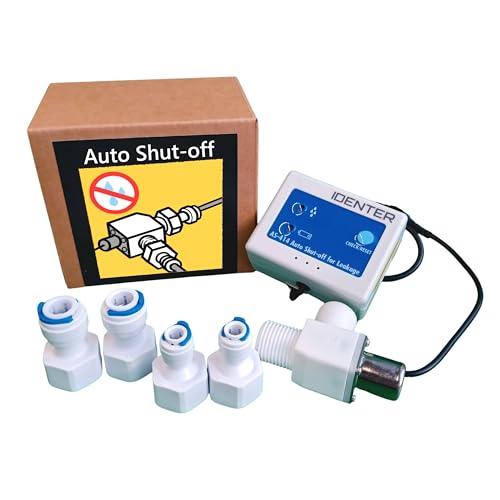
- Closes the valve when water is detected
- Audible beep and flashing indicator
- Includes 1/4-inch and 3/8-inch fittings
Best For: Automatic protection for compatible sink, laundry, filter, and softener lines
Best for Extended Cable Coverage
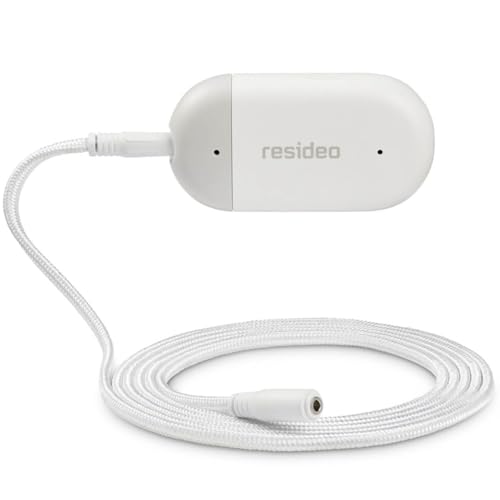
- Includes a 5-foot sensing cable
- Expandable coverage up to 500 feet
- Sends app and email alerts
Best For: Larger basements, utility rooms, and distributed monitoring areas
Best Whole-Home Shutoff Kit – YoLink X3 Valve Kit with Sensors
For beginners comparing whole home leak detection systems for beginners, this YoLink kit is a strong starting point when automatic water shutoff matters as much as leak alerts. It includes four sensors, a valve controller, valve operator, and hub, with no pipe cutting required.
Best For: Homeowners who want whole-home leak monitoring plus automatic shutoff and offline protection after pairing.
Pros:
- Includes four leak sensors and the components needed for valve control.
- YoLink Control can function during Wi-Fi, internet, and some power outages after pairing.
- Long-range LoRa connectivity supports up to 2,034 feet and 300+ devices per hub.
- Works with Alexa, Google Assistant, and IFTTT-related automation.
Cons:
- More involved than a basic standalone water alarm.
- Requires suitable installation conditions and compatible valve placement.
- The broader smart-home ecosystem may be more than beginners need.
This is the most complete option here for beginners who want a foundation for expanding smart-home protection. Its main advantage is the combination of distributed sensors and automatic shutoff, rather than alerts alone.
Best Long-Range Alert System – GoveeLife 6-Sensor Leak Detector
This GoveeLife package is a practical choice for beginners exploring whole home leak detection systems for beginners, especially in larger homes with basements, garages, or outbuildings. The kit pairs six sensors with a gateway and offers app, SMS, and email notifications.
Best For: Homeowners who need broad sensor coverage and strong remote alerts without automatic pipe shutoff.
Pros:
- Six sensors help cover multiple leak-prone areas throughout a home.
- Sub-1G connectivity reaches up to 1,804 feet, including through dense walls.
- Provides app push, SMS, email, and 105 dB local alarm notifications.
- IP67-rated sensors have an upgraded claimed five-year battery life.
Cons:
- Does not include an automatic water shutoff valve.
- The gateway supports only 2.4GHz Wi-Fi.
- Sensors work only with the specified GoveeLife H5059/H5830 system.
With six sensors and several notification methods, this kit offers straightforward coverage for beginners who prioritize knowing about leaks quickly. It is best viewed as an alerting system, not a complete shutoff solution.
Best Expandable Sensor Starter Kit – YoLink 4-Pack with Hub
For beginners choosing whole home leak detection systems for beginners, this YoLink four-sensor kit provides plug-and-play coverage for common trouble spots such as toilets, sinks, appliances, water heaters, and sump areas. Its hub-based design also leaves room to expand later.
Best For: Homeowners who want reliable multi-room leak alerts and the option to add sirens or a shutoff valve later.
Pros:
- Includes a hub and four sensors for immediate multi-location coverage.
- Long-range LoRa communication helps where Wi-Fi coverage is unreliable.
- Supports app, email, and SMS/text alerts with location naming.
- One hub supports more than 300 YoLink devices.
Cons:
- Sensors have no built-in siren.
- Automatic shutoff is not included in this package.
- An additional SpeakerHub or YoLink siren is needed for audible alerts.
This is a sensible middle ground for beginners who want more than standalone alarms but do not yet need a valve kit. Its expandable platform makes it easy to build toward broader smart-home or water-protection coverage.
Best No-Setup Budget Option – Zircon Leak Alert 5-Pack
Beginners looking at whole home leak detection systems for beginners may prefer the simplicity of these Zircon Leak Alert detectors. They require no hub, Wi-Fi, or app setup: add a 9V alkaline battery and place each unit near a likely leak source.
Best For: Renters and homeowners who want inexpensive, immediate local alarms in several rooms.
Pros:
- No wiring, hub, network, or account setup is required.
- A 90 dB alarm sounds when the contacts detect water.
- Five detectors can cover sinks, toilets, appliances, water heaters, and utility areas.
- The units float during flooding and can signal for up to 72 hours.
Cons:
- No phone, app, email, or remote notification capability is provided.
- Each detector requires a 9V alkaline battery, which is not included.
- There is no automatic water shutoff function.
This five-pack is the easiest entry point for localized protection, but it cannot notify you when you are away. Choose it when loud, nearby alarms and simple placement matter more than connected whole-home automation.
Simple Drip Coverage – Flood Buzz 12-Pack
For beginners comparing whole home leak detection systems for beginners, the Flood Buzz Small is a straightforward option for placing alarms near multiple likely leak sources. Each unit arrives with its battery installed and requires no app, tools, or setup beyond putting it on the floor.
Best For: Beginners who want simple, low-maintenance coverage near sinks, toilets, appliances, water heaters, or other individual water connections.
Pros:
- Includes 12 compact alarms for covering multiple locations.
- Factory-installed, sealed battery lasts up to three years.
- Sounds an alarm of up to 95 dB when its contact probes detect water.
- Can be placed in enclosed cabinets or under sinks without app configuration.
Cons:
- It provides a local audible alert rather than phone notifications.
- The sealed battery is not user-replaceable.
- Each alarm covers a specific spot, so broader areas require multiple units.
This is the least complicated choice in the group. Its 12-pack supports broad point coverage, but it is best understood as a collection of local alarms rather than a connected whole-home monitoring network.
Connected Home Monitoring – X-Sense SWS54 Kit
The X-Sense SWS54 adds app-based monitoring to the basics, making it a practical step up for beginners evaluating whole home leak detection systems for beginners. Three sensors connect to a base station and can send real-time phone alerts over a 2.4 GHz Wi-Fi network.
Best For: Homeowners who want distributed sensor coverage, loud local alarms, and notifications on their smartphones.
Pros:
- Three detectors and a base station support coverage in several areas.
- Six-probe design detects dripping water from above and pooling water as shallow as 0.4 mm.
- Both the sensor and base station can sound alarms up to 120 dB.
- Offers app alerts, shared access for up to 12 users, and a stated open-area range of up to 1,804 feet.
Cons:
- Setup requires the app and a 2.4 GHz Wi-Fi network; 5 GHz is not supported.
- The kit contains three detectors, so expanding coverage may require additional equipment.
- Connected features depend on the base station and Wi-Fi setup.
Among these options, the SWS54 offers the most balanced beginner-friendly mix of local alarms and remote awareness. Its probe design is useful around appliances and fixtures, while the app helps you notice a leak when you are away from the monitored area.
Wide-Area Cable Detection – Leak Geek Area Alert
For beginners seeking whole home leak detection systems for beginners, the Leak Geek system is designed for spaces where water may spread across more than one precise point. Its 76-inch sensing cable can monitor a wider area, while the Bridge Gateway sends custom alerts through the La Crosse View app.
Best For: Finished basements, utility rooms, laundry areas, sump pump spaces, and other locations where a leak could travel along a larger perimeter.
Pros:
- The flexible 76-inch cable detects water along its length.
- Bridge Gateway supports remote monitoring and custom app alerts.
- Up to 400 feet of wireless range supports challenging spaces.
- Mounting options and cable-management guides help with installation.
Cons:
- This package is a single sensor system rather than a multi-sensor kit.
- It requires corded electric power.
- Setup involves the Bridge Gateway, sensor, and La Crosse View app.
The Leak Geek stands out when area coverage matters more than placing several small spot alarms. It is a focused solution for wide or irregular spaces, and the system can be expanded with additional sensors as needed.
Best Beginner Wi-Fi Pick – X-Sense Wi-Fi Leak Detector
For beginners comparing whole home leak detection systems for beginners, the X-Sense is an easy starting point for adding alerts in key risk areas. It connects directly to a 2.4 GHz Wi-Fi network without a hub, then sends leak, freeze, and low-battery notifications through its app.
Best For: Beginners who want simple app-based monitoring under sinks, near appliances, or around a water heater.
Pros:
- No hub, wiring, drilling, or mounting required
- Six probes detect drips and shallow pooling water
- 110 dB local alarm plus app notifications
- Monitors temperatures below 39°F and supports up to 12 shared users
Cons:
- Supports 2.4 GHz Wi-Fi only
- One-pack design may require multiple units for broader coverage
The compact, IP66-rated design and replaceable battery make this a practical entry point, but it detects water only where the sensor is placed rather than shutting off the home’s water supply.
Best Automatic Shutoff for a Sink – IDENTER Leak Detector Valve
Among whole home leak detection systems for beginners, this IDENTER unit is aimed at a specific but useful job: detecting water near compatible sink, laundry, filter, and softener lines, then stopping flow automatically. Its sensor triggers an alarm and closes the solenoid valve when water is detected.
Best For: Beginners who want automatic shutoff protection for compatible under-sink or appliance water lines.
Pros:
- Automatically closes the valve after detecting water
- Provides audible and visual alerts
- Includes 1/4-inch and 3/8-inch OD quick-connect fittings
- Battery-powered with power monitoring
Cons:
- Designed for compatible lines rather than whole-home pipe coverage
- Users must verify tubing size before installation
- Installation uses a wall-mount setup and line connections
This is more proactive than an alarm-only sensor because it can stop water flow, but its usefulness depends on whether your plumbing lines match the included fittings and whether the protected area is near the installation point.
Best for Extended Cable Coverage – Resideo L1 WiFi Leak Detector
For beginners who want to expand beyond a single spot, the Resideo L1 is a flexible option among whole home leak detection systems for beginners. It includes a 5-foot cable sensor for monitoring around basements, utility rooms, or appliances and can support additional cables up to 500 feet.
Best For: Beginners who need cable-based coverage across a basement, utility room, or other larger area.
Pros:
- Wi-Fi push and email alerts for leaks, freezing temperatures, and humidity
- Five-foot cable detects water along its length
- Expandable cable coverage up to 500 feet
- Reusable after the cable is dried and reconnected
Cons:
- Additional cables may be needed for maximum coverage
- It does not shut off water by itself; pairing with the Resideo L5 valve is required for that function
- Its 100 dB alarm and app alerts still depend on the device being installed near the area monitored
The cable format makes this a stronger choice for spreading detection through a larger space, while compatibility with the L5 valve offers a path toward a more complete water-control setup later.
How We Picked the Best Whole Home Leak Detection Systems for Beginners
We selected systems and alarms based on the features that matter most to first-time buyers: coverage potential, alert volume, connectivity, ease of setup, sensor placement, power requirements, and the ability to detect water near common trouble spots. The list includes entry-level alarms, Wi-Fi systems, hub-based platforms, freeze monitoring, and an automatic shutoff option so different households can find a practical fit.
Because product capabilities vary, check the manufacturer’s current specifications before purchase. In particular, confirm whether a hub, subscription, compatible app, or separate shutoff valve is required.
Quick Comparison
Standalone alarms such as Zircon and Flood Buzz are generally the simplest choices for basements, laundry rooms, water heaters, and utility closets. Wi-Fi models from GoveeLife, X-Sense, Resideo, and Leak Geek can send remote notifications, but they depend on a reliable wireless network and app setup. YoLink kits use a hub-based ecosystem that can support broader sensor coverage and, with the appropriate equipment, water shutoff control. The sink shutoff product is more specialized: it is useful where an automatic response matters, but it does not replace placing sensors throughout the home.
Key Buying Factors for Whole Home Leak Detection Systems for Beginners
Coverage and Sensor Count
Count the areas you want to monitor before choosing a kit. Prioritize supply lines, water heaters, washing machines, sump pumps, bathrooms, kitchens, and basements. A multi-pack is often more economical, while a single sensor may be enough for a high-risk appliance.
Local Alarms Versus Remote Alerts
A loud siren can alert people who are home, but Wi-Fi or hub connectivity is more useful when you are away. For dependable protection, consider combining audible alarms with app notifications rather than relying on only one alert method.
Hub, Wi-Fi, and Installation Requirements
Direct Wi-Fi sensors may be quick to install but can use more battery power. Hub-based systems may require more setup yet offer an expandable network. Verify router compatibility, app requirements, placement range, and whether the system continues alarming locally during an internet outage.
Freeze Detection and Maintenance
Freeze alerts are valuable in garages, crawl spaces, vacation homes, and exposed plumbing areas. Replace batteries on schedule, test every sensor periodically, and keep detection contacts clean and unobstructed.
Who Should Buy Which Whole Home Leak Detection Systems for Beginners?
Choose a basic loud alarm if you want inexpensive, low-complexity protection for a few leak-prone locations. Choose a Wi-Fi kit if remote notifications are important and you are comfortable using a smartphone app. Choose a hub-based YoLink system if you want to expand coverage over time or integrate leak detection with a broader smart-home setup. Select an automatic shutoff device for a sink or appliance connection when limiting water flow quickly is the priority.
For most people comparing Whole Home Leak Detection Systems for Beginners, the best starting point is a multi-sensor kit covering the highest-risk areas, with remote alerts if the property is frequently unattended. Add automatic shutoff protection where a burst supply line could cause especially severe damage.