
If you need a compact moisture-control appliance for a bedroom, bathroom, basement, or RV, this PSOS 98 OZ Home Dehumidifier review focuses on the features that matter most in daily use.
The listing positions it as a quiet, semiconductor-based unit for spaces up to 1,000 square feet, with a 98-ounce tank and humidity display.
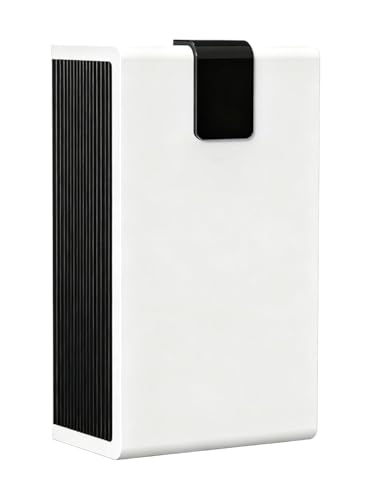
PSOS Dehumidifier Review Summary
The PSOS 98 OZ Home Dehumidifier is aimed at buyers who want a small, easy-to-place unit with visible humidity information and simple automatic protection.
Its strongest fit is a bedroom, bathroom, living area, basement corner, or RV where portability and low operating noise matter more than heavy-duty whole-home extraction.
The advertised dual-semiconductor condensation system, two modes, filtration, auto shutoff, and temperature readout give it a useful feature set for a compact appliance.
Why buy it? The 98-ounce water tank is a practical middle ground for a portable dehumidifier, while the humidity and temperature display helps you judge the room instead of relying only on how it feels.
The manufacturer also claims sleep-mode operation below 30 dBA, which makes the unit more relevant for bedrooms and other quiet spaces.
The main caveat is scale: a compact semiconductor unit is best treated as room-level moisture control, not a substitute for a large compressor dehumidifier in a seriously damp basement.
Review Scorecard
| Category | Score | Editorial assessment |
|---|---|---|
| Compact-room fit | 8/10 | The small footprint and advertised coverage up to 1,000 square feet suit several room types. |
| Noise potential | 8/10 | The listing claims sleep mode below 30 dBA and a light-free sleep environment. |
| Moisture handling | 7/10 | The 98-ounce tank is useful for a portable unit, with auto shutoff when full. |
| Controls and monitoring | 8/10 | A smart panel shows humidity and temperature in real time. |
| Placement flexibility | 8/10 | The 9.44 by 5.9 by 14.17-inch footprint is designed for tight spaces and RV use. |
| Maintenance convenience | 7/10 | A filtration system is included, but the listing does not provide a detailed replacement schedule. |
For shoppers asking “is PSOS 98 OZ Home Dehumidifier worth it,” the answer depends on the moisture problem.
It looks compelling for localized dampness, condensation, and comfort management.
Buyers dealing with persistent water intrusion or a large, wet basement should compare its compact design with a higher-capacity compressor model.
Amazon product details and availability
Key Features and Specifications of PSOS Dehumidifier
Compact design and advertised coverage
The unit measures approximately 9.44 inches long, 5.9 inches wide, and 14.17 inches high.
That narrow, upright shape should be easier to position beside furniture, in a bathroom corner, or inside an RV than a broad floor-standing appliance.
The listing says it covers up to 1,000 square feet, although actual results will depend on room layout, temperature, airflow, and how much moisture enters the space.
98-ounce water tank with auto shutoff
The 98-ounce tank gives the appliance a defined collection capacity before emptying is required.
When the tank is full, the advertised automatic shutoff is designed to stop operation and reduce the chance of overflow.
That is especially useful if you leave the dehumidifier running while away, but buyers should still place it on a stable, water-tolerant surface and check the tank routinely until they understand how quickly it fills in their room.
Two operating modes
The product offers a powerful mode for faster moisture removal and a low-speed sleep mode for quieter nighttime operation.
This is a sensible division for a bedroom or bathroom: use the stronger setting when the room feels damp, then switch to sleep mode when noise and light become more important.
The listing describes sleep operation as below 30 dBA and says the display can create a light-free environment in that mode.
Humidity and temperature monitoring
The control panel displays humidity and temperature in real time.
That information is more useful than a decorative control panel alone because it gives you a way to observe whether conditions are changing.
It can also help you decide when to use the powerful mode or when a room is comfortable enough for quieter operation.
These are monitoring features, not a promise of laboratory-grade measurement, so they should be treated as practical guidance.
Semiconductor condensation and filtration
According to the listing, PSOS uses dual semiconductor condensation technology.
The manufacturer presents this as a way to extract moisture while keeping operation quiet.
The unit also includes a filtration system intended to support airflow and remove fine pollutants such as hair and dust.
That makes filter care part of ownership: keep the intake area clear and follow the product’s maintenance guidance when available.
Auto defrost and ambient lighting
The listing says the dehumidifier can operate at temperatures as low as 41°F, or 5°C, with an auto-defrost system.
That is relevant to cooler rooms, though performance in cold spaces can still differ from performance in a warm bedroom.
Seven-color ambient lighting lets you select or lock a color and use the appliance as a night light.
Buyers who prefer a completely dark room should use the light-free sleep setting rather than treating the lighting as a required feature.
Pros and Cons of PSOS Dehumidifier
Pros
- Useful room-level format: The compact dimensions make it suitable for bedrooms, bathrooms, living areas, basement zones, and RVs.
- Practical monitoring: The humidity and temperature display gives buyers more information when adjusting operation.
- Quiet-mode emphasis: The claimed below-30-dBA sleep mode and light-free setting are useful for nighttime placement.
- Good safety basics: Auto shutoff when the tank is full helps prevent spills.
- Flexible atmosphere controls: Seven-color ambient lighting can function as a night light when desired.
- Cool-room features: The advertised auto-defrost system is intended for operation down to 41°F.
Cons
- Not clearly a heavy-duty solution: The evidence describes a compact semiconductor appliance, so buyers with severe or continuous basement dampness may need a larger category of machine.
- Coverage is an advertised maximum: The “up to 1,000 square feet” claim should not be read as identical performance in every floor plan or humidity condition.
- No detailed technical specifications provided: The supplied product record does not list extraction rate, power draw, hose-drain support, or filter replacement intervals.
- Tank emptying remains part of ownership: Auto shutoff prevents continued operation when full, but it does not eliminate manual emptying.
Who Should Buy PSOS Dehumidifier?
This model makes the most sense for someone managing moisture in one living space at a time.
Bedroom users may value the claimed quiet sleep mode, temperature and humidity readouts, and optional night light.
Bathroom users can benefit from a portable appliance that can be placed where condensation is most noticeable, provided it is kept safely away from direct water exposure.
RV owners and people with limited floor space may appreciate the upright footprint.
It may also suit a homeowner who wants to target a damp corner of a basement rather than condition an entire lower level.
The tank alert and auto shutoff are helpful for occasional unattended operation, although routine checks are still sensible.
Skip this model if your priority is moving very large amounts of water from a persistently wet area, connecting a permanent drain, or getting a clearly documented extraction rate and energy profile.
The available evidence does not establish those capabilities.
In those cases, compare larger compressor-based units with explicit drainage and basement-oriented specifications.
How PSOS Dehumidifier Fits Different Rooms
Bedroom use
The sleep mode is the most relevant feature for a bedroom.
The listing claims operation below 30 dBA and a light-free environment, while the display can help you decide whether humidity is actually improving.
The seven-color light is optional rather than central to the bedroom case.
Bathroom use
In a bathroom, portability matters because the unit can be moved toward the dampest area after showers.
Powerful mode is the logical choice for faster moisture reduction, followed by a quieter setting if needed.
Keep the appliance on a dry, stable surface and avoid direct splashes.
Basement use
The PSOS can be a targeted solution for a basement room or localized damp patch, especially where a small footprint is valuable.
However, a large or persistently wet basement is a tougher assignment than the product record proves.
Buyers should view the 1,000-square-foot figure as a coverage claim, not a guarantee of commercial-strength moisture removal.
RV and small-space use
The compact 9.44 by 5.9 by 14.17-inch dimensions are a natural match for an RV, closet-adjacent area, or other tight location.
The 98-ounce tank avoids the smallest collection capacity, and auto shutoff adds convenience when the unit cannot be watched continuously.
Alternatives to PSOS Dehumidifier
Consider the hOmeLabs dehumidifier line if you want to compare a widely recognized home-appliance brand and larger room-oriented formats.
The Frigidaire dehumidifier range is worth checking for buyers prioritizing established appliance designs and higher-capacity options for damp rooms.
For a compact alternative, browse SEAVON dehumidifiers and compare their footprint, tank size, operating modes, and stated coverage with the PSOS feature set.
Those alternatives should be evaluated by extraction capacity, drainage options, noise, dimensions, and service support—not by a single headline coverage number.
Is PSOS Dehumidifier Worth It?
The PSOS 98 OZ Home Dehumidifier is worth considering when you need compact, room-level moisture control with a visible humidity display, two modes, auto shutoff, and a quiet-sleep focus.
It is best for bedrooms, bathrooms, localized basement dampness, and RVs.
Its limitations are equally important: the available evidence does not document a detailed extraction rate, permanent drainage, or heavy-duty basement performance.
If your moisture problem is moderate and portability matters, this is a sensible feature-led choice.
If the space is persistently wet or very large, choose a model with clearly documented high-capacity extraction and drainage support instead.
Bottom line: buy the PSOS when quiet operation, compact placement, and everyday humidity monitoring are your priorities; skip it when you need industrial-strength dehumidification.