
The Q10 Pro robot vacuum review centers on a practical combination of 8000Pa suction, LiDAR mapping, mopping, and self-emptying convenience.
It is designed for households that want scheduled floor maintenance across hard floors and carpet, with app and voice controls.
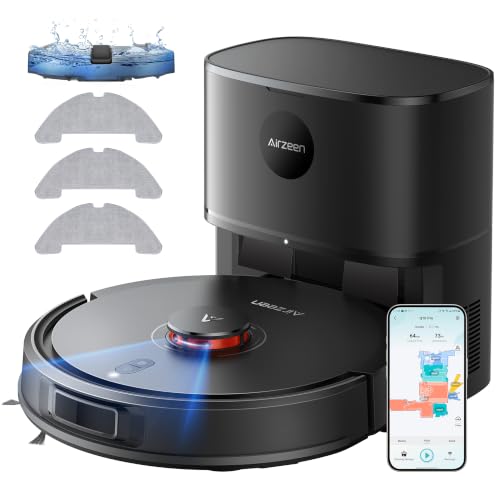
Q10 Pro Review Summary
The Q10 Pro makes the strongest case for itself as an everyday maintenance cleaner rather than a complete replacement for occasional deep cleaning.
Its listed feature set covers the chores that usually make robot vacuums useful: mapping, room coverage, automatic charging, vacuuming, mopping, and debris collection at the dock.
The 3.3L station is specified to hold collected debris for up to 60 days, which can substantially reduce routine emptying.
This model suits busy households, larger floor plans, and homes with a mix of hardwood, tile, and carpet.
The best reason to buy the Q10 Pro is the breadth of automation in one system. Buyers should also note the important setup details: mopping requires carpet protection through removing the mop holder or creating a no-go zone, and smart-home control requires 2.4GHz Wi-Fi.
Review Scorecard
| Category | Score | Editorial assessment |
|---|---|---|
| Vacuuming capability | 9/10 | 8000Pa suction and automatic carpet suction increase support strong everyday pickup. |
| Navigation | 9/10 | 360° LiDAR, SLAM mapping, and obstacle avoidance are a strong navigation package. |
| Mopping flexibility | 8/10 | Three water-flow settings help tailor cleaning, with carpet planning required. |
| Hands-free maintenance | 9/10 | The 3.3L self-emptying station is designed for up to 60 days of debris collection. |
| Coverage and endurance | 8/10 | The listed 150-minute quiet-mode runtime and auto-resume suit larger homes. |
| App and voice control | 8/10 | Scheduling, settings, no-go zones, monitoring, Alexa, and Google Assistant add convenience. |
Key Features and Specifications of Q10 Pro
The Q10 Pro is a robot vacuum and mop built around a multi-surface cleaning system.
The manufacturer listing describes four functions: vacuuming, sweeping, mopping, and self-emptying.
That positioning matters because it puts floor upkeep, navigation, and post-cleaning debris handling into one workflow.
Its headline suction specification is 8000Pa, and the listing says the robot works on hardwood, tile, and carpet.
Automatic carpet detection is said to increase suction by 15% for deeper cleaning.
That is a useful category-specific feature for homes where rugs and hard flooring share the same cleaning route, although the figure remains a manufacturer claim rather than an independent laboratory result.
Navigation uses 360° LiDAR with SLAM technology.
According to the listing, the robot scans the home, creates maps, and uses them for matrix cleaning.
It is also described as avoiding walls, stairs, and toys to reduce missed areas and repeated passes.
The app supports scheduled cleaning, setting adjustments, no-go zones, and real-time monitoring.
The cleaning controls are reasonably configurable for a robot in this class.
There are three suction levels and three water-flow settings, allowing the user to choose a gentler or more intensive approach for different floors.
For mopping, the listing specifically instructs users to remove the mop holder or establish a no-go zone so the vacuum does not wet carpet.
That is not a flaw unique to this model, but it is a planning requirement buyers should understand before relying on mixed-floor automation.
The self-emptying station has a stated 3.3L capacity and is advertised to collect debris for up to 60 days.
Actual intervals will depend on floor area, debris volume, pets, and selected cleaning frequency, but the large capacity should mean fewer manual dustbin tasks than a basic dock.
The robot can run for up to 150 minutes in quiet suction mode, and the listing says it automatically recharges and resumes cleaning where it stopped.
Coverage is described as suitable for homes up to 2,000 square feet.
For controls, the Q10 Pro uses the HomeAloT app and supports Alexa and Google Assistant.
Voice control requires a 2.4GHz Wi-Fi network.
That requirement is worth checking before purchase, particularly in homes that use a 5GHz-only setup or have restrictive router settings.
Pros and Cons of Q10 Pro
Pros
- High listed suction: 8000Pa provides a strong headline specification for hard floors, rugs, and carpet maintenance.
- Detailed navigation system: LiDAR and SLAM mapping should make route planning more systematic than random-pattern cleaning.
- Useful floor-care controls: Three suction levels and three water-flow settings offer practical adjustment.
- Low-touch debris handling: The 3.3L dock is designed to collect debris for up to 60 days.
- Large-home features: A 150-minute quiet-mode runtime, auto-charge, and resume support longer cleaning cycles.
- Convenient scheduling: App controls, no-go zones, monitoring, Alexa, and Google Assistant cover the main remote-control needs.
Cons
- Mopping needs supervision during setup: Carpeted areas require the mop holder to be removed or excluded with a no-go zone.
- Wi-Fi compatibility is limited: Smart controls are specified for 2.4GHz Wi-Fi, so network compatibility should be confirmed first.
- The strongest performance claims are listing-based: The suction increase, coverage, and extended dock interval are manufacturer specifications, not independent test results.
- Not a substitute for deep cleaning: Like other automated maintenance cleaners, it should be viewed as a way to reduce routine floor work, not eliminate every manual pass.
Who Should Buy Q10 Pro?
The Q10 Pro is a good match for busy households that want recurring cleaning with minimal intervention.
Scheduling, room mapping, no-go zones, and automatic resume are especially useful when the goal is to keep floors consistently maintained rather than wait for visible dirt to accumulate.
The self-emptying dock is also appealing to anyone who dislikes emptying a small robot dustbin after every run.
It makes sense for homes with multiple floor types because the listing covers hardwood, tile, and carpet, while automatic carpet detection is intended to raise suction when the robot reaches carpet.
Pet owners may also appreciate the emphasis on pet hair and hands-free debris collection, though the supplied evidence does not provide independent pet-hair test results.
Consider skipping it if you need a completely maintenance-free mop that can cross carpet without planning, or if your home cannot provide compatible 2.4GHz Wi-Fi for smart features.
It may also be excessive for a very small, simple space where mapping and a large self-emptying station provide little practical benefit.
How Q10 Pro Handles Real-World Floor-Care Decisions
Mapping versus repeated passes
LiDAR and SLAM mapping are the Q10 Pro’s most important navigation features.
The intended benefit is a structured cleaning route that can identify walls, stairs, and toys while reducing missed spots and unnecessary repetition.
Carpet and mop boundaries
The Q10 Pro offers flexibility through suction and water-flow settings, but mixed flooring still needs a deliberate boundary strategy.
Remove the mop holder or create a no-go zone before a mopping run that includes nearby carpet.
Dock capacity and household size
The 3.3L self-emptying station is a meaningful convenience feature for frequent cleaning.
Its advertised up-to-60-day interval is most relevant to households that want less daily involvement, although high debris loads can shorten that interval.
Runtime for larger layouts
The stated 150-minute quiet-mode runtime, auto-charging, and resume behavior make the Q10 Pro better suited to extended cleaning sessions.
A larger home may still be cleaned over multiple charging cycles, but the resume feature is designed to preserve continuity.
Alternatives to Q10 Pro
If you want to compare navigation, mopping, or dock designs before deciding, these Amazon-sold product lines are credible alternatives:
- Roborock Qrevo robot vacuum and mop: Consider this line if an all-in-one dock and stronger ecosystem of premium floor-care features are your priority.
- Eufy Clean X10 Pro Omni: A relevant comparison for shoppers focused on automated vacuuming, mopping, mapping, and dock-based maintenance.
- Dreame L10s Ultra robot vacuum: Worth comparing if you want a feature-rich robot platform with an emphasis on automated floor care.
- iRobot Roomba Combo robot vacuum and mop: A recognizable alternative for buyers who prefer the Roomba product family and its established app ecosystem.
Is Q10 Pro Worth It?
The Q10 Pro is worth considering when your priority is automated, repeatable floor maintenance across hard surfaces and carpet.
Its strongest advantages are the combination of 8000Pa listed suction, LiDAR mapping, adjustable cleaning modes, a 3.3L self-emptying station, and a 150-minute quiet-mode runtime with auto-charge and resume.
The buying decision is less straightforward if you want effortless mopping across mixed flooring or cannot use 2.4GHz Wi-Fi.
For the right home, though, the Q10 Pro offers a well-rounded automation package: schedule it, define boundaries, let it map the space, and reduce the amount of routine vacuuming and dustbin emptying on your weekly chore list.