
The best bike action cameras for home studios make it easier to capture usable cycling footage, whether you create tutorials, training videos, vlogs, or short-form content. The right model should balance image quality, stabilization, mounting flexibility, battery life, and an efficient workflow.
This roundup compares 10 options ranging from compact 1080p cameras to 4K and 360-degree models. Use the guide below to match your camera to your studio setup, riding style, and editing needs.
Best 10 Bike Action Cameras for Home Studios Picks for 2026
Best Premium Pick
DJI Osmo Action 4 Essential Combo
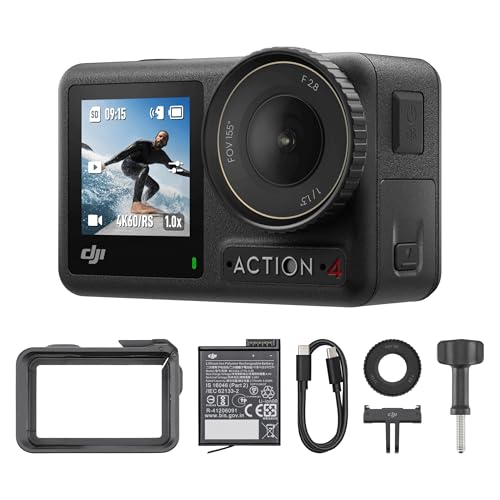
- 1/1.3-inch sensor with low-light imaging
- 4K/120fps video and advanced stabilization
- 10-bit D-Log M plus dual touchscreens
Best For: Premium cycling footage and home-studio editing
Best Lightweight Bike Camera
TIROL SUPPLIES Ultra Light Action Camera

- 41g aerodynamic body
- 1080p video with 170° wide-angle coverage
- 32GB SD card and Wi-Fi app transfers included
Best For: Commuting, touring, and simple ride recording
Best Balanced 4K Combo
DJI Osmo Action 4 Standard Combo

- 4K/120fps video with a 1/1.3-inch sensor
- Three stabilization modes and dual touchscreens
- Waterproof to 18m with cold-resistant battery
Best For: Versatile cycling, vlogging, and studio production
Best Wearable Budget Option

- 26g thumb-sized wearable design
- 1080p recording with a 120° wide-angle lens
- Records while charging and supports up to 512GB
Best For: Discreet hands-free POV cycling footage
Budget 4K Pick

- 4K30 video with 20MP photos
- Electronic image stabilization
- Wi-Fi, remote, and waterproof case included
Best For: Budget cycling footage and simple home-studio content
Creative Reframing Pick

- 5.7K 360-degree video
- 4K single-lens recording
- FlowState stabilization and Horizon Lock
Best For: Immersive cycling videos and flexible post-production framing
Integrated Cycling System

- 4K30 video with six-axis EIS
- GPS, speed, route, and headlight functions
- 64GB card and up to 5.5 hours of recording
Best For: Cyclists wanting footage, ride data, and visibility in one unit
Versatile Starter Pick

- 4K30 video and 20MP photos
- Electronic stabilization with four view angles
- Dual screens, Wi-Fi, HDMI, and two batteries
Best For: Cyclists seeking an adaptable camera for rides and home editing
Compact POV Choice

- 4K30 wide-angle POV recording
- Six-axis EIS 3.0 stabilization
- 35g body with portrait mode and up to 150-minute battery life
Best For: Hands-free cycling and lightweight social-content recording
High-Frame-Rate Upgrade

- 4K60 video and 48MP photos
- 64GB card, two batteries, and EIS
- Vertical filming, Wi-Fi, remote, and 40m housing
Best For: Cyclists wanting smoother footage and a ready-to-use accessory kit
Best Premium Pick – DJI Osmo Action 4 Essential Combo
For creators building bike action cameras for home studios, the DJI Osmo Action 4 Essential Combo offers strong footage quality for both ride recordings and polished edits. Its 1/1.3-inch sensor, 4K/120fps video, stabilization, and 10-bit D-Log M support make it a versatile choice when image quality matters.
Best For: Cyclists and home-studio creators who want premium, stable footage with strong low-light performance and flexible color grading.
Pros:
- 1/1.3-inch sensor and 2.4μm pixels support clearer low-light footage.
- Records 4K at 120fps with a 155° ultra-wide field of view.
- RockSteady, RockSteady+, and HorizonBalancing help smooth and level footage.
- Dual touchscreens, magnetic mounting, and DJI Mic 2/Mic Mini compatibility simplify production.
Cons:
- The Essential Combo does not include the curved adhesive base.
- Its advanced features may be more than casual riders need.
This is the strongest all-around option here for a home studio that needs action footage suitable for editing, slow motion, and professional-looking color work.
Best Lightweight Bike Camera – TIROL SUPPLIES Ultra Light Action Camera
For bike action cameras for home studios on a practical budget, the TIROL SUPPLIES Ultra Light Action Camera keeps the setup simple. It records 1080p Full HD, weighs just 41g, includes a 32GB SD card, and supports Wi-Fi transfers through its companion app.
Best For: Commuters and cyclists who want an inexpensive, lightweight camera that is ready to record out of the box.
Pros:
- Very light 41g design mounts to helmets, handlebars, or seat posts.
- 170° wide-angle lens captures a broad view of roads and trails.
- Includes a 32GB SD card and charging cable.
- Wi-Fi and app support allow convenient video transfers.
Cons:
- Video resolution is limited to 1080p rather than 4K.
- The supplied notes do not list advanced image stabilization.
This model is a sensible starter camera for straightforward ride documentation, especially when low weight and included storage are more important than cinematic resolution.
Best Balanced 4K Combo – DJI Osmo Action 4 Standard Combo
The DJI Osmo Action 4 Standard Combo is a strong fit for bike action cameras for home studios when you want high-quality footage without stepping up to a more expanded accessory package. It combines 4K/120fps recording, low-light imaging, stabilization, dual touchscreens, and waterproof construction.
Best For: Riders who want a capable all-purpose action camera for cycling footage, vlogging, and studio editing.
Pros:
- 1/1.3-inch sensor supports low-light performance and true-to-life color.
- 4K/120fps recording enables detailed slow-motion clips.
- RockSteady, RockSteady+, and HorizonBalancing provide stabilized footage.
- Waterproof to 18m and rated for operation down to -20°C.
Cons:
- The Standard Combo includes fewer accessories than the Adventure Combo.
- Its 145g weight is higher than the ultralight alternatives.
With a broad feature set and strong recording specifications, this is the most balanced choice for creators who want one camera for rides, vlogs, and repeatable home-studio workflows.
Best Wearable Budget Option – Mini Body Camera 1080P
For bike action cameras for home studios that need a discreet point-of-view setup, this thumb-sized mini body camera prioritizes portability. It records 1080p video, weighs 26g, includes a rotatable clip and magnetic lanyard, and can record while charging.
Best For: Riders who want an ultra-light wearable camera for hands-free POV clips and extended recording.
Pros:
- Compact 26g body is designed for discreet all-day wear.
- 360° rotatable clip and magnetic mounting support flexible angles.
- Records while charging and offers up to 120 minutes on a full battery.
- Supports microSD cards up to 512GB.
Cons:
- A microSD card is required but not included.
- It does not support Wi-Fi or Bluetooth transfers.
- The supplied details list it as not water resistant.
This camera is best when a small, hands-free perspective matters more than premium image quality or wireless studio transfers; plan to move files by USB-C.
Budget 4K Pick – AKASO EK7000
The AKASO EK7000 is a practical entry point for anyone comparing bike action cameras for home studios. It records 4K video at 30 fps, includes electronic image stabilization, and offers Wi-Fi transfer for moving clips to a phone or tablet for editing.
Best For: Budget-conscious creators who want a compact camera for cycling footage, indoor demonstrations, vlogging, or occasional outdoor recording.
Pros:
- 4K30 video and 20MP still photos provide detailed footage.
- Built-in EIS helps steady moving recordings.
- Includes a wrist remote, two batteries, and a waterproof case.
- Wi-Fi supports app-based preview, editing, and sharing.
Cons:
- MicroSD card is not included.
- The supplied remote control is not waterproof.
- Battery life is listed at approximately 90 minutes.
The EK7000 is a versatile, low-cost option for straightforward recording. Its compact form, included accessories, and app connectivity suit basic studio-to-bike workflows, though frequent long shoots may require battery planning.
Creative Reframing Pick – Insta360 X3
The Insta360 X3 stands out among bike action cameras for home studios when flexible framing matters. Its 5.7K 360-degree capture lets you choose the viewing angle later, while the 4K single-lens mode provides a more conventional wide-angle setup.
Best For: Creators who want immersive cycling footage, multiple reframing options, and polished clips for vlogging or social media.
Pros:
- 5.7K 360 capture supports post-recording reframing.
- 4K30 single-lens video and a 170-degree MaxView mode offer flexible perspectives.
- FlowState Stabilization and Horizon Lock help keep footage smooth and level.
- Waterproof design and a 2.29-inch touchscreen support outdoor use.
Cons:
- 360 footage may require app-based editing to select the final angle.
- A compatible microSD card is required and not listed among the included items.
- At 200 g, it is heavier than the compact AKASO option.
The X3 is the most creatively flexible choice in this group. It makes sense for a studio workflow built around reframing and editing, especially when you want to capture a ride without committing to one camera angle in advance.
Integrated Cycling System – Spedal S1 4K Bike Camera
The Spedal S1 is a specialized option for shoppers seeking bike action cameras for home studios that also support ride data and safety. It combines 4K recording, six-axis EIS, GPS tracking, a headlight, and cycling-computer functions in one handlebar-mounted unit.
Best For: Cyclists and e-scooter riders who want recorded footage, route and speed data, night visibility, and a ready-to-use storage card in one device.
Pros:
- 4K30 video uses six-axis EIS and a 132-degree field of view.
- Integrated GPS records speed, distance, and routes.
- Night-vision sensor and three-mode headlight support low-light riding.
- Includes a 64GB SD card, handlebar mount, and up to 5.5 hours of recording.
Cons:
- Its 0.96-inch screen is smaller than the Insta360 X3 display.
- IP65 protection is water resistance for rain and splashes, not full waterproofing.
- Its handlebar-focused design is less suited to general handheld studio shooting.
The S1 is the most purpose-built cycling system here. GPS overlays, long battery endurance, included storage, and an integrated light make it appealing for ride documentation and safety-focused recording, while its specialized mount limits versatility away from the bike.
Versatile Starter Pick – AKASO Brave 4
The AKASO Brave 4 is a practical option for creators comparing bike action cameras for home studios. It combines 4K recording, electronic stabilization, adjustable viewing angles, and included mounting accessories, making it suitable for recording cycling footage and reviewing clips at home.
Best For: Cyclists who want a versatile, budget-friendly camera with dual screens, Wi-Fi, and broad accessory compatibility.
Pros:
- Records 4K video at 30 fps and captures 20MP photos.
- Electronic stabilization helps reduce shake in moving footage.
- Includes two batteries, a dual charger, bicycle-friendly accessories, Wi-Fi, and HDMI.
- Waterproof housing supports use to depths of 131 feet, or 40 meters.
Cons:
- The included remote wristband is not waterproof.
- Battery recording time is listed at up to 90 minutes per battery.
- Its fixed-focus fisheye lens and digital zoom offer less framing flexibility than an interchangeable-lens camera.
With its adjustable field of view, front and rear displays, and included accessories, the Brave 4 is a well-rounded choice for cycling capture and basic home-studio editing. Its 4K30 limit is best suited to users who prioritize versatility over higher frame rates.
Compact POV Choice – 4K Mini Body Camera
This 4K mini body camera stands out among bike action cameras for home studios when a small, wearable setup matters. Its 35-gram body, six-axis electronic stabilization, portrait mode, and built-in display make it useful for hands-free cycling footage and quick social-content workflows.
Best For: Riders and creators who want an ultra-light POV camera for helmet, chest, bike-frame, or wearable mounting.
Pros:
- Records 4K video at 30 fps with wide-angle POV coverage.
- Six-axis EIS 3.0 helps smooth footage during movement.
- Supports both landscape and portrait recording for different platforms.
- Weighs 35 grams and offers up to 150 minutes of recording time.
Cons:
- Its compact design provides a smaller 1.5-inch display than many full-size action cameras.
- The supplied notes specify electronic rather than optical stabilization.
- Some mounting and outdoor use depend on the included accessories and waterproof case.
The AG700 is especially appealing for lightweight POV work, with a screen for setup and Wi-Fi/Bluetooth for transferring clips. It is a strong fit for creators who value portability and social-ready framing more than advanced camera controls.
High-Frame-Rate Upgrade – Camlance 4K60 Action Camera
The Camlance 4K60 action camera is a feature-rich choice for shoppers seeking bike action cameras for home studios. It pairs 4K at 60 fps with EIS stabilization, a 64GB card, vertical filming, remote control, and multiple mounting accessories for cycling and motorcycle footage.
Best For: Riders who want smoother 4K60 footage, built-in storage, vertical capture, and a broad accessory package.
Pros:
- Records 4K video at 60 fps and captures 48MP photos.
- Includes a 64GB memory card, two rechargeable batteries, and mounting accessories.
- Electronic stabilization helps improve smoothness during fast movement.
- Supports vertical filming, Wi-Fi, remote control, and waterproof use to 40 meters with the housing.
Cons:
- The supplied notes do not specify the recording time of each battery.
- The 8x zoom is digital, so zoomed footage may not match optical-zoom quality.
- The remote control range is listed at 10 meters.
For cycling footage that benefits from a higher frame rate, the Camlance offers more capture flexibility than a 4K30 model. Its included card and accessories also reduce setup friction, while vertical recording can simplify mobile-first publishing from a home studio.
How We Picked the Best Bike Action Cameras for Home Studios
We focused on features that matter after the ride, not just headline resolution. The selection includes cameras with different strengths: stabilized 4K capture, 360-degree reframing, compact body-worn designs, GPS data, wide-angle coverage, and affordable entry-level recording. We considered video resolution and frame rates, electronic image stabilization, waterproofing, mounting compatibility, wireless transfer, storage support, battery practicality, and the likelihood that footage will be easy to edit for a home-studio workflow.
Specifications can vary by recording mode and accessory bundle, so confirm the included mounts, memory-card requirements, battery capacity, and app compatibility before purchasing.
Quick Comparison
- Best for premium all-around footage: DJI Osmo Action 4 models offer strong stabilization and a creator-friendly design.
- Best for immersive editing: Insta360 X3 captures 360-degree footage that can be reframed later.
- Best for cycling data: Spedal S1 combines a bike camera with GPS and computer-style functions.
- Best for affordability: AKASO and TIROL SUPPLIES models provide accessible options for casual recording.
- Best for discreet mounting: The mini and body-camera designs are useful when a low-profile perspective matters.
Key Buying Factors for Bike Action Cameras for Home Studios
Resolution, Frame Rate, and Stabilization
4K gives you more cropping room for edited videos, while 60fps can produce smoother motion or cleaner slow-motion sequences. Electronic image stabilization is particularly important on handlebars and helmets, where vibration can make footage difficult to watch. A camera with a reliable stabilization mode may produce better results than a higher-resolution model without it.
Mounting and Field of View
Check whether the package supports handlebar, helmet, chest, or body mounting, and verify that replacement mounts are easy to find. Wide-angle lenses show more of the road but can introduce distortion. A 360-degree camera offers the most framing flexibility, though it generally requires more editing and careful attention to lens protection.
Audio, Storage, and Workflow
For narrated rides or studio-produced videos, look for microphone support, wind-noise management, dependable Wi-Fi or USB transfer, and compatible high-speed memory cards. Removable batteries and USB charging are valuable when recording multiple rides. If you edit on a phone or modest computer, simpler single-lens footage may be more convenient than large 360-degree files.
Weather Resistance and Recording Limits
Waterproof ratings are useful for unexpected rain, but seals must be properly closed and may depend on the included housing. Also check operating temperature, loop-recording behavior, overheating limits, and whether stabilization or high frame rates reduce recording time.
Who Should Buy Which Bike Action Cameras for Home Studios?
Choose a DJI Osmo Action 4 if you want a polished primary camera for regular cycling content and value stabilization, durability, and straightforward operation. Choose the Insta360 X3 if you want to decide the framing later or create dynamic follow-style edits. Choose the Spedal S1 if route, speed, and cycling-computer features are central to your videos.
Choose an AKASO model for a practical starter camera or backup angle. Choose a mini body camera when a lightweight, discreet point of view is more important than premium image quality. The TIROL SUPPLIES and other compact 1080p or 4K options can suit occasional riders who want basic footage without investing in a more advanced editing setup.