
If moisture is ruining print quality, the right filament humidity sensor can help you spot problems before they affect a job. Whether you are tracking filament storage, monitoring a dryer, or checking an enclosure, a good sensor makes it easier to keep materials in the right range.
In this roundup, we focus on practical options for 3D printing users who want clearer humidity readings, reliable monitoring, and simpler workflow decisions. Below, you will find a concise buying guide to help you choose the right setup for your printer, storage space, and filament type.
Best 10 Filament Humidity Sensor Picks for 2026
Best for Enclosed Multi-Color Setups
FYSETC Temp & Humidity Monitor

- Compact monitor for enclosed printer and filament storage conditions
- Useful for AMS/CFS and multi-color workflows
- Fast refresh rate with claimed ±2°F / ±5% RH accuracy
Best For: Makers who want a compact temperature and humidity display for enclosed printers or filament storage.
Best for Bi-Directional Printing
BIGTREETECH SFS V2.0 Filament Sensor

- Bi-directional feed support for flexible mounting
- Detects runout, clogs, tying, and extruder issues
- Compatible with Marlin, Klipper, and RRF
Best For: Users who want a compact filament monitor for Bowden or direct-drive printers.
Best Dual-Pack Pick
JEDEW 2-Pack Digital Hygrometer Thermometer

- Includes two monitors for multiple storage spots
- 10-second refresh for quick humidity checks
- Compact and easy to place in bins, jars, or enclosures
Best For: Makers and hobbyists who need a budget-friendly two-pack for filament storage and small enclosures.
Best for Creality Upgrades
Creality Ender 3 V2 Filament Runout Sensor
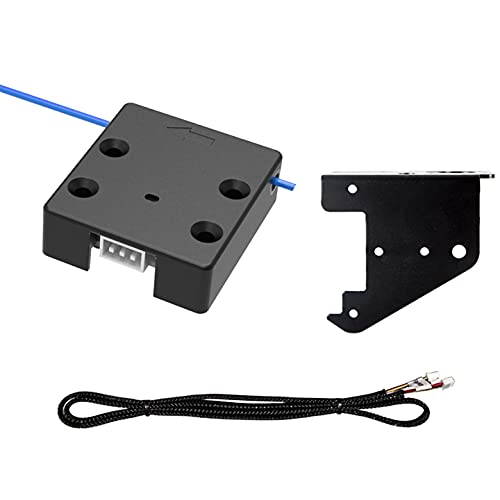
- Supports several popular Ender and CR-series printers
- Mechanical switch design helps preserve smooth feeding
- Blue LED indicator and included cable simplify setup
Best For: Creality printer owners who need a compatible filament runout detector for supported 32-bit boards.
Best for Multi-Pack Monitoring
4-Pack Mini Hygrometer Thermometer

- 4-pack helps track multiple filament storage spots
- Switchable °F/°C with 10-second auto refresh
- Compact size fits jars, cases, and small enclosures
Best For: Filament storage, desiccant jars, and small enclosures that need basic humidity checks.
Best Repair Kit
2-in-1 Filament Sensor & AMS Lite Hub

- Sensor board + 4-in-1 hub in one kit
- Fixes undetected filament and false alarm issues
- Good match for A1/A1 Mini AMS Lite repairs
Best For: Bambu Lab A1/A1 Mini owners needing a combined filament detection and feeder repair part.
Best for Run-Out Protection
IdeaFormer IR3 V2 Filament Sensor

- Detects run-out, tangles, clogs, and jams
- Auto-pauses prints for quick filament reloads
- Easy screw-mounted installation for supported printers
Best For: IdeaFormer IR3 V2 conveyor belt printer owners who want automatic run-out protection.
Best for Bambu P1 Repairs

- Hall effect sensing reduces false runout errors.
- Pre-attached FPC cable simplifies replacement.
- Designed for Bambu Lab P1S/P1P extruders.
Best For: Bambu Lab P1S/P1P users replacing a faulty extruder filament sensor quickly.
Best Smart Runout Detection
Antinsky BIGTREETECH SFS V1.0 Smart Filament Sensor

- Detects filament runout and breaks
- Works with 1.75mm filament setups
- Suited to BTT-compatible printer boards
Best For: 3D printer users who want smarter filament interruption detection on compatible boards.
Best for Enclosed Multi-Color Setups – FYSETC Temp & Humidity Monitor
If you need a simple filament humidity sensor for an enclosed 3D printer setup, this FYSETC monitor gives you quick temperature and RH readings without adding much complexity. It’s a practical add-on for AMS/CFS-style multi-color systems, heated enclosures, and filament storage boxes where consistent conditions can help reduce print issues.
Best For: Makers who want a compact temperature and humidity display for enclosed printers, filament dryers, or storage enclosures.
Pros:
- Compact monitor for checking enclosure and filament storage conditions
- Useful for AMS/CFS and multi-color printing environments
- Fast refresh rate with claimed ±2°F temperature and ±5% RH humidity accuracy
- Works with a wide range of enclosed printer setups
Cons:
- Power supply/batteries are not included
- It’s a monitor only, not an active humidity control device
- Best fit is limited to enclosed or storage-style setups
For buyers who mainly want visibility into storage conditions, this filament humidity sensor is a straightforward way to track whether your enclosure is staying in a safe range. It won’t dry filament on its own, but it can help you make better decisions about when to print, dry, or store spools.
Best for Bi-Directional Printing – BIGTREETECH SFS V2.0 Filament Sensor
If you want a reliable filament humidity sensor-style add-on for smarter print monitoring, the BIGTREETECH SFS V2.0 is a practical pick for 1.75mm setups. It doesn’t measure moisture, but it does help catch runout, clogs, and extrusion issues early, which makes it a useful quality-of-print safeguard for Marlin, Klipper, and RRF users.
Best For: Makers who want a compact, bi-directional filament monitor for Bowden or direct-drive printers.
Pros:
- Bi-directional design supports flexible installation without filament direction limits.
- Photoelectric detection helps identify runout, clogging, tying, and extruder faults.
- Works with popular firmware and many boards with endstop or runout ports.
Cons:
- Not a true filament humidity sensor, so it won’t track moisture levels in filament.
- Requires proper detection-length tuning to reduce false triggers.
Overall, the SFS V2.0 is a strong choice if you want better print interruption detection in a small, lightweight package. For buyers searching around filament humidity sensor keywords, this is really about runout and extrusion protection rather than environmental moisture sensing.
Best Dual-Pack Pick – JEDEW 2-Pack Digital Hygrometer Thermometer
If you need a practical filament humidity sensor for checking storage conditions, this JEDEW 2-pack gives you a simple way to track temperature and humidity in two spots at once. It’s a straightforward LCD meter with quick updates, Fahrenheit/Celsius switching, and enough range for everyday indoor storage, terrariums, humidors, and small work areas.
Best For: Makers and hobbyists who want an affordable two-pack for monitoring filament storage boxes, small enclosures, or multiple rooms.
Pros:
- Two meters included, so you can monitor more than one storage container or location.
- Fast 10-second refresh helps you spot humidity changes quickly.
- Compact, portable design works well in drawers, bins, jars, and enclosures.
- Switchable °F/°C display with decent stated accuracy for basic monitoring.
Cons:
- Not a high-end calibrated instrument for precision lab use.
- Basic display and build are more functional than premium.
- Best suited to monitoring, not actively controlling humidity.
For the price, this is an easy, low-friction way to add a filament humidity sensor to multiple storage areas. It’s especially appealing if you want simple readings rather than advanced features, and the two-pack makes it a good value for anyone managing several containers or closets.
Best for Creality Upgrades – Creality Ender 3 V2 Filament Runout Sensor
If you want a simple add-on to catch broken or empty filament before a print fails, this Creality sensor is a practical pick. It is not a filament humidity sensor, but it does help protect long jobs by pausing the printer when filament stops feeding. Just make sure your printer has a compatible 32-bit board and, on some models, the right firmware before installation.
Best For: Ender and CR-series owners who want a straightforward runout detector for supported 32-bit Creality printers.
Pros:
- Works with several popular Creality models, including Ender 3 V2 and Ender 6.
- Mechanical detection design avoids friction and keeps filament feeding smooth.
- Blue LED status indicator makes it easy to confirm normal operation.
- Includes the cable and mounting bracket needed for compatible Ender 3 setups.
Cons:
- Only works with 32-bit motherboards such as Creality 4.2.2 and 4.2.7.
- Some printers require firmware flashing before use.
- Mounting hardware is not equally universal across all supported models.
This is a solid utility upgrade if your main goal is preventing failed prints from runout rather than monitoring moisture. If you specifically need a filament humidity sensor, you’ll want a different product; if you want reliable runout protection for a compatible Creality machine, this one covers the basics well.
Best for Multi-Pack Monitoring – 4-Pack Mini Hygrometer Thermometer
If you need a simple filament humidity sensor for multiple storage spots, this 4-pack makes it easy to monitor several jars, bins, or enclosures at once. It gives quick digital temperature and humidity readings, with a compact round design that fits well in tight spaces.
Best For: Filament storage, desiccant jars, reptile tanks, and other small environments that need basic humidity tracking across multiple locations.
Pros:
- 4-pack is useful for monitoring several filament containers or storage areas at once
- Switchable °F/°C display and quick 10-second refresh rate
- Compact round body works well in jars, cases, and small enclosures
- Wide temperature and humidity range covers most hobbyist setups
Cons:
- Not a premium lab-grade meter for highly precise environmental control
- Requires placement or mounting; no advanced smart alerts
For buyers who want an affordable, straightforward filament humidity sensor setup, this pack covers the basics well. It is especially handy when you need to check multiple containers without buying separate monitors one at a time.
Best for Run-Out Detection – 1Set Filament Break Sensor Module
If you want a simple, low-cost way to monitor filament status, this filament humidity sensor-style roundup pick is really a filament break/run-out detector for 1.75mm material. It helps pause a print when filament stops feeding, which can save time, material, and failed jobs during long runs.
Best For: 3D printer owners who need a basic filament run-out detector with a 1m cable for 1.75mm setups.
Pros:
- Automatically pauses prints when filament runs out
- Designed for 1.75mm filament systems
- Includes a 1m cable for flexible placement
- Compact accessory that’s easy to add to a printer setup
Cons:
- Not a true filament humidity sensor for measuring moisture levels
- Only works with compatible printer control systems
- Limited to run-out detection rather than broader filament monitoring
This is a practical add-on if your priority is preventing failed prints from empty spools rather than tracking filament moisture. In other words, it fills the run-out protection role that many shoppers looking for a filament humidity sensor actually need when reliability matters more than advanced sensing.
Best Repair Kit – 2-in-1 Filament Sensor & AMS Lite Hub
MITENSLE 2-in-1 Filament Sensor & 4-in-1 AMS Lite Filament Hub Repair Kit for A1/A1 Mini 3D Printers
Check Price On AmazonIf you need a practical filament humidity sensor adjacent upgrade for Bambu Lab A1/A1 Mini maintenance, this repair kit is aimed at fixing feed detection and multi-color switching problems rather than adding dry-storage features. It combines a Hall sensor board and a 4-in-1 AMS Lite hub, making it a smart replacement option when the printer starts throwing false alarms or losing filament detection.
Best For: Bambu Lab A1 and A1 Mini owners who want to restore reliable filament sensing and AMS Lite feeding with one replacement kit.
Pros:
- Includes both the filament sensor board and the 4-in-1 AMS Lite hub
- Targets common issues like false clog alerts, undetected filament, and failed multi-color prints
- Pre-tested parts help improve confidence in replacement quality
- Simple DIY installation with basic hex tools and official guidance
Cons:
- Only fits Bambu Lab A1/A1 Mini setups with AMS Lite compatibility
- Not a true humidity-control sensor for monitoring filament moisture
- Requires opening the printer and powering down before replacement
This is a repair-focused pick, not a general-purpose filament humidity sensor, but it can be the right choice if sensing errors and hub damage are what’s breaking your print workflow. For owners troubleshooting detection and feed reliability, the bundled replacement approach is the main value.
Best for Run-Out Protection – IdeaFormer IR3 V2 Filament Sensor
If you want a practical filament humidity sensor setup for a conveyor-belt printer workflow, the IdeaFormer-3D IR3 V2 focuses on stopping failed prints before they waste time and material. It monitors filament movement, pauses on run-out, and helps catch common feed problems during long jobs.
Best For: IdeaFormer IR3 V2 conveyor belt printers and users running Marlin 2.0.x or Klipper who want automatic pause protection.
Pros:
- Detects run-out, tangles, nozzle clogs, and extruder jams
- Automatically pauses the printer so you can reload filament
- Designed for smoother feeding with less resistance
- Simple screw-mounted installation
Cons:
- Made specifically for IdeaFormer IR3 V2 conveyor belt printers
- Not a true moisture-monitoring filament humidity sensor
- Limited appeal if you need a universal sensor for any printer
Overall, this is a smart pick if your priority is print interruption protection rather than environmental monitoring. It is useful in a filament humidity sensor roundup because it addresses filament handling and print reliability, but buyers looking for moisture measurement should look elsewhere.
Best for Bambu P1 Repairs – Bambu P1S/P1P Filament Sensor
If you need a reliable filament humidity sensor alternative for the Bambu P1 series, this replacement hall switch board is aimed at restoring clean filament detection with minimal downtime. It’s a direct-fit aftermarket part for P1S and P1P owners who want an easy swap instead of troubleshooting false runout alerts or missed pauses.
Best For: Bambu Lab P1S/P1P owners who need a fast, plug-and-play filament sensor replacement for a broken or unreliable extruder sensor.
Pros:
- Hall effect detection helps reduce false filament runout readings.
- Pre-attached ribbon FPC cable makes installation quick and simple.
- Built for hotend/extruder heat and everyday printing use.
- Compatible with Bambu app and firmware behavior.
Cons:
- Only useful if you own a compatible Bambu P1-series printer.
- Not a universal filament humidity sensor for storage or enclosure monitoring.
Overall, this is a practical replacement part rather than a monitoring accessory, but it earns a spot in a filament humidity sensor roundup for buyers who mean filament detection and want dependable runout protection. If your goal is to fix print interruptions on a P1S or P1P, this is a straightforward, low-friction option.
Best Smart Runout Detection – Antinsky BIGTREETECH SFS V1.0 Smart Filament Sensor
If you want a filament humidity sensor-style add-on for your 3D printer workflow, the BIGTREETECH SFS V1.0 is a practical pick focused on detecting filament movement, breaks, and runout before a print fails. It’s aimed at users who want reliable interruption detection with broad board compatibility rather than a full environmental monitoring setup.
Best For: 3D printer owners who want smart filament runout and break detection on compatible BTT and similar control boards.
Pros:
- Detects filament runout and breakage to help prevent failed prints
- Designed for 1.75mm filament and popular BTT board ecosystems
- Compact module that fits cleanly into an existing printer setup
Cons:
- Not a true environmental filament humidity sensor for measuring moisture levels
- Compatibility depends on your printer board and firmware setup
Overall, this is a good choice if you primarily need smarter filament interruption detection, not storage monitoring. If you’re searching for a filament humidity sensor, this model is more about keeping prints alive than tracking ambient conditions.
How We Picked the Best Filament Humidity Sensor
We prioritized usefulness for 3D printing setups, ease of installation, and the ability to provide clear humidity monitoring where filament is stored or conditioned. We also looked for options that fit common use cases such as spool boxes, dry boxes, AMS-style systems, and printer-side monitoring. Because many shoppers search for a Filament Humidity Sensor but actually need either a humidity monitor or a sensor tied to filament handling, we included both practical monitor-focused and filament-system-focused choices.
Quick Comparison
For storage and environment tracking, a dedicated humidity monitor is usually the simplest choice. For printer integration, runout-style modules and system-specific sensor boards can be more useful. If you want to check multiple locations, compact digital meters are often the best value. If you need tighter compatibility with a specific printer ecosystem, a brand-matched replacement sensor may be the safer pick.
Key Buying Factors for Filament Humidity Sensor
Measurement Accuracy and Readability
Look for a display that is easy to read at a glance and a sensor with stable readings. For filament storage, small swings matter, especially for hygroscopic materials like nylon, PETG, TPU, and ABS blends. A sensor that refreshes quickly and stays consistent is more useful than one with extra features you will not use.
Placement and Form Factor
Choose a compact unit if it will sit inside a dry box or printer cabinet. Wall-mounted or stand-style monitors work better for workshops, basements, and storage rooms. If the goal is monitoring a filament path or printer feed system, make sure the sensor fits the hardware and cable layout.
Compatibility with Your Setup
Some options are general-purpose humidity meters, while others are tied to specific printer models or control systems. If you are replacing a part on a Bambu, Creality, BIGTREETECH, or similar setup, confirm connector type, mounting style, and firmware expectations before buying.
Power Source and Convenience
Battery-powered meters are convenient for flexible placement, while wired modules can be better for permanent installation. If you check storage conditions often, choose a device that is simple to move and reset. If it will run in a dry box long term, battery life and display visibility matter more.
Who Should Buy Which Filament Humidity Sensor?
Buy a general digital monitor if you mainly want to protect filament in storage and keep an eye on room conditions. Choose a printer-specific sensor if you want the part to integrate cleanly with your machine or material system. If you are setting up multiple storage points, a multi-pack can be the most cost-effective way to cover several locations at once. In short, the best Filament Humidity Sensor is the one that matches your storage habits, printer platform, and how often you actually check your filament.