
If you service mechanical watches, a reliable watch timing machine helps you assess rate, amplitude, and beat error before making adjustments. It is one of the most practical tools for faster diagnostics and more consistent results.
This roundup focuses on ten buyer-friendly options for hobbyists, watchmakers, and repair benches, with an emphasis on clarity, usability, and value.
Best 10 Watch Timing Machine Picks for 2026
Best for Beginners
YaeTek Watch Timing Machine Tester
- Automatic rate, amplitude, and beat error readout
- Real-time LCD display with visual timing lines
- Adjustable positions and sampling periods
Best For: Hobbyists and first-time users who want a simple mechanical watch tester.
Best for Multi-Beat Calibration
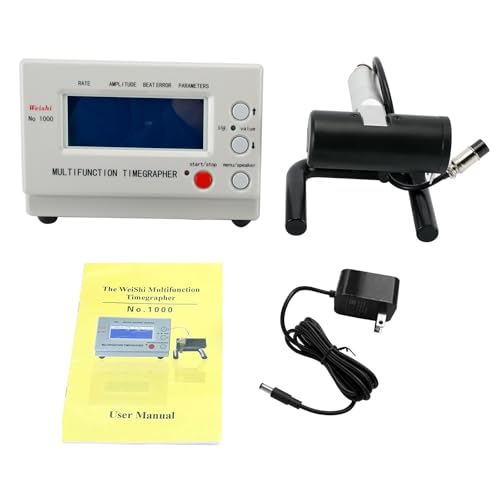
Watch Tester Timing Multifunction Timegrapher NO.1000

- Automatic readout for beat rate, amplitude, beat error, and beat number
- Wide beat support for many common and uncommon mechanical movements
- Practical choice for watchmakers, hobbyists, and collectors
Best For: Users who need a versatile timing tool for checking and regulating mechanical watches.
Best for Easy Readout
No.1900 Watch Tester Timegrapher

- Large LCD screen for clear live measurements
- Displays rate, amplitude, beat error, beat, and lift angle
- Easy setup for beginners, collectors, and hobby repair
Best For: Collectors and hobbyists who want a simple, easy-to-read timing tool for mechanical watches.
Best for Easy Setup
Watch Tester Timegrapher No.1000
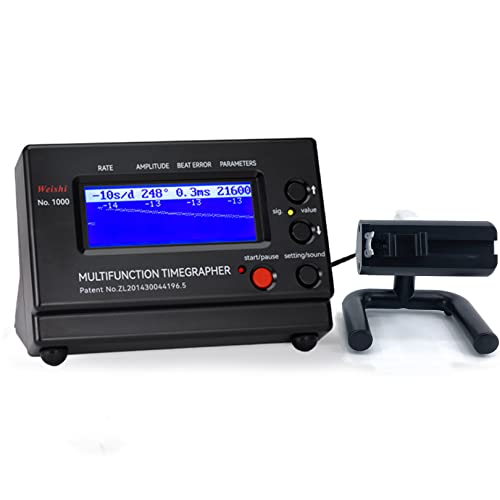
- LCD screen displays rate, amplitude, beat error, beat, and lift angle
- Easy to use right out of the box for mechanical watches
- Automatically adjusts signal level across different watches
Best For: Watch collectors and hobbyists who want a simple mechanical watch timing machine.
Best for Coaxial Movements
New Coaxial MTG Watch Tester Timing Machine NO.1900

- Larger LCD is easier to read during timing checks
- Supports coaxial and most mechanical watch movements
- Wide beat selection helps with common and specialized calibers
Best For: Watchmakers and enthusiasts who need a clear, bench-ready timing tool for coaxial and mechanical watches.
Best for Precision Diagnostics

- ±0.1s/d accuracy on supported mechanical movements
- Displays rate, amplitude, beat error, and timing curves
- Ideal for multi-position testing and workshop calibration
Best For: Watchmakers and technicians who need detailed mechanical movement diagnostics.
Best for Real-Time LCD Readouts

- Automatic rate, amplitude, and beat error readings
- LCD screen shows the watch “tic tock” in real time
- Multiple sampling periods help refine measurements
Best For: Hobbyists and repair users who want a straightforward mechanical watch tester with live LCD diagnostics.
Best for Professional Calibration
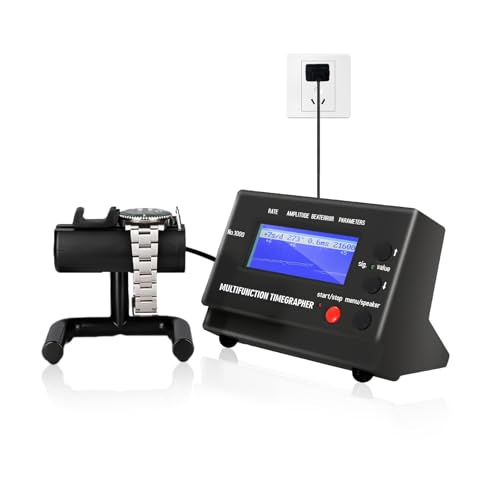
- ±0.1s/d claimed accuracy with averaging
- Shows rate, amplitude, beat error, and lift angle
- Mechanical watches only; no quartz support
Best For: Watchmakers and serious hobbyists who need a dedicated mechanical timing tool.
Best for Multi-Function Testing
Franc Moody Timegrapher No. 1000 Watch Tester

- Tracks rate, amplitude, and beat error together
- LCD display shows live waveforms and frequency data
- Manual beat selection and lift-angle control improve flexibility
Best For: Watchmakers and enthusiasts who need a versatile mechanical watch timegrapher.
Best Simple Pick

- Measures rate, beat error, and amplitude
- Graphical and numerical display for quick diagnosis
- Beginner-friendly starter tool for mechanical watches
Best For: Beginner watchmakers and hobbyists who need a straightforward watch timing machine.
Best for Beginners – YaeTek Watch Timing Machine Tester
If you want a practical watch timing machine for basic mechanical watch checks, the YaeTek No. 1000 is an approachable place to start. It reads rate, amplitude, and beat error automatically, and the LCD display makes it easy to follow the timing results in real time.
Best For: hobbyists, collectors, and first-time users who want a straightforward watch timing machine for mechanical watches.
Pros:
- Automatically calculates rate, amplitude, and beat error
- Easy-to-read LCD screen with live timing visuals
- Adjustable testing positions and sampling periods
- Works with 110V-220V and includes a US plug
Cons:
- Not intended for quartz watches
- Build and interface are more functional than premium
- Learning curve for users new to timing measurements
This watch timing machine stands out for its simple setup and automatic readouts, making it a solid value pick for routine mechanical watch diagnostics. It is not the most advanced model, but for straightforward home use, it covers the essential measurements most buyers need.
Best for Multi-Beat Calibration – Watch Tester Timing Multifunction Timegrapher NO.1000
If you need a practical watch timing machine for diagnosing and regulating mechanical watches, the Timegrapher NO.1000 covers the core measurements without adding much complexity. It automatically calculates beat rate, amplitude, beat error, and beat number, making it useful for both routine checks and more detailed servicing.
Best For: Watchmakers, repair hobbyists, and collectors who want a straightforward timing tool for a wide range of mechanical movements.
Pros:
- Automatically measures beat rate, amplitude, beat error, and beat number in real time
- Supports a wide range of beat settings, including many common automatic and manual selections
- Works with most mechanical watches and suits both professionals and enthusiasts
- Simple corded setup with CE certification and English-language version
Cons:
- Designed for mechanical watches only, not quartz models
- Basic white-box presentation and older-model styling may feel utilitarian
- Manual beat selection can take extra time for uncommon movements
This watch timing machine is a strong fit if you want broad compatibility and the essential timing data used in everyday watch regulation. It’s not the fanciest unit, but it offers the functionality most users need at the bench.
Best for Easy Readout – No.1900 Watch Tester Timegrapher
If you want a practical watch timing machine for checking mechanical movements at home or in a repair bench setup, the No.1900 keeps things simple with a large LCD readout and live measurements for rate, amplitude, beat error, beat, and lift angle. It’s aimed at users who want clear data without a steep learning curve.
Best For: Watch collectors, hobbyists, and light professional use when you want an easy-to-read timing machine that works right out of the box.
Pros:
- Large LCD screen makes timing results easy to read at a glance
- Shows rate, amplitude, beat error, beat, and lift angle live
- Simple setup is friendly for beginners and casual users
- Works with most mechanical watches, including coaxial models
Cons:
- Not intended for quartz watches
- More of a bench tool than a portable gadget
- Basic feature set compared with higher-end shop-grade units
As a watch timing machine, the No.1900 stands out for straightforward operation and readable results rather than advanced analysis features. That makes it a smart pick if you mainly need dependable timing checks for collection maintenance or routine adjustments.
Best for Easy Setup – Watch Tester Timegrapher No.1000
KINSANINC Watch Tester Timegrapher No.1000, Watch Timing Machine Calabration for Mechanical Watches
Check Price On AmazonIf you want a straightforward watch timing machine for checking the health of mechanical watches, the Watch Tester Timegrapher No.1000 is a practical pick. It displays rate, amplitude, beat error, beat, and lift angle on an LCD screen, and it’s designed to be easy to use right out of the box.
Best For: Watch collectors, hobbyists, and small repair setups that want an easy-to-read timing machine for mechanical watches.
Pros:
- Clear LCD readout shows the key timing metrics at a glance
- Works with most mechanical watches, including coaxial models
- Automatically adjusts signal level when switching between watches
- Backed by a one-year warranty and customer support
Cons:
- Limited to mechanical watch testing, so it won’t help with quartz watches
- Build materials are basic compared with higher-end shop equipment
Overall, this watch timing machine is a solid value if you want a simple, readable tester without a steep learning curve. It’s especially appealing for enthusiasts who need dependable measurements and don’t want to spend extra on more advanced lab-style equipment.
Best for Coaxial Movements – New Coaxial MTG Watch Tester Timing Machine NO.1900
OTOOLWORLD New Coaxial MTG Watch Tester Timing Multifunction Timegrapher LCD Screen NO.1900
Check Price On AmazonIf you need a practical watch timing machine for everyday diagnostics, the OTOOLWORLD NO.1900 is built to measure beat rate, amplitude, beat error, and beat number in real time. Its larger LCD makes readings easier to see than smaller-entry models, and the unit is especially useful for coaxial watches and general mechanical watch testing.
Best For: Watchmakers and serious hobbyists who want a straightforward timing machine with a clear display and broad mechanical watch compatibility.
Pros:
- Larger LCD screen improves visibility and makes setup easier
- Handles coaxial watches better than many basic timegraphers
- Automatic and manual beat selections cover a wide range of movements
- Includes multi-region plugs for easier international use
Cons:
- Requires a corded power connection, so it is not portable
- Interface is functional rather than especially modern
Overall, the NO.1900 is a solid watch timing machine for users who care more about readable results and movement compatibility than extra bells and whistles. It fits best in a repair bench or collection workspace where accuracy and convenience matter most.
Best for Precision Diagnostics – SWANSOFT Timegrapher No.1000
If you need a watch timing machine that gives detailed, workshop-friendly readings, the SWANSOFT Timegrapher No.1000 is built for mechanical movement diagnostics. It measures rate, amplitude, beat error, and lift angle in a clear color display, making it a practical bench tool for watchmakers, repair shops, and serious hobbyists.
Best For: Watchmakers and technicians who want a feature-rich mechanical watch timing machine for calibration, troubleshooting, and movement evaluation.
Pros:
- High-precision timing readout with up to ±0.1s/d accuracy on supported movements.
- Shows multiple key metrics at once, including rate, amplitude, beat error, and timing curves.
- Supports testing across six positions and a wide sampling range for different mechanical watches.
- Clear LCD interface makes it easier to spot timing issues during bench work.
Cons:
- Only works with mechanical watches, not quartz movements.
- More advanced than casual users need if you only want occasional checks.
- Designed as a bench instrument, so it takes up more workspace than basic tools.
This watch timing machine stands out for buyers who want more than a simple rate check. Its detailed measurements and broad diagnostic range make it a solid choice when accuracy and movement analysis matter most.
Best for Real-Time LCD Readouts – NO.1000 Watch Timing Machine
If you want a practical watch timing machine for mechanical watch checks, the NO.1000 focuses on the essentials: rate, amplitude, and beat error displayed in real time on an LCD screen. It’s designed to make timing diagnosis straightforward, with automatic signal adjustment and multiple sampling periods for more stable readings.
Best For: Hobbyists, watchmakers, and repair shops that need a simple timegrapher-style tester for mechanical watches.
Pros:
- Shows rate, amplitude, and beat error automatically
- Real-time LCD display makes readings easy to follow
- Multiple sampling periods help improve measurement precision
- Auto-adjusts signal level when testing different watches
Cons:
- Built for mechanical watches, not quartz models
- Plastic construction is functional rather than premium
- More of a calibration tool than a beginner-friendly gadget
This watch timing machine is a solid fit if you care more about clear diagnostics than advanced extras. It offers the core measurements most users need, with a practical display and flexible timing intervals that suit routine watch testing and calibration work.
Best for Professional Calibration – SWANSOFT Timegrapher No.1000
If you need a watch timing machine for diagnosing and calibrating mechanical movements, the SWANSOFT Timegrapher No.1000 offers a very serious spec sheet for bench use. It measures rate, amplitude, beat error, and lift angle, with a wide timing range that makes it useful for both healthy watches and problem movements that need deeper diagnosis.
Best For: Watchmakers, repair techs, and serious hobbyists who want a dedicated mechanical watch timing machine for accurate movement analysis and calibration.
Pros:
- High-precision ±0.1s/d claimed accuracy with 50-sample averaging
- Displays rate, amplitude, beat error, lift angle, and timing curves in real time
- Supports a broad measurement range for modern, vintage, and faulty mechanical watches
- Useful 6-position testing and frequency analysis for more advanced diagnostics
Cons:
- Mechanical watches only; it does not work with quartz movements
- More machine than casual buyers need if you only check one or two watches occasionally
- Not as compact or simple as basic entry-level timing tools
As a watch timing machine, this model stands out for its professional-style readouts and broad diagnostic coverage, making it a strong fit for users who care about measurable movement performance rather than just a quick pass/fail check.
Best for Multi-Function Testing – Franc Moody Timegrapher No. 1000 Watch Tester
If you want a practical watch timing machine for diagnosing and regulating mechanical watches, this Franc Moody Timegrapher gives you the core measurements in one place. It tracks rate, amplitude, and beat error in real time, while the LCD frequency display and automatic signal adjustment help make testing more straightforward for everyday watchmaking work.
Best For: Watchmakers and hobbyists who need a versatile timegrapher for mechanical watch calibration and troubleshooting.
Pros:
- Measures rate, amplitude, and beat error simultaneously
- LCD screen shows live data and beat frequency diagrams
- Manual and automatic beat selection supports a wide range of movements
- Adjustable testing positions and sampling periods add flexibility
Cons:
- Requires some know-how to choose the correct beat and lift angle
- Not ideal for casual users who only need basic time checks
Overall, this watch timing machine is a solid fit if you need a feature-rich tester that can handle common mechanical movements with more control than a basic analyzer. It leans toward serious troubleshooting and calibration rather than simple at-a-glance checking.
Best Simple Pick – TICFROG Timegrapher No.1000
The TICFROG Timegrapher No.1000 is a practical watch timing machine for checking mechanical watch accuracy at home or in a small repair setup. It measures rate, beat error, and amplitude, giving you the core data needed to spot whether a watch is gaining, losing, or running unevenly.
Best For: Beginner watchmakers and hobbyists who want a simple, affordable way to analyze mechanical watch timing.
Pros:
- Measures the key timing values most users need: rate, beat error, and amplitude
- Shows results both graphically and numerically for easier diagnosis
- Simple enough for beginners, with included sensor, manual, and US adapter
- Battery-powered and compact for bench use
Cons:
- Designed for mechanical watches only, not quartz models
- Entry-level feature set may not satisfy advanced professional users
Overall, this watch timing machine focuses on the essentials rather than extras, which makes it a smart pick for users who want straightforward readings without a steep learning curve. If you mainly need reliable timing diagnostics and beginner-friendly operation, it covers the basics well.
How We Picked the Best Watch Timing Machine
We prioritized models that are commonly used for mechanical watch testing, offer readable LCD-based results, and appear suitable for calibration work in a home bench or small workshop. We also favored straightforward controls, practical form factors, and products that fit a range of experience levels.
Quick Comparison
When comparing a Watch Timing Machine, look first at display clarity, detection consistency, and whether the interface makes it easy to compare rate across positions. If you are choosing between budget-friendly units, the main tradeoff is often simplicity versus measurement detail and build quality.
Key Buying Factors for Watch Timing Machine
Measurement Readouts
The most useful tools show rate, amplitude, and beat error in a way that is easy to read at a glance. If you plan to regulate watches regularly, a stable and legible display matters more than extra features you may rarely use.
Compatibility with Mechanical Watches
Choose a model designed for mechanical wristwatches, since quartz timing needs are different. Some units are better suited to standard three-hand watches, while others handle more varied calibers and service situations.
Ease of Use
A good Watch Timing Machine should be simple to position, start, and interpret without a steep learning curve. This is especially important for beginners who want dependable results without spending time on complex setup.
Workshop Fit
Consider size, display angle, and how the tool fits your bench workflow. If you test watches often, a compact unit with an easy-to-clean surface and quick operation can save time during repeated checks.
Who Should Buy Which Watch Timing Machine?
Beginners usually benefit from an affordable, easy-to-read model that handles basic timing checks well. Hobbyists who service multiple watches may want a more robust unit with a clear LCD and consistent day-to-day performance. Professional watchmakers and repair technicians should focus on measurement stability, workflow speed, and a layout that supports frequent regulation and verification.
In short, the best choice depends on how often you test watches, how much detail you need from each reading, and whether you want a simple diagnostic tool or a bench staple for regular calibration work.