
Choosing a benchtop planer for woodworking comes down to more than width alone. Cutterhead design, feed speed, motor power, and dust management all affect how smooth your boards come out and how much sanding you still need.
Below, we’ve narrowed the field to ten strong options for hobbyists and serious shop users, with an eye toward consistency, ease of setup, and real-world value.
Best 10 Benchtop Planer for Woodworking Picks for 2026
Best for Wide Boards
DEWALT 13-Inch 2-Speed Thickness Planer

- 13-inch cutting width for wider stock
- Three-knife head with longer knife life
- Two feed speeds for roughing or finishing passes
Best For: Woodworkers planning wider boards and frequent thicknessing jobs.
Best for Smooth Finish Cuts
JET 13-Inch Helical Benchtop Planer

- Helical cutterhead with 26 quick-change inserts
- 2-speed feed for better finish control
- Cast iron bed and four-post design help reduce snipe
Best For: Woodworkers who want smoother planed surfaces and strong control in a benchtop machine.
Best for Smooth Finishes
DEWALT DW734 12-1/2-Inch Benchtop Planer

- 96 cuts per inch for a cleaner finish
- 15-amp motor tackles deeper hardwood cuts
- Four-column lock helps reduce snipe
Best For: Woodworkers who want a portable planer with excellent finish quality and dependable power.
Best for Tear-Out Reduction
13-Inch Spiral Helical Thickness Planer
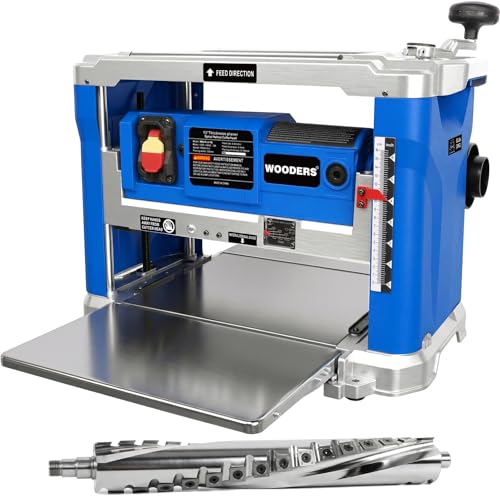
- Spiral helical cutterhead with carbide inserts
- 15A / 2000W motor handles hardwood planing
- 13-inch width with micro-adjustable depth control
Best For: Woodworkers who want cleaner cuts, strong power, and repeatable settings in a 13-inch benchtop planer.
Best for Wider Boards
WEN PL1303 13-Inch Three-Blade Planer
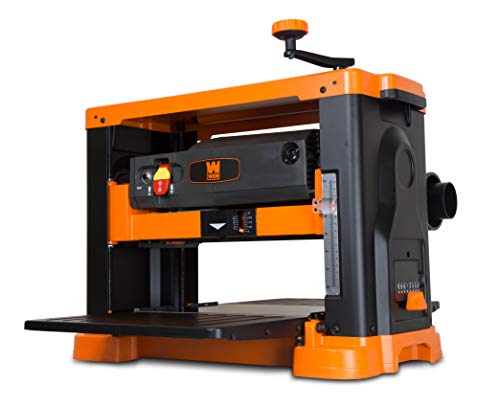
- 13-inch width capacity handles larger boards
- 15-amp motor with three-blade cutter head
- Depth control and support tables help reduce snipe
Best For: Woodworkers who need a compact planer that can handle wider boards and regular shop use.
Best for Everyday Use

- 13-inch width suits wider boards and rough stock
- 2000W motor with overload protection for tougher jobs
- 3-in-1 dust port supports common shop-vac sizes
Best For: Woodworkers who need a wider-capacity planer for general shop use and hardwoods.
Best for Heavy-Duty Width
VEVOR 13" 2000W Thickness Planer

- 13-inch capacity handles wider boards
- 2000W motor for fast, consistent stock removal
- Extended table support improves stability on long lumber
Best For: Woodworkers who need a wide-capacity benchtop planer for shop use and longer boards.
Best for Heavy-Duty Thicknessing

- 1250W motor handles rough stock and reclaimed wood
- Adjustable depth and feed rate improve control
- Low-dust chip removal keeps the workspace cleaner
Best For: Woodworkers who need a compact planer for strong material removal and thickness control.
Best for Hardwood Planing
VEVOR 13-Inch Two-Blade Benchtop Planer

- Strong 1800W motor handles hardwoods with confidence
- Dual rollers improve feed stability and reduce vibration
- 13-inch width suits wider boards and shop projects
Best For: Woodworkers who need a tough benchtop planer for hardwoods and consistent thicknessing.
Best for Fast, Smooth Passes
VEVOR 13" 2-Speed Benchtop Planer
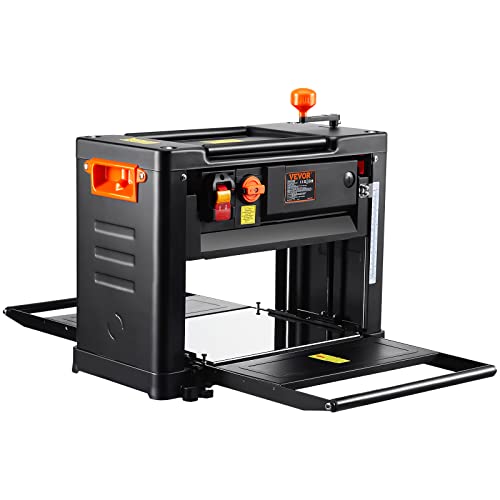
- 13-inch width with extended board support
- Two feed speeds for rough or fine passes
- Three-knife cutter and 2000W motor for smooth cuts
Best For: Woodworkers who want wider capacity and adjustable feed speed for cleaner planing.
Best for Wide Boards – DEWALT 13-Inch 2-Speed Thickness Planer
If you want a benchtop planer for woodworking that can handle wide stock without feeling underpowered, the DEWALT DW735X is an easy standout. Its 15 amp motor, 13-inch cutting width, and two-speed feed settings make it a strong fit for smoothing rough lumber and dialing in cleaner finishes.
Best For: Woodworkers who need a high-capacity benchtop planer with strong feed options, better chip control, and reliable results on wider boards.
Pros:
- 13-inch width and 15 amp motor handle larger boards with confidence
- Three-knife cutter head helps extend knife life and speeds blade changes
- Two feed speeds let you choose between faster removal and finer surface quality
- Fan-assisted chip ejection and included tables improve everyday usability
Cons:
- Heavy at 102 pounds, so it is not the easiest planer to move often
- Higher price than basic benchtop models
- Can be loud during operation, especially under heavier cuts
This is a strong pick if you want a benchtop planer for woodworking that feels closer to a shop tool than a light-duty convenience machine. The DW735X combines capacity, power, and practical features that make repeated thicknessing jobs more efficient.
Best for Smooth Finish Cuts – JET 13-Inch Helical Benchtop Planer
If you want a benchtop planer for woodworking that prioritizes surface quality and noise control, the JET JWP-13BT is built to deliver clean, consistent passes on smaller shop projects. Its helical cutterhead, 2-speed feed, and sturdy cast-iron bed make it a strong fit for users who want a refined finish without stepping up to a full-size floor planer.
Best For: Woodworkers who want smoother planed surfaces, reduced snipe, and a compact benchtop machine with serious cutting capacity.
Pros:
- Helical cutterhead with 26 quick-change inserts helps produce a smoother, quieter cut
- 2-speed feed rate gives you more control over finish quality vs. stock removal
- Cast iron bed, four-post design, and folding tables help reduce snipe and improve stability
- 13-inch width and 1/8-inch max cut handle common board-surfacing jobs
Cons:
- At 75 pounds, it is less portable than lighter benchtop models
- Higher price point than basic straight-knife planers
- Requires a solid setup and dust collection to get the best results
Overall, this is a compelling benchtop planer for woodworking if you care more about surface finish, control, and durability than getting the lowest-cost machine. It brings shop-grade features to a benchtop footprint, making it especially appealing for serious hobbyists and small-shop users.
Best for Smooth Finishes – DEWALT DW734 12-1/2-Inch Benchtop Planer
DEWALT Benchtop Planer, 15-Amp, 12-1/2-Inch, 3-Knife Cutter, 20,000 RPM, Corded (DW734)
Check Price On AmazonIf you want a benchtop planer for woodworking that prioritizes finish quality and everyday reliability, the DEWALT DW734 is a strong fit. Its 15-amp motor, three-knife cutter head, and sturdy feed-table setup are aimed at producing clean, consistent passes on hardwood and other demanding stock.
Best For: Woodworkers who want a portable planer that delivers very smooth surfaces, solid cut capacity, and dependable shop performance.
Pros:
- Three-knife cutter head delivers 96 cuts per inch for a fine finish
- 15-amp motor handles deeper cuts in hardwoods with confidence
- Four-column carriage lock helps reduce snipe for cleaner boards
- Long infeed and outfeed tables add helpful stock support
Cons:
- Heavier than some smaller benchtop planers
- Disposable knives are easy to change, but still a consumable cost
For shop owners who value a smooth result over flashy extras, this DEWALT stands out as a practical benchtop planer for woodworking. It balances cutting power, accuracy, and finish quality in a way that makes it easy to recommend for frequent use.
Best for Tear-Out Reduction – 13-Inch Spiral Helical Thickness Planer
If you want a benchtop planer for woodworking that prioritizes a cleaner surface straight off the machine, this 13-inch model is built around a spiral helical cutterhead and carbide inserts. The 15A motor, 10,000 RPM cutterhead, and micro-adjustable depth control make it a practical fit for shops that need reliable stock removal with less sanding afterward.
Best For: Woodworkers who want a 13-inch benchtop planer with a smoother finish, strong hardwood performance, and repeatable depth settings.
Pros:
- Spiral helical cutterhead with carbide inserts helps reduce tear-out and noise
- 15A, 2000W motor provides solid power for continuous planing jobs
- 13-inch width and micro-adjustable depth control suit larger boards and repeatable cuts
- Solid aluminum top cover adds durability and heat dissipation
Cons:
- At 62 pounds, it is not the easiest planer to move around often
- Only 8 customer reviews, so long-term reliability is still less proven
- Maximum 1/8-inch cut per pass may feel conservative for heavy stock removal
Overall, this is a strong pick if your priority in a benchtop planer for woodworking is finish quality over raw aggression. It looks especially appealing for cabinet, furniture, and hardwood projects where cleaner cuts can save time at the sanding stage.
Best for Wider Boards – WEN PL1303 13-Inch Three-Blade Planer
If you need a benchtop planer for woodworking that can handle wider stock without giving up portability, the WEN PL1303 is a strong shop-ready option. Its 13-inch width capacity, 15-amp motor, and three-blade cutter head make it well suited for resurfacing rough lumber and bringing boards to a smooth, consistent thickness.
Best For: Woodworkers who want a compact benchtop planer with enough width and cutting power for everyday shop projects.
Pros:
- Plans boards up to 13 inches wide and 6 inches thick
- 15-amp motor delivers up to 30,000 cuts per minute
- Three reversible blades help produce a smoother finish
- Adjustable depth control lets you remove up to 1/8 inch per pass
Cons:
- At 63 pounds, it’s less convenient to move than lighter compact planers
- Dust collection may require adapters depending on your setup
Overall, the PL1303 hits a practical middle ground for a benchtop planer for woodworking: wide enough for common lumber sizes, powerful enough for regular use, and compact enough for a small shop. The infeed and outfeed tables also help reduce snipe, which is a useful bonus at this price and size.
Best for Everyday Use – 13-Inch 2000W Benchtop Planer
If you need a benchtop planer for woodworking that can handle wider stock without feeling underpowered, this 13-inch model is built for that job. The 2000W motor, 10,000 RPM cutter head, and 21 FPM feed rate make it a practical choice for flattening and sizing rough lumber, while the cast iron base and extension tables help keep longer boards supported.
Best For: Woodworkers who want a 13-inch planer for handling wider boards, hardwoods, and general shop use.
Pros:
- 13-inch width and up to 6.2-inch thickness capacity for larger stock
- Powerful 2000W motor with overload and overheat protection
- 2 HSS blades and 10,000 RPM cutter head for smoother planing
- 3-in-1 dust port helps connect to different shop vac setups
Cons:
- Heavier than compact entry-level planers at 52.8 pounds
- Only 7 customer ratings, so long-term reliability is still limited
Overall, this is a strong fit if your benchtop planer for woodworking needs prioritize width, motor strength, and practical dust collection over portability. It looks especially appealing for hobbyists and small-shop users who want more capacity than a basic 12-inch machine.
Best for Heavy-Duty Width – VEVOR 13" 2000W Thickness Planer
If you need a benchtop planer for woodworking that can handle wider stock and keep moving through frequent shop use, this VEVOR model is built around power and support. The 13-inch worktable, 12-inch extended infeeding table, and 35 inches of total support help reduce tipping on longer boards, while the 15-amp motor is aimed at fast, consistent material removal.
Best For: Woodworkers who want a wide-capacity benchtop planer with strong feed support for furniture parts, shelving, and general shop surfacing.
Pros:
- 13-inch width capacity with a widened worktable for larger boards
- 2000W motor and two-knife cutter head for smooth, efficient planing
- Extended infeed/outfeed support helps manage longer stock
- Built-in overload protection and vacuum port add convenience and safety
Cons:
- Heavier than compact entry-level planers at 54 pounds
- Single-speed design offers less control than variable-speed models
- Best suited to bench or shop use rather than frequent portability
As a benchtop planer for woodworking, this VEVOR unit stands out more for width, support, and raw cutting power than for portability. It makes the most sense for hobbyists and DIYers who want a capable shop planer for flattening common lumber sizes without stepping up to a floor-standing machine.
Best for Heavy-Duty Thicknessing – 1250W Benchtop Planer
If you need a benchtop planer for woodworking that can handle rough lumber, reclaimed stock, and frequent thicknessing jobs, this 1250W model is built for consistent material removal and cleaner operation. It focuses on power, adjustable control, and portability for small shops or job-site use.
Best For: Woodworkers who want a compact planer for heavy material removal, adjustable depth control, and easier cleanup.
Pros:
- 1250W motor with 8000/min speed for strong, fast planing
- Adjustable cutting depth and feed rate for more precise results
- Low-dust chip removal helps keep the workspace cleaner
- Portable design suits small workshops and mobile projects
Cons:
- More of a utility planer than a feature-rich premium machine
- May be overkill for occasional light-duty hobby use
For buyers comparing a benchtop planer for woodworking, this model stands out most for raw thicknessing power and practical dust control rather than extras. It’s a solid fit if you want a straightforward planer that can tackle tougher boards without taking up much space.
Best for Hardwood Planing – VEVOR 13-Inch Two-Blade Benchtop Planer
If you need a benchtop planer for woodworking that can handle dense stock without bogging down, this VEVOR model is built around power and control. The 13-inch width, dual-roller feed, and two HSS blades help keep boards tracking straight while delivering a cleaner finish on rough lumber and longer pieces.
Best For: Woodworkers who want a 13-inch benchtop planer with enough motor strength for hardwoods, plus stable feeding for more consistent thicknessing on shop projects.
Pros:
- 1800W motor and high RPM output give it solid cutting power for oak, maple, and other hardwoods.
- Dual rollers help reduce vibration, improve board alignment, and support smoother passes.
- 13-inch width and long table make it easier to work with wider or longer boards.
- Compatible with 2-inch and 4-inch dust hoses for cleaner chip management.
Cons:
- Single-speed operation limits flexibility compared with variable-speed planers.
- At 57.76 pounds, it is not the lightest option to move around a shop.
For buyers comparing a benchtop planer for woodworking, this VEVOR stands out more for cutting strength and stable feed performance than for extra features. It is a practical pick if your priority is flattening and sizing hardwood reliably at an approachable benchtop format.
Best for Fast, Smooth Passes – VEVOR 13" 2-Speed Benchtop Planer
If you want a benchtop planer for woodworking that can handle wider stock and still leave a clean finish, this VEVOR model is built around speed, support, and consistency. The 13-inch capacity, two feed rates, and three-knife cutter make it a practical choice for shop users who want efficient thicknessing on both hard and soft woods.
Best For: Woodworkers who need a 13-inch planer with two feed speeds, solid stock support, and a smoother finish on mixed material.
Pros:
- 13-inch width and extended infeed/outfeed support help stabilize longer boards.
- Two feed speeds let you choose faster material removal or a finer finish.
- Three-knife cutter head and 2000W motor are built for smooth, consistent cuts.
- Vacuum port helps keep chip cleanup manageable in a small shop.
Cons:
- Heavier than many compact benchtop planers.
- Best results still depend on sharp knives and careful setup.
- Can be louder than some users expect despite the low-noise design.
Overall, this is a strong pick if you want a benchtop planer for woodworking that balances capacity, cut quality, and flexibility without jumping to a larger stationary machine. It fits well in shops where wide boards and finish quality both matter.
How We Picked the Best Benchtop Planer for Woodworking
To build this roundup, we focused on the features that matter most in a Benchtop Planer for Woodworking: motor strength, cutting capacity, cutterhead type, feed-speed options, and overall build quality. We also considered dust collection, infeed and outfeed support, and how well each machine fits common shop needs such as flattening rough lumber, matching board thickness, and reducing tearout.
Quick Comparison of the Main Differences
The biggest split is between standard three-knife planers and spiral or helical cutterhead models. Three-knife machines often cost less and can deliver excellent results, while helical cutterheads typically run quieter, leave a cleaner surface, and make knife rotation less frequent. Width matters too: 12-1/2-inch units are more compact, while 13-inch models offer a bit more flexibility for wider stock. Feed speed and two-speed operation can also make a noticeable difference in finish quality versus throughput.
Key Buying Factors for a Benchtop Planer for Woodworking
Cut Quality
Look at cutterhead style first. Helical and spiral heads usually reduce snipe and produce a smoother surface on figured or hardwood lumber. Straight-knife models can still perform very well, especially if you prioritize affordability and simple maintenance.
Motor Power and Feed Rate
A stronger motor helps the planer maintain speed under load, especially on wider boards or dense species. Faster feed rates improve productivity, but slower settings often yield a cleaner finish. If you want one tool for both rough stock removal and final passes, two-speed control is a useful feature.
Capacity and Portability
Check maximum width and thickness capacity against the projects you actually build. A compact benchtop planer is easier to move and store, but a larger worktable and sturdy feed support can improve stability and results.
Dust Collection and Noise
Planing creates a lot of chips. Good dust extraction keeps the cutterhead clear, improves visibility, and reduces cleanup. Noise is also worth considering if you work in a garage or shared space; helical cutterheads and better housings usually help.
Who Should Buy Which Benchtop Planer for Woodworking?
If you want the best overall surface quality and are willing to pay more, choose a helical or spiral cutterhead model. If you’re focused on value and dependable everyday performance, a standard three-knife planer is often the best fit. Woodworkers with limited space should look at lighter 12-1/2-inch options, while those processing wider boards or higher volumes should prioritize 13-inch units with stronger motors and better infeed support. For anyone buying a Benchtop Planer for Woodworking for the first time, the safest choice is usually a model with solid dust collection, clear depth adjustment, and enough power to handle your hardest stock without slowing down.