
The best compact smart home security systems combine essential entry and motion protection with app control, flexible installation, and a smaller footprint. These kits can suit apartments, houses, offices, and other spaces where a full wired installation is impractical.
Our selection includes expandable systems, sensor-focused starter kits, camera-equipped packages, and options with self-monitoring or professional monitoring. Use the guide below to compare features and choose a setup that fits your space, budget, and preferred level of support.
Best 10 Compact Smart Home Security Systems Picks for 2026
Best Expandable Kit

- Covers multiple entry points and rooms
- Includes two keypads and a range extender
- Expandable with optional monitoring
Best For: Larger homes wanting broad, flexible coverage
Best Matter Starter Kit

- Includes three compact contact sensors
- Matter-compatible with major platforms
- Supports alarms and smart automations
Best For: Smart-home users focused on doors and windows
Best No-Fee Option
eufy Security Essential Alarm System

- Includes four entry and one motion sensor
- Offers 64GB local storage
- No monthly fee or long-term lock-in
Best For: DIY users seeking local, subscription-free security
Best for Professional Monitoring
SimpliSafe 8-Piece Wireless System

- No-drill DIY installation
- Optional 24/7 monitoring with no long-term contract
- Includes entry, motion, and panic sensors
Best For: Renters and homeowners wanting optional emergency response
Best All-Around Coverage

- Six door/window sensors and three motion detectors
- Touchscreen, Smart Life app, WiFi, and optional 4G
- No monthly subscription fee; includes 120dB wired siren
Best For: Households needing broad DIY sensor coverage without recurring fees
Best for Voice Control
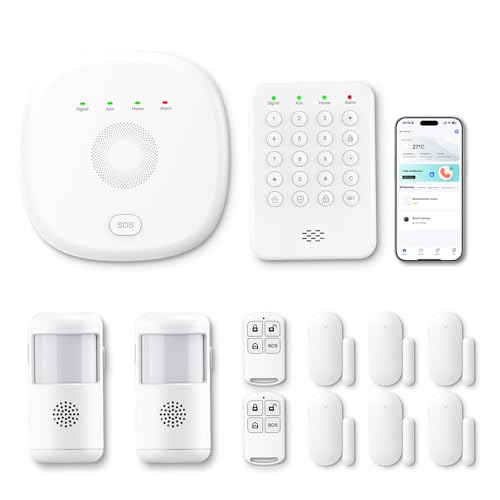
- Designed for 3- to 5-bedroom homes
- Alexa, Smart Life, and Tuya app support
- WiFi plus GSM/4G backup and expandable sensors
Best For: Medium-size homes wanting voice control and future expansion
Best for Built-In Video

- Includes a 2K WiFi security camera
- 22-piece kit with expandable sensors and SOS control
- App, phone, SMS, and audible alarm alerts without monthly fees
Best For: Apartments and homes needing alarm protection with visual monitoring
Best Compact Starter Kit
X-Sense AS05 5-Piece Security System

- Five-piece wireless kit with keypad and motion sensor
- App control, alerts, scheduling, and Alexa support
- Expandable and easy to install without tools
Best For: Renters and small homes needing straightforward entry and motion protection
Best Feature-Rich Bundle
YBJ 24-Piece GSM/4G Wi-Fi Alarm System

- Touchscreen hub with app, call, and hub alerts
- Wi-Fi and GSM/4G connectivity without monthly fees
- Supports more than 100 sensors plus Alexa and Google
Best For: Families wanting cellular backup and accessible emergency controls
Best Expandable Kit – Ring Alarm 14-Piece Kit
For shoppers comparing compact smart home security systems for a 2- to 4-bedroom home, the Ring Alarm 14-Piece Kit offers broad entry-point coverage in one package. It includes a base station, two keypads, eight contact sensors, two motion detectors, and a range extender, with app alerts and optional professional monitoring.
Best For: Households that want a comprehensive, expandable alarm kit with keypad, app, Alexa, and optional 24/7 monitoring support.
Pros:
- Includes sensors for multiple doors and windows plus two motion detectors.
- Two keypads and a range extender support convenient access and coverage.
- Expandable with additional Ring Alarm sensors and accessories.
- Mobile notifications, Alexa control, and optional professional monitoring are available.
Cons:
- Ring Protect features and professional monitoring require a compatible subscription sold separately.
- The 14-piece package may be more equipment than smaller homes need.
This is a strong all-in-one choice when you need many sensors immediately and expect your system to grow. Factor the optional subscription into the ongoing cost if you want remote arming, backup connectivity, or professional response.
Best Matter Starter Kit – Tapo T31 Door Sensor System
The Tapo T31 is a compact smart home security system focused on door and window monitoring rather than full alarm coverage. It combines three contact sensors with a hub and built-in chime, providing app notifications, automation options, and Matter compatibility for supported smart-home platforms.
Best For: Apartment dwellers and smart-home users who want discreet entry sensors, flexible automations, and broad platform compatibility.
Pros:
- Compact sensors mount with magnets or 3M adhesive without tools.
- Real-time notifications and activity history are available in the Tapo app.
- The hub supports up to 64 compatible sensors, switches, and buttons.
- Matter compatibility supports Alexa, Google Home, Apple HomeKit, and SmartThings ecosystems.
Cons:
- The sensors require the included Tapo H100 hub and 2.4 GHz Wi-Fi.
- It focuses on contact sensing and does not include motion sensors or professional monitoring.
- The 90dB alarm is a local deterrent rather than a stated emergency-response service.
Choose this kit when discreet installation and smart-home integration matter more than a traditional whole-home alarm package. Its low-power wireless protocol and expandable hub make it a practical foundation for entry monitoring and automation.
Best No-Fee Option – eufy Security Essential Alarm System
The eufy Security Essential Alarm System is a streamlined compact smart home security system with seven pieces: a HomeBase Mini, keypad, four entry sensors, and a motion sensor. It provides app alerts, local storage, and setup guidance without a required monthly fee.
Best For: Homeowners who want entry and motion coverage, local storage, and app control without recurring monitoring charges.
Pros:
- Includes four entry sensors and one motion sensor for key areas.
- HomeBase Mini provides 64GB of local storage.
- No monthly fee or long-term lock-in is required for the listed core protection.
- In-app guidance supports installation without complicated wiring.
Cons:
- The included kit has only one motion sensor.
- It is controlled through the app and push-button keypad rather than listed voice assistants.
- Additional sensors or accessories are needed for broader coverage.
This kit balances essential coverage with simple ownership costs. It is particularly appealing if you prefer local storage and straightforward DIY installation, while keeping room to expand the system later.
Best for Professional Monitoring – SimpliSafe 8-Piece Wireless System
The SimpliSafe 8-Piece Wireless Home Security System is a practical compact smart home security system with a base station, keypad, four entry sensors, motion sensor, and panic button. It is designed for no-drill DIY setup and supports optional 24/7 professional monitoring without a long-term contract.
Best For: Renters and homeowners who want easy installation, optional emergency monitoring, and coverage for entry points plus one room.
Pros:
- Installs without wiring or drilling using the included base station and wireless sensors.
- Includes four entry sensors, a motion sensor, keypad, and panic button.
- Optional professional monitoring is available without a long-term contract.
- App control and Alexa or Google Assistant compatibility add convenience.
Cons:
- Professional monitoring requires a subscription.
- The included kit has one motion sensor, limiting room coverage without expansion.
- The product and monitoring service are offered and supported only in the US.
SimpliSafe stands out for renters or anyone who wants a traditional alarm experience without permanent installation. Its optional monitoring and panic-button functions add response-oriented features, while the basic kit remains manageable for DIY setup.
Best All-Around Coverage – 16-Piece DIY Alarm Kit
For shoppers comparing compact smart home security systems, this 16-piece Hapippofa kit provides broad entry-point and room coverage without a monthly subscription. Its touchscreen hub, Smart Life app control, and optional 4G connectivity make it practical for apartments, houses, and renters who want a flexible DIY setup.
Best For: Households that want many sensors, touchscreen control, and no recurring monitoring fee.
Pros:
- Includes six door/window sensors, three PIR motion detectors, remotes, RFID key fobs, an SOS button, and a siren.
- Supports 2.4GHz WiFi app control, with optional 4G calls and SMS when paired with a compatible SIM plan.
- Pre-paired wireless accessories and a 120dB wired siren simplify installation and provide loud audible alerts.
- Offers Stay, Away, Disarm, and SOS modes from the touchscreen hub.
Cons:
- 5GHz WiFi is not supported.
- A compatible 4G SIM card and cellular plan are sold separately.
- The external siren uses a wired connection.
With its unusually generous sensor count and straightforward controls, this is a strong choice when coverage matters more than having a particularly minimal kit. Confirm your WiFi band and installation locations before buying.
Best for Voice Control – PGST 12-Piece Smart Alarm
This PGST kit is a compact smart home security system aimed at 3- to 5-bedroom homes. It combines app alerts, keypad control, WiFi and GSM/4G connectivity, Alexa compatibility, and expandable sensors in a relatively focused 12-piece package with no monthly charges.
Best For: Families wanting Alexa control and an expandable alarm system for a medium-size home.
Pros:
- Includes a base station, keypad, four door/window sensors, two motion detectors, and two remotes.
- Smart Life and Tuya apps support remote arming, disarming, defense modes, and mobile notifications.
- Can switch to 4G when WiFi disconnects, helping maintain connectivity when used with a compatible cellular plan.
- Works with Alexa and supports additional sensors for expanded coverage.
Cons:
- 4G operation requires a compatible cellular plan.
- The kit has fewer included pieces than the 16- and 22-piece alternatives.
- Camera-based visual monitoring requires separately purchased PGST cameras.
The PGST is a sensible middle ground for buyers who want a manageable starter kit rather than a large bundle. Its Alexa support and expansion options add convenience, while the dual-network design provides useful flexibility.
Best for Built-In Video – 22-Piece Camera Alarm System
Among compact smart home security systems, this 22-piece PGST package stands out by including a 2K camera alongside its alarm sensors. It adds remote visual monitoring, color-screen status information, WiFi and 4G connectivity, and app-based alerts while avoiding monthly fees.
Best For: Apartment residents and families who want alarm protection plus built-in camera monitoring.
Pros:
- Includes a WiFi-connectable 2K HD camera for remote visual monitoring.
- Provides Smart Life or Tuya app control, customizable sensor naming, and support for added PGST accessories.
- Offers WiFi and optional 4G phone/SMS alerts, plus app notifications and automatic alarm dialing.
- Includes a color display, voice-assistant compatibility, tamper protection, and an SOS device.
Cons:
- 5GHz WiFi is not supported.
- A microSD card for camera storage is sold separately.
- 4G calls and SMS require a compatible SIM card and cellular plan.
This is the most feature-rich option of the three for buyers who want video verification in addition to sensors and alarms. It is a strong apartment-oriented bundle, but budget separately for storage and any cellular service you plan to use.
Best Compact Starter Kit – X-Sense AS05 5-Piece Security System
The X-Sense AS05 is a practical choice for shoppers seeking compact smart home security systems for an apartment, bedroom, dormitory, or small home. Its wireless five-piece setup combines door sensors, a motion sensor, keypad, and base station, with app control and Alexa compatibility.
Best For: Renters and households wanting a simple, expandable entry-and-motion alarm system.
Pros:
- Includes two door sensors, one motion sensor, a keypad, and base station.
- Supports app alerts, remote arming, scheduling, and Home, Away, and Disarm modes.
- Tool-free adhesive installation is available, with screws for more permanent mounting.
- Expandable with up to six keypads and 44 additional devices.
Cons:
- Works only with 2.4 GHz Wi-Fi; 5 GHz networks are not supported.
- Alarm coverage is limited to the included sensors unless additional devices are purchased.
With its small component count and flexible mounting options, the AS05 keeps setup manageable while leaving room to expand. It is especially appealing when app-based control and Alexa integration matter more than a large included sensor bundle.
Best Feature-Rich Bundle – YBJ 24-Piece GSM/4G Wi-Fi Alarm System
For shoppers comparing compact smart home security systems with broader connectivity, this YBJ alarm kit offers a 4.3-inch smart touchscreen, app control, sensors, remote access, and GSM/4G support. It is designed for DIY installation and operates without monthly fees.
Best For: Families and users who want a touchscreen hub, emergency SOS controls, and extensive sensor expansion.
Pros:
- Includes a 4.3-inch touchscreen, motion detector, door/window sensor, remote, and high-decibel siren.
- Supports Smart Life or Tuya app control with app, hub, and call alarms.
- Uses 2.4 GHz Wi-Fi plus 2G/4G connectivity, without monthly fees.
- Can pair with more than 100 sensors and supports Alexa and Google.
Cons:
- 5 GHz Wi-Fi is not supported.
- The listed battery average life is eight hours.
- The larger 24-piece package may provide more accessories than some small spaces require.
The YBJ stands out for combining local touchscreen controls, cellular connectivity, and a generous expansion capacity. Its SOS button and remote may also be useful for households prioritizing simple emergency operation for children or older family members.
Best Expandable DIY Option – YISEELE Wireless Wi-Fi Alarm Kit
The YISEELE wireless alarm kit is a compact option among smart home security systems for houses, apartments, garages, and small businesses. It includes a hub, four door/window sensors, and a remote, while Smart Life app alerts and voice control provide convenient everyday operation.
Best For: DIY users who want expandable door and window protection with a loud siren and no monthly fee.
Pros:
- Includes four magnetic door/window sensors, a remote control, and a 120 dB siren.
- Provides Smart Life app alerts, event records, and remote arm/disarm control.
- Supports Alexa and Google Home voice commands for security modes.
- Can expand to up to 100 accessories and includes a two-year replacement warranty.
Cons:
- Connects directly only to 2.4 GHz Wi-Fi; 5 GHz is not supported.
- The stated wireless maximum range is 10 meters.
- Its included kit focuses on door/window coverage and does not include a motion sensor.
With four entry sensors and a strong siren, the YISEELE kit offers useful perimeter coverage from a relatively small starting package. Its expandable design makes it suitable for users who may later add motion, smoke, water-leak, or keypad accessories.
How We Picked These Compact Smart Home Security Systems
We focused on kits that offer a practical starting point for smaller homes, apartments, offices, and other properties with limited installation space. Key considerations included the number and type of included sensors, wireless setup, app functionality, connectivity options, alarm volume, smart-home compatibility, expansion potential, and monitoring costs.
Because product bundles vary, check the current listing carefully for exact sensor counts, camera inclusion, hub requirements, cellular backup, and subscription terms before buying. “No monthly fee” generally refers to self-monitoring or core alarm operation; cloud storage, cellular service, or professional monitoring may still cost extra.
Quick Comparison
| Priority | Look for | Best suited to |
|---|---|---|
| Simple entry protection | Hub and door/window contact sensors | Apartments, offices, and small spaces |
| Room-to-room coverage | Multiple contacts plus motion sensors | Small houses and multi-room layouts |
| Visual verification | Included camera or camera compatibility | Buyers wanting to check alerts remotely |
| Backup connectivity | Wi-Fi plus 4G/GSM support | Properties where internet outages are a concern |
| Hands-off response | Optional professional monitoring | Households that want outside assistance |
Key Buying Factors for Compact Smart Home Security Systems
Coverage and Expandability
Count every exterior door, accessible window, garage entry, and high-traffic room. A compact kit should cover your highest-priority points first, while support for additional sensors lets you expand later. Motion sensors can fill gaps, but pets, furniture, and room layout affect placement.
Connectivity and Reliability
Wi-Fi is convenient for app control, but a system with 4G or GSM backup may continue communicating during an internet outage. Confirm whether backup service requires a subscription. Also consider battery life, hub placement, power-failure behavior, and whether the system still sounds locally if the internet is unavailable.
Monitoring and Ongoing Costs
Self-monitoring avoids recurring fees but requires someone to respond to notifications. Professional monitoring can provide a more consistent response, often for a monthly charge. Compare contract requirements, cancellation terms, cloud video fees, cellular charges, and what features remain available without a plan.
Smart Features and Privacy
Look for dependable mobile alerts, clear arm and disarm controls, useful automation, and compatibility with platforms you already use. Review account security, two-factor authentication, camera privacy controls, and the manufacturer’s update policy before connecting the system to your home network.
Who Should Buy Which Compact Smart Home Security Systems?
Choose a sensor-focused starter kit if you mainly need alerts when doors or windows open. Pick a larger DIY bundle if you want coverage across several rooms without buying add-ons immediately. A camera-equipped system is preferable when visual confirmation matters, while a system with optional professional monitoring suits buyers who do not want to manage every alert themselves.
For renters, prioritize wireless installation, removable mounting, and compact hubs. For homeowners and small businesses, prioritize expansion capacity, cellular backup, and a sensor mix that matches every access point. Whichever system you choose, place the hub centrally, enable account protections, test alerts regularly, and replace batteries before they become a weak point.