
Checking a vehicle’s underbody can be difficult without lifting equipment or a clear view around tight spaces. The right inspection camera can reveal leaks, corrosion, damaged components, and blocked areas while reducing guesswork.
This roundup compares 10 compact underbody inspection cameras with features such as dual lenses, articulated probes, adjustable LEDs, waterproof construction, and long semi-rigid cables. Use the guide below to match the camera to your vehicle work, access needs, and budget.
Best 10 Compact Underbody Inspection Cameras Picks for 2026
Best Budget Dual-Lens Pick
T TAKMLY 4.3-Inch Dual-Lens Endoscope

- Dual front and side cameras
- Integrated 4.3-inch HD display
- 16.4-foot IP67 semi-rigid cable
Best For: Live inspections without a phone or recording
Best Articulating Control
Teslong Two-Way Articulating Borescope

- Two-way articulating probe
- 4.5-inch IPS LCD screen
- 5-foot semi-rigid gooseneck
Best For: Steering around obstacles during automotive and HVAC inspections
Best Phone-Based 2K Detail
DEPSTECH NTC55 Dual-Lens Borescope

- 2K phone-based imaging
- Dual 7.9mm lenses
- 16.5-foot IP67 cable
Best For: Capturing detailed inspection photos and videos
Best Steering Range
DXZtoz 220-Degree Articulating Borescope

- 220-degree two-way articulation
- Built-in 4.3-inch 1080P monitor
- IP67 oil-resistant gooseneck probe
Best For: Navigating around turns and obstacles in mechanical spaces
Best App-Connected Pick
Dual-Lens 1920P Inspection Camera

- 1920P photos and video
- 16.4-foot semi-rigid cable
- Phone connectivity with multiple adapters
Best For: Phone-based automotive, plumbing, and home inspections
Best Standalone Value
4.3-Inch 1920P Borescope Camera

- Built-in 4.3-inch IPS screen
- 16.6-foot semi-rigid cable
- No app or Wi-Fi required
Best For: Live vehicle, pipe, wall, and sewer inspections
Best Large-Screen Option
5-Inch Dual-Lens Sewer Borescope

- 5-inch HD display
- Switchable front and side lenses
- IP67 probe with 16.4-foot cable
Best For: Live automotive, plumbing, HVAC, and drain inspections
Best Dual-Lens Pick
DEPSTECH DS300 Inspection Camera
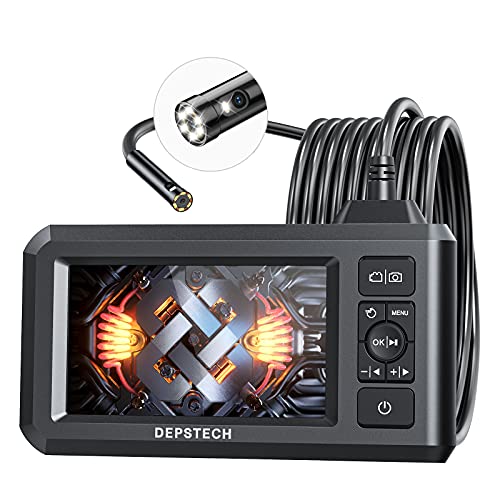
- Dual lenses with split-screen and wide-angle viewing
- 4.3-inch screen with 1080p video
- 16.5-foot IP67 semi-rigid cable
Best For: Automotive and mechanical inspections needing flexible viewing angles
Best Phone-Compatible Option
Kinpthy 1920P Endoscope Camera
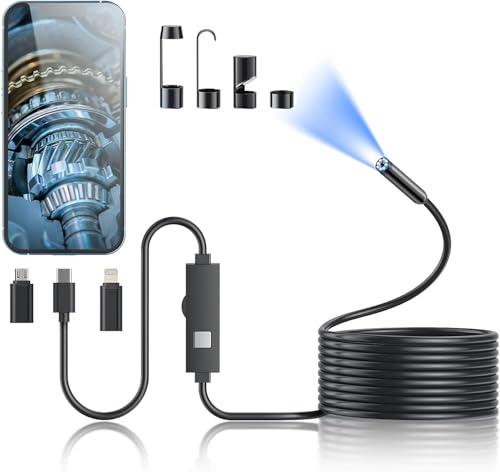
- 1920P imaging for close-range inspection
- Connectors for iOS, Android, and Type-C devices
- 16.4-foot IP67 waterproof semi-rigid cable
Best For: Phone-based underbody and household inspections
Best Dual-Lens Phone Pick
Elecshion 1920P Borescope Camera

- Dual lenses with 8mm probe for tight spaces
- 1920P imaging and adjustable LED lights
- 16.5-foot IP67 cable with 360-degree rotation
Best For: Type-C smartphone users inspecting narrow automotive gaps
Best Budget Dual-Lens Pick – T TAKMLY 4.3-Inch Dual-Lens Endoscope
For shoppers comparing compact underbody inspection cameras, this T TAKMLY model offers a straightforward, screen-based setup with dual lenses, 1080P viewing, and a 16.4-foot semi-rigid cable. Its built-in display means you can inspect automotive and household spaces without connecting a phone.
Best For: Mechanics and DIY users who want a portable dual-lens camera with an integrated screen for engines, vents, pipes, and other confined areas.
Pros:
- Dual front and side cameras help reduce blind spots.
- 4.3-inch HD IPS screen provides real-time viewing without an app.
- IP67 waterproof probe and adjustable front-camera lighting suit damp or dark spaces.
- 16.4-foot semi-rigid cable and included hook, magnet, and mirror add versatility.
Cons:
- The supplied notes state that it cannot take pictures or videos.
- The 8.0mm camera diameter may not fit the narrowest passages.
This is a practical choice when live inspection matters more than recording. The long cable and dual-view design are useful for general automotive, plumbing, HVAC, and wall inspections, while the integrated screen keeps operation simple.
Best Articulating Control – Teslong Two-Way Articulating Borescope
The Teslong is a strong option among compact underbody inspection cameras when steering control is a priority. Its two-way articulating probe, semi-rigid gooseneck, and 4.5-inch IPS screen are designed to make tight, complicated inspections easier to navigate.
Best For: Automotive, HVAC, and household users who need one-handed directional control in curved or obstructed spaces.
Pros:
- Two-way articulation helps direct the view around obstacles.
- 4.5-inch IPS display provides clear viewing in bright or dim conditions.
- 5-foot semi-rigid gooseneck balances flexibility with shape retention.
- Built-in adjustable LED lighting and included 32GB MicroSD card support practical inspections.
Cons:
- The 5-foot probe is shorter than several alternatives in this roundup.
- Its articulating mechanism adds complexity compared with a basic fixed probe.
Choose this model if positioning the camera precisely is more important than maximum reach. The joystick, dedicated capture button, and no-app operation make it particularly convenient for repeated hands-on diagnostic work.
Best Phone-Based 2K Detail – DEPSTECH NTC55 Dual-Lens Borescope
For shoppers seeking compact underbody inspection cameras with higher image detail, the DEPSTECH NTC55 pairs a 2K camera with a phone-based viewing system. Its slim dual-lens probe, 16.5-foot semi-rigid cable, and app controls offer broad coverage for automotive and general maintenance inspections.
Best For: iPhone and Android users who want 2K photo and video capture, dual perspectives, and app-based inspection controls.
Pros:
- 2K resolution is designed to show finer detail than standard 1080P.
- Front and side 7.9mm lenses provide 360-degree viewing coverage.
- Phone app supports photo/video capture, 2x zoom, and image rotation.
- 16.5-foot IP67 semi-rigid cable includes adjustable lighting, hook, and magnet.
Cons:
- A compatible phone or tablet is required for viewing.
- The DEPSTECHCAM app must be downloaded, and Android devices need OTG support.
This is the most feature-rich choice for users who want to save inspection evidence or review images on a phone. Confirm device compatibility before buying, especially if using Android, but the slim probe and long cable suit difficult automotive and underbody access points.
Best Steering Range – DXZtoz 220-Degree Articulating Borescope
The DXZtoz stands out among compact underbody inspection cameras for its 220-degree two-way articulation and rigid gooseneck probe. With a built-in 4.3-inch monitor, 1080P imaging, and no-app operation, it is built for controlled viewing inside engines, HVAC systems, and other obstructed areas.
Best For: Mechanics and technicians who need to steer the lens around obstacles while keeping a self-contained inspection kit.
Pros:
- 220-degree two-way articulation helps the camera look around turns and obstructions.
- 4.3-inch HD IPS monitor provides live 1080P viewing without an app.
- IP67 waterproof and oil-resistant probe suits wet plumbing and automotive applications.
- 8 LED lights, digital zoom, a 32GB memory card, and protective case add practical value.
Cons:
- The 8.5mm probe is not as slim as the DEPSTECH model in this group.
- The cable length is 5.5 feet, limiting reach compared with longer snake cameras.
This model is a good fit when directional control is the deciding factor. Its articulated lens and shape-holding gooseneck can reduce repositioning during complex inspections, while the integrated display and included accessories keep the kit ready for field use.
Best App-Connected Pick – Dual-Lens 1920P Inspection Camera
If you want compact underbody inspection cameras that work with a phone, this Kinpthy endoscope combines 1920P imaging, a 16.4-foot semi-rigid cable, and dual-lens viewing. Its phone connectivity and included adapters make it a practical choice for checking vehicle areas, pipes, wiring, and other tight spaces.
Best For: DIY users and mechanics who prefer viewing and capturing inspections on a compatible iOS or Android device.
Pros:
- 1920P images and video from a 2MP camera.
- Dual-lens design helps inspect from different viewing directions.
- 16.4-foot semi-rigid cable, adjustable lighting, and IP67 waterproofing.
- Includes Lightning, USB-C, and Android connectors plus hook, magnet, and mirror accessories.
Cons:
- Requires a compatible phone and app installation.
- Some Android devices may show slightly blurrier images than iOS devices.
- Its 7.9mm probe may not fit especially narrow openings.
This is the most flexible option for shoppers who want phone-based inspection and image capture. Check device compatibility before buying, especially if you use Android.
Best Standalone Value – 4.3-Inch 1920P Borescope Camera
For compact underbody inspection cameras that do not depend on a smartphone, this MugEasy model offers a built-in 4.3-inch IPS screen and simple power-on operation. Its 16.6-foot semi-rigid cable, short 7.9mm probe, and adjustable LEDs suit vehicle, pipe, wall, and sewer checks.
Best For: Users who want a self-contained inspection camera for wet or confined areas without Wi-Fi, apps, or phone handling.
Pros:
- Built-in 4.3-inch IPS screen with a wide approximately 170-degree viewing angle.
- 1920x1080P real-time image and adjustable brightness with eight LEDs.
- IP67 waterproof probe and 16.6-foot semi-rigid cable.
- Plug-and-play operation with included hook, magnet, and side mirror.
Cons:
- Cannot take or store photos.
- Uses AVI video capture specifications, but the supplied notes state that photos and storage are unavailable.
- The 7.9mm probe may be too large for the narrowest passages.
The dedicated display keeps this borescope straightforward and protects your phone from dirt and moisture. Choose it when live viewing matters more than saving inspection evidence.
Best Large-Screen Option – 5-Inch Dual-Lens Sewer Borescope
This TGJOR model is one of the more convenient compact underbody inspection cameras for users who value a larger display and quick setup. The 5-inch screen, dual-lens front and side views, 16.4-foot semi-rigid probe, and eight adjustable LEDs support automotive, plumbing, HVAC, and drain inspections.
Best For: Mechanics, plumbers, and DIYers who need a larger screen and switchable viewing angles for confined-area inspections.
Pros:
- 5-inch HD screen with a 170-degree wide-angle view.
- Dual-lens camera switches between front and side views.
- 1080P resolution, 1.2- to 4-inch focus range, and eight adjustable LEDs.
- IP67 waterproofing, 16.4-foot semi-rigid cable, and 3–4 hours of stated battery runtime.
Cons:
- Cannot take pictures or record videos.
- Fixed-focus design provides a specified close-range focus rather than broad focusing flexibility.
- The larger 5-inch display may be less compact to carry than smaller-screen models.
Its dual-lens layout is useful when seeing a pipe wall or underside from the side is as important as viewing straight ahead. It is a strong fit for live inspections, but not for creating saved reports or photo records.
Best Dual-Lens Pick – DEPSTECH DS300 Inspection Camera
For compact underbody inspection cameras, the DEPSTECH DS300 stands out when you need multiple viewing angles without changing attachments. Its dual-lens design, built-in display, and 16.5-foot semi-rigid cable make it practical for checking vehicle areas, pipes, ducts, and other confined spaces.
Best For: Automotive, HVAC, plumbing, and machinery inspections where dual-angle viewing and a dedicated screen are useful.
Pros:
- Dual lenses support front, side, and wider-angle viewing with split-screen capability.
- 4.3-inch IPS display records 1080p video and 2MP still images.
- IP67 waterproof probe, adjustable lighting, and a shape-holding 16.5-foot cable.
- Built-in battery provides about four hours of continuous operation.
Cons:
- The package does not include a TF card.
- Front and side cameras have relatively short focal ranges, so close positioning is important.
The DS300 is a strong choice when convenience matters more than the smallest possible setup. A dedicated screen eliminates the need to use a phone, while the second lens can reduce repositioning during underbody troubleshooting.
Best Phone-Compatible Option – Kinpthy 1920P Endoscope Camera
The Kinpthy is a practical choice among compact underbody inspection cameras if you prefer viewing inspections on a smartphone or tablet. Its 1920P imaging, 16.4-foot semi-rigid cable, adjustable lighting, and included connectors support close-range checks in vehicles, engines, pipes, and wiring.
Best For: Phone-based vehicle, plumbing, household, and wiring inspections across iOS and Android devices.
Pros:
- Captures 1920×1440 photos and video for detailed close-range viewing.
- Includes Android, Lightning, and Type-C connectors for broad device compatibility.
- IP67 waterproof probe can operate underwater up to 3.28 feet for one hour.
- Comes with a magnet, hook, mirror, and protective cap.
Cons:
- Single-lens design offers fewer viewing angles than dual-lens alternatives.
- It requires a compatible smartphone or tablet and the SUP-ANESOK app.
Choose the Kinpthy if you want a flexible, phone-connected inspection tool with useful accessories included. It offers strong resolution and cable reach, though it is less self-contained than models with their own display.
Best Dual-Lens Phone Pick – Elecshion 1920P Borescope Camera
The Elecshion combines a narrow 8mm probe with dual-lens viewing, making it a capable option among compact underbody inspection cameras for tight automotive spaces. Its 1920P imaging, 16.5-foot semi-rigid cord, adjustable lights, and phone compatibility suit checks around engines, pipes, wiring, and other hard-to-reach areas.
Best For: Smartphone and tablet users who need dual-angle visibility in narrow gaps and close-range inspection areas.
Pros:
- Dual 2MP cameras provide additional viewing flexibility without changing the probe.
- 8mm camera diameter and 1.2- to 4-inch viewing range suit tight spaces.
- 1920×1440 imaging, adjustable LED lighting, and 360-degree rotation support detailed checks.
- IP67 waterproof probe and 16.5-foot semi-rigid cable add reach for plumbing and automotive work.
Cons:
- Type-C phone or tablet compatibility is required.
- The probe is not heat-resistant, so engines must be fully cooled before inspection.
- Phone viewing is required because the supplied notes do not indicate a dedicated display.
The Elecshion is especially appealing for tight underbody access where a second lens can help reveal adjacent surfaces. Its cooling requirement is important: use it only around fully cooled components and avoid sharp edges or forceful cable pulling.
How We Picked the Best Compact Underbody Inspection Cameras
We focused on practical features that matter during automotive and mechanical inspections: image resolution, probe flexibility, cable length, lighting control, water resistance, screen or phone compatibility, and ease of handling. Dual-lens designs received particular attention because they can provide forward and side-facing views without repeatedly repositioning the probe.
We also considered how useful each format is in real spaces. A compact built-in display can be convenient in a garage, while a phone-connected model may be easier to store and share. Articulating probes can improve control around engine bays, suspension parts, HVAC passages, and other obstructed areas.
Quick Comparison
- Best for simple garage checks: A compact camera with a built-in screen and adjustable LEDs.
- Best for tight directional access: An articulating borescope that lets you steer the probe tip.
- Best for broader viewing: A dual-lens model with forward and side cameras.
- Best for deep access: A 16.4- or 16.5-foot probe for frames, pipes, ducts, and larger vehicles.
- Best for phone users: A compatible wireless or wired endoscope that records directly to a mobile device.
Key Buying Factors for Compact Underbody Inspection Cameras
Image Quality and Camera View
Higher stated resolution can make cracks, fasteners, labels, and fluid residue easier to identify, but lighting and lens placement matter just as much. Dual-lens cameras are useful when the target is not directly in front of the probe.
Probe Length and Flexibility
Choose a length that reaches the inspection area without leaving excessive cable to manage. Semi-rigid probes hold a shape while being pushed through gaps. Articulating models offer more precise control, especially around bends and enclosed components.
Lighting and Visibility
Adjustable LEDs help compensate for dark underbody spaces and reflective metal. Look for multiple brightness levels and a lens position that does not create excessive glare. A side-facing camera can also illuminate and inspect surfaces that a forward lens misses.
Water Resistance and Durability
An IP-rated probe is better suited to damp, dirty, or oily inspection areas, but the rating generally applies to the camera tip and probe—not necessarily the display or control unit. Keep connectors and electronics protected from water and solvents.
Display, Recording, and Compatibility
A built-in screen supports quick inspections without an app or wireless connection. Phone-based models may offer easier file sharing and storage. Before buying, confirm operating-system compatibility, recording controls, and whether the required cable or adapter is included.
Who Should Buy Which Compact Underbody Inspection Cameras?
DIY vehicle owners should prioritize a straightforward built-in display, useful LED control, and a durable probe. Professional mechanics may benefit from an articulating model or dual-lens camera for faster access and fewer repeated scans. HVAC, plumbing, and industrial users should favor longer probes, strong articulation, and suitable water resistance. If you inspect several vehicles or hard-to-reach machinery regularly, paying more for better steering and a clearer display can save time over the long term.