
A power outage can interrupt recording, editing, climate control, security, and client work in a small studio. The right generator helps protect your schedule while keeping essential equipment powered safely.
This roundup compares 10 standby and backup generator options across output, fuel flexibility, startup features, transfer-switch readiness, and studio-friendly operation. Use the buying guide below to narrow the list to the best fit for your space and workload.
Best 10 Home Standby Generators for Small Studios Picks for 2026
Whole-Home Standby Pick

- 14,000-watt automatic backup
- Includes 200-amp transfer switch
- Cellular monitoring and cold-start support
Best For: Permanent small-studio backup with broad residential coverage
Portable Value Pick
WEN DF680iX Dual-Fuel Inverter

- 5,100 rated gasoline watts
- Dual-fuel gasoline and propane operation
- CO shutdown and electric start
Best For: Portable backup for selected studio circuits and equipment
Clean-Power Standby Pick

- 14,000-watt standby output
- Less than 5% total harmonic distortion
- Includes a 16-circuit transfer switch
Best For: Sensitive studio electronics and fixed residential backup
Tri-Fuel Flexibility Pick

- 9,000 running gasoline watts
- Runs on gasoline, propane, or natural gas
- Low-THD inverter with remote start
Best For: High-output portable backup with multiple fuel options
High-Capacity Dual-Fuel Pick
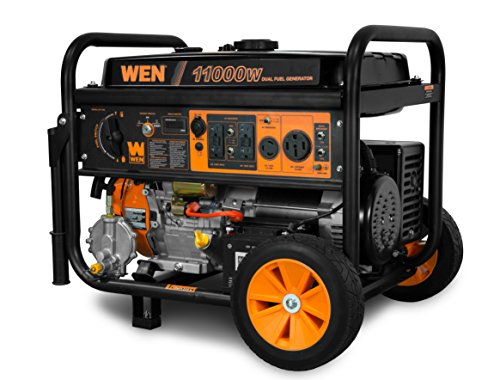
- Up to 8,300 running watts on gasoline
- Runs on gasoline or propane
- 120V/240V output with electric start
Best For: Small studios needing high output and dual-fuel flexibility
Compact Clean-Power Pick

- 3,600 running watts and under 3% THD
- Lightweight 61-pound open-frame design
- CO shutoff and low-oil protection
Best For: Essential studio electronics and portable backup
Most Flexible Fuel Pick

- Gasoline, propane, or natural-gas operation
- 9,500 running and 12,500 starting watts
- AVR, COsense, and electric start
Best For: High-capacity studio backup with multiple fuel options
Quiet Remote Backup
Champion 11,000-Watt Inverter Generator

- 9,000 running watts and up to 15 hours of gasoline runtime
- Wireless remote start from up to 80 feet
- CO Shield, inverter output, and 64 dBA listed noise level
Best For: Studios wanting remote-start gasoline backup with high output
Flexible High-Output Backup
Westinghouse 14,500-Watt Dual-Fuel Generator

- 11,500 running watts on gasoline or 10,500 on propane
- Low-THD output for sensitive electronics
- Up to 19 hours of gasoline runtime with remote electric start
Best For: Studios needing high capacity and dual-fuel flexibility
Three-Fuel Studio Backup
DuroStar DS13000MXT Tri-Fuel Generator

- 10,500 running watts from gasoline, propane, or natural gas
- Remote electric start and transfer-switch-ready 50-amp outlet
- CO Alert automatic shutdown for detected harmful fumes
Best For: Studios wanting maximum fuel flexibility for outages
Whole-Home Standby Pick – Generac 14kW Home Generator
For small studios that need automatic, whole-home-style backup, the Generac 14kW is a substantial home standby option. It provides 14,000 watts, includes a 200-amp transfer switch, and is designed to start automatically when an outage is detected.
Best For: Small studios seeking permanent residential backup with automatic transfer and remote monitoring.
Pros:
- 14,000 watts of backup power for broad residential coverage.
- Includes an automatic 200-amp transfer switch.
- Built-in cellular connectivity supports Mobile Link monitoring and alerts, with a required premium subscription.
- Oil-level sensing and cold-start features support generator readiness.
Cons:
- At 391 pounds, it requires a permanent installation rather than casual portability.
- Mobile Link premium features require a subscription.
- Its whole-home capacity may exceed the needs of a very small studio.
This is the most integrated choice of the group for hands-off outage protection. Its enclosure, transfer switch, and monitoring features suit a fixed installation, but buyers should plan for professional installation and confirm local fuel and electrical requirements.
Portable Value Pick – WEN DF680iX Dual-Fuel Inverter
The WEN DF680iX offers a flexible portable alternative for home standby generators for small studios. Its dual-fuel engine produces up to 5,100 rated watts on gasoline or 4,500 rated watts on propane, while the inverter design and CO shutdown sensor add practical protection for temporary backup use.
Best For: Small studios needing portable, dual-fuel backup for selected equipment rather than automatic whole-building coverage.
Pros:
- Runs on gasoline or propane for fuel flexibility.
- Electric start, wheels, and a telescoping handle make relocation easier.
- Bonded-neutral 240V configuration supports low-power Level 2 EV charging.
- Includes CO Watchdog shutdown and fuel shutoff to reduce remaining-fuel buildup.
Cons:
- It must be positioned and started for backup use, unlike an automatic standby generator.
- Rated output is lower on propane and may not run an entire studio simultaneously.
- Its listed runtime is six hours, so extended outages require refueling.
Choose this WEN when portability and dual-fuel operation matter more than automatic transfer. Make a load list before buying, since its rated output is better suited to prioritized studio circuits and essential equipment than full-home operation.
Clean-Power Standby Pick – Honeywell 14kW Generator
The Honeywell 14kW home standby generator is aimed at studios where power quality and automatic residential backup are priorities. Its PrecisionPower technology is rated below 5% total harmonic distortion, and the package includes a 16-circuit transfer switch for organized backup coverage.
Best For: Small studios with sensitive electronics that want fixed natural-gas or propane standby power.
Pros:
- 14,000 watts of rated output for substantial backup capacity.
- Less than 5% total harmonic distortion is designed for smoother operation of electronics.
- Includes a 16-circuit transfer switch.
- Quiet-Test mode runs at lower RPM during self-tests to reduce noise and fuel use.
Cons:
- It is a fixed installation, not a portable emergency-power solution.
- The three-year limited warranty is shorter than the five-year warranty listed for the Generac option.
- Its 14kW capacity may be more than a small studio needs if only a few circuits require backup.
Honeywell stands out when clean output, circuit-level planning, and quieter self-testing are central buying factors. Confirm which studio circuits need protection so the included transfer-switch configuration matches your electrical setup.
Tri-Fuel Flexibility Pick – Westinghouse iGen12000TFc
The Westinghouse iGen12000TFc is a high-output portable inverter generator for studios that want fuel flexibility without committing to a permanent standby installation. It delivers 9,000 running watts on gasoline, supports propane and natural gas, and is transfer-switch or interlock-kit ready.
Best For: Small studios needing powerful portable backup with access to multiple fuel sources.
Pros:
- Tri-fuel operation supports gasoline, propane, and natural gas.
- 9,000 running watts and a 50-amp outlet provide substantial backup capacity.
- Inverter output is rated at 3% or less THD for sensitive electronics.
- Remote start, CO sensor, digital data display, and up to 19-hour runtime at 25% load add convenience.
Cons:
- At 191 pounds, it is portable but substantially heavier than the WEN model.
- It does not provide automatic outage detection or automatic transfer on its own.
- Its highest output depends on gasoline; rated output decreases with propane or natural gas.
This is a strong middle ground for a studio that needs more output than a compact portable unit and wants to use an existing natural-gas connection. Treat transfer-switch or interlock installation as part of the project, and verify the output needed by your studio’s simultaneous loads.
High-Capacity Dual-Fuel Pick – WEN DF1100T
WEN 11,000-Watt 120V/240V Dual Fuel Portable Generator with Wheel Kit and Electric Start (DF1100T)
Check Price On AmazonFor shoppers comparing home standby generators for small studios, the WEN DF1100T offers substantial backup capacity in a portable, fuel-powered format. Its dual-fuel operation, 120V/240V output, and electric start make it suitable for connecting essential studio equipment through an appropriate transfer setup.
Best For: Small studios needing high output, dual-fuel flexibility, and 120V/240V compatibility.
Pros:
- Produces up to 8,300 running watts on gasoline or 7,500 running watts on propane.
- Switches between gasoline and propane with a selection dial.
- Offers 120V and 240V output, including a 50A NEMA 14-50R outlet.
- Electric start and an included wheel kit simplify operation and movement.
Cons:
- At 214 pounds, it is not an especially lightweight option.
- Its gasoline runtime is listed as up to 8.5 hours at half load, so fuel use matters during extended outages.
The DF1100T is a strong fit when a studio’s priority is capacity and fuel versatility rather than compact portability. Plan for its large footprint and weight, and use a properly installed transfer switch for building backup.
Compact Clean-Power Pick – PowerSmart 4400W Inverter
For home standby generators for small studios, the PowerSmart 4400-watt open-frame inverter generator is a more manageable choice when essential loads matter more than whole-building capacity. It provides 3,600 running watts, less than 3% THD, and a compact 61-pound design for easier repositioning.
Best For: Small studios running essential electronics, lighting, refrigeration, and chargers.
Pros:
- Less than 3% THD is designed to provide stable power for sensitive electronics.
- At 61 pounds, it is easier for one person to move than larger generators.
- Provides 4,400 peak watts and 3,600 running watts for common essential loads.
- Includes CO shutoff, low-oil shutdown, overload protection, and a 30A outlet.
Cons:
- Its 120V output and lower wattage limit it to essential-load backup rather than larger 240V studio systems.
- The listed 76 dB operating level is quieter than traditional open-frame models but not silent.
This PowerSmart is the practical portability pick for a studio that can prioritize its loads. Its inverter output and safety features are useful for electronics, while the modest capacity means you should calculate the combined startup and running wattage of studio equipment before buying.
Most Flexible Fuel Pick – Generac GP9500ETF
The Generac GP9500ETF stands out among home standby generators for small studios when fuel flexibility and extended backup options are priorities. Its tri-fuel design supports gasoline, liquid propane, or natural gas, while 9,500 running watts and automatic voltage regulation provide substantial capacity for studio and household essentials.
Best For: Studios wanting high-capacity backup with gasoline, propane, and natural-gas options.
Pros:
- Runs on gasoline, liquid propane, or natural gas for flexible emergency planning.
- Delivers 9,500 running watts and 12,500 starting watts on gasoline.
- AVR helps stabilize voltage for appliances, pumps, tools, and connected equipment.
- Electric start, COsense shutdown, a 7.5-gallon tank, and transfer-switch compatibility support home backup use.
Cons:
- At 219 pounds, it requires a suitable storage location and careful relocation.
- Its higher capacity may be more than a small studio needs if only a few essential circuits are backed up.
The GP9500ETF is the most adaptable option here for homes with access to different fuel sources. It is especially compelling where natural-gas runtime or high startup capacity matters, but its size and weight make a planned installation and safe operating location important.
Quiet Remote Backup – Champion 11,000-Watt Inverter Generator
For small studios comparing home standby generators for small studios, the Champion 11,000-watt portable inverter generator offers substantial output, remote operation, and cleaner power for sensitive equipment. It produces 9,000 running watts, operates at a listed 64 dBA from 23 feet, and runs up to 15 hours on a full gasoline tank.
Best For: Small studios that want high-capacity gasoline backup power with wireless remote starting and inverter technology.
Pros:
- Wireless remote start and stop from up to 80 feet away.
- 9,000 running watts can support substantial studio and household loads.
- CO Shield automatic carbon-monoxide shutoff and Cold Start Technology add useful safety and convenience features.
- Includes electric start, battery, wheel kit, and a three-year limited warranty with lifetime technical support.
Cons:
- At 200 pounds, it is portable but not especially easy to move without its wheel kit.
- It runs on gasoline only, so it lacks the fuel flexibility of dual- or tri-fuel models.
- The listed 64 dBA noise level may still be noticeable in a small recording or work space.
This Champion is a strong fit when remote convenience, inverter output, and extended gasoline runtime matter more than minimal size or multi-fuel capability. Confirm your studio’s total running and startup loads before connecting equipment.
Flexible High-Output Backup – Westinghouse 14,500-Watt Dual-Fuel Generator
Among home standby generators for small studios, the Westinghouse WGen11500DFc stands out for its high capacity and dual-fuel flexibility. It delivers 11,500 running watts on gasoline or 10,500 on propane, with low-THD power designed for electronics such as computers, phones, and televisions.
Best For: Small studios that need substantial backup capacity and the option to switch between gasoline and propane.
Pros:
- Dual-fuel operation provides gasoline and propane flexibility.
- Low THD is specified as suitable for sensitive electronics.
- Runs up to 19 hours on its 9.5-gallon gasoline tank.
- Remote electric start, fuel gauge, hour meter, CO sensor, and transfer-switch readiness support backup use.
Cons:
- At 230 pounds, it is a heavy portable unit.
- Propane runtime is listed at up to seven hours on a 20-pound tank, shorter than its gasoline runtime.
- The open-frame design may be less appealing for studios prioritizing the quietest enclosure.
The Westinghouse offers more output than many small studios may require, but that headroom can help with startup loads and additional household circuits. Its low-THD specification and dual-fuel operation make it especially practical when electronic equipment and fuel availability are both priorities.
Three-Fuel Studio Backup – DuroStar DS13000MXT Tri-Fuel Generator
The DuroStar DS13000MXT gives shoppers considering home standby generators for small studios the widest fuel choice of these options. Its 10,500 running watts can come from gasoline, propane, or natural gas, and the unit includes remote electric start, a 50-amp transfer-switch-ready outlet, and automatic CO Alert shutdown.
Best For: Studios with access to natural gas, propane, or gasoline that want flexible whole-home or emergency backup.
Pros:
- Tri-fuel operation supports gasoline, propane, and natural gas.
- 10,500 running watts provides substantial backup capacity.
- Remote electric start, push-button controls, and a fuel-selection knob simplify operation.
- CO Alert automatically shuts the generator down when harmful fumes are detected.
Cons:
- Its 30.5-inch length and steel construction indicate a sizable portable unit for a small studio.
- The supplied notes do not list runtime figures or a noise rating.
- Natural-gas installation and transfer-switch connections may require additional setup beyond portable operation.
The DS13000MXT is the most adaptable choice when fuel availability can change during a prolonged outage. Its power level is generous for a small studio, so check circuit requirements and plan proper placement and transfer-switch installation before use.
How We Picked the Best Home Standby Generators for Small Studios
We focused on generators that can support common studio priorities: reliable startup, clean and stable power, practical fuel options, manageable noise, and enough capacity for essential loads. The selection includes permanently installed standby models as well as portable units that can serve as home backup systems when paired with suitable connection equipment.
We also considered features that matter during real outages, including electric or remote start, transfer-switch compatibility, CO monitoring, wheel kits, dual- or tri-fuel operation, and access to professional installation and maintenance.
Quick Comparison
| Generator type | Best suited to | Main advantage | Key trade-off |
|---|---|---|---|
| Permanent standby | Frequent outages and hands-off backup | Automatic operation | Higher installation cost |
| Portable inverter | Noise-sensitive studios and flexible backup | Cleaner, quieter power | Usually lower maximum output |
| Large portable dual-fuel | Whole-home or high-demand studio loads | Strong capacity and fuel choice | More noise, storage, and setup |
| Tri-fuel portable | Homes with gas, propane, or gasoline access | Maximum fuel flexibility | Requires careful connection planning |
Key Buying Factors for Home Standby Generators for Small Studios
Calculate the Actual Load
List continuous wattage for computers, interfaces, monitors, networking equipment, lighting, HVAC, refrigeration, and security devices. Add startup demand from motors and compressors. A generator that is unnecessarily oversized may cost more to buy, fuel, and operate, while an undersized unit may overload or fail to start key equipment.
Prioritize Power Quality and Noise
Inverter generators generally produce cleaner power and are often preferable for sensitive audio, video, and computer equipment. Check the manufacturer’s specifications and use appropriate surge protection or power conditioning. Noise ratings matter in recording spaces, residential neighborhoods, and client-facing studios.
Choose the Right Fuel and Connection Method
Natural gas can provide convenient long-duration operation, while propane stores well and gasoline is widely available but requires more careful storage. Confirm fuel availability, local codes, ventilation requirements, and whether a licensed electrician must install a transfer switch or inlet box. Never connect a portable generator directly to household wiring without approved equipment.
Check Installation, Maintenance, and Safety
Permanent standby systems need a suitable outdoor location, exhaust clearance, periodic servicing, and professional installation. Portable models need secure outdoor placement, weather protection that does not restrict airflow, grounding and connection practices appropriate to the equipment, and working carbon-monoxide alarms. Follow the manual and local regulations.
Who Should Buy Which Home Standby Generators for Small Studios?
Choose a permanent Generac or Honeywell standby model if you want automatic backup and expect frequent or extended outages. Choose a compact inverter model such as the PowerSmart or WEN option if quiet operation, mobility, and essential-load backup are more important than whole-home capacity.
For larger studios or homes with substantial startup loads, the 11,000- to 14,500-watt portable models from WEN, Champion, Westinghouse, Generac, and DuroStar offer more headroom. Select a dual-fuel or tri-fuel model when fuel resilience is a priority, but verify your transfer-switch plan before buying. For the simplest decision, size the generator around your measured essential load, then favor the quietest, safest, and easiest-to-maintain option that meets it.