
A home studio needs more than basic outage protection. Computers, interfaces, monitors, instruments, storage devices, and networking equipment all depend on stable power—and an unexpected shutdown can interrupt a session or damage unfinished work.
This roundup compares 10 portable and standby generator options, including dual-fuel, tri-fuel, inverter, and whole-home models. The right choice depends on your studio’s running wattage, noise tolerance, fuel access, transfer-switch setup, and how long you need to work during an outage.
Best 10 Home Standby Generators for Home Studios Picks for 2026
High-Capacity Portable Pick

- 13,000 starting watts and 10,500 running watts
- Dual-fuel gasoline and propane operation
- Electric start with transfer-switch-ready 50-amp outlet
Best For: High-output portable backup for home studios and household loads
Clean-Power Standby Pick
Honeywell 14kW Home Standby Generator

- Less than five percent total harmonic distortion
- Natural gas or propane operation
- Includes 16-circuit transfer switch and LCD controls
Best For: Permanent studio backup where power quality and automation matter
Most Flexible Fuel Pick

- Runs on gasoline, propane, or natural gas
- 13,000 starting watts and 10,500 running watts
- Remote and push-button start with CO Alert
Best For: Portable studio backup where fuel flexibility is a priority
Connected Whole-Home Pick

- 14,000 watts with automatic whole-home outage response
- Includes 200-amp transfer switch
- Built-in cellular Mobile Link monitoring and control
Best For: Permanent studio backup with remote status and automatic transfer
High-Capacity Dual-Fuel Pick
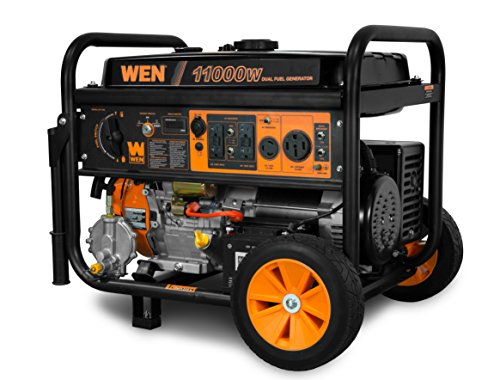
- Up to 8,300 running watts on gasoline
- Gasoline and propane operation
- 120V/240V output with electric start
Best For: Larger home studios needing substantial portable backup power
Quiet Electronics-Friendly Pick
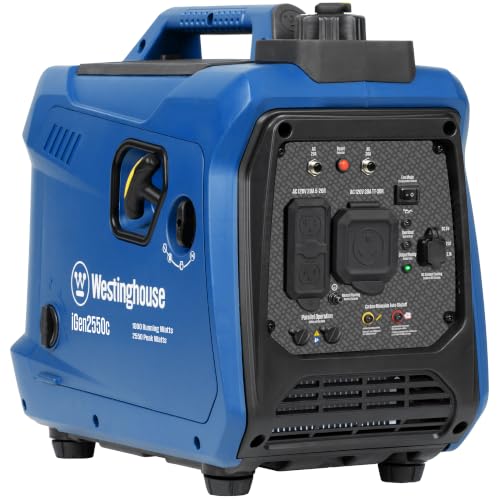
- 1,900 running watts with inverter output
- Up to 3% THD for sensitive electronics
- Compact 40-pound design with Eco Mode
Best For: Small studios prioritizing quiet, portable power for electronics
Tri-Fuel Home Backup Pick

- 9,500 running and 12,500 starting watts
- Runs on gasoline, propane, or natural gas
- Electric start, AVR, and COsense protection
Best For: Large studios and homes wanting high-capacity, flexible-fuel backup
Quiet Remote Backup
Champion 11,000-Watt Inverter Generator

- 9,000 running watts and 11,000 starting watts
- Wireless remote start up to 80 feet
- Inverter output with CO Shield and up to 15-hour runtime
Best For: Gasoline-powered studio backup with remote-start convenience
Dual-Fuel Studio Backup
Westinghouse 12,500-Watt Dual-Fuel Generator

- Up to 9,500 running watts on gasoline
- Runs on gasoline or propane
- Remote start and transfer-switch-ready outlet
Best For: Fuel-flexible backup for studios with larger power demands
High-Capacity Clean Power
Westinghouse 14,500-Watt Dual-Fuel Generator

- 11,500 running watts on gasoline
- Low-THD output for sensitive electronics
- Up to 19 hours of gasoline runtime
Best For: Larger studios needing clean, extended backup power
High-Capacity Portable Pick – DuroMax XP13000EH
For shoppers comparing home standby generators for home studios, the DuroMax XP13000EH offers substantial 13,000-watt dual-fuel capacity in a portable design. Its electric start, transfer-switch-ready 50-amp outlet, and gasoline-or-propane operation make it a flexible option for keeping studio and household equipment powered during outages.
Best For: Home studio owners who want high output and portable, dual-fuel backup power.
Pros:
- 13,000 starting watts and 10,500 running watts can support substantial household and studio loads.
- Runs on gasoline or propane, with a front-facing fuel-selection interface.
- Electric start, CO sensor, low-oil shutdown, hour meter, and transfer-switch-ready 50-amp outlet.
- Heavy-duty all-metal frame, copper windings, wheels, and foldable handle support durability and mobility.
Cons:
- At 234 pounds, it is not especially easy to move without using its wheels.
- Its listed runtime is three hours, so extended outages may require regular refueling.
- As a portable generator, it requires an appropriate outdoor setup and connection arrangement rather than operating as a permanently installed standby unit.
The XP13000EH is a practical fit when high capacity and fuel flexibility matter more than permanent automation. Its robust construction and studio-friendly output are appealing, but buyers should plan for outdoor operation, fuel management, and transfer-switch installation as needed.
Clean-Power Standby Pick – Honeywell 14kW Home Standby Generator
The Honeywell 14kW Home Standby Generator is designed for buyers seeking permanently installed backup power for a home studio. Its PrecisionPower Technology is rated below five percent total harmonic distortion, while the included transfer switch and automatic controls simplify whole-home outage coverage for sensitive electronics.
Best For: Home studios prioritizing clean power, automatic operation, and a permanent standby installation.
Pros:
- PrecisionPower Technology delivers less than five percent total harmonic distortion for sensitive electronics and appliances.
- Natural-gas and propane compatibility provides two fuel options.
- Includes a 16-circuit transfer switch and electronic ignition.
- Quiet-Test mode lowers engine speed during five- or twelve-minute self-tests, while the LCD controller tracks battery status and maintenance intervals.
Cons:
- It is a stationary standby generator rather than a portable option for flexible use elsewhere.
- The supplied details do not specify a runtime figure or noise level during normal operation.
- Professional installation and suitable fuel service are important considerations for a permanent system.
For a studio filled with computers, interfaces, monitors, and other sensitive gear, the low-THD specification is a meaningful advantage. The Honeywell is best suited to buyers ready for a fixed installation and who value automated testing and circuit-level transfer control.
Most Flexible Fuel Pick – DuroMax XP13000HXT
Among home standby generators for home studios, the DuroMax XP13000HXT stands out for its three-fuel flexibility. It can run on gasoline, propane, or natural gas and combines 13,000 watts of starting power with remote and push-button starting, making it a versatile portable backup choice for studio and residential loads.
Best For: Home studio owners who want portable high-output power with gasoline, propane, and natural-gas options.
Pros:
- Tri-fuel operation supports gasoline, propane, or natural gas.
- 13,000 starting watts and 10,500 running watts provide substantial capacity.
- Push-button and remote starting make operation more convenient.
- Includes CO Alert, digital display, transfer-switch-ready 50-amp outlet, natural-gas hose, and propane regulator.
Cons:
- Its 240-pound weight makes relocation difficult without the included wheel and handle kit.
- It is portable rather than a fully automatic, permanently installed standby system.
- The supplied details do not state total harmonic distortion, so buyers with especially sensitive studio equipment may want to verify power-quality requirements.
The XP13000HXT is compelling when fuel availability may change during a long outage. Its remote start and included fuel accessories add convenience, while the portable format preserves flexibility; however, studio owners should confirm that its power quality suits their equipment and arrange an appropriate transfer connection.
Connected Whole-Home Pick – Generac 14kW Home Generator
The Generac 14kW Whole Home Generator suits home studio owners who want automatic outage response and remote oversight. It includes a 200-amp transfer switch, built-in cellular connectivity for Mobile Link monitoring and control, and 14,000 watts of running output for broad household and studio coverage.
Best For: Home studios seeking whole-home automatic backup with remote monitoring and a five-year limited warranty.
Pros:
- Automatically detects outages and delivers 14,000 watts of whole-home backup power.
- Includes an automatic 200-amp transfer switch.
- Built-in cellular connectivity enables Mobile Link monitoring, controls, and maintenance alerts; premium features require a subscription.
- Oil-level sensors, cold-start support, and a fully enclosed design support readiness and outdoor use.
Cons:
- At 391 pounds, it is a substantial stationary installation.
- Mobile Link premium monitoring features require a subscription.
- The supplied details do not specify total harmonic distortion or a normal-operation noise rating.
This Generac is a strong choice for a studio that cannot afford to wait beside a generator during an outage. Its automatic transfer equipment and cellular monitoring add convenience, while buyers with particularly sensitive audio or production electronics should separately confirm the unit’s power-quality specifications.
High-Capacity Dual-Fuel Pick – WEN DF1100T
WEN 11,000-Watt 120V/240V Dual Fuel Portable Generator with Wheel Kit and Electric Start (DF1100T)
Check Price On AmazonFor home standby generators for home studios, the WEN DF1100T is a high-output portable option with gasoline and propane flexibility. Its 120V/240V operation, electric start, and multiple outlet types make it suitable for larger studio setups and other household backup loads.
Best For: Home studios that need substantial portable capacity and 120V/240V compatibility.
Pros:
- Produces up to 8,300 running watts on gasoline and 7,500 on propane.
- Dual-fuel operation provides flexibility during extended outages.
- Electric start and 120V/240V output support convenient backup connections.
- Includes a 50A outlet, 30A twist-lock outlet, GFCI outlets, wheel kit, and two-year warranty.
Cons:
- At 214 pounds, it is considerably less portable than a compact inverter generator.
- Its fuel-powered design may be more capacity than a small studio requires.
- Gasoline runtime is listed as up to 8.5 hours at half load, so heavy loads require more frequent refueling.
The DF1100T is a strong fit when studio equipment and household essentials demand serious wattage. Choose it over a smaller unit when outlet versatility and dual-fuel flexibility matter more than low weight.
Quiet Electronics-Friendly Pick – Westinghouse iGen2550c
The Westinghouse iGen2550c is a compact choice among home standby generators for home studios, especially where noise and clean power matter. Its inverter design produces power with up to 1,900 running watts, while Eco Mode and a claimed 52 dBA noise level help keep operation less intrusive.
Best For: Small home studios powering computers, displays, networking equipment, and other moderate electronic loads.
Pros:
- Inverter output has up to 3% THD, making it suitable for sensitive electronics such as computers and TVs.
- Compact 40-pound design is easier to move and store than larger conventional generators.
- Runs up to 11 hours at 25% load and includes Eco Mode for reduced fuel use.
- Provides a 30A TT-30R outlet, standard 20A outlet, and two USB ports.
Cons:
- Its 1,900 running watts may not support a larger studio or several high-draw devices simultaneously.
- It uses gasoline only and has recoil start rather than electric start.
- Parallel cables are sold separately if you want to combine it with a compatible Westinghouse generator.
For a modest studio, the iGen2550c emphasizes portability, quieter operation, and cleaner inverter power rather than maximum capacity. Confirm the combined running and startup wattage of your equipment before choosing it as your primary backup.
Tri-Fuel Home Backup Pick – Generac GP9500ETF
The Generac GP9500ETF offers flexible backup for home studios that need high output and multiple fuel choices. It delivers 9,500 running watts, supports gasoline, propane, or natural gas, and includes electric start, voltage regulation, and COsense shutdown protection.
Best For: Larger home studios and households seeking high-capacity backup with natural-gas capability.
Pros:
- Tri-fuel operation supports gasoline, liquid propane, and natural gas.
- Provides 9,500 running watts and 12,500 starting watts for high-surge loads.
- AVR helps stabilize output voltage for connected equipment and motor-driven devices.
- Includes electric start, COsense detection, a 50A outlet, and compatibility with Generac HomeLink manual transfer switches.
Cons:
- At 219 pounds, it is heavy to relocate despite its wheels and folding handle.
- The larger output and frame may be excessive for a small studio setup.
- It is a portable generator, so safe placement and appropriate transfer-switch installation remain necessary for home backup.
The GP9500ETF stands out when fuel flexibility and sustained capacity are priorities. Its natural-gas option can reduce reliance on stored gasoline, while the high surge rating gives larger studio and household loads more headroom.
Quiet Remote Backup – Champion 11,000-Watt Inverter Generator
For shoppers comparing home standby generators for home studios, the Champion 11,000-Watt Portable Inverter Generator offers substantial output with inverter technology and a relatively low listed noise level of 64 dBA from 23 feet. Its remote start and CO Shield system add convenience for residential backup use.
Best For: Home studios that need strong gasoline-powered backup capacity, remote starting, and cleaner inverter power in a portable package.
Pros:
- Provides 9,000 running watts and 11,000 starting watts.
- Wireless remote start works from up to 80 feet away.
- Inverter design, CO Shield auto shutoff, and up to 15 hours of runtime support practical backup use.
- Includes multiple 120V and 120/240V outlets plus a three-year limited warranty.
Cons:
- At 200 pounds, it is not especially easy to move without its wheel kit.
- It runs on gasoline rather than offering a dual-fuel option.
- It is a portable generator, so it does not provide automatic whole-home standby transfer.
Choose this Champion when remote convenience, inverter output, and extended gasoline runtime matter more than automatic standby operation. Its outlet selection also makes it flexible for studio equipment and household circuits.
Dual-Fuel Studio Backup – Westinghouse 12,500-Watt Dual-Fuel Generator
Among home standby generators for home studios, this Westinghouse dual-fuel model stands out for its choice of gasoline or propane, remote electric start, and transfer-switch-ready 30A connection. It delivers enough capacity for studio equipment alongside selected household loads during an outage.
Best For: Home studios that value fuel flexibility, high output, and transfer-switch compatibility without moving to a permanently installed system.
Pros:
- Produces up to 9,500 running watts on gasoline or 8,500 on propane.
- Supports remote, electric, and recoil starting.
- Includes a transfer-switch-ready L14-30R outlet and a 50A 120/240V outlet.
- Offers a fuel gauge, digital hour meter, low-oil shutdown, and up to 12 hours of gasoline runtime.
Cons:
- Its open-frame design may be less suitable for noise-sensitive recording spaces.
- At 210 pounds, positioning it can require substantial effort.
- It does not include an automatic transfer system.
This Westinghouse is a practical option when propane availability and higher household power demands are priorities. For a studio, plan generator placement carefully because the supplied notes do not identify it as an inverter model or specify a low-THD output.
High-Capacity Clean Power – Westinghouse 14,500-Watt Dual-Fuel Generator
For larger home studios evaluating home standby generators for home studios, this Westinghouse dual-fuel generator combines high output with a low-THD design intended for sensitive electronics. Its long gasoline runtime and remote electric start make it suited to extended outage coverage, though it remains a portable open-frame unit.
Best For: Larger studios that need substantial power for computers, audio equipment, and other electronics while retaining gasoline-or-propane flexibility.
Pros:
- Delivers 11,500 running watts on gasoline and 10,500 on propane.
- Low-THD output is designed for sensitive electronics.
- Runs up to 19 hours on its 9.5-gallon gasoline tank.
- Includes remote electric start, fuel gauge, hour meter, CO sensor, and overload protection.
Cons:
- At 230 pounds, portability is limited despite its open-frame design.
- Propane runtime is listed at up to seven hours on a 20-pound tank.
- Only two outlets are listed in the supplied specifications, so connection planning is important.
This model is the strongest fit of the three when studio electronics and extended runtime are the main concerns. Its low-THD output is a useful advantage, but buyers should verify outlet needs and remember that portable operation does not equal automatic standby transfer.
How We Picked the Best Home Standby Generators for Home Studios
We focused on generators that can support common studio loads such as computers, displays, audio interfaces, powered monitors, external drives, routers, ventilation, and selected household circuits. The lineup includes true standby systems as well as portable models that may suit renters, smaller studios, or buyers who want flexible backup power.
We compared rated and starting wattage, fuel flexibility, generator type, starting controls, transfer-switch readiness, portability, noise-related features, carbon-monoxide safety, and practical home-backup capability. Because studio equipment can be sensitive to unstable power, inverter technology and proper installation deserve special attention.
Quick Comparison
- Whole-home standby generators: Honeywell and Generac standby options are suited to permanently installed backup and automatic operation when paired with the correct transfer equipment.
- High-output portable generators: The DuroMax, WEN, Generac, Champion, and Westinghouse models offer substantial capacity for selected circuits or broader backup use.
- Quiet, compact studio-friendly option: The Westinghouse 2550-watt inverter generator is easier to move and may be more appropriate for modest loads, outdoor remote work, or sensitive environments.
- Best fuel flexibility: Dual-fuel and tri-fuel models can reduce dependence on one fuel source, but output and runtime vary by fuel type.
Key Buying Factors for Home Standby Generators for Home Studios
Calculate Running and Starting Loads
Add the continuous wattage of your computer, monitors, interface, drives, networking gear, lights, and HVAC equipment. Then account for startup surges from refrigerators, pumps, air conditioners, or other shared household circuits. A generator’s running wattage is more important than its headline peak figure.
Choose Power Quality and Connection Method Carefully
Inverter generators generally provide cleaner, more stable power and can be a strong fit for computers and audio equipment. For a permanently installed standby system, use a properly rated automatic transfer switch and have the electrical work completed by a qualified professional. Never connect a portable generator directly to household wiring without approved transfer equipment.
Balance Noise, Runtime, and Fuel Availability
Generator noise can enter microphones, monitoring rooms, and nearby living spaces. Place portable units outdoors, far from doors and windows, while following clearance and ventilation requirements. Natural gas may offer convenient long-duration operation; propane stores well; gasoline is widely available but requires careful storage and maintenance.
Prioritize Safety and Maintenance
Look for carbon-monoxide detection, low-oil protection, remote or electric start, weather protection where appropriate, and accessible service points. Test the system periodically, keep fuel fresh, and install carbon-monoxide alarms inside the home. A generator must always operate outdoors, never in a garage or enclosed area.
Who Should Buy Which Home Standby Generators for Home Studios?
Choose a permanently installed standby model if your studio is part of your primary home, you want automatic outage response, and you need dependable support for multiple circuits. Choose a high-output portable model if you need strong capacity at a lower upfront cost or want to move backup power between locations. Choose a dual-fuel or tri-fuel generator if fuel flexibility matters during extended outages. Choose a compact inverter model if your essential studio load is modest and quiet operation, portability, and cleaner power are higher priorities than whole-home capacity.