
Photographers spend long hours on the road, often carrying valuable gear and visiting unfamiliar locations. A capable dash camera can document incidents, protect parked vehicles, and preserve useful visual evidence without adding much workflow friction.
This roundup focuses on cameras with strong image detail, broad coverage, reliable storage, and practical phone connectivity. The buying guide below explains which features matter most for creative professionals and different driving routines.
Best 10 Dash Cameras for Photographers Picks for 2026
Best Dual-Camera Detail
ROVE R2-4K Dual Front and Rear

- Upscaled 4K front and 1080P rear recording
- STARVIS 2 sensor with HDR and low-light support
- Includes 128GB card and fast 5.8GHz Wi-Fi
Best For: Photographers wanting front-and-rear coverage with convenient file transfers
Best Complete Coverage

- Records front, interior, and rear views
- Triple STARVIS 2 sensors with HDR
- Buffered parking mode and rotating rear camera
Best For: Photographers needing comprehensive three-channel vehicle recording
Best Touchscreen Controls
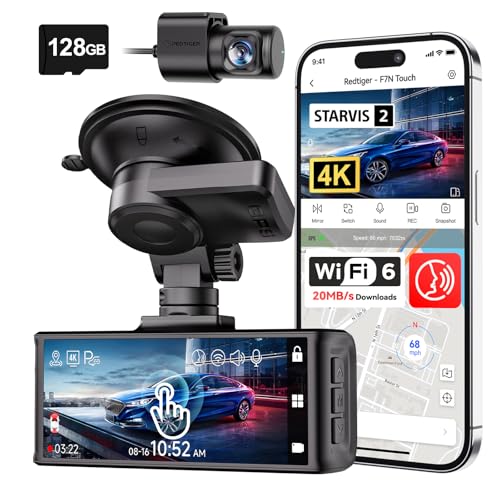
- 4K front and 1080P rear recording
- Touchscreen and voice-control options
- Includes 128GB card, GPS, and 5.8GHz Wi-Fi
Best For: Users wanting easy hands-free and touchscreen operation
Best Single-Camera Resolution

- Native up to 2160P 4K front recording
- 8MP Sony sensor with F1.5 aperture
- Built-in GPS, Wi-Fi, and parking mode
Best For: Photographers prioritizing detailed forward-facing footage
Top Coverage Pick
4K+4K+1080P 3-Channel Dash Cam

- 4K front and rear with 1080P cabin video
- Wi-Fi 6 app transfers and built-in GPS
- Free 128GB card; supports up to 512GB
Best For: Photographers needing detailed three-way vehicle coverage
Best Full-Surround Option

- Four-channel coverage with side and interior views
- 4K front recording and 3-inch multi-view display
- Wi-Fi 6, GPS, 128GB card, and side IR lights
Best For: Photographers prioritizing broad 360-degree-style coverage
Best Dual-4K Choice
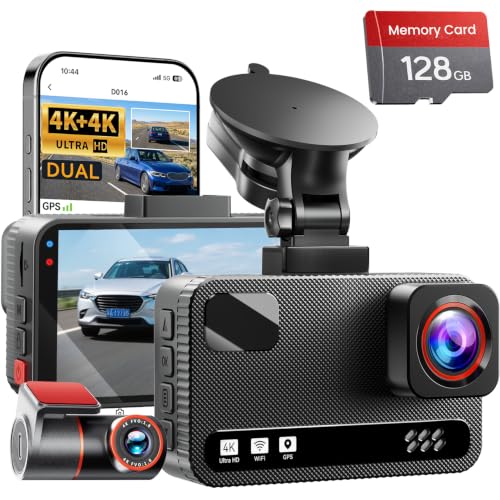
- Matching 4K recording from front and rear cameras
- Starlight sensor, f/1.5 aperture, and WDR
- 128GB card included; supports up to 1TB
Best For: Photographers prioritizing maximum front-and-rear detail
Maximum Coverage Pick
BOTSLAB 4-Channel 360° Dash Cam

- Four-channel front, side, and rear recording
- 3K video with low-light enhancements
- GPS, 5.8GHz Wi-Fi, voice control, and 128GB card
Best For: Photographers needing comprehensive vehicle and parking-area coverage
Balanced Road-Trip Pick
REDTIGER F7NP 4K Dual Dash Cam

- 4K front and 1080P rear recording
- STARVIS 2 sensor with WDR and HDR
- 5.8GHz Wi-Fi, GPS, and included memory card
Best For: Road-trip photographers wanting high-quality front footage and simple rear coverage
Interior Documentation Pick
70mai T800E 3-Channel Dash Cam

- 4K front plus 1080P interior and rear channels
- Switchable infrared for clearer interior night footage
- Wi-Fi 6, GPS, voice control, and 64GB card
Best For: Rideshare and travel photographers needing cabin and road coverage
Best Dual-Camera Detail – ROVE R2-4K Dual Front and Rear
For photographers comparing dash cameras for photographers, the ROVE R2-4K Dual is a practical choice when you want front-and-rear coverage, strong low-light performance, and quick phone transfers. Its front video is captured at 2.5K and upscaled to 4K, while the rear camera records in 1080P.
Best For: Drivers who want dual-angle documentation, GPS-stamped footage, and a bundled 128GB card for everyday road and travel recording.
Pros:
- Records front and rear views simultaneously, with upscaled 4K front video and 1080P rear video.
- Sony STARVIS 2 IMX675 sensor, HDR, and wide apertures support clearer low-light footage.
- Built-in GPS, 5.8GHz Wi-Fi, and downloads of up to 20MB/s simplify footage review and sharing.
- Includes a 128GB microSD card and offers several parking-mode options with a hardwire kit.
Cons:
- The front 4K output is upscaled from 2.5K rather than native 4K.
- A hardwire kit is required for parking mode and is not included.
This model balances broad coverage with convenient file handling, making it particularly useful for photographers who want organized driving documentation without buying a memory card separately.
Best Complete Coverage – Vantrue N4 Pro S 4K 3-Channel
The Vantrue N4 Pro S is suited to photographers seeking dash cameras for photographers with maximum coverage. Its three STARVIS 2 cameras record the front, interior, and rear, giving you a wider record of road conditions, passengers, and surrounding activity.
Best For: Photographers and travelers who need three-channel recording, strong nighttime detail, and buffered parking surveillance.
Pros:
- Combines 4K front, 2.5K interior, and 1080P rear recording for broad coverage.
- Triple STARVIS 2 sensors and HDR are designed to improve low-light and license-plate detail.
- The rotating rear camera can monitor traffic or the trunk area.
- Offers 5GHz Wi-Fi, GPS, voice control, and buffered parking recording across all three cameras.
Cons:
- The package does not include a memory card.
- A separately sold hardwire kit is needed for parking modes.
- Three-channel 4K recording uses substantial storage capacity.
With its interior-facing channel and flexible rear camera, the N4 Pro S is the strongest option here for documenting more than just the road ahead and behind.
Best Touchscreen Controls – REDTIGER F7N TOUCH 4K Dual
For photographers evaluating dash cameras for photographers, the REDTIGER F7N TOUCH adds hands-free voice commands and a touchscreen to a front-and-rear setup. It records 4K video in front and 1080P video behind, with Wi-Fi for transferring clips to a phone.
Best For: Users who prefer touchscreen controls, voice operation, and included storage for capturing and sharing driving footage.
Pros:
- Provides 4K front and 1080P rear recording with wide viewing angles.
- STARVIS 2, WDR, HDR, and night-vision features support recording in varied lighting.
- Touchscreen and voice controls make locking footage or capturing scenery convenient.
- Includes a 128GB card, built-in GPS, and 5.8GHz Wi-Fi with up to 20MB/s downloads.
Cons:
- Parking monitoring requires a separate hardwire kit.
- It uses a wired installation for the camera system.
The F7N TOUCH is a well-rounded pick when direct camera controls matter as much as image quality, especially for users who want to lock or share footage without navigating a complicated interface.
Best Single-Camera Resolution – ROVE R2-4K UHD GPS
The original ROVE R2-4K is a straightforward option for photographers looking at dash cameras for photographers and prioritizing detailed forward-facing footage. Its 8MP Sony sensor records up to 2160P 4K, while built-in Wi-Fi and GPS help with reviewing and organizing clips.
Best For: Photographers who want high-resolution front-facing recording, a wide 150-degree view, and app-based footage management.
Pros:
- Records forward-facing video at up to 2160P 4K using an 8MP Sony sensor.
- F1.5 aperture, six-glass-lens design, and Super Night Vision support low-light capture.
- Built-in GPS records location and speed, while Wi-Fi enables app viewing and sharing.
- Includes parking mode, loop recording, G-sensor protection, and a supercapacitor.
Cons:
- A microSD card is not included and must be purchased separately.
- This is a front-facing camera rather than a dual- or triple-channel system.
- Wi-Fi downloads are listed at up to 6MB/s, slower than the newer options here.
Choose this ROVE when forward-facing 4K detail is more important than multi-camera coverage. Its GPS and app support also make footage easier to identify and share after a drive.
Top Coverage Pick – 4K+4K+1080P 3-Channel Dash Cam
For photographers seeking dash cameras for photographers, this three-channel model offers unusually broad coverage: 4K video in front and rear, plus 1080P cabin recording. Its wide-angle lenses, Wi-Fi 6 app, GPS, and included 128GB card make it practical for documenting scenic drives, incidents, and vehicle activity.
Best For: Photographers who want high-resolution front-and-rear footage with cabin coverage and convenient wireless file transfers.
Pros:
- Records 4K front, 4K rear, and 1080P cabin video simultaneously.
- Wi-Fi 6 supports app-based viewing, downloads, sharing, and OTA updates.
- Includes a 128GB memory card and supports storage up to 512GB.
- Built-in GPS, night vision, and 24-hour parking monitoring add useful documentation features.
Cons:
- The 24-hour parking-monitoring feature requires a separate hardwire kit.
- Three-camera recording and high resolutions may use storage quickly.
This is the most versatile option of the group for creators who want both detailed road footage and interior coverage. The 3-year guarantee and 24/7 support are additional advantages for frequent users.
Best Full-Surround Option – Icesky 4K 4-Channel Dash Cam
This Icesky model is a strong choice among dash cameras for photographers who want to capture more than the road ahead and behind. It records 4K front video alongside 1080P rear, interior, left, and right views, while its multi-view display and Wi-Fi 6 app simplify reviewing footage.
Best For: Photographers and travelers who prioritize 360-degree-style coverage and side-view recording.
Pros:
- Four-channel system covers front, rear, interior, left, and right views.
- Built-in 3-inch display can show front, rear, left, and right footage together.
- Wi-Fi 6 enables app preview, downloads, playback, and sharing at up to 20MB/s.
- Includes GPS, 128GB storage, side-camera IR lights, and 24-hour parking mode.
Cons:
- Only the front camera records in 4K; the other listed views record at 1080P.
- Parking mode requires a hardwire kit that is not included.
- Four camera views may require more involved installation and positioning.
Choose this model when coverage around the vehicle matters more than matching 4K resolution across every camera. Its side cameras and independent IR controls are particularly useful for documenting activity in low-light areas beside the vehicle.
Best Dual-4K Choice – 4K+4K Front-and-Rear Dash Cam
Photographers comparing dash cameras for photographers may prefer this focused dual-channel design when image detail matters most. Both the front and rear cameras record in 4K, and the starlight-level sensor, f/1.5 aperture, WDR, and Wi-Fi app are designed to support clearer footage in changing light.
Best For: Photographers who want matching 4K front-and-rear recordings for road trips, evidence, and scene documentation.
Pros:
- Records 3840×2160 4K video from both front and rear cameras.
- Starlight-level sensor, f/1.5 aperture, five-element lens, and WDR support low-light detail.
- 5.8GHz/2.4GHz Wi-Fi provides app playback, downloads, GPS data access, and sharing.
- Includes a 128GB card and supports up to 1TB of external storage.
Cons:
- It provides front-and-rear coverage rather than interior or side cameras.
- 24/7 parking mode requires a separate hardwire kit.
- The listed after-sales coverage is 18 months.
This is the clearest fit for creators who value consistent 4K quality in both driving directions. Its large-aperture optics and high storage ceiling also suit users who expect to record frequently and review footage through the app.
Maximum Coverage Pick – BOTSLAB 4-Channel 360° Dash Cam
For photographers researching dash cameras for photographers, the BOTSLAB stands out when broad exterior coverage matters. Its four-channel setup records front, side, and rear views simultaneously, while built-in GPS, fast 5.8GHz Wi-Fi, and a supplied 128GB card simplify reviewing and transferring road-trip footage.
Best For: Photographers who want the widest possible vehicle coverage for documenting journeys, incidents, and parking-area activity.
Pros:
- Four cameras record simultaneously, with front, dual side, and rear coverage.
- 3K recording, F1.8 aperture, infrared illumination, and WDR support low-light detail.
- Includes voice control, GPS, 5.8GHz Wi-Fi, a touchscreen, and a 128GB card.
- Supports multiple parking modes and preserves pre-impact footage with 8-second pre-recording.
Cons:
- Advanced parking modes require a separately purchased hardwire kit.
- Remote access is unavailable; the Wi-Fi range is limited to approximately 3–5 meters.
- The four-camera configuration may be more equipment than casual drivers need.
The BOTSLAB is the most coverage-focused option here. It makes sense for photographers who prioritize capturing context from multiple directions, though its larger feature set and hardwire requirement add installation complexity.
Balanced Road-Trip Pick – REDTIGER F7NP 4K Dual Dash Cam
The REDTIGER F7NP is a practical choice for photographers who want strong front-facing detail without moving to a four-camera system. It combines 4K front video, 1080P rear recording, STARVIS 2 imaging, GPS, and fast phone transfers for reviewing or sharing travel footage.
Best For: Road-trip and commuting photographers who want sharp front footage with straightforward rear coverage.
Pros:
- Records 4K from the front and 1080P from the rear with wide-angle lenses.
- STARVIS 2, a large F1.5 aperture, WDR, and HDR support day-and-night recording.
- Built-in 5.8GHz Wi-Fi and app support make previewing and downloading clips convenient.
- Includes a memory card, GPS, loop recording, parking modes, and an 18-month warranty.
Cons:
- Parking monitoring requires a hardwire kit.
- It does not provide side-camera coverage like the BOTSLAB.
- Its many settings and accessories require following the installation guidance carefully.
Choose the F7NP if front-image quality and easy smartphone access matter more than all-around coverage. Its dual-camera design keeps the setup more conventional while still offering useful evidence and travel documentation.
Interior Documentation Pick – 70mai T800E 3-Channel Dash Cam
Photographers looking at dash cameras for photographers may prefer the 70mai T800E when interior activity matters as much as the road ahead. Its 4K front, 1080P interior, and 1080P rear channels cover the cabin and surroundings, while switchable interior infrared recording helps in low light.
Best For: Rideshare, family, and travel photographers who need front, rear, and in-cabin documentation.
Pros:
- Three-channel recording combines 4K front footage with interior and rear cameras.
- Switchable infrared, HDR, and 3D noise reduction support interior and nighttime recording.
- Includes GPS, Wi-Fi 6, voice control, parking monitoring, and a 64GB card.
- Supports cards up to 512GB and uses a supercapacitor rated for 14°F to 140°F.
Cons:
- Continuous parking monitoring requires a compatible hardwire kit.
- The interior camera may be unnecessary for photographers who only need road views.
- It does not support 4G connectivity.
The T800E is the most versatile option for documenting people and activity inside the vehicle as well as the route outside. Its interior channel is especially useful for rideshare or family travel, but it adds little value for strictly forward-facing use.
How We Picked the Best Dash Cameras for Photographers
We focused on the features that have the greatest practical value for photographers: recording resolution, sensor performance, coverage, file access, storage, GPS data, and parking protection. The selection includes single-, dual-, triple-, and four-channel models so you can compare compact setups with more comprehensive vehicle monitoring.
High-resolution recording is useful when you need to inspect license plates, road signs, or small details after an incident. However, resolution alone does not determine image quality. Sensor generation, HDR or night-vision performance, lens placement, compression, and lighting conditions all affect usable footage.
Quick Comparison
| Priority | Look For | Why It Matters |
|---|---|---|
| Maximum detail | 4K front recording and strong HDR | Improves clarity for daytime evidence and distant details |
| Vehicle coverage | Dual, triple, or four-channel recording | Reduces blind spots around the car |
| Low-light driving | STARVIS 2, starlight, or HDR night vision | Helps retain detail after dark and in difficult contrast |
| Fast workflow | Wi-Fi, modern app, and GPS | Makes clips easier to preview, locate, and share |
| Long-term recording | High-capacity card support and loop recording | Provides more recording time and simpler maintenance |
Key Buying Factors for Dash Cameras for Photographers
Image Quality and Exposure Control
Choose 4K when fine detail is a priority, but check whether the camera maintains clarity at night. HDR can help balance bright headlights and dark surroundings. A polarizing filter, if supported, may reduce windshield reflections, though it can require careful adjustment.
Coverage and Installation
A front-and-rear system is a strong general-purpose choice. Three-channel models add cabin coverage, while four-channel systems can monitor the sides as well. More cameras mean more wiring, storage demands, and installation complexity, so match coverage to your vehicle and security concerns.
Storage, Connectivity, and Power
Confirm the included card capacity, maximum supported capacity, and whether the camera requires a high-endurance microSD card. Wi-Fi is convenient for transferring short clips, while GPS adds location and speed information. Parking mode may require a separate hardwire kit and should be installed safely.
Who Should Buy Which Dash Cameras for Photographers?
- Choose a dual-channel 4K model if you want strong front detail plus rear coverage for everyday travel and location scouting.
- Choose a three-channel camera if you regularly drive alone at night, transport clients, or want cabin footage alongside front and rear views.
- Choose a four-channel system if maximum visibility around a parked vehicle matters more than a simple installation.
- Choose a compact single-front camera if easy setup, lower cost, and fast file access are your top priorities.
- Prioritize GPS, Wi-Fi, and voice control if you frequently need to identify, save, or share clips while working on location.
Before buying, verify vehicle compatibility, camera dimensions, mounting options, app support, and power requirements. For photographers, the best choice is the model that delivers dependable evidence while fitting smoothly into an existing travel and media workflow.