
The best beginner-friendly dash cameras make everyday driving safer without turning installation, app setup, or footage management into a chore. This roundup compares compact front cameras, dual-channel systems, and 360-degree multi-camera options.
We focused on practical differences that matter to first-time buyers, including image quality, field of view, included storage, wireless transfer, GPS, voice control, and parking coverage.
Best 10 Beginner-Friendly Dash Cameras Picks for 2026
Best Screen-Free 4K Pick

- 4K front video with 160° coverage
- 5GHz Wi-Fi and app control
- 32GB card included; compact screen-free design
Best For: New drivers and rideshare users wanting detailed front footage
Best Minimalist Option

- Ultracompact key-sized design
- 1080p recording with glare-reducing polarizer
- Voice control and automatic incident saving
Best For: Drivers wanting a discreet, simple dash cam
Best Dual-Camera System
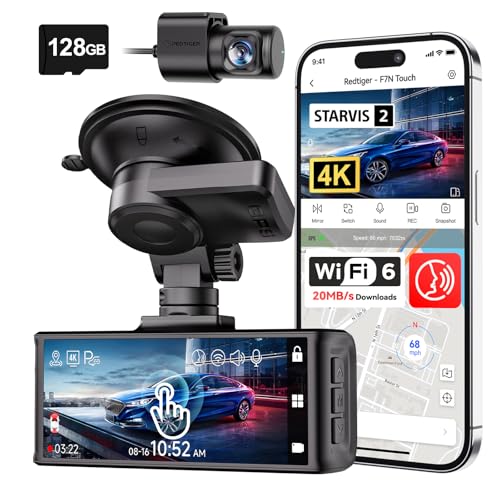
- 4K front plus 1080p rear recording
- Touchscreen, voice control, and GPS
- 128GB card included with fast Wi-Fi
Best For: Drivers seeking broad front-and-rear coverage
Best Simple QHD Starter

- 2.5K front recording with 160° coverage
- 64GB card included and expandable storage
- Wi-Fi app with compact screen-free design
Best For: Commuters and new drivers wanting clear front footage
Top Resolution Pick

- True 4K recording from both front and rear cameras
- 128GB card included with support up to 512GB
- WiFi 6, GPS, app control, and three-year guarantee
Best For: Drivers prioritizing maximum dual-camera detail and fast phone transfers
Beginner Setup Pick
Affver A4 4K+2.5K Dual Dash Cam

- 4K front and upgraded 2.5K rear recording
- 64GB card and installation tools included
- Large 3.59-inch screen with WiFi 6 and GPS
Best For: First-time owners, family vehicles, and rideshare drivers
Night Driving Pick

- STARVIS 2 sensor, HDR, and F1.5 front aperture
- 128GB card included with support up to 1TB
- GPS, fast WiFi, voice guidance, and multiple parking modes
Best For: Night drivers wanting strong low-light performance and guided setup
Top 4K Three-Channel Pick

- 4K front plus 1080P interior and rear cameras
- GPS, Wi-Fi 6, voice control, and 64GB card included
- HDR and switchable IR support low-light recording
Best For: Rideshare drivers and families wanting front, rear, and cabin coverage
Best Full-Coverage Value

- Four 1080P cameras cover front, rear, left, and right
- 128GB card included with support for up to 256GB
- 5GHz Wi-Fi app supports quick video transfers
Best For: Drivers wanting broad four-sided coverage and ample included storage
Best Screen-and-App Combo

- 4K front camera plus three adjustable 1080P cameras
- 3-inch IPS screen with 5GHz Wi-Fi and app control
- GPS, G-sensor locking, and 64GB card included
Best For: Drivers wanting four-sided coverage with both screen and smartphone access
Best Screen-Free 4K Pick – Galphi 4K WiFi Dash Cam
For drivers seeking beginner-friendly dash cameras, the Galphi combines sharp 4K recording with a compact, screen-free design. Its included 32GB card lets you start recording out of the box, while 5GHz Wi-Fi makes phone transfers more convenient.
Best For: New drivers, family vehicles, and Uber or Lyft drivers who want high-resolution front footage without a distracting display.
Pros:
- 4K resolution, a 160-degree lens, and night-focused F/1.6 aperture with WDR
- 5GHz Wi-Fi and app support for faster video downloads
- Compact installation with included 32GB memory card
- Loop recording, G-sensor protection, and screen-free operation
Cons:
- 24-hour parking mode requires a separately purchased Type-C hardwire kit
- The included card is 32GB and extended storage requires a compatible upgrade
This is a straightforward choice for beginners who prioritize detailed front footage and easy phone access. The lack of a built-in screen keeps the unit unobtrusive, though parking-mode users should budget for the additional hardwire kit.
Best Minimalist Option – Garmin Dash Cam Mini 3
The Garmin Dash Cam Mini 3 is one of the most beginner-friendly dash cameras for drivers who want a discreet setup. Its key-sized body, automatic incident recording, and voice controls keep daily operation simple.
Best For: Drivers who prefer a nearly invisible 1080p camera with hands-free controls and optional cloud-based features.
Pros:
- Ultracompact design that stays unobtrusive on the windshield
- 1080p video with a 140-degree field of view in bright and low light
- Polarizer lens helps reduce windshield glare
- Voice control can save video and start or stop audio recording
Cons:
- Some Vault features, including live view and parking notifications, require a paid subscription and additional connectivity
- It records at 1080p rather than the higher resolutions offered by some alternatives
Garmin’s small footprint and automatic incident saving make this a particularly approachable first dash cam. It is best suited to buyers who value simplicity and discretion more than maximum resolution or built-in display controls.
Best Dual-Camera System – REDTIGER F7N Touch Dash Cam
For beginners who want broader coverage from the start, the REDTIGER F7N Touch pairs 4K front video with a 1080p rear camera. A touchscreen, voice commands, GPS, and a 128GB card provide accessible controls and substantial included storage.
Best For: Drivers wanting front-and-rear protection, touchscreen controls, and location data in recorded footage.
Pros:
- 4K front and 1080p rear recording with wide-angle coverage
- Touchscreen, voice control, and 5.8GHz Wi-Fi offer multiple control methods
- Built-in GPS records location, speed, and route information
- 128GB card included, plus loop recording and G-sensor protection
Cons:
- Rear-camera installation adds wiring and setup compared with a front-only model
- Parking monitoring requires a separately purchased hardwire kit
This model offers a feature-rich package for beginners who want a complete dual-camera setup rather than a basic front recorder. The touchscreen can simplify setup, while the extra camera and GPS add useful coverage and evidence detail.
Best Simple QHD Starter – KEYROO Q1 2.5K Dash Cam
The KEYROO Q1 is a practical entry point for shoppers comparing beginner-friendly dash cameras. It offers 2.5K front recording, a pre-installed 64GB card, Wi-Fi app access, and a small screen-free body that is easy to place behind the mirror.
Best For: Daily commuters, new drivers, and rideshare users who want clear front footage and phone-based controls without a built-in screen.
Pros:
- 2.5K QHD recording with a 160-degree lens and stated night-vision performance
- 64GB card included and support for cards up to 256GB
- Wi-Fi app supports previewing, downloading, replaying, and settings
- Compact installation with a rotatable lens and detachable bracket
Cons:
- 24-hour parking mode requires a separately purchased hardwire kit
- It is a front-only camera, so it does not provide rear-camera coverage
The Q1 balances useful resolution, included storage, and approachable phone controls without adding a display to the windshield. It is a sensible starter option for buyers who want more detail than 1080p while keeping installation relatively simple.
Top Resolution Pick – Terunsoul 4K+4K Dual Dash Cam
For drivers seeking beginner-friendly dash cameras with maximum front-and-rear detail, this Terunsoul model offers true 4K recording from both cameras. Its included 128GB card, built-in screen, app control, and straightforward installation help reduce setup friction.
Best For: Drivers who want high-resolution dual-camera coverage, fast phone transfers, and generous included storage.
Pros:
- True 4K front and rear recording with a 170-degree front viewing angle
- Includes a 128GB memory card and supports cards up to 512GB
- Dual-band WiFi 6, GPS, a 3-inch screen, and OTA firmware updates
- Three-year guarantee and 24/7 customer support
Cons:
- 24-hour parking monitoring requires a separately sold hardwire kit
- Its advanced app, GPS, and parking features may be more than casual drivers need
This is a feature-rich choice for beginners who want strong image resolution and modern connectivity in one package. The included card makes it easier to start recording immediately, while the dual 4K setup is particularly useful when front and rear detail matters.
Beginner Setup Pick – Affver A4 4K+2.5K Dual Dash Cam
The Affver A4 fits the beginner-friendly dash cameras category with a clear 3.59-inch screen, included 64GB card, and installation tools in the box. It combines 4K front footage with upgraded 2.5K rear recording, making it a practical dual-camera starting point.
Best For: New dash-cam owners, family vehicles, and rideshare drivers who value simple setup and readable controls.
Pros:
- 4K front and 2.5K rear recording with wide-angle coverage
- 64GB card, installation tools, and an extra USB port in the car charger included
- 5GHz WiFi 6, built-in GPS, and app or computer playback support
- Large 3.59-inch IPS screen and low-profile design
Cons:
- Included storage is smaller than some competing options
- 24-month warranty is shorter than the three-year coverage offered by some alternatives
- Parking monitoring is not specifically listed among the supplied features
The A4 emphasizes accessibility: its larger screen, bundled accessories, and uncomplicated wiring can make first-time installation less intimidating. It is a balanced option if you want strong front footage without giving up improved rear coverage.
Night Driving Pick – ROVE R2-4K Dual Dash Cam
Among beginner-friendly dash cameras, the ROVE R2-4K Dual stands out for its Sony STARVIS 2 front sensor, HDR, and wide-aperture lenses aimed at improving low-light footage. It also includes a 128GB card and a broad set of setup accessories.
Best For: Drivers who frequently travel at night and want guided installation, GPS evidence, and flexible parking-mode options.
Pros:
- STARVIS 2 front sensor, HDR, and F1.5 aperture support clearer low-light recording
- Includes a 128GB microSD card and supports up to 1TB
- Fast 5.8GHz WiFi, GPS, voice guidance, and a 3-inch IPS screen
- Includes mounting hardware, cables, clips, trim tool, and cleaning wipe
Cons:
- Rear camera records at 1080P, while the front footage is upscaled from 2.5K to 4K
- Parking mode requires a separately sold hardwire kit
- The extensive feature set may take longer for beginners to learn
This model is a strong fit when nighttime visibility and installation support matter more than native 4K from both cameras. Its supplied accessories and voice guidance make the setup more approachable, while the flexible parking modes add useful protection when hardwired.
Top 4K Three-Channel Pick – 70mai T800E
For drivers seeking beginner-friendly dash cameras with broad coverage, the 70mai T800E combines 4K front recording with interior and rear cameras. Its included memory card, voice control, app connectivity, and straightforward adhesive-mount setup make it practical for everyday driving and rideshare use.
Best For: Uber and Lyft drivers, families, and anyone wanting front, rear, and cabin coverage in one system.
Pros:
- Records 4K front, 1080P interior, and 1080P rear video.
- Includes GPS, Wi-Fi 6, voice control, and a 64GB SD card.
- HDR, 3D noise reduction, and switchable infrared support clearer low-light footage.
- Supercapacitor is designed for operation from 14°F to 140°F.
Cons:
- Parking monitoring requires a separately purchased compatible hardwire kit.
- 4G connectivity is not supported.
The T800E is a strong beginner-friendly choice when coverage and convenience matter more than a minimal setup. Its three-camera design is especially useful for documenting passenger-area incidents or rideshare activity.
Best Full-Coverage Value – ZMOPO D435 4-Channel Dash Cam
The ZMOPO D435 is among the beginner-friendly dash cameras for drivers who want simultaneous front, rear, left, and right recording. It uses four 1080P cameras, includes a 128GB card, and offers app-based transfers without requiring users to manage footage manually during normal loop recording.
Best For: Drivers prioritizing four-sided vehicle coverage and convenient video sharing.
Pros:
- Four Full HD cameras record the front, rear, left, and right sides.
- Includes a 128GB memory card and supports cards up to 256GB.
- 5GHz Wi-Fi and a mobile app simplify video downloads and sharing.
- Supercapacitor, WDR, infrared lights, and incident locking support everyday protection.
Cons:
- GPS requires purchasing the optional GPS logger separately.
- Parking mode requires an optional ACC hardwire kit.
- All four channels record at 1080P rather than offering a higher-resolution front camera.
This model offers extensive visibility and a relatively approachable feature set, though installation and optional accessories add planning. The generous included storage is helpful for drivers who prefer fewer card-management tasks.
Best Screen-and-App Combo – 4K 360° Four-Channel Dash Cam
This four-channel model suits shoppers comparing beginner-friendly dash cameras with an integrated display and smartphone controls. It pairs a 4K front camera with three adjustable 1080P cameras, while the 3-inch IPS screen, included 64GB card, and suction-cup mounting help simplify setup and daily use.
Best For: Drivers who want 360-degree coverage, an onboard screen, and quick phone access to recordings.
Pros:
- Combines 4K front video with three adjustable 1080P channels.
- 3-inch IPS screen provides an easy way to review the camera view.
- 5GHz Wi-Fi, GPS, and app control support fast transfers and route documentation.
- G-sensor incident locking and loop recording help preserve collision footage.
Cons:
- 24-hour parking monitoring requires a separately purchased hardwire kit.
- Only a 64GB SD card is included.
- The product has a 12-month guarantee, shorter than some competing options.
With high-resolution front recording and four-channel visibility, this camera is a capable all-around option. Its screen and app make key functions accessible, although buyers should budget for hardwiring if they need parking surveillance.
How We Picked These Beginner-Friendly Dash Cameras
We selected models that offer a useful balance of straightforward operation, dependable recording, and features that help new owners get started quickly. The list includes compact 1080p cameras for discreet installation, 2.5K and 4K front cameras for sharper license-plate detail, front-and-rear systems for broader protection, and four-channel models for near-360-degree coverage.
We also considered practical extras such as included microSD cards, Wi-Fi or Wi-Fi 6 transfer, GPS, parking monitoring, voice control, night vision, and app support. Because specifications and included accessories can vary by seller or package, confirm the current listing before purchase.
Quick Comparison
| Type | Best For | Main Advantage | Trade-Off |
|---|---|---|---|
| Compact front camera | Simple installations | Small footprint and easy setup | Limited coverage |
| 4K front camera | Sharper forward detail | Higher-resolution evidence | Larger files and greater storage needs |
| Front-and-rear camera | Most daily drivers | Records approaching and following traffic | More involved installation |
| Three-channel camera | Rideshare and family vehicles | Adds cabin coverage | More wiring and footage to manage |
| Four-channel camera | Maximum visibility | Front, rear, side, and interior views | Highest cost and installation complexity |
Key Buying Factors for Beginner-Friendly Dash Cameras
Resolution and Night Performance
1080p is adequate for basic incident recording, while 2.5K or 4K can capture more detail in good light. Resolution alone does not guarantee clarity: sensor quality, HDR or WDR processing, lens design, and nighttime performance are equally important.
Coverage and Installation
Choose a front-only model if simplicity and a clean windshield matter most. A front-and-rear system offers stronger everyday coverage, but the rear cable requires careful routing. Three- and four-channel cameras provide wider protection, though they demand more mounting space, configuration, and storage.
Storage, Wi-Fi, and Apps
Included cards reduce startup friction, but check their capacity and whether the camera supports higher-capacity cards. Wi-Fi makes clips easier to transfer without removing the card. A well-designed app is especially valuable for beginners, so look for clear pairing instructions and reliable playback.
Power and Parking Mode
Most cameras use a 12-volt adapter while driving. Parking monitoring may require a separately purchased hardwire kit and should be installed correctly to avoid battery drain. Confirm whether buffered recording, motion detection, or impact-triggered clips are supported.
Who Should Buy Which Beginner-Friendly Dash Cameras?
Choose the Garmin Dash Cam Mini 3 or another compact front-only option if you want the least noticeable installation. Pick a 2.5K or 4K front camera if forward-facing detail is your priority. A dual-channel model such as the REDTIGER, ROVE, or Affver is the better all-around choice for drivers who want front and rear evidence. Consider the 70mai three-channel system for rideshare or frequent passenger use. Choose a four-channel 360-degree model only if side and cabin coverage justify the added setup and storage demands.