
The right dust-control setup depends on what you make and where the dust starts. A sander needs a different solution from a planer, and neither replaces filtration for particles already floating around the shop.
This roundup covers 10 options across tool-connected extractors, woodworking dust collectors, and ambient air filtration systems so you can match the equipment to your tools and workspace.
Best 10 Dust Extraction System for Workshop Picks for 2026
Best for Power-Tool Cleanup

- Vacuum and dust extractor modes
- Automatic power-tool activation
- HEPA filter and 10-foot anti-static hose
Best For: Connected power tools and general shop cleanup
Best for Two-Tool Setups
WEN DC1300 50-Gallon Dust Collector

- Up to 1,300 CFM airflow
- Two 4-inch tool inlets
- 50-gallon bag and mobile base
Best For: One or two woodworking machines
Best Compact HEPA Extractor

- Compact, mobile design
- HEPA filter and tool-free changes
- Automatic tool start and Bluetooth capability
Best For: Mobile, tool-connected woodworking
Best Mid-Capacity Collector
SHOPMAX 20-Gallon Dust Collector

- 677 CFM stated maximum airflow
- 20-gallon collection capacity
- Five hose adapters included
Best For: Woodworking machines needing adapter flexibility
Airborne Dust Pick
WEN 3410 Air Filtration System
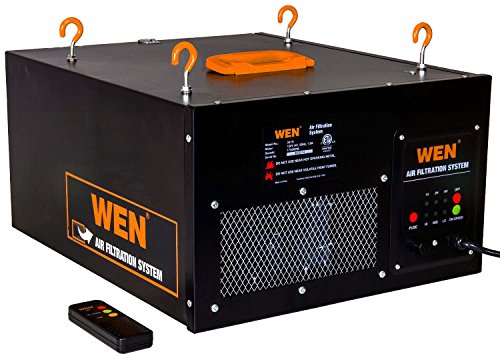
- 300/350/400 CFM settings
- Replaceable 5- and 1-micron filters
- RF remote and shutoff timer
Best For: Supplemental workshop air filtration
Portable Tool-Linked Pick
DYNAVEX 12-Gallon Dust Extractor

- 142 CFM airflow; 12-gallon tank
- 0.5-micron HEPA filter
- AUTO socket supports tools up to 550 W
Best For: Portable extraction for compatible woodworking tools
Wall-Mount Pick

- 560 CFM airflow; 1 HP motor
- 21-gallon zip-bottom bag
- 2.5-micron filtration
Best For: Wall-mounted sawdust collection
Best for Automated Air Cleaning
DEWALT DWXAF101 Ceiling Air Filtration System
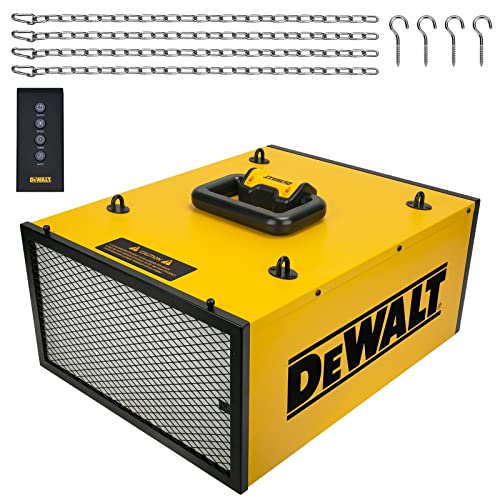
- Two-stage filtration with H11 HEPA filter
- AUTO mode, remote, and timed shutoff
- Ceiling mounting saves floor space
Best For: Automated, overhead workshop air filtration
Best for Tool-Connected Sawdust Collection
VEVOR 1.5HP Vortex Dust Collector

- Rated 1100 CFM airflow
- 35-gallon dust bag and 42-gallon filter bag
- Clip-style access for bag emptying
Best For: Collecting woodworking sawdust and chips
Best for High-Airflow Room Filtration

- 360-degree intake; 1050 or 1350 CFM
- MERV-11 filtration
- Ceiling or bench placement with remote control
Best For: Flexible, high-airflow workshop air filtration
Best for Power-Tool Cleanup – ECOMAX 8-Gallon HEPA Shop Vac
If your dust extraction system for workshop projects needs to handle both tool-generated dust and general cleanup, this 8-gallon ECOMAX switches between dust extractor and standard vacuum modes. Power-tool activation starts the vacuum when a connected tool turns on.
Best For: Woodworkers who want one portable unit for connected tools and everyday shop messes.
Pros:
- HEPA filter and semi-automatic filter cleaning.
- Includes a 10-foot anti-static hose, tool adapter, filter bags, and cleaning attachments.
- Built-in drain port makes liquid cleanup easier to empty.
Cons:
- The 8-gallon tank needs emptying more often than larger workshop collectors.
- Semi-automatic filter cleaning still requires user action.
This is a flexible choice when tool connection and floor cleanup matter more than a large collection capacity.
Best for Two-Tool Setups – WEN DC1300 50-Gallon Dust Collector
For a dust extraction system for workshop machinery, the WEN DC1300 offers up to 1,300 CFM of airflow and dual 4-inch inlets that can connect to two tools. Its 50-gallon collection bag suits shops that generate substantial wood debris.
Best For: Woodworking shops connecting one or two machines to a high-capacity collector.
Pros:
- Dual 4-inch inlets accommodate two tool connections.
- 50-gallon bag provides substantial collection capacity.
- Mobile base has four swivel casters.
Cons:
- The stated 5-micron filtration is not HEPA filtration.
- Its large collection bag calls for more floor space than a compact extractor.
Choose this model for airflow and capacity at woodworking machines, rather than for HEPA-level filtration.
Best Compact HEPA Extractor – Festool CT MIDI I
The Festool CT MIDI I is a compact dust extraction system for workshop tasks where moving between work areas matters. It pairs a HEPA filter with automatic tool start, an included smooth suction hose, and integrated Bluetooth remote-start capability.
Best For: Woodworkers who prioritize a mobile HEPA extractor for tool-connected work.
Pros:
- Compact dimensions, low weight, and a robust chassis aid mobility.
- HEPA filter and tool-free filter changes.
- Automatic tool start and integrated Bluetooth remote-start capability.
Cons:
- Filter cleaning is described as manual, despite the title’s AutoClean wording.
- The supplied notes do not state a collection capacity or airflow rating.
Its appeal is convenient movement and controls; check the capacity and airflow specifications if those determine your purchase.
Best Mid-Capacity Collector – SHOPMAX 20-Gallon Dust Collector
For a dust extraction system for workshop woodworking machines, this SHOPMAX collector offers a stated maximum airflow of 677 CFM and a 20-gallon capacity. Five hose adapters help it connect to a range of tools.
Best For: Woodworkers seeking a wheeled collector with multiple hose-adapter options.
Pros:
- 677 CFM stated maximum airflow and a 12-inch impeller.
- Five hose adapters support different machine connections.
- Two wheels and a carrying handle assist transport.
Cons:
- At 55 pounds, it may take effort to move despite the wheels.
- The supplied notes do not specify a filtration rating.
This is a practical middle-ground option if its adapters suit your machines; verify filtration details before choosing it for fine-dust control.
Airborne Dust Pick – WEN 3410 Air Filtration System
If your dust extraction system for workshop use leaves fine particles in the air, the WEN 3410 offers supplemental air filtration. Its three speeds move 300, 350, or 400 CFM, and it is rated for rooms up to 400 square feet.
Best For: Filtering airborne dust in a workshop alongside tool-connected dust collection.
Pros:
- Replaceable 5-micron pre-filter and 1-micron filter.
- RF remote operates from up to 26 feet away without a clear line of sight.
- Programmable shutoff timer and three airflow settings.
Cons:
- Filters room air rather than collecting debris directly from a tool.
- Rated room coverage is up to 400 square feet.
Choose this as an air-cleaning complement, not a substitute for capturing sawdust at the source.
Portable Tool-Linked Pick – DYNAVEX 12-Gallon Dust Extractor
For a portable dust extraction system for workshop tools, this DYNAVEX unit pairs 142 CFM airflow with a 12-gallon tank. Its included hose and adaptors make it a practical option for collecting debris from sawing, sanding, and routing.
Best For: Moving dust extraction between compatible woodworking tools.
Pros:
- 0.5-micron HEPA filtration for fine particles.
- Tool-linked AUTO mode starts the extractor when the connected tool starts.
- Optional wheels, hose adaptors, and two replacement paper filters are included.
Cons:
- The tool connected to the AUTO socket cannot exceed 550 watts.
- Continuous usage time is limited to one hour.
Its mobility and tool-linked startup are useful conveniences, but check your tool’s wattage before relying on the AUTO socket.
Wall-Mount Pick – VEVOR 560 CFM Dust Collector
If you want a wall-mounted dust extraction system for workshop woodworking, this VEVOR collector provides 560 CFM airflow from a 1 HP motor. Its 21-gallon bag is sized to hold sawdust and debris through longer stretches between emptying.
Best For: Wall-mounted collection of woodworking sawdust and shavings.
Pros:
- 560 CFM airflow and a 21-gallon collection bag.
- 2.5-micron filtration captures fine dust as well as larger debris.
- Bottom zipper lets you empty the bag without detaching it.
Cons:
- 2.5-micron filtration is less fine than the 1-micron or 0.5-micron filters listed for the other products here.
- Specified operating noise is up to 90 dB.
This is the higher-airflow choice in this group for collecting wood debris, though its bag filtration and noise rating are worth weighing against your shop’s needs.
Best for Automated Air Cleaning – DEWALT DWXAF101 Ceiling Air Filtration System
If your dust extraction system for workshop use already collects debris at the tool, the DEWALT DWXAF101 adds overhead air filtration. Its two-stage setup pairs a washable pre-filter with an H11 HEPA filter rated to capture over 95% of 0.3-micron particles.
Best For: Woodworkers who want ceiling-mounted air filtration with automatic operation and minimal floor-space use.
Pros:
- Four modes include an AUTO setting that adjusts based on sensed air quality.
- Remote control and 1-, 2-, 4-, or 8-hour shutoff timers offer flexible operation.
- Includes ceiling-mounting hardware, a filter replacement indicator, and a three-year warranty.
Cons:
- Filters room air rather than collecting sawdust directly from a tool.
- Its specified noise level is 64 dB.
Choose this model for convenient supplemental filtration, not as a replacement for tool-connected dust collection.
Best for Tool-Connected Sawdust Collection – VEVOR 1.5HP Vortex Dust Collector
For a dust extraction system for workshop woodworking that collects sawdust and debris, this VEVOR vortex collector offers a stated 1100 CFM airflow and a 1.5HP induction motor. Its 2.5-micron filtration and large bags suit ongoing small to medium woodworking jobs.
Best For: Woodworkers who need a dedicated collector for sawdust and chips rather than a room-air filter.
Pros:
- Rated 1100 CFM airflow draws in coarse sawdust and finer debris.
- Includes a 35-gallon dust collection bag and a 42-gallon filter bag.
- Clip-style bag access simplifies emptying and maintenance.
Cons:
- At 36.22 by 29.13 by 75.59 inches, it needs substantial workshop space.
- Its 2.5-micron filtration is not specified as HEPA-grade.
This is the pick when debris collection is the priority; check your available floor space before buying.
Best for High-Airflow Room Filtration – ABESTORM DecDust 1350
As an air-cleaning addition to a dust extraction system for workshop use, the ABESTORM DecDust 1350 draws air from all sides through a MERV-11 filter. Selectable 1050 and 1350 CFM settings make it a flexible option for woodworking activities that release airborne dust.
Best For: Workshops needing high-airflow room filtration that can hang from the ceiling or sit on a bench.
Pros:
- 360-degree intake and two airflow settings provide flexible air circulation.
- MERV-11 filter is rated to capture 85% of 1-micron particles.
- Panel controls and an IR remote adjust speed and timer settings.
Cons:
- Does not replace a collector attached directly to woodworking tools.
- Specified noise ranges from 60 to 69 dBA.
Its overhead-or-bench placement is useful when you want to add room filtration without committing to a single installation spot.
How We Picked the Best Dust Extraction System for Workshop
We selected a mix of portable extractors, larger woodworking collectors, and ambient air filtration units to reflect common workshop needs. We compared their stated airflow or suction specifications, filtration claims, capacity, portability, and convenience features such as automatic tool start or remote controls. Manufacturer ratings are useful for narrowing the field, but airflow at the tool can drop once you add hoses, bends, filters, and fittings. This is a feature-based comparison, not a claim that every model was independently tested.
Quick Comparison: Which Type Do You Need?
Portable dust extractors suit handheld sanders, routers, and saws with small dust ports. The ECOMAX, Festool CT MIDI I, and DYNAVEX are options to compare when hose compatibility, portability, and fine-dust filtration matter most.
Woodworking dust collectors are intended for machines that produce larger volumes of chips and sawdust. Compare the WEN DC1300, SHOPMAX 20-gallon collector, VEVOR wall-mount unit, and VEVOR 1,100 CFM collector by your available space, machine-port sizes, collection capacity, and ducting plans.
Ambient air filtration systems circulate workshop air rather than capture dust directly at a cutting tool. The WEN 3410, DEWALT DWXAF101, and ABESTORM hanging unit belong in this category. They can complement source capture, but they should not be its only component.
Key Buying Factors for a Dust Extraction System for Workshop Use
Match the Equipment to the Dust Source
Check the dust-port size on each tool before buying. Small-port handheld tools generally pair with an extractor and appropriately sized hose; stationary machines with larger outlets typically call for a dust collector. Reducing a large collector hose to a tiny tool port does not automatically make it an effective sander extractor.
Look Beyond Headline Airflow
CFM figures describe airflow under specified conditions, not necessarily what reaches your machine. Hose length, duct diameter, sharp bends, clogged filters, and partially filled bags all affect performance. Keep runs short and connections well sealed where practical.
Check Filtration and Maintenance
Consider the stated filter rating, whether the unit is sealed, and how easily you can clean or replace filters. A HEPA filter claim alone does not establish that the entire setup is HEPA-rated. Fine dust also makes emptying important: choose a capacity and disposal method you will maintain regularly.
Plan for Your Shop Layout
A mobile unit works well when you move between tools; a wall-mounted or larger collector may make more sense for a fixed machine. Check electrical requirements, noise, floor or ceiling clearance, and whether you need to run more than one tool at a time.
Who Should Buy Which Dust Extraction System for Workshop?
Choose a portable extractor if you mainly use handheld power tools or work in changing locations. Choose a woodworking collector if chips from stationary machines are your primary problem. Add an ambient filter when you want another layer of control for airborne dust that escapes source capture. For a mixed-use workshop, the most practical Dust Extraction System for Workshop use may be a combination of source capture and air filtration—not one machine asked to do every job.