
A well-designed home greenhouse can be more than a place to grow plants—it can become a bright architectural feature, a relaxing retreat, or a seamless extension of your living space.
This roundup compares 10 greenhouse resources covering sunrooms, passive-solar systems, beginner setups, DIY construction, energy efficiency, and cold-climate growing. Use the guide below to choose the right inspiration and planning approach for your project.
Best 10 Home Greenhouse Systems for Interior Design Picks for 2026
Classic Design Reference

- Explores conservatories, greenhouses, and sunrooms
- Covers plants, furnishings, and practical gardening
- A design-oriented reference from 1990
Best For: Classic interior greenhouse and sunroom inspiration
Modern Systems Guide

- Connects greenhouse design with climate control
- Covers water management and multiple growing systems
- Includes compact layouts and seasonal planning tools
Best For: Modern, space-conscious greenhouse planning
Passive Solar Specialist

- Explains earth-sheltered passive-solar design
- Covers insulation, heat storage, and cooling
- Includes soil and aquaponic growing approaches
Best For: Low-cost, solar-powered greenhouse construction
Beginner DIY Handbook
Step by Step Greenhouse Gardening

- Starts with choosing a greenhouse for space and budget
- Covers affordable DIY and sustainable methods
- Explains seasonal growing and basic greenhouse care
Best For: First-time, budget-conscious greenhouse gardeners
Solar Design Guide

- Solar-gain plans and thermal-mass strategies
- Covers automated ventilation and year-round crops
- Includes energy savings and payback analysis
Best For: Planning an energy-efficient, year-round greenhouse
Barn-Style DIY Plan

- Step-by-step framing and roof instructions
- Includes diagrams, cut dimensions, and tool guidance
- Plans an approximately 10 × 12-foot structure
Best For: Building a classic barn-style backyard greenhouse
Earthen Greenhouse Systems
Energy-Efficient Underground Design

- Explores submerged and semi-submerged structures
- Covers insulation, drainage, ventilation, and automation
- Includes hydroponics and interior space-planning guidance
Best For: Designing a climate-conscious underground greenhouse
Build-and-Design Guide

- Covers site selection, foundations, glazing, and ventilation
- Illustrated, step-by-step construction guidance
- Suitable for varied growing and conservatory goals
Best For: DIY greenhouse builders planning a custom outdoor structure
Beginner Harvest Planner
Stress-Free Greenhouse Gardening
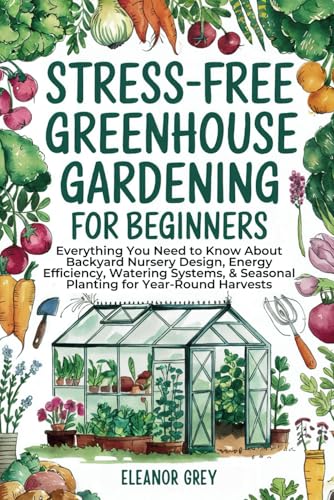
- Beginner-friendly advice for greenhouse setup and care
- Covers watering, energy efficiency, humidity, and temperature
- Includes seasonal planning and 30+ plant ideas
Best For: First-time growers seeking simple year-round greenhouse guidance
Cold-Climate Planning Manual

- Addresses heating, snow loads, frost depth, and winter daylight
- Includes data for 64 Canadian locations
- Explains project limits and when to hire professionals
Best For: Canadian DIYers planning year-round greenhouse operation
Classic Design Reference – Garden Rooms
For shoppers exploring home greenhouse systems for interior design, Garden Rooms offers an inspiration-focused look at how conservatories, greenhouses, and sunrooms can function as attractive living spaces. It combines design ideas with practical discussion of plants, furnishings, and greenhouse gardening.
Best For: Readers seeking classic greenhouse, sunroom, and solarium design inspiration.
Pros:
- Covers conservatories, greenhouses, and sunrooms in one volume
- Discusses suitable plants and furnishings
- Includes practical aspects of greenhouse gardening
Cons:
- Published in 1990, so its design perspective may feel dated
- Focuses on concepts and reference material rather than modern greenhouse technology
Choose this book if appearance, room integration, and decorative planting matter as much as growing technique. It is better suited to design planning than to selecting contemporary equipment or automated systems.
Modern Systems Guide – Greenhouse of the Future
THE GREENHOUSE OF THE FUTURE: Smart, Sustainable and Year‑Round Growing Made Simple
Check Price On AmazonFor anyone comparing home greenhouse systems for interior design alongside year-round growing needs, The Greenhouse of the Future connects structure, layout, climate control, water management, and crop planning. Its coverage is especially useful when a greenhouse must work efficiently in a limited space.
Best For: Backyard gardeners and space-conscious growers planning or upgrading a modern greenhouse system.
Pros:
- Covers passive solar design, insulation, thermal mass, ventilation, shading, and cooling
- Explains irrigation, humidity, soil, hydroponic, and aquaponic options
- Includes compact layouts, seasonal checklists, schedules, and technical tables
- Addresses pest prevention and year-round crop planning
Cons:
- Its broad coverage may be more than casual gardeners need
- Scheduled for publication in May 2026, so availability may depend on release timing
This is the most systems-oriented option in the group. It suits readers who want design decisions tied to energy use, water efficiency, airflow, growing methods, and practical production goals.
Passive Solar Specialist – The Chinese Greenhouse
For design-minded growers interested in energy-conscious home greenhouse systems for interior design, The Chinese Greenhouse focuses on an earth-sheltered, east-west-oriented structure with insulation and strategic glazing. The approach is intended to support year-round production using passive solar principles.
Best For: DIY builders pursuing low-cost, passive-solar greenhouse construction.
Pros:
- Provides step-by-step guidance for building a passive-solar greenhouse
- Explains heat storage and cold-night temperature management
- Includes summer cooling and year-round growing strategies
- Supports soil-bed and aquaponic growing methods
Cons:
- The specialized Chinese greenhouse design may not suit every site or aesthetic
- Its focus is backyard construction rather than interior decorating
This book is a strong match when thermal efficiency and self-sufficient construction take priority. Its design guidance is more structural and climate-focused than focused on blending a greenhouse into a finished interior.
Beginner DIY Handbook – Step by Step Greenhouse Gardening
If you are new to home greenhouse systems for interior design and want approachable setup guidance, Step by Step Greenhouse Gardening for Beginners starts with choosing a greenhouse for your space and budget. It also covers affordable DIY construction, plant protection, seasonal growing, and basic water-management systems.
Best For: First-time greenhouse gardeners who want budget-conscious, step-by-step instructions.
Pros:
- Explains greenhouse selection for different spaces and budgets
- Includes DIY projects using affordable and recycled materials
- Covers temperature, humidity, ventilation, composting, irrigation, and rainwater collection
- Offers seasonal planting and beginner mistake-avoidance guidance
Cons:
- Its beginner focus may provide less depth for experienced growers
- The notes do not indicate a strong emphasis on interior design or decorative integration
Pick this guide for a practical starting point rather than a styling reference. It is particularly useful for readers who want to begin small, control costs, and build confidence before expanding.
Solar Design Guide – Year-Round Solar Greenhouse
The Year-Round Solar Greenhouse: How to Design and Build a Net-Zero Energy Greenhouse
Check Price On AmazonFor shoppers researching home greenhouse systems for interior design, this 320-page guide focuses on the architectural and energy strategy behind a year-round solar greenhouse. It covers solar gain, thermal mass, automated ventilation, crop rotation, and construction planning rather than presenting a compact decorative indoor unit.
Best For: Homeowners, designers, and serious growers planning a net-zero or highly energy-efficient greenhouse.
Pros:
- Includes architectural plans optimized for solar gain.
- Explains thermal mass, climate control, and year-round growing systems.
- Provides cost-benefit and payback analysis.
- Offers guidance intended for cold climates, including areas reaching -20°F.
Cons:
- It is a design and construction book, not a ready-to-install greenhouse system.
- The focus on net-zero energy construction may be more involved than many indoor-design projects require.
This is the strongest choice for readers who want sustainability and building performance to shape the greenhouse’s design. Its detailed, systems-oriented approach is best suited to a substantial year-round project rather than a simple ornamental setup.
Barn-Style DIY Plan – Practical Backyard Greenhouse
DIY Barn Style Greenhouse: Step-by-Step Building Plans for a Practical Backyard Greenhouse
Check Price On AmazonThis compact building guide is a practical option for comparing home greenhouse systems for interior design when the desired look is a classic barn-style structure. It provides step-by-step framing guidance, diagrams, cut dimensions, and enclosure instructions for a greenhouse measuring approximately 10 by 12 feet.
Best For: DIY gardeners who want a functional backyard greenhouse with a recognizable barn-style profile.
Pros:
- Includes construction diagrams and a materials shopping list.
- Covers wall framing, roof construction, rafters, and ridgepole assembly.
- Lists key cut dimensions and required tools.
- Explains installation of corrugated plastic or similar panels.
Cons:
- The 30-page guide is focused on construction basics rather than advanced climate systems.
- It requires DIY building work and separate materials.
- The planned footprint may not suit limited indoor or urban spaces.
Choose this guide if visual character and straightforward construction matter more than sophisticated energy management. Its defined dimensions and common-tool approach make it a useful starting point for a backyard greenhouse project.
Earthen Greenhouse Systems – Energy-Efficient Underground Design
For readers evaluating home greenhouse systems for interior design through the lens of architecture and resource efficiency, this guide explores submerged and semi-submerged earthen greenhouses. It combines structural planning with insulation, drainage, ventilation, automation, irrigation, and interior growing layouts.
Best For: Sustainable growers and designers planning an underground or semi-underground greenhouse in the USA or Canada.
Pros:
- Addresses climate zones across the USA and Canada.
- Covers structural materials, insulation, drainage, and ventilation.
- Includes engineering topics such as solar collectors, automation, irrigation, and rainwater harvesting.
- Discusses vertical cultivation, hydroponics, organic methods, and interior space planning.
Cons:
- Underground construction can require more planning and site work than a conventional greenhouse.
- The guide is oriented toward advanced, region-specific projects rather than simple decorative installations.
- Its business and farming coverage may be more extensive than needed for casual home use.
This is the most systems-focused choice of the three, especially for projects where the greenhouse must respond to climate, water use, and spatial efficiency. It is a better fit for serious sustainable design than for a small, ready-made interior feature.
Build-and-Design Guide – DIY Greenhouse Plans
How to Build Your Own Greenhouse: Designs and Plans to Meet Your Growing Needs
Check Price On AmazonFor shoppers exploring home greenhouse systems for interior design, this illustrated guide is a practical starting point for planning a structure that complements a property. It covers site selection, foundations, glazing, materials, ventilation, and construction techniques, with designs intended for different growing goals.
Best For: DIYers who want to design and build an outdoor greenhouse or conservatory from the ground up.
Pros:
- Explains the process from site selection through glazing.
- Includes guidance on foundations, construction materials, and ventilation.
- Addresses both extended growing seasons and year-round conservatory uses.
Cons:
- Published in 2006, so some approaches or materials may feel dated.
- Focuses on building an outdoor structure rather than decorating an interior space.
This is a strong fit when the design and construction process matters as much as plant care. Its broad project coverage can help you shape a greenhouse around your property, though readers should verify current building practices and materials.
Beginner Harvest Planner – Stress-Free Greenhouse Gardening
For anyone comparing home greenhouse systems for interior design alongside everyday usability, this beginner-focused guide emphasizes practical operation. It covers greenhouse design choices, energy efficiency, watering, humidity, temperature, seasonal planning, and plant selection for year-round harvesting.
Best For: New greenhouse gardeners who want straightforward guidance on setup, maintenance, and productive planting.
Pros:
- Uses clear, beginner-oriented language and step-by-step guidance.
- Includes more than 30 beginner-friendly plant suggestions.
- Covers watering systems, energy efficiency, pests, diseases, and winter care.
- Provides season-by-season planning for year-round growing.
Cons:
- Its backyard nursery focus may be less relevant to purely decorative indoor displays.
- Does not present the same detailed construction emphasis as a dedicated building manual.
This book is useful when you want a greenhouse that looks considered but also performs reliably. It is especially approachable for first-time growers who need help turning a chosen system into a manageable, productive routine.
Cold-Climate Planning Manual – Canadian Winter Greenhouses
The Cold-Climate Greenhouse Guide: Plan, Build and Run a Greenhouse Through a Canadian Winter
Check Price On AmazonWhen home greenhouse systems for interior design must also withstand severe weather, this Canada-focused guide helps with the planning decisions behind a durable structure. It addresses winter heating, snow loads, frost depth, glazing, ventilation, daylight, operating costs, and when to involve professionals.
Best For: Competent DIYers in Canada planning a greenhouse for cold climates and year-round operation.
Pros:
- Includes climate data for 64 Canadian reference locations.
- Explains heating, snow-load, frost-depth, glazing, and ventilation considerations.
- Provides formulas, a glossary, and a catalogue of ten common project failures.
- Clearly identifies when engineering or building-professional help is required.
Cons:
- Canadian data and examples may not transfer directly to other regions.
- It is a planning guide, not an engineered structural design.
- Written for readers comfortable with framing, plans, and hiring trades.
This is the most specialized option for northern projects where climate performance affects both design and operating costs. It can support a polished greenhouse concept, but its strongest value is making cold-weather requirements explicit before construction begins.
How We Picked the Best Home Greenhouse Systems for Interior Design
We selected resources that address the practical and visual decisions involved in planning a greenhouse for residential use. The list spans interior-focused concepts such as garden rooms and solariums, along with books covering passive-solar design, year-round growing, DIY construction, water management, insulation, and beginner-friendly maintenance.
Because a greenhouse connected to or positioned beside a home must balance appearance with performance, we prioritized resources that can help readers evaluate layout, materials, climate response, energy use, and growing goals—not just decorative style.
Quick Comparison
| Best For | Look For |
|---|---|
| Interior design inspiration | Garden room, sunroom, and solarium ideas |
| Year-round growing | Insulation, solar gain, ventilation, and heating guidance |
| Low-energy operation | Passive-solar planning and net-zero strategies |
| DIY builders | Detailed plans, construction sequences, and material guidance |
| Cold climates | Snow loads, thermal performance, winter operation, and frost protection |
| First-time growers | Simple setup, watering, crop selection, and seasonal maintenance |
Key Buying Factors for Home Greenhouse Systems for Interior Design
Style and Connection to the Home
Start with the greenhouse’s relationship to your existing architecture. Consider roofline, framing finishes, glazing, door placement, flooring, and sightlines from nearby rooms. A structure intended as a visual extension of the home may need more attention to furniture, circulation, shading, and finish quality than a standalone production greenhouse.
Climate and Energy Performance
Local weather should determine the design approach. In colder regions, prioritize insulation, airtight construction, foundation details, snow-load capacity, thermal mass, and dependable ventilation. In warmer areas, roof vents, shade cloth, cross-ventilation, and heat control may matter more than added glazing. Passive-solar and net-zero concepts can reduce operating costs, but they require careful orientation and realistic seasonal planning.
Size, Maintenance, and Utilities
Choose enough space for plants, paths, storage, work surfaces, and access around the glazing. Confirm whether the site can support water, drainage, electricity, heating, and lighting. Interior-facing systems also need moisture control to protect adjacent walls, floors, furnishings, and finishes.
Build Complexity and Budget
DIY plans can reduce labor costs but require time, tools, accurate foundations, and construction confidence. Compare the total project cost—not only framing and glazing—including site preparation, ventilation, irrigation, insulation, heating, electrical work, and permits.
Who Should Buy Which Home Greenhouse Systems for Interior Design?
Choose a garden-room or solarium-focused resource if your priority is integrating plants into an attractive living environment. Beginners will benefit most from step-by-step gardening and stress-free setup guidance. Readers interested in reducing energy use should focus on passive-solar, net-zero, or earthen greenhouse approaches. DIY builders should look for plan-driven construction guides, while anyone in a severe winter climate should prioritize cold-climate engineering and seasonal operating advice.
Before committing, verify local building regulations, zoning requirements, structural loads, and electrical rules. The best Home Greenhouse Systems for Interior Design are those that match your home’s style while remaining comfortable, durable, serviceable, and suitable for the plants you actually intend to grow.