
The best studio camera drone systems combine reliable flight control with the image quality, stabilization, and monitoring features needed for polished aerial content. This roundup covers compact DJI models, GPS camera drones, AI-assisted options, and a depth-camera solution for specialized studio work.
Use the comparison and buying advice below to match your priorities—cinematic movement, portability, subject tracking, flight time, or production experimentation—with the right system.
Best 10 Studio Camera Drone Systems Picks for 2026
Lightweight 4K Starter
DJI Mini 4K Camera Drone Combo

- 4K video with 3-axis gimbal stabilization
- Under 249 g with GPS Return to Home
- Two batteries rated for up to 62 minutes
Best For: Beginners and travel-focused aerial creators
Depth-Sensing Developer Camera
Intel RealSense D435i Depth Camera

- Depth, RGB, infrared stereo, and IMU modes
- Compact USB camera for embedded projects
- Designed for robotics and computer vision
Best For: Developers integrating spatial sensing into drones or robots
Long-Flight 6K Imaging

- 6K photos and 4K/30fps video
- 3-axis brushless gimbal with GPS flight modes
- Up to 70 minutes stated total flight time
Best For: Extended outdoor photography and inspection sessions
AI-Assisted Safety Choice

- 4K camera with 3-axis gimbal stabilization
- LiDAR-powered 360-degree obstacle avoidance
- Up to 47 minutes with a stated upgraded battery
Best For: Beginners seeking assisted flight and a screen-equipped controller
Long-Range Pro Pick

- 4K camera with three-axis gimbal and EIS
- Up to 90 minutes with two batteries
- Tablet controller, payload release, and obstacle avoidance
Best For: Extended travel, rural, and professional-style aerial shoots
Portable Vlogging Pick

- 135g compact design with palm takeoff
- 4K stabilized video and subject tracking
- Controller-free operation with QuickShots
Best For: Beginner-friendly travel and hands-free vlogging
GPS Value Pick

- 4K camera with 5GHz FPV transmission
- GPS return, Follow Me, and waypoint flight
- Foldable under-250g design with two batteries
Best For: Traveling beginners and automated outdoor filming
Phone-Free GPS Pick

- 4.5-inch controller screen avoids phone use
- Adjustable 4K camera and GPS flight modes
- Two batteries provide up to 60 minutes total flight
Best For: Beginners wanting a dedicated-screen controller
Long-Range Value Pick

- Three batteries provide up to 90 minutes total
- 3328-foot stated control range
- Includes Follow Me, Tap Fly, and Point of Interest
Best For: Outdoor users seeking endurance and range
Creator-Friendly Screen Pick
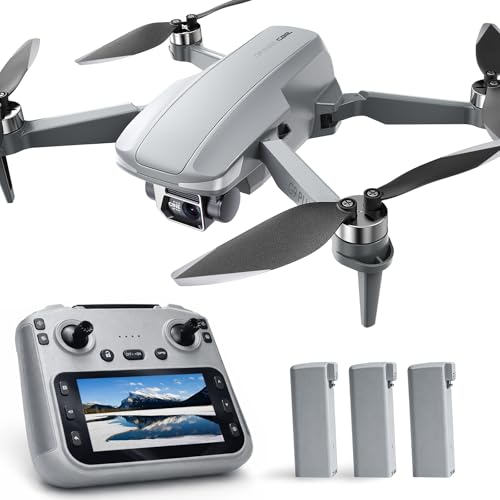
- 4.5-inch HD controller includes live FPV viewing
- Three batteries provide up to 90 minutes total
- Includes GPS modes, case, and 32GB SD card
Best For: Beginners wanting a convenient recording package
Lightweight 4K Starter – DJI Mini 4K Camera Drone Combo
For shoppers comparing studio camera drone systems, the DJI Mini 4K is a compact, beginner-friendly option focused on stabilized 4K footage. Its sub-249-gram design, GPS features, and included two-battery combo make it practical for travel and extended shooting sessions.
Best For: Beginners and creators who want a lightweight drone with stabilized 4K video and straightforward flight controls.
Pros:
- 4K video capture with 3-axis gimbal stabilization.
- Under 249 g and regulation-friendly for applicable recreational use.
- Two batteries provide up to 62 minutes of stated maximum flight time.
- GPS Return to Home, stable hovering, and QuickShots support easier operation.
Cons:
- The DJI Fly app must be downloaded from DJI’s website for Google Play users.
- The included remote controller does not have a built-in screen.
The DJI Mini 4K emphasizes portability and accessible controls rather than advanced obstacle avoidance. It is a sensible entry point for aerial video work when low weight and simple cinematic presets matter most.
Depth-Sensing Developer Camera – Intel RealSense D435i Depth Camera
Among studio camera drone systems, the seeed studio Intel RealSense D435i is a specialized integration camera rather than a ready-to-fly drone. It combines depth sensing, RGB capture, infrared stereo, and an integrated IMU for robotics and computer-vision development.
Best For: Developers building drone, robotics, AR, VR, 3D-scanning, or embedded computer-vision projects.
Pros:
- Provides depth sensing and wide-field spatial data.
- Integrated IMU adds motion-tracking information.
- Compact 2.82-ounce design supports embedded installations.
- USB connectivity and compatibility with varied platforms support development work.
Cons:
- It is a camera module, not a complete flying drone system.
- Listed video capture resolution is 720p, so it is not aimed at cinematic 4K recording.
- It is not water resistant.
The D435i makes the most sense when spatial perception and sensor integration are more important than turnkey aerial filming. Plan on supplying the host computer, software, and aircraft platform separately.
Long-Flight 6K Imaging – Bwine F7GIM 4K Camera Drone
For studio camera drone systems that prioritize shooting endurance, the Bwine F7GIM combines a 6K photo mode, 4K/30fps video, and a 3-axis brushless gimbal. GPS flight modes, digital transmission, and two 35-minute flights are aimed at longer outdoor capture sessions.
Best For: Outdoor photographers, property inspectors, and experienced beginners who want long stated flight time and automated GPS shooting modes.
Pros:
- 18MP photos and 4K/30fps video with a 3-axis brushless gimbal.
- Up to 70 minutes total flight time with two batteries, according to the listing.
- Includes follow, orbit, cruise-control, and waypoint flight modes.
- Offers 10,000-foot real-time transmission and a 5x digital zoom.
Cons:
- Requires the correct app and wired digital-transmission connection setup.
- A Micro SD card is recommended and may require formatting for Mac use.
- Its FAA-compliant Remote ID module does not eliminate the need to check current flight rules.
The F7GIM is feature-rich for the price category, especially if repeated landings for battery changes would interrupt a shoot. Its smart modes and support materials may also help newer pilots move toward more deliberate aerial coverage.
AI-Assisted Safety Choice – DCX Volo X EZ AI 4K Drone
For buyers evaluating studio camera drone systems with automated flight assistance, the DCX Volo X EZ AI pairs a 4K camera and 3-axis gimbal with LiDAR-based 360-degree obstacle avoidance. Its screen-equipped controller and extended battery are designed to simplify aerial shooting for newer pilots.
Best For: Beginners who want assisted flight, collision-awareness features, a built-in controller screen, and longer individual flights.
Pros:
- 4K camera with 3-axis gimbal and electronic image stabilization.
- 360-degree obstacle detection powered by LiDAR sensors.
- Up to 47 minutes of flight time with the upgraded battery.
- Smart controller includes a built-in touch screen, and the drone offers Follow Me and Precision Return-to-Home.
Cons:
- The listing contains differing battery-capacity figures, so verify the current specification before buying.
- The foam padding under the camera must be removed before use to avoid restricting the gimbal.
- It is heavier than an under-249-gram travel drone and is not presented as a registration-free model.
The Volo X EZ AI stands out for hands-on convenience: obstacle sensing, automated flight functions, and a screen on the remote reduce setup friction. It is a strong fit for users who value assistance and situational awareness over ultra-light portability.
Long-Range Pro Pick – Bingchat AE86 Pro Max
For demanding studio camera drone systems, the Bingchat AE86 Pro Max emphasizes long-range operation, extended flight time, and flexible imaging. Its 4K camera, three-axis gimbal, bottom camera, tablet-style controller, and obstacle-avoidance features make it suited to ambitious aerial projects.
Best For: Travel, rural filming, extended shoots, and buyers who want a feature-rich professional-style drone.
Pros:
- 4K camera with three-axis gimbal, EIS, 110° field of view, and 20x digital zoom.
- Up to 90 minutes of stated flight time with two extended batteries.
- Tablet controller includes Google services and supports downloaded apps.
- Includes payload release, liftable 360° laser obstacle avoidance, GPS functions, and FAA Declaration of Compliance.
Cons:
- The extensive feature set may be more than casual pilots need.
- The supplied guidance says to keep away from trees for drone safety, despite the obstacle-avoidance system.
- Long-range claims apply without obstacles blocking the signal.
This is the most ambitious option here for buyers prioritizing range, endurance, and control flexibility. Its larger design and advanced features make it better suited to planned shoots than quick, minimalist flights.
Portable Vlogging Pick – DJI Neo
The DJI Neo is a particularly approachable choice for studio camera drone systems that need quick setup and easy subject capture. At 135g, it combines 4K stabilized video, palm takeoff, subject tracking, and controller-free operation in a compact package.
Best For: Beginners, travel creators, family events, hiking, and hands-free vlogging.
Pros:
- 135g lightweight design that does not require FAA registration or Remote ID according to the supplied notes.
- 4K UHD video with DJI stabilization and level-4 wind resistance.
- Palm takeoff and landing, subject tracking, and eight QuickShots modes simplify filming.
- Full-coverage propeller guards add confidence for beginners and indoor-style practice.
Cons:
- The standard package includes one battery.
- The DJI Fly app must be downloaded from DJI’s official website rather than Google Play.
- Controller-free operation may offer less traditional flight control than a dedicated remote setup.
Choose the Neo when portability and effortless creator features matter more than maximum endurance or a larger professional control system. Its compact, guarded design makes spontaneous filming simple.
GPS Value Pick – BLINORY 4K Foldable GPS Drone
For buyers comparing studio camera drone systems on a lighter budget and travel footprint, this foldable BLINORY model combines a 4K camera with GPS flight assistance. Follow Me, waypoint flight, optical-flow hovering, and a sub-250g design support both creative shooting and easier outdoor transport.
Best For: Beginners and outdoor creators who want GPS safety features, automated filming modes, and a travel-friendly drone.
Pros:
- 4K camera with 90° electronic adjustment and 5GHz real-time transmission.
- GPS auto return activates for signal loss, low power, or going out of range.
- Follow Me, waypoint flight, point of interest, and gesture selfie modes support hands-free filming.
- Foldable, under-250g design includes a storage case and two batteries for up to 32 minutes of stated flight time.
Cons:
- The supplied notes do not specify a gimbal; the camera uses built-in shock absorption.
- Two batteries provide up to 32 minutes of stated flight time, which is less than the Bingchat system’s claim.
- Automated GPS modes still require suitable outdoor conditions and responsible operation.
This model offers a practical middle ground for travelers who want automated filming and GPS reassurance without carrying a larger drone. Its foldable build and included case make it convenient for hiking, camping, and action-focused content.
Phone-Free GPS Pick – 4K Drone with Built-In Screen
For shoppers comparing studio camera drone systems, this PRAGYM model is a practical option when you want a dedicated controller rather than a phone-based setup. Its built-in 4.5-inch display, GPS-assisted flight, adjustable 4K camera, and two included batteries make it suited to straightforward outdoor filming and everyday aerial viewing.
Best For: Beginners and casual creators who want phone-free FPV viewing, portable GPS flight, and extended flying through two batteries.
Pros:
- Built-in 4.5-inch screen shows live FPV footage without requiring a smartphone app.
- Adjustable 90-degree 4K camera supports multiple viewing angles.
- GPS Return-to-Home modes include one-key, low-battery, and signal-loss return.
- Two batteries provide up to 60 minutes of total flight time.
Cons:
- The listed 60-minute figure is total time across two batteries, not one uninterrupted flight.
- Its feature set is oriented toward beginner and recreational use rather than advanced production workflows.
Choose this model if the integrated controller display is a priority. It combines useful GPS safety functions and simple flight modes with a compact, under-249g design, though serious studio work may call for a more specialized camera platform.
Long-Range Value Pick – N11 Pro 4K GPS Drone
Among studio camera drone systems, the NAFYRE N11 PRO stands out for its combination of long stated control range, three batteries, and GPS-assisted automation. It is a useful fit for creators who want more time in the air and hands-free modes such as Follow Me, Tap Fly, and Point of Interest.
Best For: Outdoor users prioritizing extended total flight time, long-range control, and automated camera-flight features.
Pros:
- Three batteries provide up to 90 minutes of total flight time.
- 3328-foot maximum control range supports broader outdoor exploration.
- 4K camera offers a 100-degree wide-angle lens with remote or app adjustment up to 90 degrees.
- GPS safety and creative functions include Auto Return, Follow Me, Tap Fly, and Point of Interest.
Cons:
- No charger is included according to the supplied listing details.
- The 90-minute figure represents total flight time across three batteries.
- Unlike the other screen-controller options here, operation relies on Wi-Fi/app connectivity for viewing and control features.
The N11 PRO is compelling when endurance and range matter more than an integrated display. Its brushless motors, GPS positioning, and 5GHz FPV transmission support a feature-rich outdoor setup, while buyers should account for the missing charger and multi-battery calculation.
Creator-Friendly Screen Pick – G9 Pluto 4K GPS Drone
For buyers evaluating studio camera drone systems, the CHUBORY G9 Pluto pairs a built-in 4.5-inch HD controller screen with GPS flight features and three batteries. The included 32GB SD card and EIS-listed camera make it a convenient package for beginners who want to record without assembling extra storage or relying entirely on a phone.
Best For: Beginner creators who want an integrated display, included storage, extended total flight time, and simple automated flight modes.
Pros:
- 4.5-inch controller display provides real-time FPV video directly from the remote.
- Three batteries offer up to 90 minutes of total flight time.
- GPS features include Auto Return, Circle Fly, and Follow Me, with a stated 3280-foot range.
- Foldable under-249g design includes a carrying case and 32GB SD card.
Cons:
- Listing details identify the video capture resolution as 2K despite the product title and description referencing 4K.
- The 90-minute flight claim is cumulative across three batteries.
- No charger is included according to the supplied details.
This is a practical all-in-one choice for users who value simple monitoring and portability. Verify the camera-resolution specifications before buying if your workflow depends on true 4K video, but the screen controller, storage card, GPS modes, and carrying case add convenience for casual filming.
How We Picked These Studio Camera Drone Systems
We selected these systems by comparing the features that matter most for aerial production: camera resolution, stabilization, transmission range, flight assistance, portability, battery options, and controller usability. We also considered different creative workflows, from lightweight travel capture and automated subject tracking to more controlled GPS flights and depth-sensing experiments.
Specifications can vary by bundle and seller, so verify the included batteries, controller, app compatibility, storage requirements, and regional flight restrictions before buying.
Quick Comparison
- Best compact all-rounder: DJI Mini 4K offers a lightweight design, 4K recording, and three-axis gimbal stabilization.
- Best for hands-free social footage: DJI Neo emphasizes palm takeoff, subject tracking, and QuickShots in a very light body.
- Best for specialized sensing: The Seeed Studio Intel RealSense D435i is a depth-camera component rather than a complete flying drone, making it better suited to robotics and custom studio projects.
- Best for extended sessions: Several GPS models include three batteries and advertise up to 90 minutes of combined flight time.
- Best for obstacle-awareness features: The DCX Volo X EZ pairs a 4K camera with advertised 360-degree obstacle avoidance.
Key Buying Factors for Studio Camera Drone Systems
Camera and Stabilization
Look beyond the 4K label. A three-axis gimbal generally produces smoother footage during movement than a fixed camera, while electronic image stabilization can reduce vibration but may crop the frame. Check whether the advertised photo resolution is interpolated and confirm supported frame rates, codecs, and still-image formats.
Flight Control and Safety
GPS, return-to-home, optical flow, waypoint flight, and obstacle sensing can make filming more predictable, but they are not substitutes for an attentive pilot. Confirm how return-to-home altitude is set, whether obstacle avoidance works in low light, and how the drone behaves when its connection or GPS signal drops.
Monitoring, Transmission, and Power
A reliable live feed is important when framing shots from a distance. Compare transmission claims with local regulations and real-world conditions. A built-in-screen controller can simplify setup, while a phone-based controller may offer a more familiar app experience. Extra batteries, charging time, spare propellers, and storage media also affect the practical cost.
Weight and Operating Environment
Sub-249-gram models are easier to carry and may have simpler requirements in some regions, but all drones remain subject to local rules. Wind resistance, lighting, indoor positioning, and available launch space should influence your choice as much as headline specifications.
Who Should Buy Which Studio Camera Drone Systems?
Choose the DJI Mini 4K if you want a broadly capable, travel-friendly camera drone with mechanical stabilization. Choose the DJI Neo if automated follow shots and quick social content matter more than advanced cinematic control. Consider GPS drones with multiple batteries when endurance and beginner-friendly flight assistance are priorities, but treat advertised flight times as ideal combined figures.
The DCX Volo X EZ is worth considering if obstacle-awareness features are central to your workflow. Bwine’s gimbal-equipped option may suit buyers seeking stabilized 4K video and higher-resolution stills. The tablet-remote and built-in-screen models are practical for users who want an integrated viewing setup. Finally, choose the RealSense D435i only if you are building a custom robotics, mapping, or depth-sensing project—it is not a conventional ready-to-fly camera drone system.