
A well-sealed studio door can help control sound leakage, drafts, dust, and distracting light around the room’s largest movable opening. The right solution depends on your door gap, frame style, installation method, and how much acoustic improvement you need.
We selected 10 door sweeps, compression seals, foam tapes, brush strips, and weatherstripping options for artists building or upgrading recording, rehearsal, editing, and creative workspaces.
Best 10 Studio Door Seals for Professional Artists Picks for 2026
Best Overall Kit
Audimute Large Soundproofing Door Seal Kit

- Includes two door seals and one door sweep
- Designed for up to four standard doors
- Easy-install polyurethane construction
Best For: Multi-door studio sound-sealing projects
Best Adhesive Foam
Ninsula 33-Foot Door Weather Stripping

- 33 feet of cut-to-length sealing tape
- Tool-free adhesive installation
- Neoprene and foam help with sound and insulation
Best For: Flexible sealing around smaller door gaps
Best for Wide Gaps
Holikme Flexible Door Seal Strip

- 1.8-inch-wide strip covers broad gaps
- 33 feet total across two rolls
- Flexible TPE backing installs by pressing
Best For: Interior doors with gaps up to 1.2 inches
Best Permanent Upgrade
Aluminum Compression Door Seal Kit

- Includes header and jamb seals for one door
- Neoprene bulb compresses against the frame
- Adjustable, screw-mounted aluminum casing
Best For: Standard studio doors needing a durable frame seal
Quiet Studio Seal

- Flexible silicone construction
- 20-foot cut-to-fit length
- Helps limit noise, dust, and light
Best For: Smaller, fairly consistent studio-door gaps
Sliding Studio Barrier

- Designed for sliding frames
- Cuttable 16.4-foot length
- Available for several gap ranges
Best For: Sliding studio doors and windows
Large-Gap Studio Seal

- Fits 5/16- to 15/32-inch gaps
- Compressible hollow EPDM profile
- Reinforced adhesive backing
Best For: Large or uneven studio-door gaps
Flexible Brush Seal

- Self-adhesive installation
- Flexible, lint-free felt pile
- Helps block drafts, dust, and noise
Best For: Quick sealing around studio doors, windows, and sliding glass doors
Kerf-Fit Replacement
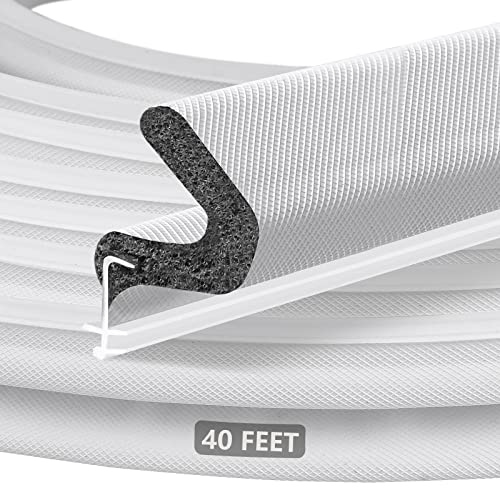
- Presses into 1/8-inch kerf slots
- Fits 1/4- to 1/2-inch door gaps
- 40-foot cut-to-fit roll
Best For: Replacing worn seals on compatible grooved studio entry doors
Compression D-Seal

- Adhesive-backed for tool-free installation
- Seals 3.5- to 6-millimeter gaps
- Helps reduce drafts and workspace noise
Best For: Small, measured gaps around studio doors and windows
Best Overall Kit – Audimute Large Soundproofing Door Seal Kit
Audimute Soundproofing Acoustic Door Seal Kit - Door Sweep and Seal - (Large Size)
Check Price On AmazonFor professional artists comparing studio door seals for professional artists, this Audimute kit is a practical choice when several standard doors need treatment. It includes door seals and a door sweep designed to help block sound traveling through gaps around doors.
Best For: Studios, apartments, or setups treating up to four standard-size doors.
Pros:
- Includes two 50-foot door seals and one 25-foot door sweep.
- Designed to treat up to four standard-size doors.
- Easy to install and made from polyurethane.
Cons:
- The kit is limited to sealing gaps around doors; it is not a complete room-acoustic treatment.
- Its large quantity may be more than needed for a single door.
Choose this kit when you want a packaged solution with both perimeter seals and a sweep. Its multi-door coverage makes it especially useful for larger studio spaces or multiple entrances.
Best Adhesive Foam – Ninsula 33-Foot Door Weather Stripping
Ninsula is a flexible option for artists seeking studio door seals for professional artists without tools or a permanent screw-mounted installation. The 33-foot CR foam and neoprene rubber tape can be cut to length and applied around doors, windows, vents, or other gaps.
Best For: Quick, customizable sealing of door and frame gaps in studios, workspaces, and other rooms.
Pros:
- Provides 33 feet of 1/2-inch-by-1/4-inch weather-stripping tape.
- Strong adhesive backing supports tool-free installation.
- Neoprene and CR foam offer soundproofing, weatherproofing, and insulation properties.
Cons:
- Adhesive installation requires a thoroughly cleaned surface.
- The narrow profile may not suit unusually large door gaps.
This tape works well when you need an adaptable seal that can be measured and trimmed for a particular door. It is a convenient starting point for reducing sound leakage through smaller gaps.
Best for Wide Gaps – Holikme Flexible Door Seal Strip
For studio door seals for professional artists where a wider gap needs coverage, the Holikme strip offers a 1.8-inch-wide flexible barrier. Its two-roll, 33-foot total length can be cut and pressed onto cleaned surfaces around doors or windows.
Best For: Interior doors with gaps up to 1.2 inches and users who want a broad, flexible adhesive strip.
Pros:
- Wide 1.8-inch strip helps cover larger gaps.
- Two rolls provide 33 feet of total material.
- Flexible TPE design conforms to uneven gaps and installs by peeling and pressing.
Cons:
- The lucent finish may be less discreet on some door surfaces.
- Adhesion depends on careful surface preparation and application.
- It is also marketed for drafts, dust, and water splash control, rather than studio sound isolation alone.
This is a useful choice when a standard narrow weather strip would leave part of the gap exposed. Measure the door carefully and follow the surface-preparation guidance before installation.
Best Permanent Upgrade – Aluminum Compression Door Seal Kit
Artists wanting a more permanent approach to studio door seals for professional artists may prefer this aluminum compression kit. It uses a neoprene bulb and screw-mounted aluminum casing to seal the top and sides of a standard entry or exterior door.
Best For: Standard doors in home recording studios, apartments, garages, and other spaces needing a durable frame-mounted seal.
Pros:
- Includes one 36-inch header seal and two 84-inch jamb seals.
- Compression sealing helps block noise, drafts, dust, water, and insects.
- Slotted screw holes allow fit adjustment for warped or uneven doors.
- Anodized aluminum casing is designed for repeated daily use.
Cons:
- Screw installation is less temporary than adhesive tape.
- Designed for standard door frames, so unusual dimensions may require additional planning.
- Requires measuring and aligning the header and jamb pieces during installation.
Consider this kit when durability and a consistent compression seal matter more than a tool-free setup. Its included header and jamb pieces are intended to cover a complete standard single-door frame.
Quiet Studio Seal – Silicone D-Shape Door Strip
For artists comparing studio door seals for professional artists, this 20-foot silicone strip is a flexible peel-and-stick option for smaller, fairly consistent gaps. Its D-shaped profile is designed to help reduce drafts, dust, insects, light leakage, and some outside noise around doors or windows.
Best For: Interior studio doors and frames with gaps around 1/4 inch that need a simple, cut-to-length seal.
Pros:
- Silicone construction is flexible, wear-resistant, and suitable for a broad range of temperatures.
- Upgraded transparent hot-melt adhesive is designed for straightforward peel-and-stick installation.
- Twenty feet can be cut to fit most doors and windows.
- May help reduce noise, dust, drafts, insects, and light leakage.
Cons:
- The 3/8-inch width and 1/4-inch thickness may not suit larger or uneven gaps.
- White material may be more visible on darker studio frames.
- The surface must be cleaned before installation for proper adhesion.
This is a practical choice when you want an easy-to-trim seal for a relatively uniform studio-door gap. Measure first, clean the frame thoroughly, and confirm that the profile will not interfere with closing.
Sliding Studio Barrier – Self-Adhesive Brush Seal
For studio door seals for professional artists using sliding doors, windows, cabinets, or bookcases, this gray pile weatherstrip offers a brush-style barrier rather than a solid rubber profile. It is intended to help limit cold-air transfer and fit selected sliding-frame gaps.
Best For: Sliding studio doors or windows with measured gaps from roughly 2.5 to 13 mm, depending on the brush height selected.
Pros:
- Woven synthetic-fiber pile is described as durable, waterproof, and self-adhesive.
- Brush construction is suitable for sliding doors and windows without a rigid D-shaped seal.
- Can also be used on wardrobes, bookcases, and cupboards.
- Approximately 16.4 feet can be cut to the needed length.
Cons:
- This product is intended for sliding frames and may not be appropriate for conventional hinged studio doors.
- Several brush heights and gap ranges require careful measurement before ordering.
- The notes emphasize draft and temperature control more than sound isolation.
If your studio uses a sliding door, this brush seal can accommodate movement while helping close the frame-side gap. Measure the opening carefully and choose the brush height that matches the actual clearance.
Large-Gap Studio Seal – Reinforced EPDM D-Strip
Among studio door seals for professional artists, this large-gap D-shaped strip is the most suitable option here for uneven clearances. Its hollow EPDM profile is designed for 5/16- to 15/32-inch gaps and compresses as the door closes, while the reinforced adhesive backing supports a secure installation.
Best For: Studio entry doors, exterior doors, or frames with larger and uneven gaps between 5/16 and 15/32 inch.
Pros:
- Hollow D-shaped profile is designed to fit larger, uneven gaps.
- Flexible EPDM rubber can compress and rebound through repeated door use.
- Mesh-reinforced adhesive backing is intended to improve hold.
- May help reduce drafts, dust, light leaks, energy loss, and some outside noise.
Cons:
- Its 1/2-inch thickness may be too large for narrow or precisely fitted door gaps.
- Accurate gap measurement is essential before installation.
- The adhesive may need warming in cold weather and 24 hours to bond fully.
This is the strongest fit for a drafty studio door with a noticeable or inconsistent clearance. Test the closed gap before removing the backing, then clean, cut, press firmly, and allow the adhesive to set as directed.
Flexible Brush Seal – High-Density Felt Door Strip
For studio door seals for professional artists, the ZOMPAGO brush strip is a flexible option for reducing drafts, dust, moisture, and outside noise around doors, windows, sliding glass doors, and garage frames. Its dense felt pile and self-adhesive backing make it practical for quick DIY sealing without tools.
Best For: Artists who need an easy-to-install brush seal for door gaps, sliding doors, windows, or workspace dust and draft control.
Pros:
- Strong oil-based adhesive is designed to remain attached from -10°C to 60°C.
- High-density woven felt is soft, lint-free, wear-resistant, and flexible.
- Useful for doors, windows, cabinets, sliding glass doors, and garage gaps.
- 32.8-foot roll can be measured, trimmed, and installed as needed.
Cons:
- Brush-style sealing may be less suitable for larger gaps requiring a compression seal.
- Installation depends on thoroughly cleaning the surface before applying the adhesive.
This is a versatile studio sealing choice when quick installation and a gentle felt contact surface matter. It can help create a more comfortable, quieter workspace, but measure the gap and mounting surface before ordering.
Kerf-Fit Replacement – Exterior Door Frame Seal
For studio door seals for professional artists with grooved door frames, the Litaibai kerf seal offers a clean press-in replacement for worn weather stripping. It fits 1/8-inch kerf slots and closed gaps from 1/4 to 1/2 inch, helping limit drafts, light leaks, noise, and heating or cooling loss.
Best For: Artists replacing damaged or compressed seals on studio entry doors with pre-cut kerf grooves.
Pros:
- Press-in design fits 1/8-inch kerf slots without adhesive.
- Designed for 1/4- to 1/2-inch closed door gaps.
- PU foam with a durable PE cover compresses and rebounds for a snug seal.
- 40-foot roll can be cut for multiple doors.
Cons:
- Only suitable for pre-cut kerf frames; it is not self-adhesive.
- Requires measuring, cutting, and cleaning the kerf groove before installation.
This seal is a strong fit for studios with compatible grooved frames and worn exterior-door weather stripping. Confirm the kerf and gap measurements first, since it will not install on a smooth frame without the required slot.
Compression D-Seal – Self-Adhesive EPDM Strip
For studio door seals for professional artists, this black D-shaped EPDM strip provides an adhesive-backed compression seal for door frames and windows. Its hollow profile is designed to cover gaps from 3.5 to 6 millimeters while helping reduce drafts, dust, noise, and door-slamming sound.
Best For: Artists seeking a self-adhesive rubber seal for relatively small, measured gaps around studio doors or windows.
Pros:
- Self-adhesive backing supports quick installation without extra hardware.
- D-shaped EPDM profile compresses to seal 3.5- to 6-millimeter gaps.
- Flexible rubber is designed to retain elasticity and sealing performance across varied temperatures.
- Hollow structure helps dampen external and door-slamming noise.
Cons:
- Its specified gap range is narrower than seals intended for larger openings.
- Adhesive installation requires a clean, properly prepared surface.
This is a practical option when a studio door or window has a small, consistent gap and a smooth mounting surface. Measure carefully before applying, because the D-profile is intended for 3.5- to 6-millimeter openings.
How We Picked These Studio Door Seals for Professional Artists
We focused on products that address the most common studio-door problems: perimeter gaps, under-door openings, uneven frames, drafts, and sound leakage. The selection includes complete acoustic kits as well as individual seals for targeted repairs or lower-cost upgrades.
We also considered installation complexity, adhesive or kerf mounting, profile shape, coverage length, compressibility, and compatibility with interior and exterior doors. Weatherstripping cannot make a lightweight door fully soundproof, but reducing air gaps is one of the most practical first steps toward better isolation.
Quick Comparison
- Best for a complete upgrade: A door seal kit with both a perimeter seal and door sweep.
- Best for simple repairs: Self-adhesive foam or D-shaped weatherstripping.
- Best for uneven gaps: Compression seals or larger D-shaped profiles.
- Best for sliding doors: Adhesive brush or pile weatherstripping.
- Best for replaceable exterior-door seals: Kerf-style weatherstripping, if your frame has compatible slots.
Key Buying Factors for Studio Door Seals
Measure the Gap First
Close the door and measure the gap along the latch side, hinge side, top, and bottom. Use the largest consistent gap when choosing a seal thickness. A strip that is too thin will not close the opening; one that is too thick can prevent the door from latching or create excessive pressure on the hinges.
Choose the Right Seal Profile
Foam tape is affordable and easy to cut, while D-shaped rubber or foam seals generally provide more durable compression. Brush seals work well where a door or sliding panel needs to move freely, but they may block less sound than a firmly compressed gasket. A door sweep is particularly important when light, air, or noise passes beneath the door.
Check the Mounting Method
Self-adhesive products are convenient for rentals and quick upgrades, but the surface must be clean, dry, and smooth. Mechanical, aluminum compression, and kerf-mounted options can offer stronger long-term installation when the door and frame support them. Confirm the product’s width, thickness, length, and color before ordering.
Set Realistic Acoustic Expectations
Sealing gaps can improve isolation and reduce rattling or outside distractions, but it will not replace a solid-core door, dense walls, or professional acoustic construction. For a recording studio, prioritize a continuous seal around all four sides and verify that the door still closes securely.
Who Should Buy Which Studio Door Seals for Professional Artists?
Choose a complete acoustic door kit if you want the simplest coordinated solution for a studio entrance. Pick adhesive foam or D-shaped weatherstripping when you are treating modest gaps or replacing worn material. Larger profiles are better for visibly wide openings, while brush strips suit sliding doors and areas where clearance is limited.
For exterior or frequently used entry doors, consider a compression or kerf-style seal when compatible with the existing frame. Artists working in rental spaces may prefer removable adhesive products, while permanent studio builds can justify a more durable mechanically mounted system. Whichever option you choose, seal the entire perimeter, test the latch, and inspect the fit again after several days of use.