
A door gap can undermine an otherwise well-treated studio. The right seal helps limit sound leakage while also blocking drafts, dust, and unwanted light around the frame or threshold.
These 10 studio door seals for beginners include acoustic kits, adhesive foam, silicone, rubber, kerf, brush, and corner-seal options. Use the guide below to match the sealing method to your door, gap size, and installation experience.
Best 10 Studio Door Seals for Beginners Picks for 2026
Best Complete Kit

- Includes seals and a door sweep
- Treats up to four standard doors
- Easy polyurethane installation
Best For: Multi-door studio or apartment projects
Best Wide Flexible Strip

- Clear 35mm-wide silicone strip
- 32.8 feet of two-roll coverage
- Adhesive DIY installation
Best For: Large gaps where a low-visibility seal is preferred
Best No-Adhesive Fit

- Pushes into compatible door grooves
- 26 feet of polyurethane strip
- Blocks light, drafts, and noise
Best For: Doors with 0.35–0.59-inch kerf slots
Best for Large Gaps

- Seals 5/16–15/32-inch gaps
- Self-adhesive and easy to cut
- Multi-hole design helps reduce noise
Best For: Large-gap interior or exterior doors
Best All-Purpose Foam Seal

- 33 feet across two rolls
- Cuttable CR foam and neoprene
- Useful for insulation and sound absorption
Best For: Beginners needing flexible coverage for doors, windows, and studio sealing projects
Best for Door Corners
16-Piece Self-Adhesive Corner Seals

- Targets door-frame corner gaps
- Sixteen adjustable PU pieces
- Peel-and-stick installation
Best For: Beginners sealing corners around swing doors
Best Overall Kerf Seal
Long-Reach V-Shaped Door Strip
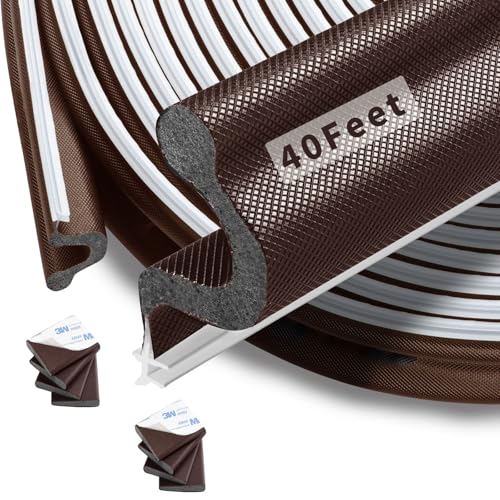
- 40 feet of strip with eight corner seals
- Kerf-mounted PVC flange for grooved frames
- Designed for larger 3/10- to 4/5-inch gaps
Best For: Beginners sealing compatible grooved studio door frames
Best Flexible Option

- Flexible brush handles irregular gaps
- Adhesive backing needs no groove
- 16.5 feet of 3/8-inch weatherstrip
Best For: Sliding or moving studio doors with modest, uneven gaps
Best Complete Kit – Audimute Large Door Seal Kit
Audimute Soundproofing Acoustic Door Seal Kit - Door Sweep and Seal - (Large Size)
Check Price On AmazonFor beginners comparing studio door seals for beginners, the Audimute kit is a straightforward option when you need materials for several standard-size doors. It includes door seals and a sweep designed to reduce sound transfer through perimeter gaps.
Best For: Treating up to four standard-size doors in studios, apartments, or other spaces where sound enters or exits through door gaps.
Pros:
- Includes two 50-foot door-seal rolls and one 25-foot door sweep.
- Designed to cover up to four standard-size doors.
- Easy to install and made from polyurethane.
Cons:
- The large kit may provide more material than needed for a single door.
- It is intended for door gaps, so it does not address other room sound paths.
Choose this kit if you want a bundled solution and have multiple doors to seal. Its included sweep and perimeter seals make it more comprehensive than buying one strip alone.
Best Wide Flexible Strip – Clear Silicone Door Seal
This clear silicone strip is a beginner-friendly choice among studio door seals for beginners when you need a wide, flexible seal for doors or frames. Its adhesive backing and transparent finish support simple, low-visibility installation.
Best For: Sealing larger gaps on interior or exterior doors, window frames, sliding doors, and other areas where a clear finish is useful.
Pros:
- Provides 32.8 feet of total coverage across two rolls.
- Wide 35mm silicone construction helps close substantial gaps.
- Four-step installation requires measuring, cutting, cleaning, and pressing into place.
- Designed to reduce drafts, debris, and some hallway or outdoor noise.
Cons:
- Adhesive installation requires a clean surface and up to 24 hours to cure.
- The wide strip may be more material than needed for narrow studio-door gaps.
This is a practical pick when flexibility, broad coverage, and a transparent appearance matter. Warm the adhesive in cold rooms for improved initial grip, as the supplied guidance recommends.
Best No-Adhesive Fit – Ravinte Q-Shaped Door Seal
For beginners seeking studio door seals for beginners without adhesive cleanup, the Ravinte Q-shaped strip uses a push-in installation. It is designed for door grooves or recesses and can help block light, drafts, dust, water, and noise.
Best For: Doors with compatible kerf slots measuring approximately 0.35 to 0.59 inches.
Pros:
- Push-in design requires no adhesive or tools.
- Provides 26 feet of black polyurethane weather stripping.
- High-density foam core helps block light and air leakage.
- Flexible fit is intended for many common door slots.
Cons:
- It requires a suitable existing groove or recess.
- You must check the slot dimensions before ordering.
This option is especially convenient for renters or beginners who want a removable, clean installation. Confirming the door’s kerf size is the key step before purchase.
Best for Large Gaps – VITAM AMO EPDM Seal
The VITAM AMO strip is a simple starting point for studio door seals for beginners when the door has a relatively large gap. Its self-adhesive EPDM construction is easy to cut and is designed to reduce wind, water, light, and sound leakage.
Best For: Inside or outside doors and windows with gaps from 5/16 to 15/32 inch.
Pros:
- Self-adhesive backing requires no tools or experience.
- 18-foot roll can be cut to the required length.
- EPDM material is designed to resist cracking and maintain resilience in cold conditions.
- Multi-hole design helps reduce sound propagation and closing pressure.
Cons:
- Coverage is limited to 18 feet per roll.
- It is sized for larger gaps and may not suit narrower openings.
- Adhesive placement requires careful surface preparation and alignment.
Consider this strip when gap size is your main concern and you want a quick peel-and-stick installation. Measure the opening first to confirm that its specified range matches your door.
Best All-Purpose Foam Seal – 33-Foot Adhesive Door Seal
For beginners comparing studio door seals for beginners, this 33-foot foam tape is a practical option when you need flexible coverage for doors or windows. Its 1/2-inch width and 1/4-inch thickness can be cut to length, while the adhesive grid backing is designed for straightforward installation.
Best For: Beginners who need a versatile seal for insulation, sound absorption, impact protection, or general door and window gaps.
Pros:
- Includes two rolls totaling 33 feet for broader coverage.
- CR foam and neoprene construction offers sealing and warp resistance.
- Cut-to-length design and adhesive backing simplify installation.
- Can help reduce air leakage, dust, noise, and impact.
Cons:
- The 1/2-inch width may not suit very narrow gaps.
- Installation requires careful surface preparation and cutting.
This is a strong starter choice when you want one material that can handle multiple sealing tasks. Its generous length is useful for larger projects, though beginners should measure the gap before applying the relatively wide strip.
Best for Door Corners – 16-Piece Self-Adhesive Corner Seals
For studio door seals for beginners, these wedge-shaped corner seals target a commonly missed area: the gaps around door-frame corners. The self-adhesive PU pieces can be peeled, positioned, stacked, or cropped to fit many frame configurations.
Best For: Beginners addressing corner gaps around swing doors and looking for a simple way to reduce drafts, dust, moisture, and outside noise.
Pros:
- Sixteen pieces provide multiple replacements or installation options.
- Wedge-shaped design is intended for door-frame corner compression.
- Odorless PU material is moistureproof, windproof, and weather resistant.
- Peel-and-stick backing supports a beginner-friendly installation.
Cons:
- Designed specifically for corners rather than long straight gaps.
- The white color may be more noticeable on dark studio doors or frames.
This option makes sense as a targeted supplement when air or light enters at the corners. It is less suitable as a complete perimeter seal, but the adjustable pieces make it approachable for first-time DIY installation.
Best for Standard Frame Gaps – 20-Foot D-Shaped TPE Seal
For beginners shopping for studio door seals for beginners, this D-shaped strip offers a straightforward solution for common door-frame gaps. The 3/8-inch width and 1/4-inch thickness are designed for a closer size match, and the self-adhesive backing is intended for wood, metal, glass, and some plastic surfaces.
Best For: Beginners sealing standard door-frame or window gaps against drafts, dust, noise, and light entry.
Pros:
- Thickened TPE construction is designed to rebound and resist deformation.
- Twenty feet of material covers common household sealing projects.
- D-shaped profile is made for everyday frame gaps.
- Simple clean, peel, and press installation process.
Cons:
- Its 20-foot length is less coverage than a 33-foot roll.
- Designed for common gaps, so unusually large openings may need another profile.
This is a sensible pick for a first sealing project when the door frame has a conventional gap. Measure the opening first, then clean and dry the surface thoroughly to support the adhesive bond.
Best Overall Kerf Seal – Long-Reach V-Shaped Door Strip
For beginners comparing studio door seals for beginners, this kerf-mounted option is a practical choice when the door frame has a compatible groove and larger gaps. Its 40-foot length and included corner seals provide plenty of material for a studio door project.
Best For: Beginners sealing grooved door frames with gaps from 3/10 to 4/5 inch.
Pros:
- Includes 40 feet of strip plus eight corner seals.
- PVC flange pushes into a compatible groove instead of relying on adhesive.
- Can help block noise, light, drafts, dust, rain, and odors.
- Can be cut with scissors or a utility knife and installed in under 10 minutes.
Cons:
- Requires a compatible approximately 1/8-inch groove.
- Users should measure the door gap before purchasing.
- The brown finish may not suit every studio door.
This is the strongest fit for a beginner who wants generous coverage and a secure kerf installation. Confirm the groove and gap dimensions first to avoid a mismatch.
Best Flexible Option – Self-Adhesive Pile Brush Seal
This pile brush weatherstrip is a beginner-friendly choice for studio door seals for beginners when the gap is irregular or the door moves against the frame. The adhesive backing allows a straightforward installation without a groove or specialized tools.
Best For: Sliding doors, windows, and irregular gaps up to about 3/8 inch.
Pros:
- Flexible brush adapts to uneven gaps and movement.
- Self-adhesive backing supports direct installation on frames.
- May reduce outside noise, drafts, dust, and sliding-door impact.
- Easy to cut and shape with scissors or a blade.
Cons:
- Provides only 16.5 feet of material.
- Adhesive installation requires a clean, suitable surface.
- Its 3/8-inch profile may not suit larger studio door gaps.
Choose this seal when flexibility and simple adhesive installation matter more than maximum coverage. Measure the frame and gap before applying it.
Best Adhesive Value – 50-Foot D-Shape Rubber Seal
For beginners looking for studio door seals for beginners with a simple peel-and-stick installation, this D-shaped rubber strip offers substantial coverage. The included tailor scissors make it easier to cut the 50-foot roll to fit a door frame.
Best For: Standard door or window frame gaps measuring about 1/10 to 11/50 inch.
Pros:
- Provides 50 feet of rubber sealing material.
- Includes tailor scissors for cutting to size.
- Strong self-adhesive backing is designed to firm up after 24 hours.
- Flexible rubber helps address drafts, dust, sound, and temperature changes.
Cons:
- Only fits relatively narrow gaps from 2.5 to 5.5 mm.
- Requires a 24-hour setting period after installation.
- Adhesive performance depends on proper surface preparation.
This is a practical pick for a beginner who wants long coverage and no-groove installation. Its narrow gap range makes accurate measurement especially important.
How We Picked the Best Studio Door Seals for Beginners
We focused on products that are practical for first-time installers and useful in common home-studio situations. The selection covers door-bottom sweeps, frame seals, adhesive strips, kerf-installed weatherstripping, brush seals, and corner patches. We also considered installation complexity, adjustability, coverage length, material type, and whether a seal is suited to small gaps or larger irregular spaces.
Because weatherstripping is not the same as full acoustic isolation, we favored options that can reduce air movement—the main path for many sound leaks—without implying that they will make a hollow interior door soundproof.
Quick Comparison
- Best dedicated acoustic option: Audimute’s door seal kit combines frame sealing with a bottom sweep.
- Best for clear installation: Transparent silicone strips are less visually noticeable on suitable doors and windows.
- Best for kerf channels: Q-shaped and V-shaped strips fit doors designed with a receiving slot.
- Best for adhesive installation: D-shaped, foam, TPE, and rubber strips apply directly to clean surfaces.
- Best for corners and awkward leaks: Corner seals can supplement a continuous frame seal where gaps meet.
- Best for sliding doors: Pile brush weatherstripping is designed to accommodate movement while limiting drafts.
Key Buying Factors for Studio Door Seals for Beginners
Measure the Gap and Mounting Surface
Close the door and inspect the frame, hinge side, latch side, and threshold. Measure the widest gap rather than guessing. A seal that is too thin may leave leaks; one that is too thick can prevent the door from closing or create excess pressure on the hinges.
Choose the Correct Installation Type
Self-adhesive strips are the simplest choice, but they require a clean, dry, smooth surface. Kerf seals need a compatible slot in the door frame and usually provide a neater, more durable fit. Door sweeps address the bottom gap, which frame-mounted strips cannot fix. Brush seals work well where the door must slide or where contact pressure needs to stay low.
Match Material to the Gap
Foam is compressible and forgiving for uneven surfaces. Silicone and rubber generally offer better resilience and resistance to wear. TPE strips can provide a flexible middle ground. For large gaps, look for a thicker profile, a broader mounting face, or a kit that includes a sweep rather than stacking several narrow strips.
Plan for Removal and Maintenance
Clean adhesive surfaces with an appropriate non-oily cleaner, cut strips accurately, and test the door before pressing the entire length into place. Replace compressed, torn, or loose seals when they stop making consistent contact.
Who Should Buy Which Studio Door Seals for Beginners?
Choose a complete acoustic seal kit if you want the most straightforward approach to a typical studio door. Pick adhesive foam, D-shaped rubber, silicone, or TPE when you need an inexpensive retrofit and can verify the gap size. Choose a kerf strip only if your frame has the required channel. Add corner seals when the main weatherstrip leaves small junction gaps. For sliding studio doors or windows, a pile brush is usually more suitable than a pressure-sealing foam profile.