
A studio door does not need to be expensive to perform better. The right seal can close small gaps that let in drafts, outside noise, dust, and distracting light.
This roundup compares 10 affordable door sweeps, foam seals, brush strips, pile weather stripping, and kerf-fit options for different door materials and gap sizes.
Best 10 Budget Studio Door Seals Picks for 2026
Best Adjustable Under-Door Seal
Thickened Silicone Draft Stopper

- Fits gaps from 0 to 1.5 inches
- Flexible, floor-friendly silicone
- Wide adhesive backing for quick installation
Best For: Large or uneven gaps under interior and exterior doors
Best Sliding-Door Seal
Self-Adhesive Pile Weather Stripping

- 16.5-foot cut-to-length roll
- Waterproof woven pile construction
- Available for several gap ranges
Best For: Sliding studio doors, windows, and frame gaps
Best Kerf-Fit Seal
Litaibai Exterior Door Weather Stripping
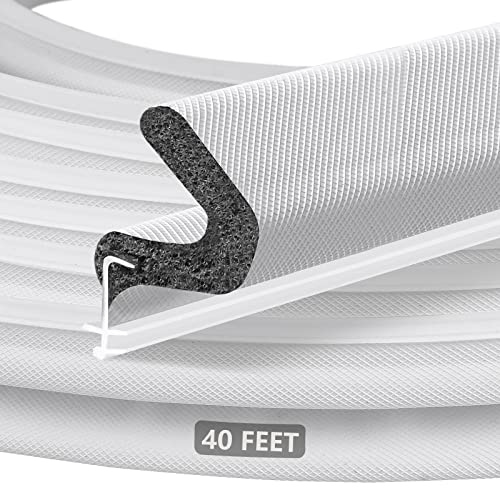
- 40-foot replacement roll
- Presses into 1/8-inch kerf slots
- Fits 1/4- to 1/2-inch door gaps
Best For: Grooved exterior studio door frames
Best Two-Pack Seal
Grotheory Silicone Door Draft Stopper

- Includes two 39-inch strips
- Fills gaps up to 1.5 inches
- Helps block drafts, noise, dust, and bugs
Best For: Two studio doors needing flexible bottom sweeps
Best Secure-Hold Pick
Clear T-Shaped Silicone Door Seal

- Two adhesive faces for a stable hold
- Clear, flexible silicone construction
- Helps reduce drafts, dust, and noise
Best For: Exterior and garage-entry doors needing a discreet seal
Best Long-Roll Value
Self-Adhesive Brush Weather Stripping

- Generous 33-foot roll
- Tool-free self-adhesive installation
- Trim-to-fit brush design
Best For: Multiple narrow door or window gaps
Best Traditional Seal

- Flexible 100% silicone material
- 20-foot cut-to-fit roll
- Helps block drafts, dust, and noise
Best For: Narrow, compatible door and window frame gaps
Best Overall Coverage
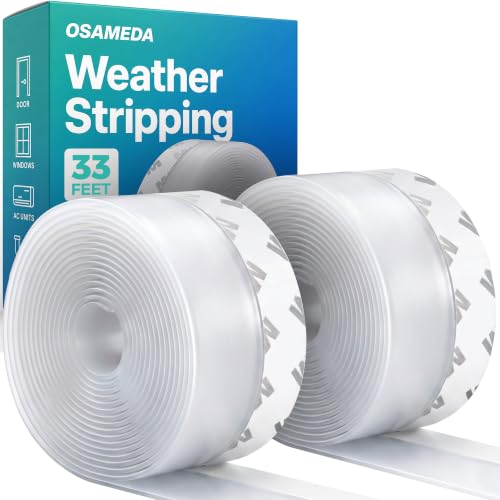
- 33 feet covers multiple frames
- Fits gaps up to 1.2 inches
- Helps block drafts, dust, and noise
Best For: Large gaps and multi-door projects
Best for Sound and Light Control

- Tapered profile fits 0.16–0.35-inch gaps
- Helps block sound, light, and drafts
- Flexible foam avoids hindering operation
Best For: Narrow interior studio gaps
Best for Sliding Doors

- Fits narrow 0.1–0.18-inch gaps
- Dense nylon pile resists shedding
- 33 feet for multiple doors or windows
Best For: Sliding doors and window tracks
Best Adjustable Under-Door Seal – Thickened Silicone Draft Stopper
For budget studio door seals that handle larger gaps, this adjustable silicone door sweep offers a practical way to reduce drafts, light, noise, dust, and insects. Its 39-inch length can be trimmed, and it is designed for gaps up to 1.5 inches.
Best For: Interior or exterior doors with uneven floors and gaps up to 1.5 inches.
Pros:
- Flexible silicone construction is designed to glide over carpet and resist floor damage.
- Wide adhesive backing supports quick installation on smooth surfaces.
- Triple-design cavity helps reduce airflow and outside noise.
- Includes gloves and an adhesion promoter.
Cons:
- Adhesion may be weaker on rough or textured surfaces.
- The backing should be warmed in cold weather and left undisturbed for 24 hours.
This is a strong budget pick when a studio door has a noticeably wide or irregular bottom gap. Measure carefully before cutting, and prepare the surface for the best adhesive hold.
Best Sliding-Door Seal – Self-Adhesive Pile Weather Stripping
This pile weather stripping is a budget studio door seals option for sliding doors, windows, and frames where a brush-style seal is more suitable than a bottom sweep. The 16.5-foot roll can be cut to the required length.
Best For: Sliding doors and windows with measured gaps from approximately 2.5 to 13 mm, depending on the brush height.
Pros:
- Self-adhesive woven pile is designed to be durable and waterproof.
- Long roll provides material for multiple applications.
- Can help limit drafts and heated-air leakage.
- Also suits wardrobes, bookcases, and cupboards.
Cons:
- Requires careful gap measurement because several brush heights are specified.
- Designed for sliding door or window edges and bottoms rather than large under-door gaps.
Choose this seal when your studio uses a sliding door or window and needs a low-profile brush barrier. Confirm the gap size and matching brush height before ordering.
Best Kerf-Fit Seal – Litaibai Exterior Door Weather Stripping
For budget studio door seals on a grooved door frame, this 40-foot kerf weather stripping offers a clean press-in replacement without adhesive. It is intended for 1/8-inch kerf slots and closed gaps measuring 1/4 to 1/2 inch.
Best For: Exterior, front, back, or garage doors with pre-cut kerf channels.
Pros:
- Press-in design avoids adhesive and supports a neat installation.
- 40-foot roll can cover multiple doors or replacement sections.
- PU foam with a PE cover is designed to compress and rebound.
- Helps reduce drafts, light leaks, outside noise, and energy loss.
Cons:
- Only fits frames with compatible 1/8-inch kerf slots.
- Not self-adhesive, so it is unsuitable for smooth frames without grooves.
- Requires removing the old seal, cleaning the channel, measuring, and cutting.
This is the better choice for studios with existing kerf-style door frames and worn or pet-damaged seals. Verify the groove and gap dimensions first, since it will not serve as a universal stick-on strip.
Best Two-Pack Seal – Grotheory Silicone Door Draft Stopper
This two-pack is a practical budget studio door seals solution for covering the bottoms of two doors or keeping a spare on hand. The self-adhesive silicone sweeps are 39 inches long, can be trimmed, and are rated to fill gaps up to 1.5 inches.
Best For: Studios needing two flexible under-door seals for interior, exterior, garage, or similar doors.
Pros:
- Two 39-inch silicone strips provide useful coverage for multiple doors.
- Flexible material is designed not to damage floors.
- Triple design helps block drafts, noise, dust, light, and bugs.
- Adhesive installation requires cutting, peeling, and sticking.
Cons:
- Adhesive performance depends on proper surface preparation.
- It is intended for bottom gaps and may not suit sliding-door frame gaps.
Pick this pack when you want straightforward coverage for two standard doors. Its broad gap range and flexible silicone construction make it versatile, while the two-count format can be more economical than buying separate seals.
Best Secure-Hold Pick – Clear T-Shaped Silicone Door Seal
For budget studio door seals, the Benory T-shaped strip is a practical choice when you want a discreet, flexible seal with extra adhesive contact. Its clear silicone design can help reduce drafts, dust, and outside noise around suitable door gaps.
Best For: Exterior and garage-entry doors where a low-visibility seal and secure adhesive hold are priorities.
Pros:
- T-shaped design uses two adhesive surfaces for a more stable hold.
- Clear, flexible silicone conforms to door gaps and blends with different door colors.
- 20-foot roll can be measured and cut for installation.
- Helps reduce drafts, indoor air loss, dust, and outside noise.
Cons:
- Requires a clean, dry mounting surface for installation.
- Adhesive may benefit from brief hair-dryer warming in cold weather.
- Gap and mounting-surface compatibility should be checked before ordering.
This is a strong budget option when appearance matters and the two-sided adhesive layout suits your door. Measure the gap first to confirm the 1.38-inch width is appropriate.
Best Long-Roll Value – Self-Adhesive Brush Weather Stripping
If you need budget studio door seals for several openings, this 33-foot brush strip offers plenty of material and can be trimmed to fit. The self-adhesive backing is designed for straightforward installation on doors or windows without tools.
Best For: Multi-opening projects where a long roll of gray brush-style weather stripping is useful for blocking drafts, dust, and insects.
Pros:
- 33-foot length provides material for multiple installations.
- Self-adhesive backing supports tool-free application.
- Trim-to-fit design accommodates different window and door dimensions.
- Brush construction is intended to help block drafts, dust, and insects.
Cons:
- The notes primarily describe window applications, so door fit should be verified.
- Gray finish may be more visible than a clear seal.
- Supplied dimensions indicate a narrow brush and backing, which may not suit larger gaps.
This option makes sense when coverage length and easy installation matter more than a molded silicone profile. Check the listed brush and backing dimensions against the gap before buying.
Best Traditional Seal – White Silicone D-Shaped Strip
This white silicone strip is a straightforward budget studio door seal for filling compatible door or window gaps. Its 20-foot roll, flexible construction, and peel-and-stick backing make it easy to cut and install for draft, dust, insect, light, and noise reduction.
Best For: Door or window frames where a white, narrow silicone seal is suitable for a clean-looking installation.
Pros:
- Silicone construction is designed for flexibility, toughness, and temperature resistance.
- Upgraded hot-melt adhesive is intended to provide longer bonding and simple application.
- 20-foot roll can be cut to the needed length.
- Helps reduce wind, dust, insects, light leakage, and noise.
Cons:
- White may be more noticeable on darker doors or frames.
- Requires the adhesive surface to be cleaned before installation.
- The 3/8-inch width and 1/4-inch thickness may not fill larger gaps.
Choose this strip when its white finish and compact profile match your frame. It offers a simple all-purpose approach, but accurate gap measurement is important for a secure seal.
Best Overall Coverage – 33-Ft Wide-Gap Door Seal
For shoppers comparing budget studio door seals, this 33-foot weather-stripping tape is a practical pick when you need plenty of material and coverage for larger gaps. Its 1.8-inch width is designed for gaps up to 1.2 inches and can be trimmed for doors, windows, thresholds, and other household applications.
Best For: Covering multiple door frames or sealing wider gaps on a budget.
Pros:
- 33 feet of material can cover multiple frames.
- Designed for gaps up to 1.2 inches.
- Helps reduce drafts, wind, dust, insects, and outside noise.
- Can also be used for shower doors and glass-door edges.
Cons:
- The adhesive may need warming with a hair dryer for the best bond.
- Its wide profile may be excessive for narrow studio door gaps.
This is a strong value option when coverage and gap size matter most. Clean and prepare the surface carefully, then warm the adhesive during installation to improve the hold.
Best for Sound and Light Control – Wedge Foam Door Seal
This wedge-shaped foam strip is a useful budget studio door seal for smaller, uneven gaps where reducing light, drafts, and sound matters. The tapered profile accommodates gaps from about 0.16 to 0.35 inches, while the nylon-covered PU foam is designed to compress without interfering with normal door or window operation.
Best For: Interior studio doors, windows, cabinets, and other narrow gaps requiring light and sound reduction.
Pros:
- Tapered design fits a range of smaller gap sizes.
- PU foam is designed to remain flexible and resist deformation.
- Useful for soundproofing, light blocking, dust control, and insulation.
- Grid adhesive backing is intended to provide a lasting bond.
Cons:
- At 118 inches, it provides less coverage than the 33-foot options.
- Cold-weather installation may require heating the backing with a hair dryer.
- Not intended for gaps as large as those handled by wider seal tape.
Choose this strip when a discreet, compressible seal is more important than maximum length. Its wedge shape makes it particularly practical for studio doors and windows with modest gap variation.
Best for Sliding Doors – Self-Adhesive Brush Seal
For budget studio door seals on sliding doors or tracks, this self-adhesive brush strip offers a low-profile alternative to foam. The dense nylon pile is made for gaps from 0.1 to 0.18 inches and can be cut with scissors, making installation straightforward after measuring and cleaning the surface.
Best For: Sliding glass doors, exterior doors, windows, closets, and tracks with narrow gaps.
Pros:
- Oil-based adhesive is designed to resist falling off in temperatures from -10°C to 50°C.
- Dense woven nylon pile blocks drafts, dust, and some outside noise.
- 33 feet can cover approximately two to three doors or four to six windows.
- Brush material is designed to avoid flattening through repeated use.
Cons:
- Only fits relatively narrow gaps from 0.1 to 0.18 inches.
- The 0.35-inch width may not suit every door track or frame.
- Brush seals may not provide the same light-blocking effect as a solid foam strip.
This is the most targeted choice for narrow moving gaps and sliding-door applications. Its brush profile should preserve smoother operation while adding a barrier against drafts, dust, and noise.
How We Picked These Budget Studio Door Seals
We focused on affordable sealing solutions that can address common studio problems: air movement, light leakage, dust, and modest noise transfer. The selection includes adhesive-backed strips for quick installation, under-door sweeps for floor gaps, kerf seals for compatible door frames, and silicone or foam profiles for compressible perimeter sealing.
Because door gaps vary considerably, no single product is best for every room. We considered installation method, adjustability, material, stated length, profile shape, and likely suitability for interior studio doors, exterior doors, windows, and sliding panels. These products can improve isolation at the door, but they will not replace acoustic construction, a solid-core door, or properly sealed walls.
Quick Comparison
| Seal type | Best for | Installation | Key consideration |
|---|---|---|---|
| Adjustable door sweep | Large bottom gaps | Screw-on or fitted | Measure floor clearance first |
| Adhesive foam or silicone | Small perimeter gaps | Peel-and-stick | Surface must be clean and smooth |
| Brush strip | Dust, light, and uneven gaps | Adhesive-backed | Brushes allow some movement |
| Pile weather stripping | Sliding windows and frames | Adhesive-backed | Best on narrow, consistent channels |
| Kerf seal | Doors with retaining slots | Push-in | Requires a compatible kerf |
Key Buying Factors for Budget Studio Door Seals
Measure the Gap and Mounting Surface
Measure the widest gap along the door, then check whether the seal will attach to wood, metal, painted trim, glass, or a sliding frame. A seal that is too thick may prevent the door from closing, while one that is too thin may leave an air path.
Choose the Right Profile
Use a door sweep for the threshold and perimeter stripping for the sides and top. Brush seals are useful where the gap is uneven or the door moves frequently. Foam and silicone provide a tighter compression seal when the surfaces are reasonably straight. Kerf products are convenient only when the frame has the required slot.
Check Adhesive and Durability
Clean and dry the mounting area before applying adhesive, and allow it to bond according to the product instructions. Adhesive strips are simple and inexpensive, but heavy-use doors, dusty surfaces, and temperature changes can reduce their lifespan. For a frequently used studio entrance, a mechanically secured sweep may be more dependable.
Set Realistic Acoustic Expectations
Sealing gaps can reduce high-frequency leakage and rattling, especially around the bottom edge, but these products are not full soundproofing systems. Prioritize a continuous seal around the door and avoid blocking the door’s safe operation or ventilation requirements.
Who Should Buy Which Budget Studio Door Seals?
Choose an adjustable sweep if the main issue is a visible gap beneath the door. Choose adhesive foam or silicone for small gaps around a conventional hinged door. Pick brush weather stripping when you need a forgiving seal for uneven surfaces, dust, or light. For sliding windows or doors, pile stripping is usually the more suitable format. If your frame already has a kerf channel, a push-in kerf seal can provide a cleaner, more durable installation.
For most budget studio projects, start by sealing the largest obvious gap rather than covering every edge with the thickest material available. Confirm the dimensions, test the door’s movement, and replace or trim the seal if it creates excessive friction.