
The best studio wide-angle camera lenses help you fit more into the frame without moving far from your subject. They are useful for interiors, architecture, product sets, environmental portraits, and video where space is limited.
This lineup includes ultra-wide and wide zooms, compact autofocus primes, bright f/2.8 options, and affordable lenses for Canon EF, EF-S, RF, RF-S, and other compatible mounts. The right choice depends on your camera, working distance, lighting, and tolerance for distortion.
Best 10 Studio Wide-Angle Camera Lenses Picks for 2026
Best Canon DSLR Range

- Broad 10-22mm zoom range
- USM autofocus with manual override
- Focuses as close as 9.5 inches
Best For: Canon EOS DSLR landscapes, interiors, and wide compositions
Best Budget Video Features

- Optical image stabilization
- Quiet STM autofocus for video
- Ultra-wide 10-18mm zoom
Best For: Canon EOS landscapes, handheld video, and online content
Best Classic Canon Wide Zoom

- 10-20mm APS-C wide-angle range
- Ultrasonic AF with manual override
- 77mm filter compatibility
Best For: Canon APS-C DSLR landscapes, interiors, and architecture
Compact Full-Frame Pick

- 16mm ultra-wide prime with a bright f/2.8 aperture
- Quiet STM autofocus for video recording
- Compact 163 g design with close-focus capability
Best For: Canon RF users needing a lightweight wide prime for video, interiors, and travel
Autofocus DSLR Option

- Ultra-wide 14mm full-frame perspective
- Bright f/2.8 aperture with autofocus
- Water-resistant body and Ultra Multi-Coating
Best For: Canon EF DSLR users shooting interiors, landscapes, and architecture
Flexible Vlogging Zoom
Canon RF-S10-18mm F4.5-6.3 IS STM

- 10-18mm ultra-wide zoom for APS-C cameras
- Optical stabilization for handheld shooting
- Compact design suited to vlogging and travel
Best For: Canon RF-S users needing a stabilized ultra-wide zoom for video and selfies
Best Manual-Focus Value

- 115.7-degree ultra-wide perspective
- f/2.8 aperture with close 10.8-inch focus
- Manual-focus prime with AE chip for Canon DSLRs
Best For: Landscapes, architecture, interiors, and creative video
Best Stabilized Zoom
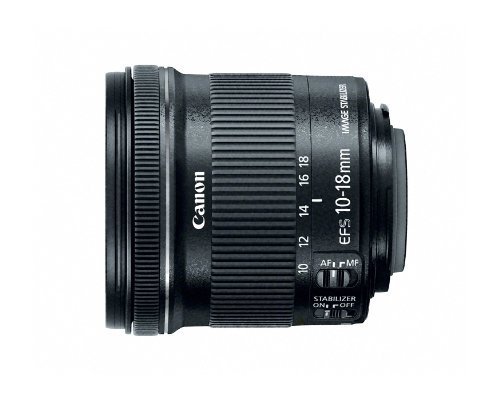
- Flexible 10-18mm ultra-wide zoom
- Optical image stabilization
- Stepping motor for quiet video focusing
Best For: Canon EF-S users shooting handheld photos and video
Best for Detailed Ultra-Wide Work
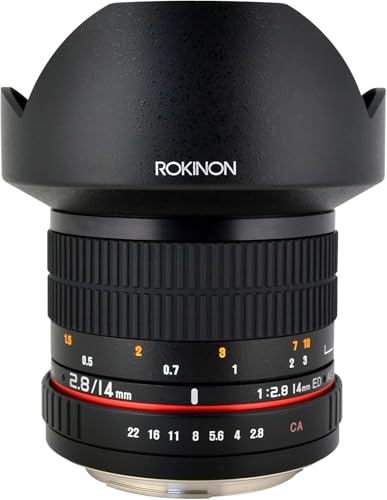
- 115.7-degree Canon EF perspective
- 14-element design for detailed images
- f/2.8 aperture and built-in hood
Best For: Landscapes, real estate, astrophotography, and studio work
Best Lightweight APS-C Pick – Sigma 10-18mm F2.8 for Sony E
For studio wide-angle camera lenses used in travel, video, or online content creation, the Sigma 10-18mm F2.8 DC DN stands out for combining an ultra-wide zoom range with a bright constant aperture. It is designed for Sony APS-C E-mount cameras and weighs just 260 g.
Best For: Sony APS-C creators who want a compact lens for vlogging, landscapes, travel, and studio content.
Pros:
- Bright F2.8 maximum aperture across the zoom range
- Ultra-wide 10-18mm range suits landscapes and video
- Compact, lightweight design with weather sealing
- Autofocus and manual focus supported by a stepping motor
Cons:
- Compatible with Sony APS-C E-mount cameras rather than Canon systems
- Its 18mm maximum focal length is limited for tighter framing
This is a particularly practical choice when portability and low-light flexibility matter. Its Sony E compatibility and APS-C coverage should be confirmed before purchase.
Best Canon DSLR Range – Canon EF-S 10-22mm USM
The Canon EF-S 10-22mm f/3.5-4.5 USM is a versatile option among studio wide-angle camera lenses for EOS digital SLR users. Its 10-22mm zoom range provides broad framing, while USM autofocus and full-time manual focus add practical control.
Best For: Canon EOS DSLR photographers who need an expansive zoom for landscapes, interiors, and wide compositions.
Pros:
- Useful 10-22mm wide-angle zoom range
- USM autofocus offers speed and full-time manual focus
- Close focusing distance reaches 9.5 inches
- Circular aperture design produces natural-looking highlights
Cons:
- Maximum aperture varies from f/3.5 to f/4.5
- Not water resistant according to the supplied specifications
- Designed for Canon EF-S systems
Choose this lens when framing flexibility is more important than a constant bright aperture. Its close-focus capability also helps with foreground subjects in wide scenes.
Best Budget Video Features – Canon EF-S 10-18mm IS STM
For Canon users comparing studio wide-angle camera lenses, the EF-S 10-18mm f/4.5-5.6 IS STM emphasizes smooth, quiet operation for video. Its optical image stabilization and stepping-motor autofocus make it suitable for handheld recording and broad landscape framing.
Best For: Canon EOS users shooting wide-angle landscapes, handheld video, and online content.
Pros:
- Optical image stabilization supports handheld shooting
- STM autofocus is designed for quiet video operation
- Ultra-wide 10-18mm zoom range
- Close focusing distance of 0.72 feet
Cons:
- Relatively modest f/4.5-5.6 maximum aperture
- Not water resistant according to the supplied details
- Made for Canon EF-S-compatible EOS cameras
This lens is a sensible fit when stabilization and quiet focusing are priorities. It is less suited to situations requiring a particularly bright aperture, but it offers useful wide coverage for video and landscapes.
Best Classic Canon Wide Zoom – Sigma 10-20mm f/4-5.6 EX HSM
The Sigma 10-20mm f/4-5.6 EX DC HSM offers a broad zoom range for Canon APS-C DSLR photography. As one of these studio wide-angle camera lenses, it provides 10-20mm coverage, ring-type ultrasonic autofocus, and full-time manual focusing.
Best For: Canon APS-C DSLR photographers who want a conventional ultra-wide zoom for landscapes, interiors, and architectural-style compositions.
Pros:
- Flexible 10-20mm wide-angle range
- Ring-type ultrasonic AF with full-time manual focus
- Close minimum focus distance of 0.24 m
- Accepts 77mm filters
Cons:
- Maximum aperture is f/4-5.6 rather than constant across the range
- Not water resistant according to the supplied specifications
- Can vignette on sensors larger than APS-C or on 35mm SLR cameras
This Sigma is best considered for APS-C users who value wide coverage and traditional autofocus controls. Check the Canon mount and sensor format carefully before ordering.
Compact Full-Frame Pick – Canon RF16mm F2.8 STM
For photographers and creators comparing studio wide-angle camera lenses, the Canon RF16mm F2.8 STM is a compact prime built for Canon EOS R-series mirrorless cameras. Its fixed 16mm view, bright f/2.8 aperture, and quiet STM autofocus suit interiors, landscapes, vlogging, and video work.
Best For: Canon RF users who want a lightweight ultra-wide prime for video, travel, interiors, and low-light shooting.
Pros:
- Bright fixed f/2.8 aperture with a 108-degree angle of view.
- Very compact and lightweight at 163 g.
- Smooth, quiet continuous autofocus for video recording.
- Focuses as close as 5.11 inches with 0.26x magnification.
Cons:
- Fixed 16mm focal length provides no zoom flexibility.
- Designed for Canon RF-mount EOS R-series mirrorless cameras.
- Not water resistant.
The RF16mm F2.8 STM is a practical choice when portability and a wide perspective matter more than zoom versatility. Its bright aperture and quiet focusing also make it especially useful for handheld video and vlogging.
Autofocus DSLR Option – Rokinon 14mm F2.8 AF
The Rokinon 14mm F2.8 AF is a full-frame ultra-wide prime for Canon EF DSLRs. Among studio wide-angle camera lenses, it stands out for its 14mm perspective, autofocus, and f/2.8 maximum aperture, making it suitable for expansive scenes and tight spaces.
Best For: Canon DSLR owners seeking an autofocus 14mm prime for landscapes, interiors, architecture, and broad environmental compositions.
Pros:
- Ultra-wide 14mm focal length for expansive framing.
- Bright f/2.8 maximum aperture.
- Autofocus support for Canon EF-mount cameras.
- Water-resistant design and Ultra Multi-Coating.
Cons:
- Prime design does not offer zoom flexibility.
- Compatible with Canon DSLRs rather than Canon RF mirrorless mounts.
- Heavier than the other listed options at 1.1 pounds.
This lens is a strong fit for DSLR users who prioritize the widest perspective in the group and still want autofocus. Its 14mm focal length is useful when you need to include more of a room, building, or landscape in one frame.
Flexible Vlogging Zoom – Canon RF-S10-18mm F4.5-6.3 IS STM
The Canon RF-S10-18mm F4.5-6.3 IS STM gives APS-C Canon EOS R-series users a flexible ultra-wide zoom. For shoppers evaluating studio wide-angle camera lenses, its 10-18mm range, optical image stabilization, and compact design make it especially practical for vlogging, travel, and tight indoor spaces.
Best For: Canon RF-S and compatible RF-mount mirrorless users who need an ultra-wide zoom for vlogging, selfies, travel, and landscapes.
Pros:
- 10-18mm range, equivalent to approximately 16-29mm on APS-C.
- Optical image stabilization supports handheld shooting.
- Wide view works well for vlogging and selfies without a long selfie stick.
- Compact 5.28-ounce design with up to 0.5x magnification in manual focus.
Cons:
- Maximum aperture varies from f/4.5 to f/6.3 and is less bright than the listed prime lenses.
- Designed for RF-mount mirrorless cameras and APS-C use.
- Not water resistant.
The RF-S10-18mm is the most versatile choice here for framing flexibility. Its stabilization and broad zoom range favor moving creators, while the compact build keeps it convenient for travel and handheld video.
Best Manual-Focus Value – Samyang 14mm f/2.8 Canon EF
The Samyang SY14M is a practical choice for photographers seeking studio wide-angle camera lenses with a dramatic 115.7-degree perspective. Its 14mm prime focal length, f/2.8 aperture, and close-focusing capability suit expansive compositions, interiors, and creative video work.
Best For: Landscapes, architecture, interiors, and photographers who want a compact manual-focus ultra-wide lens for Canon EF.
Pros:
- Wide 115.7-degree field of view captures expansive scenes.
- Hybrid aspherical elements and multi-layer coating help reduce distortion and chromatic aberration.
- f/2.8 maximum aperture supports low-light shooting.
- Focuses as close as 10.8 inches and includes a petal-style hood.
Cons:
- Manual focus and manual exposure control may not suit users seeking full automation.
- No image stabilization.
- Fixed 14mm focal length is not zoomable.
Choose this Samyang when a broad, immersive view and hands-on control matter more than autofocus or stabilization. The built-in AE chip supports accurate metering with Canon DSLR cameras, while the durable, lightweight design works for both studio and outdoor setups.
Best Stabilized Zoom – Canon EF-S 10-18mm STM
The renewed Canon EF-S 10-18mm is a flexible option among studio wide-angle camera lenses for Canon EF-S users. Its zoom range covers expansive 10mm views through a more moderate 18mm perspective, while optical stabilization and a stepping motor add practicality for handheld photography and video.
Best For: Canon EF-S photographers and videographers who want an affordable ultra-wide zoom with stabilization and quieter focusing.
Pros:
- 10-18mm zoom range provides framing flexibility.
- Optical image stabilization helps with handheld shooting.
- Stepping motor supports noise-free video shooting.
- Close-focusing distance is 0.72 feet.
Cons:
- Compatible with Canon EF-S mount cameras rather than full-frame Canon EF bodies.
- Maximum aperture ranges from f/4.5 to f/5.6, less bright than the f/2.8 primes here.
- As a renewed product, it includes a 90-day limited warranty.
This Canon is the practical pick when zoom flexibility, stabilization, and video-friendly focusing are priorities. Its lighter 12.32-ounce weight also makes it convenient for extended handheld use, though its narrower aperture is less suited to very low-light work.
Best for Detailed Ultra-Wide Work – Rokinon 14mm f/2.8
The Rokinon FE14M-C is a sturdy manual-focus prime for photographers comparing studio wide-angle camera lenses for Canon EF. Its 14mm focal length, 115.7-degree angle of view, and f/2.8 aperture are well suited to landscapes, real estate, astrophotography, and other scenes that benefit from a broad perspective.
Best For: Canon EF photographers who prioritize edge-to-edge detail, low-light capability, and precise manual focusing.
Pros:
- 14-element, 10-group optical design is intended to deliver detailed images across the frame.
- f/2.8 aperture supports low-light photography.
- Aspherical elements help minimize distortion and aberrations.
- Includes a built-in petal-style lens hood and focuses as close as 10.8 inches.
Cons:
- Manual focus requires deliberate setup and operation.
- No image stabilization.
- At 31.7 ounces, it is heavier than the compact Canon zoom listed here.
The Rokinon makes sense for controlled studio work and demanding ultra-wide compositions where optical design and a fast aperture are more important than automation. It offers a similar broad perspective to the Samyang, but its robust 900-gram build may appeal to users seeking a more substantial lens.
How We Picked These Studio Wide-Angle Camera Lenses
We focused on lenses that suit controlled studio work as well as location-based shooting. The selection covers focal lengths from 10mm to 20mm for crop-sensor cameras and 14mm to 16mm full-frame options, along with zooms that make framing easier. We also considered autofocus availability, maximum aperture, image stabilization, optical compatibility, and the practical differences between new and renewed models.
Mount compatibility comes first. A lens designed for Canon EF-S or RF-S cameras is not interchangeable with a full-frame RF or EF lens in every situation. Before buying, confirm both the physical mount and whether the lens covers your sensor size.
Quick Comparison
| What to compare | Best fit |
|---|---|
| Maximum flexibility | 10–20mm or 10–22mm zooms |
| Low-light studio work | f/2.8 wide-angle lenses |
| Full-frame interiors | 14mm–16mm lenses |
| Compact video setups | STM autofocus lenses |
| Lowest-cost upgrade | Compatible renewed or older DSLR models |
Key Buying Factors for Studio Wide-Angle Camera Lenses
Focal Length and Distortion
Wider lenses capture more of a room, but they can exaggerate foreground objects and stretch faces near the edges. For people, keep subjects near the center and avoid placing important details close to the frame borders. A zoom gives you more control when the camera position is fixed.
Aperture and Lighting
An f/2.8 lens admits more light than a lens with a variable f/4.5–6.3 aperture. That matters for handheld shooting, video, and separating a subject from the background. In a well-lit studio on a tripod, a slower lens can still produce excellent results, especially at moderate ISO settings.
Autofocus, Stabilization, and Handling
STM and other quiet autofocus systems are valuable for video and moving subjects. Image stabilization helps with camera shake, but it does not freeze subject movement. For static setups, prioritize sharpness, edge performance, flare control, and easy manual-focus operation.
Sensor and Mount Coverage
Full-frame lenses can generally be used on compatible crop-sensor bodies, though the field of view becomes narrower. Crop-specific lenses may be smaller and less expensive, but they are not the right choice if you plan to move to full frame without replacing the lens.
Who Should Buy Which Studio Wide-Angle Camera Lenses?
Choose a 10–18mm or 10–22mm zoom if you photograph interiors, sets, or architecture and need quick framing changes. An f/2.8 zoom is the stronger option for dim studios, event-style shooting, and video where shutter speed matters. Full-frame users seeking a dramatic perspective should look at 14mm or 16mm primes, while photographers who value a smaller kit may prefer a compact autofocus prime.
For budget-conscious Canon DSLR owners, an EF-S zoom or compatible renewed model can deliver substantial value. Canon RF and RF-S users should stay within the appropriate mirrorless mount family unless using a reliable adapter. Whatever you choose, verify camera compatibility, check the return policy, and test edge distortion and corner sharpness before relying on the lens for a paid assignment.