
The best wide-angle lens can transform landscapes, architecture, interiors, travel scenes, and video by fitting more into the frame without forcing you farther from the subject. The right choice depends on your camera mount, sensor size, preferred focal length, and low-light needs.
We compared 10 premium wide-angle camera lenses across Sony, Canon, Panasonic, and Sigma-compatible systems, including bright primes, flexible zooms, compact APS-C options, and renewed full-frame models.
Best 10 Premium Wide-Angle Camera Lenses Picks for 2026
Sony G Master Ultra-Wide Prime
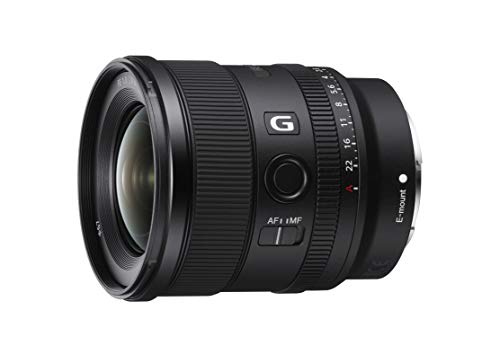
- Bright F1.8 aperture
- Compact 13.2-ounce design
- Fast XD autofocus motors
Best For: Full-frame Sony landscapes, travel, and low-light photography
Sony G Master Ultra-Wide

- Dramatic 114-degree view
- Bright F1.8 maximum aperture
- G Master optical construction
Best For: Full-frame Sony astrophotography, architecture, landscapes, and video
Leica Micro Four Thirds Ultra-Wide

- 18mm-equivalent ultra-wide view
- Bright F1.7 aperture
- 0.095m close-focusing distance
Best For: Micro Four Thirds stills, close-up work, and video
Best Compact Canon RF Prime

- Lightweight 16mm f/2.8 prime
- Quiet STM autofocus for video
- 5.11-inch close-focusing distance
Best For: Canon EOS R-series vlogging and travel
Best Full-Frame Sony G Prime

- Bright 16mm f/1.8 full-frame prime
- Advanced aspherical elements for resolution
- Dual XD motors for quiet AF
Best For: Sony full-frame landscape and video shooting
Best Mirrorless Vlogging Pick
Canon RF-S10-18mm F4.5-6.3 IS STM

- 10-18mm ultra-wide zoom for APS-C mirrorless cameras
- Optical stabilization and STM autofocus for video
- Lightweight design for travel and selfies
Best For: Canon RF-S mirrorless vlogging and travel
Best Renewed Full-Frame Value

- 17-40mm ultra-wide zoom for Canon EF SLR cameras
- Constant f/4 aperture with USM autofocus
- Weather-resistant build and 77mm filter support
Best For: Canon SLR landscape, nature, and event photography
Best Budget EF-S Ultra-Wide

- 10-18mm range for landscapes and interiors
- Optical stabilization and quiet STM focusing
- Close 0.72-foot focusing distance
Best For: Canon EF-S-compatible landscape and video shooting
Sony G Master Ultra-Wide Prime – FE 20mm F1.8 G
The Sony FE 20mm F1.8 G is a strong choice among premium wide-angle camera lenses for full-frame Sony E-mount users who want a compact prime with a bright aperture. Its 20mm view, F1.8 maximum aperture, and fast autofocus suit landscapes, interiors, travel, and low-light shooting.
Best For: Full-frame Sony photographers seeking a lightweight ultra-wide prime for landscapes, travel, architecture, and low-light work.
Pros:
- Bright F1.8 aperture supports low-light exposure and shallow depth of field.
- Compact 13.2-ounce design is easy to carry.
- XD linear motors provide fast, precise autofocus.
- Aspheric elements and Nano AR coating support high-resolution, lifelike images.
Cons:
- Fixed 20mm focal length offers no zoom flexibility.
- No built-in image stabilization is listed.
- It is not rated as water resistant.
This lens balances a useful ultra-wide perspective with portability and a bright aperture. It is especially appealing when image quality and low-light capability matter more than zoom range.
Sigma Compact APS-C Zoom – 10-18mm F2.8 DC DN
The Sigma 10-18mm F2.8 DC DN is a versatile option among premium wide-angle camera lenses for Sony APS-C users. Its ultra-wide zoom range, constant F2.8 aperture, stabilization, and compact 260-gram build make it practical for landscapes, travel, vlogging, and online content.
Best For: Sony APS-C creators who need a lightweight ultra-wide zoom for travel, landscapes, video, and vlogging.
Pros:
- 10-18mm range covers multiple ultra-wide perspectives.
- Constant F2.8 aperture supports consistent exposure across the zoom range.
- Compact, lightweight design is suited to travel and handheld content creation.
- Weather-resistant construction and image stabilization add practical versatility.
Cons:
- Compatible with Sony APS-C E-mount cameras rather than full-frame bodies as specified.
- Maximum 18mm focal length remains firmly in the wide-angle range.
- It uses a 67mm filter size, which may require matching accessories.
Choose this lens when flexibility matters more than a prime lens’s simplicity. The zoom range and F2.8 aperture are particularly useful for creators who move between scenery, interiors, and talking-head video.
Sony G Master Ultra-Wide – FE 14mm F1.8 GM
The Sony FE 14mm F1.8 GM is an ultra-wide premium wide-angle camera lens built for full-frame Sony E-mount cameras. Its dramatic 114-degree angle of view, bright F1.8 aperture, and G Master optical design make it well suited to astrophotography, architecture, landscapes, and filmmaking.
Best For: Full-frame Sony users who want a compact 14mm prime for astrophotography, architecture, landscapes, and video.
Pros:
- Very wide 14mm perspective captures expansive scenes.
- F1.8 aperture is useful for low-light work and background separation.
- XA, ED, and Super ED elements support corner-to-corner sharpness and reduced aberration.
- Dual XD linear motors provide fast autofocus and tracking.
Cons:
- Fixed focal length provides no framing flexibility.
- No image stabilization is listed.
- It is not rated as water resistant in the supplied specifications.
This is the specialist choice for photographers who want maximum width without giving up a bright aperture. Its compact design also suits gimbals and other video setups, while the 14mm perspective demands careful composition.
Leica Micro Four Thirds Ultra-Wide – DG SUMMILUX 9mm F1.7
The Panasonic Leica DG SUMMILUX 9mm F1.7 is a specialized option among premium wide-angle camera lenses for Micro Four Thirds cameras. With an 18mm-equivalent field of view, F1.7 aperture, close 0.095m focusing distance, and video-focused features, it works well for both stills and motion.
Best For: Micro Four Thirds photographers and videographers needing a compact ultra-wide lens for close-up work, travel, and video.
Pros:
- 9mm focal length provides a 100-degree angle of view, equivalent to 18mm on 35mm format.
- F1.7 aperture supports low-light shooting and bokeh.
- Focuses as close as 0.095m with 0.25x magnification.
- Minimal focus breathing and smooth aperture control benefit video recording.
Cons:
- Designed for Micro Four Thirds cameras, limiting mount compatibility.
- Fixed 9mm focal length offers no zoom flexibility.
- Its supplied specifications do not list a formal water-resistance rating.
This lens stands out for close-focus creativity and video handling rather than outright system versatility. It is a compelling fit for Micro Four Thirds users who want an ultra-wide perspective in a lightweight, rugged-feeling package.
Best APS-C Vlogging Prime – Sony E 11mm F1.8 APS-C Ultra-Wide
The Sony E 11mm F1.8 is a compact premium wide-angle camera lens for Sony APS-C and Super35 E-mount cameras. Its 104-degree view, bright f/1.8 aperture, and quiet autofocus make it especially practical for handheld vlogging, interiors, landscapes, and video work.
Best For: Sony APS-C creators who prioritize an ultra-wide perspective, low-light flexibility, and responsive video autofocus.
Pros:
- Very compact and lightweight at 10.56 ounces.
- Bright f/1.8 aperture helps create background separation and supports low-light shooting.
- Two linear motors provide fast, precise, quiet autofocus and tracking.
- Refined internal focusing keeps the lens length constant and helps reduce focus breathing.
Cons:
- Compatible with Sony APS-C E-mount cameras rather than full-frame systems.
- Fixed 11mm focal length offers no framing flexibility.
- Not water resistant according to the supplied specifications.
This is a strong choice when a small APS-C setup needs a genuinely wide, bright prime. Its creator-friendly autofocus and reduced focus-breathing behavior give it particular appeal for smooth video and arm’s-length shooting.
Best Compact Canon RF Prime – Canon RF16mm F2.8 STM Lens
The Canon RF16mm F2.8 STM is a lightweight premium wide-angle camera lens for Canon EOS R-series mirrorless cameras. Its fixed f/2.8 aperture, 108-degree view, close 5.11-inch focusing distance, and quiet STM motor make it a versatile option for vlogging, cinematic video, and everyday ultra-wide shots.
Best For: Canon EOS R-series users seeking an affordable-feeling, highly portable ultra-wide prime for video, vlogging, and close-up perspectives.
Pros:
- Supremely compact and lightweight at 163 grams.
- Bright fixed f/2.8 aperture and 16mm ultra-wide perspective.
- Stepping-motor autofocus is smooth and quiet during video recording.
- 5.11-inch minimum focusing distance and 0.26x magnification support close subjects.
Cons:
- Compatible with Canon RF-mount EOS R-series cameras only.
- Fixed focal length cannot zoom or adjust the field of view.
- Not water resistant according to the supplied specifications.
For Canon RF users who value low weight and a broad perspective, this lens is an uncomplicated travel and creator option. Its close-focus capability adds useful flexibility beyond standard wide establishing shots.
Best Full-Frame Sony G Prime – Sony FE 16mm f/1.8 G
Sony FE 16mm f/1.8 G,Black | 304 g (10.8 oz.) Dust and Moisture Resistant Structure Minimal
Check Price On AmazonThe Sony FE 16mm f/1.8 G combines a bright f/1.8 aperture with a 107-degree field of view, making it a premium wide-angle camera lens for Sony full-frame mirrorless systems. Its advanced aspherical elements, 11-blade diaphragm, close focusing, and dual XD motors target photographers and videographers who want both resolution and expressive background blur.
Best For: Sony full-frame users who want a bright ultra-wide prime for landscapes, interiors, close perspectives, and high-quality video.
Pros:
- Bright f/1.8 aperture balances ultra-wide coverage with bokeh potential.
- Two Advanced Aspherical elements are designed to minimize field curvature and astigmatism.
- Fast, precise, quiet autofocus comes from two XD linear motors.
- Close focusing reaches 0.15 meters in autofocus and 0.13 meters manually.
Cons:
- No image stabilization is listed in the supplied specifications.
- Fixed 16mm focal length provides no zoom flexibility.
- Not water resistant according to the supplied specifications.
This is the most performance-focused option of the three, pairing a bright aperture with optical design intended for high resolution. At 304 grams, it also remains reasonably portable for a full-frame ultra-wide G lens.
Best Mirrorless Vlogging Pick – Canon RF-S10-18mm F4.5-6.3 IS STM
For Canon EOS APS-C mirrorless users, this compact zoom is a practical entry into premium wide-angle camera lenses. Its 10-18mm range provides a 16-29mm equivalent field of view, helping you fit more into tight interiors, travel scenes, landscapes, and selfie-style videos.
Best For: Canon RF-S mirrorless owners who prioritize lightweight vlogging, travel, landscapes, and wide shots in confined spaces.
Pros:
- Ultra-wide 10-18mm zoom with a 16-29mm equivalent range for APS-C cameras
- Optical image stabilization and STM autofocus support video shooting
- Compact 5.28-ounce design suited to travel and handheld vlogging
- Up to 0.5x magnification in manual-focus mode for close-up subjects
Cons:
- Relatively modest f/4.5-6.3 maximum aperture
- Designed for Canon RF-S and compatible RF-mount mirrorless cameras rather than EF systems
- Not water resistant
The broad view, stabilization, quiet focusing, and low weight make this a strong specialized choice for creators using Canon APS-C mirrorless bodies. Choose it when portability and framing flexibility matter more than a brighter aperture.
Best Renewed Full-Frame Value – Canon EF 17-40mm f/4L USM
Canon EF 17-40mm f/4L USM Ultra Wide Angle Zoom Lens for Canon SLR Cameras (Renewed)
Check Price On AmazonThis renewed Canon L-series zoom offers a useful 17-40mm range and up to a 104-degree diagonal angle of view, making it a versatile option among premium wide-angle camera lenses for Canon SLR users. The constant f/4 maximum aperture and weather-resistant construction suit landscape, nature, and event work.
Best For: Canon EF SLR photographers seeking a durable ultra-wide zoom for landscapes, weddings, nature, and general outdoor photography.
Pros:
- 17-40mm zoom range covers ultra-wide through moderate wide-angle views
- Constant f/4 maximum aperture across the zoom range
- Ring-type USM provides fast, quiet autofocus
- Weather-resistant construction and support for 77mm screw-in filters
Cons:
- Renewed product includes a 90-day limited warranty
- Not water resistant according to the supplied specifications
- Heavier and less compact in concept than the newer APS-C lens options in this roundup
Its L-series optical design, aspherical elements, Super UD glass, and close 0.9-foot focusing distance give this older EF zoom a broad range of practical uses. It is most compelling for photographers who already use Canon SLR equipment and want a sturdy wide-angle zoom.
Best Budget EF-S Ultra-Wide – Canon EF-S 10-18mm IS STM
Canon’s EF-S 10-18mm zoom is a straightforward choice for EOS users who want premium wide-angle camera lenses without giving up video-friendly features. Its ultra-wide range is useful for landscapes and architecture, while optical stabilization and stepping-motor autofocus help keep handheld video smooth and quiet.
Best For: Canon EOS EF-S-compatible users who need an affordable ultra-wide lens for landscapes, interiors, travel, and video.
Pros:
- 10-18mm ultra-wide zoom for expansive landscape and interior views
- Optical image stabilization supports handheld shooting
- Stepping-motor autofocus enables quieter video operation
- Close focusing distance of 0.72 feet
Cons:
- Maximum aperture is f/4.5-5.6, limiting low-light flexibility
- EF-S mount is intended for compatible Canon EOS cameras rather than RF systems
- Not water resistant
This lens makes the most sense for Canon APS-C DSLR owners who value an expansive view, stabilization, and quiet autofocus over a brighter aperture or professional weather sealing. Its 10-18mm range is particularly useful when you need to include both a close subject and its surroundings.
How We Picked These Premium Wide-Angle Camera Lenses
We focused on lenses that offer a meaningful advantage for wide-angle shooting, whether through a bright aperture, useful zoom range, compact design, strong optical performance, or video-friendly features. The selection covers full-frame, APS-C, and Micro Four Thirds systems so you can compare realistic options for your camera rather than relying on focal length alone.
We also considered autofocus suitability, distortion control, minimum focusing distance, portability, and value. A premium lens does not always mean the most expensive model; it means the lens is well matched to the work you want it to do.
Quick Comparison
- Best for low-light landscapes and astrophotography: Bright full-frame primes such as 14mm, 16mm, and 20mm models.
- Best for travel flexibility: Wide zooms covering roughly 10–18mm or 10–20mm on APS-C cameras.
- Best for compact mirrorless kits: Small APS-C and Micro Four Thirds primes.
- Best for affordable full-frame shooting: Compact 16mm options with moderately wide apertures.
- Best for DSLR owners: Canon EF and EF-S zooms, including renewed models where compatibility and condition are acceptable.
Key Buying Factors for Premium Wide-Angle Camera Lenses
Mount and Sensor Format
Confirm the lens mount before comparing specifications. Sony FE lenses are designed for full-frame E-mount cameras, while Sony E lenses may target APS-C bodies. Canon RF, RF-S, EF, and EF-S lenses are not interchangeable in the same way, and Micro Four Thirds lenses use a separate system. Sensor size also changes the effective field of view, so a 10mm APS-C lens and a 10mm full-frame lens do not produce the same framing.
Focal Length and Aperture
Choose a prime when you value maximum sharpness, low-light performance, and a simple lightweight setup. Choose a zoom when you photograph interiors, travel scenes, or changing subjects and want to reframe without moving. A wide maximum aperture helps with night skies, dim interiors, and subject separation, while a smaller aperture can be sufficient for daylight landscapes.
Autofocus, Video, and Handling
For video, look for quiet autofocus, smooth focusing behavior, and manageable focus breathing. For architecture and interiors, examine edge sharpness and distortion correction. Weight, filter compatibility, weather resistance, and minimum focusing distance can matter as much as headline sharpness when you carry the lens regularly.
Who Should Buy Which Premium Wide-Angle Camera Lenses?
Landscape and astrophotography shooters should prioritize a bright full-frame prime with strong corner performance. Travel photographers may prefer a compact prime for portability or a zoom for framing flexibility. Vloggers and content creators should look for a lightweight lens with reliable, quiet autofocus and a comfortably wide perspective.
APS-C owners should select lenses designed for their mount and account for the crop factor before deciding how wide they need to go. Micro Four Thirds users can gain an especially broad view from compact ultra-wide primes. DSLR owners on a budget may find renewed EF or affordable EF-S zooms practical, but should verify camera compatibility, seller condition ratings, and warranty coverage first.