
The right telephoto lens can bring distant wildlife, sports action, and candid moments within reach without forcing you closer to the subject. This roundup covers 10 options across Canon RF and EF mounts, plus manual long-range lenses for compatible Canon and Nikon cameras.
Before buying, confirm your camera mount, decide whether autofocus or manual focus suits your work, and weigh portability against maximum reach. The buying guide below highlights the practical differences that matter most.
Best 10 Telephoto Camera Lenses for Photographers Picks for 2026
Maximum Reach Pick
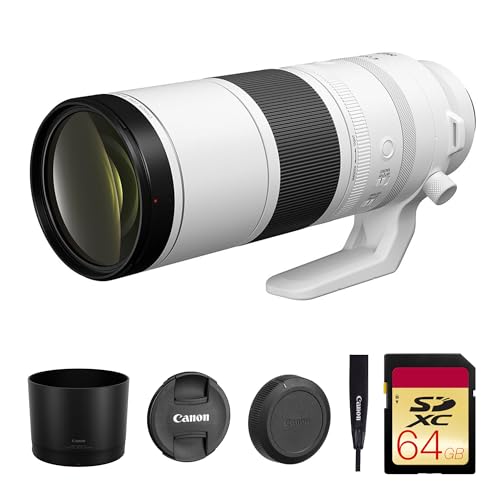
- 200-800mm super-telephoto range
- Optical image stabilization
- USM autofocus for action
Best For: Wildlife, birding, and outdoor sports
Accessible RF Zoom
Canon RF 75-300mm Telephoto Zoom

- Portable 75-300mm range
- Servo AF and pupil detection
- Approx. 120-480mm on APS-C
Best For: Everyday sports, wildlife, and outdoor photography
Extreme Manual Reach

- 420-800mm zoom with 2X converter
- Manual focus and exposure operation
- Canon EF/EF-S and Nikon F adapters
Best For: Moon, distant wildlife, and landscape photography
Classic DSLR Value

- 75-300mm telephoto zoom
- Autofocus for straightforward shooting
- Lightweight 1.1-pound design
Best For: Canon DSLR outdoor, sports, and portrait photography
Best for Easy Setup
Big Mike's 500mm/1000mm Manual Telephoto Lens

- 500mm lens with included 2x teleconverter
- Manual focus and aperture control
- Designed for Canon EF-mount DSLRs
Best For: Distant wildlife, landscapes, and celestial subjects
Everyday Versatility
Canon RF 75-300mm Compact Telephoto Zoom
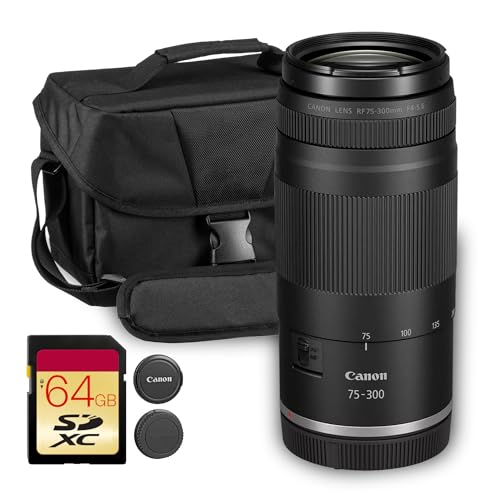
- Autofocus 75-300mm zoom for Canon RF cameras
- Lightweight design with f/4-5.6 aperture
- Includes bag and 64GB memory card
Best For: Travel, portraits, sports, and everyday distant subjects
Budget Canon Reach

- 75-300mm zoom range
- Autofocus for Canon EF SLR cameras
- 90-day limited warranty
Best For: Budget-conscious Canon SLR photographers
Best Heavy-Duty Pick

- 420-800mm super-telephoto range
- Manual focus with no image stabilization
- Metal body and two-year warranty
Best For: Tripod-using Canon DSLR photographers
Classic Canon Zoom

- 75-300mm 4x zoom range
- Autofocus for Canon EF-mount SLRs
- Compact 16.8-ounce listed weight
Best For: Canon DSLR users shooting in good light
Maximum Reach Pick – Canon RF 200-800mm IS USM
For photographers seeking telephoto camera lenses for photographers who need serious reach, the Canon RF 200-800mm f/6.3-9 IS USM stands out with an unusually broad super-telephoto zoom range. Its optical image stabilization, USM autofocus, and Canon RF mount make it a practical option for wildlife, birding, and sports with compatible EOS R-series cameras.
Best For: Wildlife, birding, sports, and outdoor photographers who need up to 800mm reach.
Pros:
- 200-800mm zoom range provides exceptional framing flexibility.
- Built-in optical image stabilization supports handheld shooting.
- USM autofocus is designed for quiet, quick focusing on moving subjects.
- Includes a 64GB SDXC memory card in the bundle.
Cons:
- Maximum aperture ranges from f/6.3 to f/9, limiting light-gathering ability.
- Compatible with Canon RF cameras rather than EF or Nikon F systems.
- Not listed as water resistant.
This is the strongest choice here for photographers who value maximum native RF reach and stabilization. Its relatively slow aperture makes bright outdoor conditions especially important.
Accessible RF Zoom – Canon RF 75-300mm Telephoto Zoom
Canon RF75-300mm F4-5.6, Telephoto Zoom Lens, Compatible with EOS R Series Mirrorless Cameras, Black
Check Price On AmazonThe Canon RF75-300mm f/4-5.6 is an approachable option for photographers comparing telephoto camera lenses for photographers using Canon RF mirrorless cameras. It offers useful reach in a portable 1.1-pound design, with Servo AF and pupil detection support for subjects such as sports, wildlife, and events.
Best For: Canon RF users who want an affordable, portable telephoto zoom for everyday outdoor shooting.
Pros:
- 75-300mm range covers portraits, sports, and wildlife scenarios.
- Provides approximately 120-480mm equivalent framing on APS-C bodies.
- Servo AF and pupil detection help track subjects at long focal lengths.
- Lightweight design is easier to carry on outings.
Cons:
- Does not include image stabilization.
- Maximum aperture narrows to f/5.6 at the long end.
- Not listed as water resistant.
This lens balances reach, portability, and accessibility for RF shooters. Plan to use faster shutter speeds, strong light, or a steady support because stabilization is not built in.
Extreme Manual Reach – JINTU 420-1600mm Manual Zoom
The JINTU 420-1600mm is a specialized choice among telephoto camera lenses for photographers who prioritize extreme focal-length reach over automation. It combines a 420-800mm manual-focus zoom with a 2X teleconverter and adapters for Canon EF/EF-S and Nikon F SLR cameras.
Best For: Experienced manual-focus users photographing the moon, distant wildlife, birds, airplanes, and landscapes.
Pros:
- 420-800mm range can extend to 1600mm with the included 2X teleconverter.
- Adapters support selected Canon EF/EF-S and Nikon F cameras.
- Metal construction and multi-coated low-dispersion glass elements.
- Includes pouch, caps, hood, cleaning cloth, and user manual.
Cons:
- Manual focus only; there is no autofocus or image stabilization.
- Requires manual exposure operation and may display F00 on the camera.
- F/8.3-16 aperture range demands careful technique and adequate light.
This lens offers remarkable listed reach at the cost of convenience. It is best suited to patient photographers comfortable focusing and exposing manually rather than fast-moving action shooters.
Classic DSLR Value – Canon EF 75-300mm III
The Canon EF 75-300mm f/4-5.6 III is a straightforward DSLR telephoto zoom for photographers evaluating telephoto camera lenses for photographers with Canon EF bodies. Its four-times zoom range reaches 300mm, making it useful for bringing distant subjects closer in outdoor, sports, and portrait work.
Best For: Canon DSLR owners seeking a simple, lightweight telephoto zoom for general outdoor photography.
Pros:
- 75-300mm focal-length range supports varied telephoto compositions.
- Autofocus provides simpler operation than manual-focus alternatives.
- At 1.1 pounds, it is relatively portable for a telephoto zoom.
- Super Spectra coating is included in the optical design.
Cons:
- No image stabilization.
- Maximum aperture ranges from f/4 to f/5.6.
- Minimum focusing distance is 1.5m/4.9ft.
This is a basic, familiar option for compatible Canon EF DSLR users who want affordable telephoto reach. Its lack of stabilization and modest aperture favor daylight shooting or support from a tripod or other steady position.
Best for Easy Setup – Big Mike's 500mm/1000mm Manual Telephoto Lens
For photographers seeking telephoto camera lenses for photographers using Canon EF-mount DSLRs, this manual-focus 500mm lens offers substantial reach at f/8. Its included 2x teleconverter extends the stated focal length to 1000mm, making it suited to distant subjects when you are comfortable managing focus and exposure manually.
Best For: Canon DSLR users photographing wildlife, distant landscapes, or celestial subjects from a stable shooting position.
Pros:
- 500mm focal length can extend to 1000mm with the included 2x teleconverter.
- Multi-coated, low-dispersion optical glass is designed to support clear, sharp images.
- Manual focus and aperture provide direct control over focusing and exposure.
- Durable construction and a one-year warranty support outdoor use.
Cons:
- Manual focusing may be demanding for fast-moving subjects.
- Its fixed f/8 aperture can require careful attention to available light.
- It is not water resistant.
This is a specialized long-reach option rather than an all-purpose lens. Choose it when maximum magnification and manual control matter more than autofocus convenience.
Everyday Versatility – Canon RF 75-300mm Compact Telephoto Zoom
Among telephoto camera lenses for photographers using Canon RF mirrorless cameras, this 75-300mm zoom balances reach with portability. Autofocus, a variable f/4-5.6 aperture, and a lightweight design make it a practical choice for travel, portraits, sports, wildlife, and everyday distant subjects.
Best For: Canon RF-mount mirrorless users who want a compact, autofocus telephoto for travel and general-purpose shooting.
Pros:
- 75-300mm range provides flexible framing for distant subjects.
- Autofocus supports automatic AF-A and continuous-servo AF-C modes.
- Super Spectra Coating helps reduce flare and ghosting.
- 4.9-foot minimum focus distance and 0.25x magnification support semi-macro work.
Cons:
- The variable f/4-5.6 aperture becomes narrower at the long end.
- The lens is compatible with Canon RF-mount cameras, not the Canon EF DSLR mount.
- The supplied bundle’s 64GB memory card is listed as microSDXC-compatible, so verify device compatibility before use.
For RF users who value convenience, this lens offers a broad focal-length range without the weight of a larger super-telephoto. Its close-focusing ability also adds useful flexibility beyond traditional distant-subject photography.
Extreme Distance – Big Mike's 420-1600mm Manual Telephoto Zoom
Photographers comparing telephoto camera lenses for photographers who need extreme reach may find this manual Canon EF-mount zoom appealing. It covers 420-800mm natively and uses a 2x teleconverter to reach the stated 1600mm maximum, giving distant wildlife, sports, landscapes, and celestial subjects a very narrow-angle perspective.
Best For: Canon DSLR photographers prioritizing maximum focal length and willing to use manual focusing and exposure controls.
Pros:
- 420-800mm zoom range extends to a stated 1600mm with the 2x teleconverter.
- Manual controls allow deliberate focus and exposure adjustments.
- HD coating is designed to support image clarity.
- Compatible with a broad range of listed Canon EF-mount DSLR bodies.
Cons:
- Manual focus is less convenient for moving subjects.
- The f/8.3 maximum aperture can limit low-light flexibility.
- It is not water resistant.
This lens is best viewed as a reach-first tool for specialized shooting. Its impressive focal-length potential comes with the need for careful technique, steady support, and patience when composing distant subjects.
Budget Canon Reach – EF 75-300mm III Renewed
Canon EF 75-300mm f/4-5.6 III Telephoto Zoom Lens for Canon SLR Cameras, 6473A003 (Renewed)
Check Price On AmazonFor photographers seeking telephoto camera lenses for photographers on a budget, this renewed Canon EF 75-300mm f/4-5.6 III offers flexible reach for everyday distant subjects. Its Canon EF mount, autofocus, and 4:1 zoom range make it a practical fit for compatible Canon SLR cameras.
Best For: Canon SLR owners who want an affordable autofocus zoom for general telephoto photography.
Pros:
- 75-300mm zoom range covers a useful variety of distant subjects.
- DC autofocus motor supports convenient automatic focusing.
- 4.9-foot minimum focus distance and 58mm filter thread add everyday versatility.
- Renewed model includes a 90-day limited warranty.
Cons:
- No weather resistance.
- The maximum aperture reaches f/5.6 at the long end.
- Renewed condition may not suit buyers seeking a new lens.
This lens is a straightforward choice when reach, autofocus, and low cost matter more than advanced stabilization or a bright aperture. Confirm that your camera uses the Canon EF mount before buying.
Best Heavy-Duty Pick – JINTU 420-800mm
Among telephoto camera lenses for photographers, the JINTU 420-800mm stands out for its unusually long reach and manual-control design. It is aimed at Canon EOS DSLR users photographing distant wildlife, sports, aircraft, or celestial subjects, but its slow aperture and lack of stabilization call for careful technique.
Best For: Experienced Canon DSLR photographers who need maximum reach and are comfortable focusing manually with a tripod.
Pros:
- 420-800mm range is suited to very distant subjects.
- Full metal body and multi-coated low-dispersion glass elements provide a solid build and coated optics.
- Manual focusing allows direct control over focus placement.
- Includes a carry bag, lens cap, cleaning kit, and two-year warranty.
Cons:
- No autofocus or image stabilization.
- Fixed aperture control is unavailable, according to the supplied notes.
- The f/8.3 maximum aperture and roughly 1.8-pound weight make tripod use advisable.
This is a specialist lens rather than an easy all-purpose zoom. Its extreme focal-length range can be valuable for distant subjects, but buyers should be prepared for manual focusing, limited light-gathering ability, and tripod-based shooting.
Classic Canon Zoom – EF 75-300mm III
This Canon EF 75-300mm f/4-5.6 III is a simple option for photographers comparing telephoto camera lenses for photographers who want familiar Canon compatibility and autofocus. The 4x zoom provides flexible framing for compatible Canon EF-mount SLR cameras without adding image stabilization.
Best For: Canon EF-mount DSLR users who want a conventional autofocus telephoto zoom for general shooting.
Pros:
- 75-300mm focal-length range provides useful telephoto flexibility.
- Autofocus supports straightforward operation.
- 4.9-foot closest focusing distance works for relatively near subjects as well as distant ones.
- Compact 4.8-inch length and 16.8-ounce listed weight make it comparatively manageable.
Cons:
- No image stabilization.
- Maximum aperture is f/4-5.6, limiting light-gathering ability compared with brighter lenses.
- Not water resistant.
Choose this model for a basic, recognizable Canon telephoto setup with autofocus and a broad zoom range. It is best suited to well-lit conditions and cameras that already support the Canon EF mount.
How We Picked These Telephoto Camera Lenses for Photographers
We selected these lenses to represent several common buying paths: native Canon RF mirrorless options, Canon EF lenses for DSLR bodies, compact 75-300mm zooms, and extreme-reach manual-focus models. We considered focal-length range, mount compatibility, focusing system, stabilization, maximum aperture, portability, and likely use cases such as wildlife, sports, travel, and beginner photography.
Because the list includes both modern autofocus lenses and inexpensive manual designs, specifications should not be compared by zoom range alone. A longer lens may require a tripod, bright conditions, careful focusing, and realistic expectations about image quality.
Quick Comparison
| Lens Type | Best For | Main Advantage | Main Trade-Off |
|---|---|---|---|
| RF 200-800mm zoom | Wildlife and distant subjects | Very long reach with native RF compatibility | Large size and modest maximum aperture |
| RF or EF 75-300mm zoom | Beginners, travel, and outdoor events | Affordable, flexible framing | Limited reach and varying autofocus or stabilization features |
| 420-1600mm manual zoom | Stationary distant subjects | Exceptional stated focal-length range | Manual focus, narrow aperture, and demanding technique |
| 500mm/1000mm manual lens | Budget experimentation | Long focal length at a low entry price | Slow operation and limited versatility |
Key Buying Factors for Telephoto Camera Lenses for Photographers
Mount and Camera Compatibility
RF lenses are designed for Canon EOS R-series mirrorless cameras, while EF lenses fit Canon DSLR bodies and may require an appropriate adapter on RF cameras. Check the exact mount before ordering. A listing that mentions several camera models may still require an adapter or may use a third-party mount.
Reach, Aperture, and Light
Longer focal lengths magnify distant subjects but also magnify camera shake. An f/4-5.6 lens is generally easier to use for moving subjects than an f/8 or f/8.3 manual lens, especially in shade or at dusk. For wildlife and sports, shutter speed is often more important than maximum zoom.
Autofocus, Stabilization, and Handling
Autofocus helps track birds, athletes, and unpredictable action. Image stabilization can make handheld shooting easier, but it does not freeze subject movement. Extremely long lenses are often best supported with a monopod or tripod, particularly when using manual focus.
Realistic Image Quality
Compare independent test results, sample images, and return policies when possible. Budget and renewed lenses can be useful, but inspect condition, included accessories, focusing behavior, and warranty coverage before committing.
Who Should Buy Which Telephoto Camera Lenses for Photographers?
Choose the Canon RF 200-800mm option if you use an EOS R-series body and prioritize wildlife reach. Select an RF or EF 75-300mm lens for an affordable, versatile introduction to telephoto photography, matching the version to your camera system. Consider the manual 420-1600mm, 420-800mm, or 500mm/1000mm options only if you are comfortable focusing manually and mainly photograph distant, relatively predictable subjects. Renewed or standard Canon EF 75-300mm models can make sense for DSLR owners seeking a familiar, budget-friendly starting point.