
The right telephoto lens can make distant subjects feel close without overwhelming a new photographer. This roundup covers approachable options for Nikon and Canon DSLRs, Canon and Sony mirrorless systems, and even compatible smartphones.
We focused on practical reach, autofocus or stabilization where available, system compatibility, portability, and value. Whether you are photographing wildlife, youth sports, travel details, or the moon, these lenses offer different ways to get started.
Best 10 Beginner-Friendly Telephoto Camera Lenses Picks for 2026
Best Refurbished Value

- 55-300mm range for flexible telephoto shooting
- Autofocus and VR II optical stabilization
- Certified refurbished with a 90-day limited warranty
Best For: Nikon DSLR beginners seeking an affordable, versatile zoom
Best Lightweight Sony Starter

- Portable 1.2-pound telephoto zoom
- 70-300mm range with close-focusing ability
- Moisture-resistant build and six-year warranty
Best For: Sony mirrorless beginners prioritizing portability
Best Canon RF Reach

- Long 100-400mm zoom range
- Up to 5.5 stops of optical stabilization
- Quiet, smooth Nano USM autofocus
Best For: Canon EOS R users needing stabilized long-range reach
Best APS-C Sony Upgrade
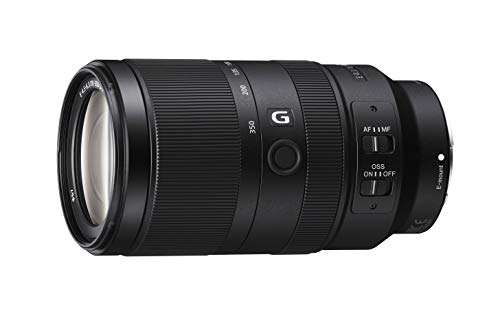
- 70-350mm range with 5x zoom
- Lightweight 22-ounce design
- Optical stabilization and quiet tracking autofocus
Best For: Sony APS-C beginners wanting reach in a manageable lens
Budget Canon Classic

- 75-300mm 4:1 telephoto zoom
- Autofocus for Canon EF SLR cameras
- Renewed with 90-day limited warranty
Best For: Canon SLR beginners seeking affordable telephoto reach
Easy Smartphone Reach

- 28x magnification for distant subjects
- Universal smartphone clip compatibility
- Manual-focus lens also works as a monocular
Best For: Mobile photographers and travelers wanting portable reach
Modern Mirrorless Zoom

- 75-300mm telephoto zoom for Canon RF
- Servo AF and pupil detection
- Approximately 120-480mm equivalent on APS-C
Best For: Canon EOS R beginners shooting sports and wildlife
Best Compact RF Reach
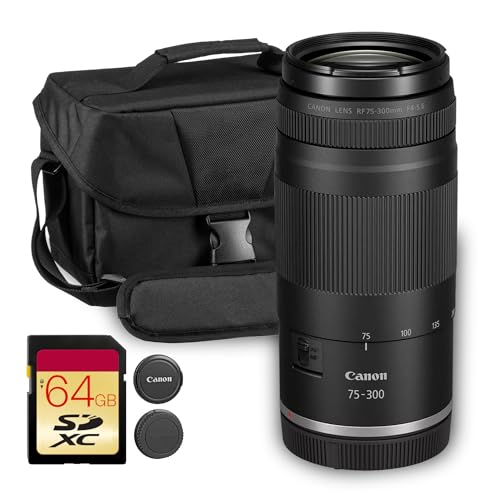
- Lightweight 75-300mm autofocus zoom
- Up to 480mm equivalent on APS-C
- Includes bag and 64GB memory card
Best For: Canon RF beginners who want portable reach
Best Straightforward DSLR Zoom

- Autofocus 75-300mm telephoto zoom
- 4x range for portraits and outdoor subjects
- Super Spectra Coating and seven-blade diaphragm
Best For: Canon EF DSLR beginners seeking a conventional telephoto zoom
Best Refurbished Value – Nikon 55-300mm VR Zoom
For Nikon DSLR owners seeking beginner-friendly telephoto camera lenses, this refurbished Nikon zoom offers a useful 55-300mm range, autofocus, and optical vibration reduction. Its broad focal-length range suits everyday telephoto practice without requiring a fixed focal-length lens.
Best For: Nikon DSLR beginners who want an affordable, versatile telephoto zoom.
Pros:
- 5.5x zoom range from 55-300mm
- Autofocus with Nikon Silent Wave Motor
- VR II image stabilization with tripod detection mode
- Includes original accessories and a 90-day limited warranty as a certified refurbished product
Cons:
- Compatible with Nikon F-mount DSLR cameras rather than mirrorless systems
- Not water resistant
- Refurbished condition may show limited wear
This is a practical starter telephoto for Nikon DSLR users who value reach, autofocus convenience, and stabilization. Verify F-mount compatibility and refurbished-product expectations before buying.
Best Lightweight Sony Starter – Tamron 70-300mm RXD
The Tamron 70-300mm is one of the more approachable beginner-friendly telephoto camera lenses for Sony E-mount users who prioritize portability. It combines a useful telephoto range, autofocus/manual focus control, close-focusing capability, and moisture-resistant construction.
Best For: Sony mirrorless beginners who want a lightweight lens for telephoto and occasional close-up work.
Pros:
- Lightweight design at 1.2 pounds
- 70-300mm zoom range for flexible framing
- Close-focusing performance reaches 1:5.1 magnification at the telephoto end
- Moisture-resistant construction and six-year manufacturer warranty
Cons:
- No built-in image stabilization
- Compatible with Sony E-mount mirrorless cameras only
- Maximum aperture is relatively limited at f/4.5-6.3
Its low weight and straightforward 70-300mm range make this a sensible entry point for Sony users. Because stabilization is not built in, consider your camera body’s stabilization features and shooting conditions.
Best Canon RF Reach – Canon RF100-400mm IS USM
For Canon EOS R users comparing beginner-friendly telephoto camera lenses, this RF 100-400mm zoom provides substantial reach in a compact telephoto design. Optical stabilization, quiet Nano USM autofocus, and useful close-focusing capability make it approachable for wildlife, sports, and distant subjects.
Best For: Canon EOS R-series users who want long reach with stabilization and fast, quiet autofocus.
Pros:
- Versatile 100-400mm telephoto zoom range
- Optical image stabilization provides up to 5.5 stops of correction
- Up to 6 stops when paired with compatible EOS R cameras featuring IBIS
- Nano USM supports smooth, quiet autofocus
Cons:
- Compatible with Canon RF mirrorless cameras rather than DSLR systems
- At 816g, it is heavier than the lightest options in this roundup
- Not water resistant
This lens is a strong beginner-friendly choice when extra reach matters, especially with a stabilized EOS R body. Confirm that your camera uses the Canon RF mount before purchasing.
Best APS-C Sony Upgrade – Sony E 70-350mm G OSS
The Sony E 70-350mm G OSS is a capable option among beginner-friendly telephoto camera lenses for Sony APS-C cameras. Its 5x zoom, optical stabilization, quiet XD Linear Motor autofocus, and 22-ounce body create a manageable setup for learning telephoto composition and subject tracking.
Best For: Sony APS-C beginners who want lightweight handling, extended reach, and responsive autofocus.
Pros:
- 5x 70-350mm super-telephoto zoom
- Lightweight 22-ounce design
- Optical SteadyShot image stabilization
- XD Linear Motor provides fast, precise, quiet autofocus and tracking
Cons:
- Compatible with Sony APS-C E-mount cameras only
- Maximum aperture reaches f/6.3 at the long end
- Not suitable for full-frame Sony cameras according to the supplied compatibility details
This is an appealing choice for Sony APS-C photographers who want more reach without a bulky lens. Its stabilization and tracking-focused autofocus make it especially practical for moving subjects and handheld shooting.
Budget Canon Classic – Canon EF 75-300mm III
Canon EF 75-300mm f/4-5.6 III Telephoto Zoom Lens for Canon SLR Cameras, 6473A003 (Renewed)
Check Price On AmazonThe Canon EF 75-300mm f/4-5.6 III is a practical entry point for photographers seeking beginner-friendly telephoto camera lenses for Canon SLR cameras. Its 4:1 zoom range reaches from 75mm to 300mm, providing useful flexibility for distant subjects, while the renewed version offers a 90-day limited warranty.
Best For: Canon SLR owners who want an affordable, straightforward telephoto zoom for learning and general outdoor photography.
Pros:
- 75-300mm zoom range helps frame subjects at varying distances.
- Canon EF mount and autofocus motor support simple operation with compatible SLR cameras.
- Compact 4.8-inch length and 16.8-ounce listed weight make it relatively portable.
Cons:
- Compatible with Canon EF SLR cameras, not Canon RF mirrorless cameras.
- No weather resistance is listed.
- The 4.9-foot minimum focus distance limits close-up shooting.
This renewed Canon lens is most appealing when affordability and reach matter more than advanced features. Check your camera’s mount and the renewed condition before buying.
Easy Smartphone Reach – MIAO LAB 28X Telephoto
The MIAO LAB 28X HD Telephoto Lens is designed for beginners who want beginner-friendly telephoto camera lenses without carrying a dedicated camera. Its universal clip is compatible with many iPhone, Samsung, and other Android phones, and the manual-focus design also lets it function as a monocular.
Best For: Smartphone users photographing concerts, sports, wildlife, travel scenes, and other distant subjects.
Pros:
- 28x magnification provides substantial reach for distant subjects.
- Universal clip supports iPhone, Samsung, Huawei, Xiaomi, OPPO, Vivo, and most other smartphones.
- Compact design and monocular function add portability and versatility.
- Field-of-view ring is designed to reduce edge darkening.
Cons:
- Manual focus requires more hands-on adjustment than autofocus lenses.
- Image results and edge-darkening performance may vary by phone model.
- The clip-on design requires careful alignment with the smartphone camera.
This is a convenient option for casual long-distance viewing and mobile photography. It is best suited to users comfortable with manual focusing and realistic about clip-on lens limitations.
Modern Mirrorless Zoom – Canon RF75-300mm
Canon RF75-300mm F4-5.6, Telephoto Zoom Lens, Compatible with EOS R Series Mirrorless Cameras, Black
Check Price On AmazonThe Canon RF75-300mm F4-5.6 offers a beginner-friendly telephoto camera lens option for Canon EOS R-series mirrorless users. Its 75-300mm range delivers substantial subject reach, while Servo AF and pupil detection are designed to keep tracking and focusing at longer focal lengths.
Best For: Canon RF mirrorless beginners photographing sports, wildlife, travel, and other subjects that are difficult to approach.
Pros:
- 75-300mm range provides flexible telephoto framing.
- Servo AF and pupil detection support subject tracking at maximum telephoto.
- On APS-C Canon bodies, the listed equivalent range is approximately 120-480mm.
- Portable and lightweight for a zoom lens in this range, with a one-year manufacturer warranty.
Cons:
- No image stabilization is listed.
- Designed for Canon RF mirrorless cameras and is not an EF SLR lens.
- The f/4-5.6 maximum aperture becomes narrower toward the long end.
This lens is a sensible match for Canon EOS R owners who want accessible telephoto reach and modern autofocus features. Confirm RF compatibility and consider your shooting conditions because image stabilization is not included.
Best Compact RF Reach – Canon RF 75-300mm Bundle
For photographers seeking beginner-friendly telephoto camera lenses for a Canon RF mirrorless camera, this 75-300mm zoom offers useful reach without an especially bulky setup. Its autofocus, compact design, and included camera bag make it a practical choice for learning sports, wildlife, portraits, and distant-subject photography.
Best For: Canon RF users who want a lightweight, versatile telephoto zoom for travel, everyday shooting, and beginner wildlife or sports photography.
Pros:
- 75-300mm range, equivalent to 120-480mm on APS-C cameras.
- Autofocus support and a lightweight design of about 16 ounces.
- 4.9-foot minimum focus distance, 0.25x magnification, and seven-blade diaphragm.
- Bundle includes a camera bag and 64GB memory card.
Cons:
- Variable f/4-5.6 aperture becomes narrower at the long end.
- Designed for Canon RF mount, so it is not a general-purpose lens for other systems.
This is the most approachable option here for Canon RF beginners who value portability and autofocus. The 4x zoom range provides flexibility, while the included accessories make the bundle ready for casual shooting.
Extreme Long-Reach Option – BM Premium 420-1600mm Manual Lens
This BM Premium lens offers extraordinary stated reach for Canon EF and EF-S DSLR users, but it is a specialized choice rather than one of the easiest beginner-friendly telephoto camera lenses. Its manual focus, f/8.3 aperture, and lack of image stabilization require careful technique and realistic expectations.
Best For: Experienced or highly patient Canon DSLR users exploring manual-focus wildlife, distant landscapes, or celestial subjects from a fixed position.
Pros:
- 420-800mm range with a supplied 2x teleconverter for stated reach up to 1600mm.
- Compatible with a broad range of Canon EF and EF-S DSLR cameras.
- Includes HD coating and a 62mm filter thread.
Cons:
- Manual focus only, with no image stabilization.
- f/8.3 maximum aperture can make focusing and handheld shooting challenging.
- Its extreme reach and specialized operation are less forgiving for beginners.
The impressive focal-length claim is the main attraction, but this lens demands more involvement than a conventional autofocus zoom. Consider it only if manual operation and a narrow aperture fit your shooting style.
Best Straightforward DSLR Zoom – Canon EF 75-300mm III
For Canon DSLR owners comparing beginner-friendly telephoto camera lenses, the EF 75-300mm III is a familiar, straightforward zoom with autofocus and a useful 4x range. It can cover portraits, outdoor subjects, and general telephoto work without the complexity of an extreme manual lens.
Best For: Canon EF DSLR beginners who want an affordable-style, conventional telephoto zoom for everyday distant subjects and casual outdoor photography.
Pros:
- Versatile 75-300mm focal-length range with 4x zoom ratio.
- Autofocus support and automatic exposure control.
- Super Spectra Coating and a seven-blade diaphragm.
- 4.9-foot closest focusing distance.
Cons:
- No image stabilization.
- Variable f/4-5.6 aperture limits light-gathering flexibility.
- Compatible with Canon EF mount DSLR cameras rather than RF mirrorless cameras.
This lens is a sensible entry point for Canon DSLR users who want familiar autofocus operation and useful reach. Its lack of stabilization means beginners may need to pay closer attention to shutter speed and camera steadiness.
How We Picked These Beginner-Friendly Telephoto Camera Lenses
We selected lenses across several camera systems and budgets, prioritizing useful focal-length ranges, straightforward operation, and realistic entry points for new photographers. The list includes native mirrorless lenses, older DSLR-compatible zooms, renewed models, a manual super-telephoto option, and a smartphone attachment.
We also considered features that reduce the learning curve, including autofocus, optical or in-body stabilization support, manageable size, and compatibility with commonly owned cameras. Because no single lens suits every photographer, system fit and intended subject matter matter as much as maximum zoom.
Quick Comparison
| Best For | Useful Range | Camera Type | Key Consideration |
|---|---|---|---|
| Everyday wildlife and travel | 55–300mm or 70–300mm | DSLR or mirrorless | Good balance of reach and portability |
| More distant subjects | 100–400mm | Full-frame mirrorless | Greater reach, often with a slower maximum aperture |
| APS-C wildlife and sports | 70–350mm | Sony E-mount | Long effective reach in a compact design |
| Lowest-cost DSLR upgrade | 75–300mm | Canon EF or Nikon DSLR | Check autofocus and stabilization expectations |
| Smartphone experimentation | Approx. 28x | Compatible phone | Alignment and image stability are critical |
Key Buying Factors for Beginner-Friendly Telephoto Camera Lenses
Compatibility Comes First
Match the mount exactly: Canon RF lenses fit EOS R mirrorless cameras, Canon EF lenses fit compatible Canon DSLRs, Sony E lenses fit Sony E-mount cameras, and Nikon DX lenses are intended for Nikon DSLR systems. An adapter may expand compatibility, but it can affect autofocus, stabilization, or handling.
Focal Length and Crop Factor
A 70–300mm zoom is versatile for portraits, travel, animals, and outdoor sports. APS-C cameras provide a narrower field of view that makes subjects appear more tightly framed, but the lens does not physically gain magnification. A 400mm lens helps when subjects remain far away, while a 75–300mm model is usually easier to carry and less expensive.
Autofocus, Stabilization, and Aperture
Autofocus is especially valuable for moving subjects. Optical or in-body stabilization helps reduce camera shake, although it cannot freeze a moving animal or athlete. Telephoto lenses often become slower as you zoom in, so bright daylight is easier than indoor or evening shooting. Raise ISO when needed, and use a faster shutter speed for action.
Weight and Manual-Focus Demands
Large super-telephoto lenses can be difficult to steady and may require a tripod or monopod. Manual-focus models can deliver extreme reach at a low price, but they demand more practice and are less forgiving for fast-moving subjects.
Who Should Buy Which Beginner-Friendly Telephoto Camera Lenses?
Choose a native mirrorless lens if you want the smoothest autofocus and simplest setup for a current Canon or Sony camera. DSLR owners seeking an affordable first telephoto should consider a 55–300mm or 75–300mm zoom, while photographers who regularly shoot distant wildlife may prefer a 100–400mm or 70–350mm option.
A renewed or older lens can be a sensible budget choice when condition and return coverage are acceptable. Smartphone users should treat a clip-on telephoto as an occasional accessory rather than a replacement for a dedicated camera lens. For most beginners, a stabilized autofocus zoom with a 70–300mm-style range offers the best combination of reach, flexibility, and learning potential.