
If you’re passionate about wildlife photography, 2025 brings an exciting selection of telephoto lenses that can elevate your skills. From Canon’s impressive RF200-800mm to Sony’s versatile FE 200-600mm, there’s something for every photographer. Whether you prioritize zoom capabilities or budget-friendly options, these lenses promise to enhance your outdoor adventures. Ready to discover which lenses made the top of the list? Let’s explore the choices that could transform your photography experience.
Canon RF200-800mm Super-telephoto Zoom Lens

If you’re passionate about wildlife photography and want a versatile lens that covers a broad zoom range, the Canon RF200-800mm Super-telephoto Zoom Lens is an excellent choice. Weighing around 4.5 pounds, it’s lightweight and compact, making handheld shooting easy. With an impressive zoom range from 200mm to 800mm, you’ll capture stunning details of distant subjects. Its fast autofocus and up to 5.5 stops of image stabilization guarantee sharp images in various conditions. Whether you’re shooting birds in flight or outdoor sports, this lens delivers exceptional quality, making it a valuable addition to your photography gear.
Best For: Wildlife enthusiasts and outdoor photographers seeking a versatile and high-quality super-telephoto lens.
Pros:
- Excellent image quality with optimized optical design across the zoom range.
- Fast autofocus and image stabilization of up to 5.5 stops, ensuring sharp images even in challenging conditions.
- Lightweight and compact design facilitates comfortable handheld shooting, ideal for capturing dynamic subjects.
Cons:
- Maximum aperture of F6.3 to F9 may limit performance in low-light situations.
- Weight of approximately 4.5 pounds may require support for extended use, such as a tripod or monopod.
- Limited to mirrorless camera systems, which may restrict compatibility for some photographers.
Canon RF 200-800mm f/6.3-9 is USM Lens (6263C002) + 64GB Memory Card
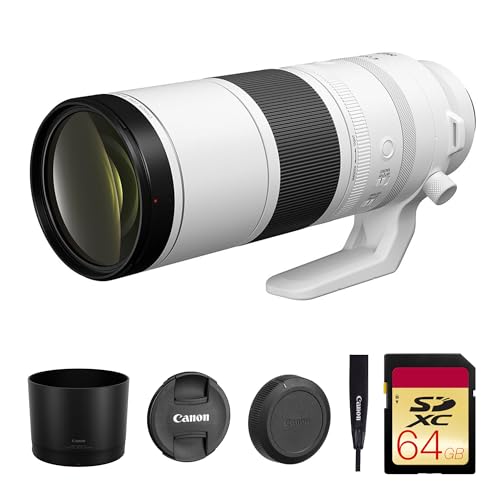
The Canon RF 200-800mm f/6.3-9 IS USM Lens is an exceptional choice for wildlife photographers seeking to capture distant subjects with stunning clarity. With its impressive zoom range, you can easily frame subjects from 200mm to 800mm. The built-in image stabilization guarantees your shots remain shake-free, even at full zoom. Plus, the fast USM autofocus system locks onto fast-moving wildlife, giving you sharp focus every time. Weighing just 7 pounds, it’s lightweight and portable for your outdoor adventures. Included is a 64GB Extreme PRO memory card, perfect for storing all your incredible shots without worry.
Best For: Wildlife photographers and outdoor enthusiasts looking for a high-quality, versatile zoom lens to capture distant subjects with precision and clarity.
Pros:
- Exceptional zoom range from 200mm to 800mm, ideal for wildlife and sports photography.
- Built-in image stabilization helps to ensure sharp images, even at maximum zoom.
- Fast USM autofocus system quickly locks onto moving subjects for accurate focus.
Cons:
- Weighing 7 pounds, it may be cumbersome for some users during extended use.
- The maximum aperture of f/6.3-9 may limit performance in low-light conditions.
- Higher price point compared to standard zoom lenses may not suit all budgets.
APEXEL 50x Telephoto Lens for iPhone & Android Phones

For wildlife enthusiasts looking to capture stunning images from afar, the APEXEL 50x Telephoto Lens is a game changer. Compatible with most iPhone and Android models, this lens offers an impressive 50x optical zoom, equivalent to a 1200 mm focal length. With its durable aircraft-grade aluminum build and lightweight design, it’s perfect for hikes or camping trips. The included tripod enhances stability, minimizing hand shake for clearer shots. Users rave about its vibrant results, especially in low-light conditions, thanks to improved light transmission. Whether bird watching or photographing the moon, this lens elevates your smartphone photography to new heights.
Best For: Wildlife enthusiasts and outdoor photographers seeking to capture distant subjects with their smartphones.
Pros:
- High Magnification: Offers a 50x optical zoom, equivalent to a 1200 mm focal length for detailed shots.
- Durable Construction: Made from aircraft-grade aluminum, ensuring long-lasting use in various outdoor conditions.
- Improved Low-Light Performance: Enhanced light transmission provides vibrant images even in challenging lighting situations.
Cons:
- Weight: At 3.25 pounds, it may be heavier compared to other smartphone lenses, potentially affecting portability.
- Limited Compatibility: Not compatible with mini or older iPhone models (4 to 8).
- Requires Tripod for Stability: Users may experience shaking during handheld shooting, necessitating the use of the included tripod for optimal results.
APEXEL 30x HD Telephoto Lens for Smartphones

Photographers seeking to capture stunning wildlife shots from a distance will find the APEXEL 30x HD Telephoto Lens for smartphones an invaluable tool. This lens features a universal clip and tripod mount, giving you stability while shooting. With its 7-element, 10-glass design, you’ll enjoy razor-sharp images even from 8000 meters away. The Quick-Switch Focus Ring allows for real-time zoom control, making it perfect for bird watching and hiking. Compatible with many smartphone models, including the latest iPhones and Samsung devices, it’s a fantastic gift for any photography enthusiast looking to elevate their outdoor photography game.
Best For: Photography enthusiasts and outdoor adventurers who want to capture stunning wildlife shots from a distance.
Pros:
- High-quality 7-element, 10-glass design for razor-sharp images.
- Quick-Switch Focus Ring for real-time zoom control.
- Compatible with a wide range of smartphones, making it versatile for different users.
Cons:
- May require a steady hand or tripod for optimal results at longer distances.
- Bulkier than standard smartphone lenses, which could affect portability.
- Some users may find the learning curve steep for mastering focus adjustments.
Sony FE 200-600mm F5.6-6.3 G OSS Super Telephoto Zoom Lens (SEL200600G)
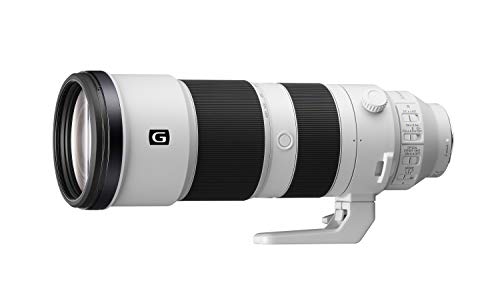
Exceptional versatility in wildlife photography defines the Sony FE 200-600mm F5.6-6.3 G OSS Super Telephoto Zoom Lens (SEL200600G). Weighing in at 4.66 pounds, this lens offers remarkable optical performance with sharp resolution across its zoom range. Its direct drive Supersonic Wave Motor guarantees quick and quiet autofocus, especially effective with Sony A1 and A7R cameras. With three image stabilization modes, you can adapt to various shooting conditions. The internal zoom mechanism maintains balance, while programmable buttons enhance usability. Overall, this lens delivers great value, making it a fantastic choice for capturing stunning wildlife images without breaking the bank.
Best For: Wildlife photographers seeking a high-quality super telephoto zoom lens that offers excellent performance and value.
Pros:
- Exceptional optical performance with sharp resolution throughout the zoom range.
- Fast and quiet autofocus enabled by the direct drive Supersonic Wave Motor.
- Versatile image stabilization with three modes for various shooting conditions.
Cons:
- Heavier than average, which may require tripod use in certain situations.
- Lens hood lacks a locking mechanism, potentially causing inconvenience.
- Some users may need third-party accessories for better tripod compatibility.
High-Power 420-1600mm f/8.3 HD Manual Telephoto Zoom Lens for Canon Cameras
If you’re seeking an affordable option to capture distant wildlife or stunning landscapes, the High-Power 420-1600mm f/8.3 HD Manual Telephoto Zoom Lens for Canon Cameras is an excellent choice. This lens offers a remarkable zoom range, enabling you to photograph subjects from afar. Weighing just 1.7 pounds and compatible with various Canon models, it’s portable and user-friendly. However, keep in mind it requires manual focus and stabilization, so a tripod is recommended. While some users report minor chromatic aberration, the value for money is impressive, especially for those ready to embrace manual photography techniques.
Best For: Photography enthusiasts looking for an affordable manual telephoto zoom lens to capture distant wildlife and landscapes.
Pros:
- Excellent zoom range of 420mm-1600mm, allowing for detailed shots of faraway subjects.
- Lightweight at 1.7 pounds, making it portable and easy to handle.
- Great value for money compared to higher-priced lenses, ideal for hobbyists willing to learn manual techniques.
Cons:
- Lacks autofocus and image stabilization, requiring users to manually focus and stabilize the lens.
- Some reports of build quality issues, including a fragile tripod mount.
- Minor chromatic aberration noted by users, which is common in lenses within this price range.
Nikon AF-S FX NIKKOR 200-500mm Zoom Lens for Nikon DSLR Cameras

For wildlife enthusiasts seeking to capture stunning images from a distance, the Nikon AF-S FX NIKKOR 200-500mm f/5.6E ED Vibration Reduction Zoom Lens stands out as an excellent choice. With a focal length range of 200-500mm, you’ll enjoy incredible versatility for birding and wildlife photography. Its constant f/5.6 aperture and advanced Vibration Reduction system let you shoot in low light with confidence. Weighing about 3.22 pounds, it balances portability with performance. The lens features extra-low dispersion glass for improved contrast and fast, silent autofocus. Plus, it’s compatible with teleconverters, expanding your creative possibilities even further.
Best For: Wildlife photographers and enthusiasts who need a versatile lens for capturing distant subjects with stunning detail.
Pros:
- Excellent sharpness and image quality, even at maximum zoom.
- Advanced Vibration Reduction technology allows for steady shots in low light conditions.
- Compatible with teleconverters for extended focal lengths, enhancing creative options.
Cons:
- Relatively heavy, which may be challenging for prolonged handheld use.
- Constant f/5.6 aperture may limit performance in very low light compared to faster lenses.
- Size may be cumbersome for travel or casual photography.
JINTU Telephoto Lens 420-1600mm for Canon EF SLR Cameras

The JINTU Telephoto Lens 420-1600mm for Canon EF SLR Cameras stands out as an excellent choice for wildlife photographers seeking to capture distant subjects with impressive detail. This manual zoom lens features a focal length of 420-800mm, expandable to 1600mm with a 2X teleconverter. Weighing just 2.2 pounds and built with an aluminum alloy housing, it’s durable and portable. While it excels in bright conditions, be mindful of potential motion blur and chromatic aberration at longer distances. Users appreciate its affordability, though some have faced stabilization issues. Consider using a sturdy tripod for best results, especially in low light.
Best For: Wildlife photographers looking for an affordable telephoto lens to capture distant subjects with impressive detail.
Pros:
- Affordable option for a telephoto lens with a focal length of up to 1600mm.
- Durable aluminum alloy housing and lightweight design make it portable for outdoor use.
- Ideal for capturing images of wildlife and distant subjects in good lighting conditions.
Cons:
- Users may experience motion blur and chromatic aberration at longer focal lengths.
- Stabilization issues reported, necessitating the use of a sturdy tripod for best results.
- Mixed feedback on image quality, especially in low light conditions.
Canon RF 100-500mm Telephoto Zoom Lens (4112C002)

Wildlife enthusiasts looking to capture stunning images from afar will find the Canon RF 100-500mm Telephoto Zoom Lens (4112C002) an exceptional choice. With its impressive zoom range and image stabilization, you can shoot handheld with confidence, even in challenging environments. The fast, silent Dual Nano USM autofocus guarantees you won’t miss a moment, whether for video or stills. Weighing only 5 pounds, it’s portable yet durable, thanks to its weather-sealed design. Plus, you’ll receive all essential accessories, including a lens hood and memory card. This lens truly elevates your wildlife photography experience.
Best For: Wildlife enthusiasts and photographers looking for a high-quality telephoto lens to capture distant subjects with precision and clarity.
Pros:
- Extreme telephoto reach allows for capturing distant wildlife and sports action effortlessly.
- Up to 5 stops of image stabilization enables handheld shooting in various conditions without sacrificing image quality.
- Weather-sealed design ensures durability and reliability in challenging outdoor environments.
Cons:
- Weight of 5 pounds may be cumbersome for extended use without a tripod.
- Maximum aperture of f/7.1 at the longer end limits performance in low-light situations.
- Higher price point compared to other telephoto lenses may not fit all budgets.
Canon RF 200-800mm Super-telephoto Zoom Lens (Renewed)

Capturing stunning wildlife images requires gear that can keep up with fast-moving subjects, and the Canon RF 200-800mm Super-telephoto Zoom Lens (Renewed) is a top choice for outdoor enthusiasts. With a versatile range of 200-800mm and a lightweight design, this lens excels in wildlife, nature, and sports photography. The ultra-quiet Nano USM motor guarantees fast, accurate autofocus, while Optical Image Stabilization allows for handheld shooting with up to 4.5 stops of correction. Customizable controls and Canon’s Super Spectra Coating enhance your shooting experience, producing sharp, vibrant images that showcase nature in all its glory.
Best For: Wildlife photographers and outdoor enthusiasts looking for a versatile lens that can quickly capture fast-moving subjects with high optical quality.
Pros:
- Ultra-quiet Nano USM motor ensures fast and accurate autofocus, ideal for dynamic photography.
- Optical Image Stabilization provides up to 4.5 stops of correction, enhancing handheld shooting capabilities.
- Customizable controls and advanced optical elements improve user experience and image clarity.
Cons:
- Maximum aperture range of f/6.3-9 may limit performance in low-light conditions.
- Weighing 6.06 pounds, the lens may be cumbersome for extended use without a tripod.
- The lens may be more expensive compared to other telephoto options, especially for budget-conscious photographers.
Factors to Consider When Choosing a Telephoto Lens for Wildlife
When choosing a telephoto lens for wildlife photography, you’ll want to take into account several key factors. Focal length, image stabilization, and autofocus performance can make a huge difference in capturing that perfect shot. Additionally, think about weight and optical quality, as these will affect your shooting experience in the field.
Focal Length Range
Choosing the right focal length range for your telephoto lens is essential for successful wildlife photography. A common range of 200mm to 800mm provides versatility, allowing you to capture detailed images from a comfortable distance. If you’re targeting elusive species, longer focal lengths like 600mm to 1600mm let you observe wildlife without disturbing their behavior. For bird photography, consider a lens with at least 400mm, which offers tight framing for birds in flight or perched. Zoom lenses provide flexibility to adjust your composition quickly, while prime lenses excel in image quality. Don’t forget the minimum focus distance; a shorter distance lets you capture stunning close-ups, even with longer focal lengths, enhancing your wildlife photography experience.
Image Stabilization Features
In wildlife photography, the importance of image stabilization features can’t be overstated, especially as you work with longer focal lengths that amplify any camera shake. High-quality telephoto lenses often offer up to 5 stops of image stabilization, which is invaluable for capturing sharp images in low-light conditions or when photographing fast-moving wildlife. Look for lenses with different stabilization modes, like normal, panning, and sports, to adapt to various shooting scenarios. These modes enhance usability and improve focus on dynamic subjects. Effective optical image stabilization technologies not only boost shooting comfort but also allow you to shoot at slower shutter speeds without sacrificing image quality, giving you greater flexibility in capturing stunning wildlife shots.
Autofocus Performance
Autofocus performance is a game-changer in wildlife photography, especially for capturing those fleeting moments when animals are on the move. Fast autofocus systems, like those with direct drive motors, guarantee quick and precise focus adjustments, essential for fast-moving subjects. Lenses equipped with dual nano USM motors provide silent and rapid focusing, minimizing disruption to your subject. Keep in mind that lighting conditions can impact autofocus performance; consequently, choose lenses with advanced low-light capabilities for challenging environments. Customizable focus/control rings and assignable function buttons let you adjust focus settings quickly as scenes unfold. Finally, don’t forget that image stabilization features work hand-in-hand with autofocus, reducing shake and allowing for sharper images at longer focal lengths.
Weight and Portability
When you’re out in the field capturing wildlife, the weight and portability of your telephoto lens can make all the difference. Lighter lenses, typically around 4.5 pounds, are easier to carry during long hikes, allowing you to stay mobile. A compact design enhances your comfort and enables easier handheld shooting in dynamic environments. Ideally, choose a lens under 5 pounds for prolonged use without fatigue, which is essential when tracking moving subjects like birds. Some telephoto lenses even feature external zooming designs that improve weight distribution. As you plan your outdoor shoots, remember that a sturdy yet lightweight lens can provide the durability you need without sacrificing portability, helping you capture stunning wildlife images effortlessly.
Optical Quality Considerations
Optical quality is essential for capturing stunning wildlife images, as it directly influences sharpness, clarity, and color accuracy across different focal lengths. When choosing a telephoto lens, look for high-quality optics that include advanced elements like extra-low dispersion (ED) glass to minimize chromatic aberration and enhance contrast. A robust lens coating, such as Super Spectra or Nano AR, can greatly reduce flare and ghosting, ensuring clearer photos even in challenging light. Pay attention to the aperture range; wider apertures improve performance in low light and create a pleasing depth of field to isolate your subjects. Finally, consider image stabilization features, as they help counteract shake, especially at longer focal lengths, enhancing your handheld shooting experience.