
The best professional handheld light meters help photographers, filmmakers, and technicians measure light more reliably than a camera screen or room-level estimate alone. The right model can simplify exposure decisions, evaluate flash, or verify illuminance in a workspace.
This roundup compares ten options ranging from compact photo meters to advanced flash and spot meters, plus general-purpose lux instruments for practical measurement tasks.
Best 10 Professional Handheld Light Meters Picks for 2026
Compact Exposure Specialist

- Tenth-stop ambient and flash readings
- Photo, Cine, and HD Cine modes
- Pocket-sized 3.52-ounce design
Best For: Photographers and videographers needing portable exposure metering
Illuminance Measurement Value

- 0.1–200,000 lux measurement range
- 180-degree rotating sensor
- Temperature, humidity, MAX/MIN, and hold functions
Best For: Plant, workplace, home, and LED light-level checks
Advanced Flash Control
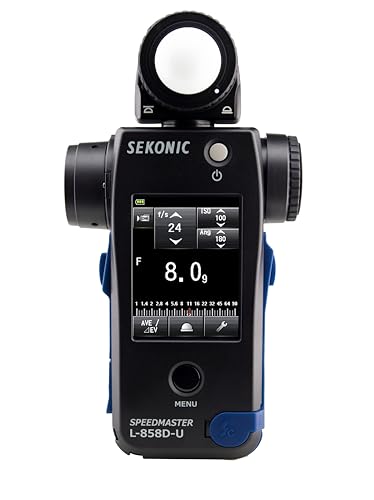
- Built-in 1° spot metering
- Flash-duration and HSS analysis
- Optional radio triggering and power control
Best For: Advanced photographers managing complex flash setups
Simple Illuminance Testing

- Fluke-branded illuminance tester
- Designed for basic light measurement
- Runs on one 9V battery
Best For: General illuminance checks and facility inspection tasks
Professional Pick

- Measures flash duration and very low-light ambient exposure
- Wireless compatibility with Elinchrom, Phottix, and PocketWizard
- Color touchscreen with dust- and splash-proof build
Best For: Advanced photography and filmmaking setups
Color Workflow Choice

- Measures light level, color temperature, chromaticity, and DUV
- Bluetooth app sync with multi-meter support up to 80 feet
- Compact, drop-resistant design with up to 40 hours of use
Best For: Color-conscious production teams
Compact Value

- Pocket-sized meter for incident, reflected, flash, and ambient readings
- Exposure accuracy down to a tenth of a stop
- Supports half- and third-stop display increments
Best For: Portable everyday exposure metering
Best Budget Lux Meter
Dr.meter Digital Illuminance Light Meter

- Measures up to 200,000 lux
- Switches between lux and foot-candles
- Includes peak capture and low-battery alert
Best For: Plant, office, factory, and general illuminance checks
Best Advanced Flash Meter

- Measures ambient and electronic flash
- Stores up to nine readings
- Supports optional wireless flash control
Best For: Advanced photography exposure and flash workflows
Best Compact Photography Meter
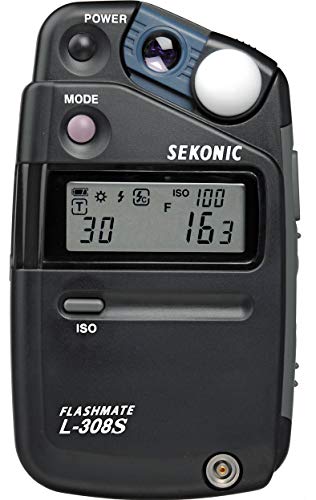
- Handles incident, reflected, and flash readings
- Compact 4.3 x 2.5 x 0.9-inch design
- Runs on one AA battery
Best For: Portable photography exposure measurement
Compact Exposure Specialist – Sekonic L-308X-U Flashmate
The Sekonic L-308X-U Flashmate is a practical choice among professional handheld light meters for photographers and videographers who need compact incident and reflected exposure readings. It supports photo, cine, and HD cine workflows, with readings accurate to a tenth of a stop.
Best For: Still photographers, DSLR and mirrorless videographers, and cinema users who want a pocket-sized meter with flash support.
Pros:
- Measures ambient and electronic flash exposures with tenth-stop accuracy.
- Offers Photo, Cine, and HD Cine modes for different shooting workflows.
- Supports corded and cordless flash measurement, with a broad shutter-speed and aperture range.
- Compact 4.3-by-2.5-by-0.9-inch design weighs just 3.52 ounces.
Cons:
- Uses two AAA batteries, which are not included in the supplied details.
- Its compact feature set may be less suited to users seeking built-in spot metering or advanced wireless control.
The L-308X-U stands out for straightforward, portable exposure control. Its dedicated cinema modes and flash-reading options make it more versatile than a basic ambient-only meter.
Illuminance Measurement Value – TopTes TS-710 Light Meter
The TopTes TS-710 is a versatile illuminance meter for users comparing light levels in homes, offices, workshops, farms, and other settings. It measures lux and foot-candles across a wide range, making it a useful option when professional handheld light meters are needed for general light assessment rather than camera exposure.
Best For: Plant-light checks, workplace and home lighting inspections, LED troubleshooting, and general illuminance testing.
Pros:
- Measures 0.1 to 200,000 lux and 0.1 to 20,000 foot-candles.
- Features a 180-degree rotating probe and fast 0.5-second sampling.
- Includes a large 2.25-inch backlit display for low-light readability.
- Adds temperature, humidity, MAX/MIN, data-hold, and auto-shutoff functions.
Cons:
- It is an illuminance meter, not a dedicated photographic incident, reflected, or flash exposure meter.
- The temperature sensor adapts to new environments over time, according to the supplied details.
With its rotating sensor, broad lux range, and included accessories, the TS-710 is well suited to practical environmental and lighting checks. Choose a photographic meter instead if you need camera exposure or flash analysis.
Advanced Flash Control – Sekonic L-858D-U Speedmaster
The Sekonic L-858D-U Speedmaster is an advanced option among professional handheld light meters for photographers working with complex ambient and flash setups. It combines incident metering, a built-in 1° spot viewfinder, flash-duration analysis, HSS measurement, and compatibility with optional radio modules.
Best For: Advanced portrait, studio, and location photographers who need detailed flash analysis, spot metering, and expandable wireless control.
Pros:
- Measures incident ambient and flash light with a wide -5 to 22.9 EV range at ISO 100.
- Built-in 1° spot meter supports highlight and shadow analysis.
- Analyzes flash duration, including HSS output, using t.1 and t.5 measurements.
- Supports optional radio modules for flash triggering and remote power adjustment.
Cons:
- Radio triggering requires optional modules.
- Its advanced functions may be more than casual photographers need.
- At 8.8 ounces and nearly 7 inches long, it is less compact than simpler meters.
The L-858D-U is the strongest choice here for demanding flash work. Its spot-metering and duration-analysis tools provide control that basic ambient light meters cannot offer.
Simple Illuminance Testing – Fluke 941 Light Meter
The Fluke 941 is a straightforward illuminance tester for users who need to check light levels with a familiar Fluke-branded instrument. It is best considered for general light measurement rather than camera exposure work typically associated with professional handheld light meters.
Best For: Basic illuminance testing in maintenance, facility, workplace, and general inspection tasks.
Pros:
- Designed as an illuminance meter and light meter tester.
- Comes from the Fluke brand.
- Uses one 9V battery.
Cons:
- The supplied details do not specify measurement range, accuracy, display features, or sensor functions.
- It does not have documented photographic incident, reflected, flash, or spot-metering features in the supplied notes.
The Fluke 941 may appeal to buyers who prioritize a simple Fluke illuminance tester, but the limited supplied specifications make it harder to compare directly with feature-rich photographic meters.
Professional Pick – Sekonic L-858D Speedmaster
For photographers and filmmakers seeking professional handheld light meters, the Sekonic L-858D Speedmaster combines advanced flash and ambient measurement with wireless compatibility for supported lighting systems. Its color touch screen, broad sensitivity, and rugged construction make it suited to demanding on-set work.
Best For: Photographers and filmmakers who need detailed flash analysis, low-light ambient readings, and wireless lighting compatibility.
Pros:
- Measures flash duration and ambient exposure, including scenes as dim as 0.1 lx.
- 2.7-inch color touch screen with extended ISO and shutter-speed ranges.
- Compatible with Elinchrom, Phottix, and PocketWizard products.
- Dust-proof and splash-proof construction for location use.
Cons:
- Its advanced feature set may be more than casual users need.
- Requires AA batteries.
The L-858D is the most capable option here for production environments where flash duration, wireless control, and low-light accuracy matter. Its sealed design adds confidence when working across varied locations.
Color Workflow Choice – Datacolor LightColor Meter
The Datacolor LightColor Meter is a compact choice among professional handheld light meters for crews who need both exposure-related light data and color information. Bluetooth app integration, hands-free operation, and multi-meter support make it especially useful for coordinated lighting workflows.
Best For: Film and photo teams measuring color temperature, green-magenta balance, and multiple light sources across a production.
Pros:
- Measures lux, chromaticity, color temperature from 1,600K to 20,000K, and DUV.
- Supports ambient and flash lighting, including LED, tungsten, HMI, fluorescent, strobe, and outdoor sources.
- Bluetooth app integration provides real-time data and supports multiple meters up to 80 feet away.
- Compact, drop-resistant design offers up to 40 hours of use with two included AAA batteries.
Cons:
- Using the full feature set depends on the connected mobile app.
- Its 1.73-ounce design may favor portability over the feel of a larger traditional meter.
This meter stands out when matching and monitoring light color is as important as measuring intensity. Its wireless workflow can reduce repeated manual checks on larger productions.
Compact Value – Sekonic L-308S-U Flashmate
The Sekonic L-308S-U Flashmate offers a straightforward, pocket-sized option for photographers comparing professional handheld light meters. It handles incident, reflected, flash, and ambient readings while providing exposure accuracy down to a tenth of a stop.
Best For: Photographers who want a small, easy-to-stow meter for everyday ambient and electronic-flash exposure readings.
Pros:
- Supports incident and reflected readings for ambient and electronic flash lighting.
- Provides exposure accuracy to a tenth of a stop in full-stop mode.
- Displays shutter speeds and apertures in half- or third-stop increments.
- Wide stated ranges, including ambient EV 0 to 19.9 and shutter speeds up to 1/8000 second.
Cons:
- It does not offer the color touchscreen or wireless features found on the other listed meters.
- Flash shutter-speed range is listed as 1 second to 1/500 second.
The L-308S-U is a practical pick when portability and core exposure measurement take priority. Its small body and broad ambient range make it easy to carry as a dependable everyday meter.
Best Budget Lux Meter – Dr.meter Digital Illuminance Light Meter
For straightforward light-intensity checks, this Dr.meter is a practical option among professional handheld light meters. It measures up to 200,000 lux, delivers readings twice per second, and lets you switch between lux and foot-candles.
Best For: Plant lighting, indoor spaces, offices, factories, and general sunlight measurement.
Pros:
- Wide 0–200,000 lux measurement range.
- Fast readings at approximately two measurements per second.
- Peak function records the highest brief light pulse value.
- Low-battery alert and included 9V battery add convenience.
Cons:
- Uses a 9V battery rather than a smaller AA cell.
- Its supplied features focus on illuminance measurement rather than photographic flash metering.
The Dr.meter is a versatile general-purpose choice when you need quick lux or foot-candle readings and a broad measuring range without a photography-specific feature set.
Best Advanced Flash Meter – Sekonic L-358 Flash Master
The Sekonic L-358 Flash Master is a strong choice for photographers seeking professional handheld light meters with dedicated ambient and electronic-flash measurement. It supports incident readings, memory averaging, and exposure accuracy down to a tenth of a stop.
Best For: Photographers who need incident and flash readings, exposure averaging, and optional wireless flash control.
Pros:
- Measures ambient and electronic flash light down to a tenth of a stop.
- Stores up to nine readings for averaging and contrast evaluation.
- Extended Lumisphere supports incident readings of three-dimensional subjects.
- Dust-proof and splash-proof to JIS Standard Water Resistance Class 4.
Cons:
- The optional RT-32 transmitter module is required for wireless functionality.
- Its photography-focused controls may be more than needed for basic lux measurements.
With flash support, memory-based evaluation, and weather-resistant construction, the L-358 is suited to more demanding exposure workflows where repeatable readings matter.
Best Compact Photography Meter – Sekonic L-308S Flashmate
The Sekonic L-308S Flashmate is a compact photography meter designed for incident, reflected, and flash readings. Its small body makes it an appealing option for photographers comparing professional handheld light meters for portable exposure work.
Best For: Photographers who want one compact meter for incident, reflected, and flash measurement.
Pros:
- Supports incident, reflected, and flash light measurement.
- Compact dimensions of approximately 4.3 x 2.5 x 0.9 inches.
- Operates on one AA battery.
Cons:
- The supplied notes provide fewer feature details than the other Sekonic models.
- The listed item weight of 8.8 pounds appears unusually high for its compact dimensions and should be verified before purchase.
- The notes reference a newer version with an exclusive three-year USA warranty.
The L-308S offers broad photography-oriented measurement capabilities in a compact form, but buyers should confirm the exact model and warranty status because the supplied listing points to a newer version.
How We Picked These Professional Handheld Light Meters
We grouped the selected meters by their primary use rather than treating every model as interchangeable. Photography and filmmaking models are judged by exposure modes, incident and reflected readings, flash support, spot-metering capability, and workflow features. General illuminance meters are considered for lux or foot-candle testing, display readability, sensor positioning, and measurement range.
We also considered portability, control layout, display design, compatibility with wireless flash systems where relevant, and whether a meter is best suited to occasional use or demanding professional work. Always confirm current specifications, included accessories, and compatibility before purchasing.
Quick Comparison
| Best For | What to Look For | Typical Advantage |
|---|---|---|
| Still photography | Incident and reflected exposure modes | More consistent exposure decisions |
| Flash photography | Flash percentage, duration, and wireless support | Faster control of studio and portable lighting |
| Film and cinema | Frame-rate, shutter-angle, and cine modes | Exposure readings suited to motion work |
| Lighting audits | Lux range, rotating sensor, and clear display | Practical room and workplace measurements |
| Color-aware workflows | Color-temperature measurement and connectivity | Better coordination of light color and exposure |
Key Buying Factors
Choose the Right Measurement Type
Incident meters measure light falling on the subject and can produce consistent results when subject reflectance varies. Reflected meters read light coming from the scene, while spot meters isolate a small area for contrast and highlight or shadow evaluation. A general lux meter is better for measuring illumination than for setting a camera exposure.
Check Flash and Cinema Features
For studio photographers, look for flash measurement, flash-duration analysis, wireless triggering, and the ability to separate ambient and flash contributions. Filmmakers should prioritize cine modes that account for frame rate, shutter angle, and HD or cinema exposure conventions.
Consider Range, Display, and Handling
A broad measurement range is useful across bright exteriors and dim interiors, but usability matters just as much. Look for a readable backlit display, intuitive controls, a sensor that can be positioned easily, and a body size you will actually carry. Battery type, battery life, calibration options, and accessory availability can affect long-term value.
Match Precision to the Job
Advanced meters cost more because they combine multiple measurement modes and specialized controls. If you only need occasional room illumination checks, a lux meter may be sufficient. If exposure consistency, flash balancing, or spot readings directly affect paid work, the extra controls of a dedicated photographic meter may justify the investment.
Who Should Buy Which Professional Handheld Light Meters?
Photographers who want a compact exposure tool should focus on a straightforward incident/reflected meter with dedicated photo modes. Studio and location flash users should choose a model with flash analysis and, when needed, wireless system compatibility. Filmmakers should prioritize cinema-specific modes and controls rather than buying solely on lux range.
Technicians, facility managers, and hobbyists measuring workplace or household illumination should look for a dedicated lux meter with a wide range, rotating sensor, and legible display. Color-critical creators may benefit from a connected light-color meter that adds color-temperature information to ordinary exposure readings.