
The best budget camera cranes make cinematic high and low-angle movements more accessible without requiring a full professional rig. This roundup compares jib arms, mini cranes, and lightweight gimbal-based options for creators working with DSLR, mirrorless, and compact camera setups.
Before buying, consider payload, reach, mounting hardware, portability, and whether you need a true crane movement or handheld stabilization. The right choice depends as much on your camera and shooting style as your budget.
Best 10 Budget Camera Cranes Picks for 2026
Long-Reach Pick

- Supports rigs up to 8kg
- Configures at 14ft or 10ft
- 270° platform tilt range
Best For: Large crane moves and elevated production shots
Travel Stabilizer Pick
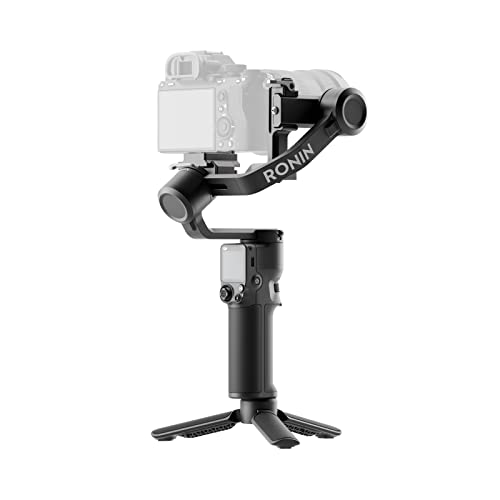
- Weighs just 795g
- Supports up to 2kg
- Offers native vertical shooting
Best For: Portable handheld camera movement and travel filming
Compact Jib Pick

- Carries up to 8kg
- Supports multiple camera heads
- Breaks into two transport sections
Best For: Smaller crews and controlled jib shots
High-Payload Gimbal Pick

- Supports up to 3kg
- Provides native vertical shooting
- Offers up to 16 hours of battery life
Best For: Portable DSLR and mirrorless stabilization
Best for Easy Setup

- 33-pound maximum load
- 85-inch extendable reach
- Foldable carbon-fiber arm
Best For: Portable jib shots with flexible camera and accessory mounting
Best Handheld Stabilizer

- 705-gram lightweight design
- Supports cameras up to 2 pounds
- Up to 7.5 hours of battery life
Best For: Portable stabilized shots with cameras, phones, or action cameras
Best Heavy-Duty Jib

- Supports up to 55 pounds
- 10-foot telescopic jib arm
- Includes 100mm and 75mm bowl compatibility
Best For: Studio, event, and production setups with heavier camera rigs
Compact Starter Pick
Zhiyun M2S Gimbal Crane Stabilizer

- Supports cameras and smartphones
- Captures 4K MP4 video
- Includes tripod and carrying case
Best For: Portable camera and smartphone stabilization
Feature-Rich DSLR Option

- Native horizontal and vertical shooting
- Up to 12-hour battery life
- Supports many major camera brands
Best For: Advanced mirrorless and DSLR video rigs
Lightweight Run-and-Gun Pick

- Weighs approximately 549 g
- Includes a 1,000-lumen fill light
- Uses a dual-lock quick-release plate
Best For: Portable mirrorless-camera filmmaking
Long-Reach Pick – Proaim 14ft Camera Crane Jib
For filmmakers comparing budget camera cranes, the Proaim 14ft Camera Crane Jib is the reach-focused option. Its two-arm design supports rigs up to 8kg and can be configured at either 14ft or 10ft, making it suitable for expansive crane shots as well as somewhat tighter locations.
Best For: Elevated shots, sweeping movements, overhead angles, and productions carrying heavier DSLR, mirrorless, gimbal, or pan-tilt rigs.
Pros:
- Supports camera setups up to 8kg / 17.6lb.
- Offers 14ft and 10ft configurations for added flexibility.
- 270-degree platform tilt range supports unusual and straight-down angles.
- Includes an LCD mounting arm and carrying bags.
Cons:
- Its 16kg weight makes it less convenient for lightweight solo setups.
- The full-length arm requires substantial space for operation and transport.
The P-14 is a strong choice when maximum reach matters more than compactness. Its modular sections and included bags improve transport, while the reinforced construction is aimed at keeping extended movements controlled.
Travel Stabilizer Pick – DJI RS 3 Mini Gimbal
Among budget camera cranes and motion tools, the DJI RS 3 Mini is the compact handheld alternative. At 795g, it is designed for travel and extended handheld use, while its 2kg payload accommodates many compatible camera and lens combinations.
Best For: Travel shooters, low-angle camera movement, vertical social-media footage, and lightweight DSLR or mirrorless kits.
Pros:
- Lightweight 795g design is easy to carry.
- Supports tested payloads up to 2kg / 4.4lb.
- Provides native vertical shooting and 3-axis stabilization.
- Includes Bluetooth shutter control and a full-color touchscreen.
Cons:
- Its 2kg payload is unsuitable for heavier cinema rigs.
- The DJI Ronin app is required for activation and full functionality, and is not available through Google Play.
This is not a raised camera crane, but it can deliver smooth moving shots in a far more portable package. Choose it when mobility and handheld stabilization are more important than height or sweeping jib movement.
Compact Jib Pick – Proaim 9ft Camera Crane
For buyers seeking budget camera cranes with a more manageable footprint, the Proaim 9ft Camera Crane Jib offers a practical middle ground. It supports up to 8kg, accepts compatible gimbals and heads, and separates into two sections for transport.
Best For: Small production crews needing controlled reveals, elevated perspectives, sweeping moves, and a jib that is easier to transport than a longer arm.
Pros:
- Supports DSLR, mirrorless, camcorder, gimbal, and pan-tilt setups up to 8kg.
- Auto and manual platform tilt controls support flexible framing.
- Two-arm construction and a thrust-bearing central fork help control movement.
- Includes an integrated LCD monitor mounting point and carrying bag.
Cons:
- The 9ft reach provides less height and sweep than the 14ft model.
- Its folded length is listed as 7ft, so it still needs considerable storage space.
The P-9ft is a sensible choice when you want genuine jib movement without committing to the larger 14ft system. Its 8kg capacity also leaves room for a rigged camera or compatible motorized head.
High-Payload Gimbal Pick – ZHIYUN Weebill 3E Gimbal
The ZHIYUN Weebill 3E is a lightweight alternative for shoppers comparing budget camera cranes with handheld stabilization systems. It weighs about 1.05kg, supports a tested payload of 3kg, and adds native vertical shooting for social and mobile-first production.
Best For: DSLR and mirrorless operators who need portable 3-axis stabilization, longer handheld sessions, and support for moderately heavy camera-and-lens combinations.
Pros:
- Supports a maximum tested payload of 3kg / 6.6lb.
- Offers native vertical shooting without dismantling the gimbal.
- Up to 16 hours of battery life supports all-day shooting.
- Includes Bluetooth shutter control and a comfortable sling-oriented design.
Cons:
- The package includes only a Panasonic control cable; other camera brands may require additional cables.
- The sling grip and wrist rest are sold separately.
The Weebill 3E cannot provide the height or sweeping reach of a physical jib, but it is more portable and supports a higher payload than the DJI RS 3 Mini. It fits productions where handheld movement, vertical framing, and endurance matter most.
Best for Easy Setup – IFOOTAGE M1 III Mini Jib
For shoppers comparing budget camera cranes, the IFOOTAGE M1 III is a compact carbon-fiber mini jib with an 85-inch reach and a 33-pound maximum load. Its foldable design, included water bag, and multiple mounting options make it practical for controlled camera movement without the footprint of a full-size crane.
Best For: Filmmakers and content creators who need a portable jib for smooth vertical, horizontal, low-angle, or upside-down shots.
Pros:
- Supports up to 33 pounds and extends to 85 inches.
- Carbon-fiber square tube provides rigidity while keeping the arm foldable.
- Offers tilt adjustment, focus-shot movement, and multiple 1/4-inch and 3/8-inch accessory threads.
- Includes quick-release plates and a free water bag.
Cons:
- At 13.2 pounds, it is not an ultralight travel setup.
- Its folded length is about 38.2 inches, which still requires storage space.
The M1 III stands out among budget camera cranes for its combination of load capacity, compact construction, and flexible mounting support. It is a strong option when you want jib-style movement but need a setup that can be transported and adapted to different camera accessories.
Best Handheld Stabilizer – Zhiyun Crane M3S
Although it is a handheld gimbal rather than a traditional jib, the Zhiyun Crane M3S belongs on a budget camera cranes shortlist for creators who prioritize compact stabilization and fast setup. It weighs 705 grams, supports cameras up to 2 pounds, and works with compatible mirrorless cameras, smartphones, and action cameras.
Best For: Mobile creators who want stabilized handheld movement across cameras, phones, and action cameras.
Pros:
- Lightweight 705-gram design is easy to carry.
- Supports multiple device types, including compatible mirrorless cameras, smartphones, and action cameras.
- Quick-release system simplifies installation and battery replacement without removing the camera.
- Offers Bluetooth shutter control, a built-in 1.22-inch screen, and up to 7.5 hours of battery life.
Cons:
- Its maximum supported weight is 2 pounds, limiting larger camera setups.
- It provides handheld three-axis stabilization rather than the elevated reach of a jib crane.
- It is not water resistant.
The Crane M3S is best viewed as a lightweight alternative for stabilized motion, not a replacement for a long-arm crane. Choose it when portability, wireless controls, and quick operation matter more than overhead or sweeping jib movements.
Best Heavy-Duty Jib – Proaim Wave-2 10ft Crane
For buyers seeking budget camera cranes with a larger working range, the Proaim Wave-2 provides a 10-foot telescopic jib arm designed for rising, lowering, sweeping, overhead, and reveal shots. It supports up to 25 kilograms and includes both a 100mm bowl and a 75mm adapter for broader head compatibility.
Best For: Production crews, event videographers, studios, and filmmakers using DSLR cameras, camcorders, gimbals, or pan-tilt heads.
Pros:
- Supports up to 25 kilograms or 55 pounds.
- 10-foot telescopic arm enables broad, dynamic camera movements.
- Includes a 100mm bowl mount and 75mm bowl adapter.
- Designed for DSLR, camcorder, gimbal, and pan-tilt-head setups.
Cons:
- Its six-foot folded size requires substantial transport and storage space.
- The larger professional setup may be less convenient for solo, mobile shooting.
The Wave-2 is the strongest choice here for heavier rigs and expansive camera movement. Its long arm and bowl adapters add versatility, but its size makes it better suited to organized production environments than lightweight travel kits.
Compact Starter Pick – Zhiyun M2S Gimbal Crane Stabilizer
For shoppers comparing budget camera cranes, the Zhiyun M2S is a compact stabilizer that supports cameras and smartphones while adding 4K video capability, an electronic viewfinder, and manual exposure control. Its 459 g weight and included carrying case make it practical for portable shooting.
Best For: Travelers and creators who want a lightweight, versatile stabilizer for cameras or smartphones.
Pros:
- Compatible with cameras and smartphones.
- Supports 4K video capture in MP4 format.
- Includes a tripod, fill light filters, charging cables, and EPP carrying case.
- Lightweight 459 g design with a one-year quality warranty.
Cons:
- Maximum recommended load is 1,000 g.
- Not water resistant.
- Manual exposure control may require more hands-on operation.
The M2S is a sensible budget-friendly option when portability and broad device compatibility matter more than heavy-camera support. Its included accessories also reduce the need for immediate add-on purchases.
Feature-Rich DSLR Option – ZHIYUN Crane 4E Camera Gimbal
Among budget camera cranes, the ZHIYUN Crane 4E stands out for users who need a larger camera gimbal with native horizontal and vertical shooting. It supports a wide range of Canon, Nikon, Sony, Fujifilm, Panasonic, Blackmagic, Sigma, and Z CAM devices, with built-in controls for key camera settings.
Best For: Video creators using compatible interchangeable-lens cameras who want extensive shooting controls and long battery life.
Pros:
- Switches between horizontal and vertical shooting without additional accessories.
- Offers Bluetooth shutter control and quick-adjustment controls for shutter, aperture, and ISO.
- Supports up to two servo focusers and specialty expansion accessories.
- Provides up to 12 hours of operation and supports 25 W PD fast charging.
Cons:
- At 1.33 kg, it is heavier than the other listed options.
- Video capture resolution is listed as 1920 x 1080.
- Not water resistant.
The Crane 4E is the strongest fit for a more advanced camera rig in this group. Its integrated controls and long runtime are useful for production work, though its larger weight may be less comfortable for casual handheld use.
Lightweight Run-and-Gun Pick – Zhiyun Crane M2S Standard
The Zhiyun Crane M2S is a strong contender for budget camera cranes when low weight and quick setup are priorities. This 549 g, three-axis stabilizer is designed for lightweight mirrorless cameras and includes an integrated 1,000-lumen fill light with adjustable brightness and color filters.
Best For: Run-and-gun filmmakers using lightweight mirrorless cameras who value portability and built-in lighting.
Pros:
- Lightweight 549 g body with stronger motors and extended axes.
- Integrated 1,000-lumen fill light with five brightness levels and four color filters.
- Includes a 0.66-inch display for camera and gimbal status information.
- Features a V-shaped quick-release plate with dual safety locks.
Cons:
- Designed only for lightweight mirrorless cameras and lenses.
- Requires proper balancing before powering on.
- Not intended for heavy cameras or lenses.
The Crane M2S is particularly appealing for mobile shooting where every gram matters. Its built-in light adds useful flexibility, but buyers should confirm their camera-and-lens combination stays within the stabilizer’s lightweight design limits.
How We Picked These Budget Camera Cranes
We focused on products that offer a practical path to smoother camera movement at a lower cost than large studio crane systems. The selection includes full-size jib arms, compact carbon-fiber mini jibs, and handheld gimbals that can cover some of the same creative needs in smaller spaces.
Our comparisons prioritize usable payload capacity, stated reach, compatibility with DSLR and mirrorless cameras, portability, setup demands, and the type of movement each product is designed to create. A longer jib is not automatically better: it may require a sturdier tripod, more counterweight, and additional space.
Quick Comparison
| Best For | What to Look For |
|---|---|
| Large, sweeping crane moves | Long jib arm, strong mounting system, and adequate counterweight capacity |
| Small studios and travel | Compact folding design, low weight, and quick setup |
| Walking or handheld shots | Three-axis stabilization and camera compatibility |
| Heavier mirrorless rigs | Higher payload rating and a rigid support platform |
| Beginner-friendly shooting | Simple balancing, clear controls, and included accessories |
Key Buying Factors for Budget Camera Cranes
Payload and Balance
Check the complete rig weight, including the camera, lens, battery, monitor, microphone, quick-release plate, and any accessories. Stay comfortably below the stated limit when possible. A poorly balanced jib can produce unwanted tilt, strain the operator, or become unsafe on a lightweight tripod.
Reach and Operating Space
Longer arms create more dramatic movement but need more room behind and beside the tripod. Measure your shooting area before choosing a 9-, 10-, or 14-foot design. A mini jib may be more useful when filming indoors, at events, or in crowded locations.
Movement Type
Traditional cranes are best for rising, descending, panning, and reveal shots from a fixed base. Gimbals are better for walking, tracking, and fast repositioning. Some setups can complement each other, but they are not interchangeable.
Support and Accessories
Many jib arms depend on a separate heavy-duty tripod, counterweights, pan-tilt head, or remote control. Include those costs in your budget. Gimbals may also require balancing time, compatible plates, batteries, and a suitable camera lens.
Who Should Buy Which Budget Camera Cranes?
Choose a full-size Proaim-style jib when you want sweeping overhead or reveal shots and have a stable tripod plus enough operating space. A compact mini jib is a better match for creators who need a portable crane effect for product videos, small productions, or travel.
Choose a three-axis gimbal when your priority is smooth handheld or walking footage rather than elevated camera movement. Lightweight models suit smaller mirrorless cameras and phones, while higher-payload options are preferable for larger bodies, lenses, and accessories.
For most buyers, the best value comes from matching the tool to the shot rather than choosing the longest arm or highest payload. Confirm camera compatibility, calculate the fully equipped rig weight, and budget for essential support hardware before ordering.