
The best studio camera cranes make sweeping moves, elevated angles, and controlled reveals easier to repeat on set. The right choice depends on more than arm length: payload, balance, mounting, and movement control all affect usable results.
This roundup compares 10 options ranging from compact carbon-fiber jibs to heavy-duty telescoping cranes and automated camera arms, helping you match the crane to your camera package, studio space, and shooting style.
Best 10 Studio Camera Cranes Picks for 2026
Automated Studio Crane

- 24 programmable movement presets
- Dual-arm design helps level the camera
- Includes tripod and counterweights
Best For: Repeatable product videos and studio motion work
Heavy-Duty Studio Crane
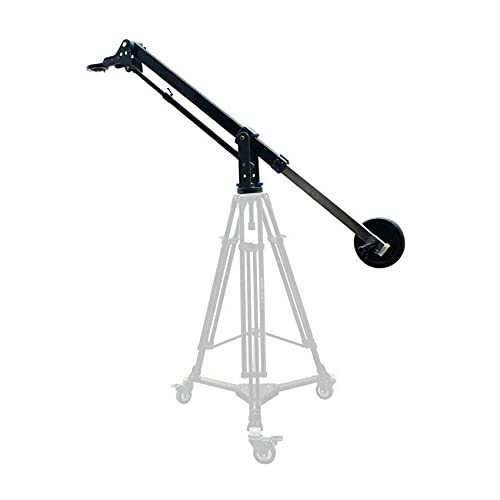
- Supports up to 25 kg or 55 lb
- Accepts 75mm and 100mm fluid heads
- Includes weight bar and locking clamps
Best For: Large camera rigs and high-capacity setups
Extended-Reach Studio Crane

- Configures at 14 feet or 10 feet
- Supports camera rigs up to 8 kg
- 270-degree platform tilt range
Best For: Sweeping overhead and long-reach crane shots
Compact Studio Crane
IFOOTAGE Carbon Fiber Mini Jib

- 85-inch reach with 33-lb capacity
- Carbon-fiber structure for rigidity
- Supports multiple tilt and mounting options
Best For: Compact studios and low-angle camera work
Best Heavy-Duty Jib
Proaim Wave-2 7' Camera Jib Crane

- Supports up to 55 pounds
- Works with fluid heads, gimbals, and remote heads
- Tool-free telescopic setup with storage bag
Best For: Large camera rigs and sweeping studio or location moves
Best Portable Kit

- Tool-free setup in under five minutes
- Includes tripod, pan head, monitor arm, and bags
- Designed for cameras around 5–8kg
Best For: Lightweight cameras and mobile studio production
Best Compact Cinema Jib
Proaim Comet Mini 4.5ft Camera Jib

- Carries rigs up to 110 pounds
- Fits Euro, Elemac, and Mitchell remote heads
- Compact arm with lockable pan and tilt
Best For: Heavy cinema rigs in tight studios and traveling productions
Long-Reach Studio Crane

- 2.4m arm for extended camera movement
- Includes monitor bracket, bag, and tools
- 3.5kg optimum camera weight
Best For: Studio DSLR and camcorder setups needing an extended jib arm
Heavy-Duty Jib Support

- Supports up to 90kg/198lb
- Adjusts from 51 to 83 inches
- 33mm tube with rubber feet
Best For: Professional jib cranes requiring a high-capacity adjustable base
Compact Studio Jib
GOWE Portable Mini Camera Crane

- 2.2m full arm length
- Folds to 1.2m for transport
- 3.5kg maximum listed load
Best For: Portable lightweight camera setups and compact studio work
Automated Studio Crane – Motorized Preset-Motion Jib
For studio camera cranes used in repeatable product videos or batch photography, this motorized jib stands out for its programmable movement. Its controller supports up to 24 saved motion programs, while the dual-arm design helps keep the camera level during vertical moves.
Best For: Product photography, e-commerce videos, repeatable B-roll, and controlled studio or event shooting.
Pros:
- Stores up to 24 preset movement programs with speed, looping, pause, and return controls.
- Dual-arm parallelogram structure helps reduce unwanted camera tilt.
- Includes a servo motor, counterweights, heavy-duty tripod, and controller.
- Provides up to 74.8 inches of arm reach and 102.4 inches of working height.
Cons:
- Requires careful counterweight adjustment before operation.
- Camera is not included.
This is the most automation-focused option in the group. It makes the most sense when consistent, repeatable camera moves matter more than a purely manual setup.
Heavy-Duty Studio Crane – 7-Foot 55-lb Video Jib
This 7-foot jib is a heavy-duty choice among studio camera cranes, with a stated capacity of up to 25 kg (55 lb). Its aluminum camera mount accepts 75mm and 100mm fluid heads, and built-in controls support practical setup and panning adjustments.
Best For: Large DSLR, video camera, and camcorder rigs that need a substantial load capacity.
Pros:
- Supports camera setups up to 25 kg (55 lb).
- Camera mount offers a 90-degree tilt angle and accepts 75mm and 100mm fluid heads.
- Built-in bubble level supports faster setup on uneven surfaces.
- Includes a counterweight bar and clamps for standard dumbbell weights.
Cons:
- At 14 kg, it is a relatively substantial piece of equipment to transport.
- The supplied notes do not indicate that a tripod or camera head is included.
Choose this model when payload capacity is the priority. Its weight and manual design make it better suited to robust production setups than lightweight, highly mobile shooting.
Extended-Reach Studio Crane – Proaim 14ft Modular Jib
The Proaim P-14 is built for sweeping studio camera crane moves, offering a 14-foot configuration and up to 15 feet of height when paired with a 5-foot stand. Its four-section design can also be assembled at 10 feet for tighter locations.
Best For: Dramatic overhead shots, crowd work, large spaces, and productions needing adjustable jib length.
Pros:
- Supports rigs up to 8 kg, including cameras with gimbals, pan-tilt heads, or fluid heads.
- Offers 14-foot and 10-foot configurations for different shooting spaces.
- Camera platform tilts through a 270-degree range with automatic and manual modes.
- Two-arm construction, thrust roller bearings, LCD mounting, and storage bags are included.
Cons:
- Its 8 kg payload is lower than the 25 kg capacity of the FLYCITY jib.
- A stand is needed to achieve the stated 15-foot height.
- The large extended configuration requires substantial operating space.
This is the reach-focused pick for filmmakers who need sweeping crane perspectives but still want modularity. The ability to shorten the arm makes it more adaptable than a fixed-length large jib.
Compact Studio Crane – IFOOTAGE Carbon Fiber Mini Jib
For smaller studio camera cranes and low-angle setups, the IFOOTAGE M1 III combines an 85-inch reach with a carbon-fiber square-tube structure. It supports up to 33 lb and provides multiple mounting and tilt options for compact camera rigs.
Best For: Compact studios, low-angle product shots, and camera setups requiring flexible accessory mounting.
Pros:
- 20-layer carbon-fiber construction is designed for rigidity and stability.
- Supports up to 33 lb with an 85-inch extendable reach.
- Offers adjustable platform tilt, low-profile mounting, and upside-down mounting options.
- Includes quick-release plates compatible with 60mm and 75mm fluid ball heads.
Cons:
- This listed product is described as 90% new, with a creased box.
- Its 85-inch reach is shorter than the Proaim’s 14-foot configuration.
- A tripod is not identified as included in the supplied notes.
The M1 III is a versatile middle ground for studios that want more reach and movement options than a basic mini jib without moving to a full-size 14-foot system. Its condition should be considered before purchase.
Best Heavy-Duty Jib – Proaim Wave-2 7' Camera Jib Crane
The Proaim Wave-2 is a strong choice for studio camera cranes when you need a longer reach, substantial payload capacity, and compatibility with common fluid heads, gimbals, or pan-tilt systems. Its dual-rail construction and telescopic design suit controlled sweeping movements in both indoor and outdoor setups.
Best For: Filmmakers needing a robust, versatile jib for cameras and larger cinema-style rigs.
Pros:
- Supports cameras and equipment up to 25kg/55lb.
- Compatible with 75mm and 100mm fluid heads, remote pan-tilt heads, and 3-axis gimbals.
- Tool-free setup, telescopic design, included storage bag, and bubble leveler.
- Dual-rail build supports smooth, sweeping camera moves.
Cons:
- At 40 pounds, it is less convenient to transport than smaller jib systems.
- Its 7-foot form may require more room than a compact studio crane.
With its high payload rating and broad mounting compatibility, the Wave-2 offers considerable flexibility for professional production work. Its weight and footprint are the main trade-offs for buyers prioritizing portability.
Best Portable Kit – GOWE 8kg Camera Crane Jib Arm
GOWE Camera crane Jib Arm Crane For around 8 kilo Big Camera + Tripod Kit Crane jibs
Check Price On AmazonThe GOWE jib arm is a practical option among studio camera cranes for smaller cameras and productions that value quick setup. The lightweight aluminum-and-steel design includes a tripod, pan head, monitor mounting arm, support hardware, and carrying bags for a more complete kit.
Best For: Small production teams, studio work, and mobile filming with cameras around 5–8kg.
Pros:
- Portable, scalable design assembles in less than five minutes without tools.
- Includes a tripod with pan head, monitor arm, support plate, transfer bowl, and two carrying bags.
- Offers built-in damping and 360-degree horizontal movement.
- Can serve as a jib or an extension of the tripod arm.
Cons:
- The included tripod is rated for a maximum load of 6kg.
- Camera suitability is described as approximately 5–8kg, so it is not intended for heavy cinema rigs.
- The supplied notes do not specify a warranty.
This kit emphasizes convenience and portability rather than maximum capacity. Check the weight of the complete camera setup against the tripod rating before using it for elevated or extended moves.
Best Compact Cinema Jib – Proaim Comet Mini 4.5ft Camera Jib
The Proaim Comet Mini is designed for tight studio spaces and location work where a compact jib is easier to position. Despite its 4.5-foot class, it supports rigs up to 50kg/110lb and connects to Euro, Elemac, and Mitchell remote head systems.
Best For: Professional crews needing high payload capacity and controlled crane movement in confined spaces.
Pros:
- Supports cinema rigs up to 50kg/110lb.
- Fits Euro, Elemac, and Mitchell remote head systems.
- Independent locking controls allow adjustable pan and tilt movement.
- Tool-free assembly and a dedicated flight case support travel between sets.
Cons:
- At 54 pounds, the jib itself is relatively heavy for a compact model.
- Remote head systems are not indicated as included.
- Counterweights are required for balancing and are not specified as included.
The Comet Mini stands out when payload and maneuverability matter more than arm length. Its compact reach is useful in restricted spaces, while the flight case and broad remote-head compatibility make it practical for professional workflows.
Long-Reach Studio Crane – GOWE 8ft Fluid Pan Head Jib
GOWE 2.4M 8ft Fluid pan head Camera Crane Jibs Jib Arm Crane for Video Studio DSLR photography
Check Price On AmazonFor buyers comparing studio camera cranes, the GOWE 2.4M jib offers an 8-foot arm with a fluid pan head setup for compatible camcorders and DSLR cameras such as the 5D2 and 7D. Its aluminum-alloy construction, included monitor bracket, and carrying bag make it a practical option for controlled studio or video work.
Best For: Studio users who need a long camera-crane arm and support for cameras up to the stated 3.5kg optimum weight.
Pros:
- 2.4m full arm length provides substantial reach.
- Includes a quick-release plate, monitor bracket, soft bag, and tools.
- Aluminum-alloy construction with electrostatic-sprayed finish.
- Listed maximum load is 20kg.
Cons:
- The stated optimum camera weight is 3.5kg, which is more relevant for routine use than the higher maximum-load figure.
- Its 120cm folded length may require dedicated storage or transport space.
Choose this model when reach and included accessories matter most. Before purchasing, verify that your camera setup fits the recommended operating weight and that your support arrangement is appropriate for the arm.
Heavy-Duty Jib Support – PROAIM 90kg Telescopic Stand
Among studio camera cranes and support accessories, the PROAIM Heavy-Duty Jib Stand is designed to provide a stable base for professional jib cranes. It uses a 33mm mounting tube, telescopic height adjustment from 51 to 83 inches, a mid-level spreader, and rubber feet for demanding studio or location setups.
Best For: Production teams needing a height-adjustable, heavy-duty stand for compatible camera jibs and equipment.
Pros:
- Supports up to 90kg/198lb according to the supplied specifications.
- Telescopic column adjusts between 51 and 83 inches.
- 33mm mounting tube suits a range of professional jib systems.
- Mid-level spreader and rubber feet are designed for added stability.
Cons:
- At 5.6kg, it is less convenient when minimizing support weight is the priority.
- Compatibility depends on a jib system that accepts a 33mm mounting tube.
This stand is a sensible foundation when payload capacity and adjustable working height take precedence over an ultra-light setup. Confirm the jib’s mounting requirements before adding it to your studio support kit.
Compact Studio Jib – GOWE Portable Mini Camera Crane
GOWE Portable Mini Video Camera Crane Jibs Jib Arm Crane Boom camera jib crane
Check Price On AmazonFor compact studio camera cranes, the GOWE Portable Mini Jib provides a 2.2m aluminum-alloy arm that folds to a 1.2m carrying length. It is intended for camera setups up to the stated 3.5kg maximum load and includes a carrying bag for easier transport between shoots.
Best For: Portable camera operators using lightweight cameras and needing a compact jib arm.
Pros:
- 2.2m full length offers useful reach in a compact design.
- Folds to 1.2m for carrying and storage.
- Aluminum-alloy construction keeps the arm portable.
- Includes a carrying bag.
Cons:
- Maximum listed load is 3.5kg, limiting heavier camera builds.
- Tripod, pan head, and balance weight are not included.
This mini jib is best suited to buyers who already have compatible support accessories and value portability. Budget separately for the excluded tripod, pan head, and balance weight when planning a complete setup.
How We Picked These Studio Camera Cranes
We focused on the specifications that most directly affect production: maximum reach, supported payload, construction, telescoping or fixed-arm design, compatibility with fluid heads and gimbals, and the stability of the required stand or tripod. The selection includes compact jibs for smaller studios, long-reach systems for cinematic overhead movement, and automated options for repeatable motion.
Published payload figures should be treated as a starting point, not a target. A camera, lens, battery, monitor, gimbal, pan-tilt head, and mounting hardware all count toward the load. A crane that operates comfortably below its limit will generally be easier to balance and safer to use.
Quick Comparison
- Best for automated repeatability: Motorized camera jib with 24 preset movements.
- Best for long reach: Proaim 14ft Camera Crane Jib Arm.
- Best for compact setups: iFootage M1 III 85-inch carbon-fiber mini jib.
- Best telescoping option: Proaim 7′ Wave-2.
- Best for extreme support capacity: Proaim Heavy-Duty Jib Stand.
- Best for smaller cameras: GOWE Portable Mini Video Camera Crane.
Key Buying Factors for Studio Camera Cranes
Reach and Studio Footprint
Longer arms create more dramatic movement but require additional clearance, counterweight, and floor space. Measure the available operating area, ceiling height, and distance from talent or sets before choosing a 14-foot or similarly extended jib.
Payload and Balance
Check the complete camera package rather than the camera body alone. Higher-capacity arms suit cinema cameras, gimbals, and pan-tilt heads, while compact jibs are easier to transport and position for lightweight DSLR or mirrorless rigs.
Movement and Compatibility
Look for compatibility with your fluid head, gimbal, or remote pan-tilt system. Telescoping arms simplify transport and adjustment; motorized systems are useful when you need repeatable moves for product videos, virtual production, or multi-take studio work.
Stand, Counterweights, and Safety
A crane is only as stable as its support system. Confirm the mounting standard, stand capacity, counterweight requirements, and footprint. Use rated counterweights, secure every locking point, and never exceed the manufacturer’s load limits.
Who Should Buy Which Studio Camera Cranes?
Choose a compact mini jib if portability, quick setup, and smaller cameras matter most. Select a telescoping 7-foot model for a practical balance of reach and studio flexibility. Long-arm systems are better for wide, elevated, or sweeping shots when you have adequate clearance and a robust support setup.
For heavier cinema packages, prioritize a rated heavy-duty stand and an arm designed for gimbals or pan-tilt heads. If your workflow depends on identical camera moves across multiple takes, a motorized preset system may justify its added complexity. Whichever model you choose, budget for a suitable head, counterweights, and secure support rather than treating the jib arm as a complete ready-to-shoot system.