
The best compact camera cranes help filmmakers create controlled rises, reveals, and sweeping movements without the footprint of a full-size studio jib. The right choice depends on payload, reach, portability, and how much setup your workflow can handle.
This roundup compares compact jib arms with motorized sliders and handheld gimbals, giving creators practical options for cameras ranging from pocket models to heavier mirrorless and cinema setups.
Best 10 Compact Camera Cranes Picks for 2026
Professional Carbon-Fiber Pick
IFOOTAGE M1 III Mini Jib Crane

- 85-inch extendable reach
- 33-pound maximum load
- Adjustable tilt and versatile mounting
Best For: Heavier camera rigs and controlled jib movements
Ultra-Compact Motion Pick

- Slider, monopod, and selfie stick in one
- 11.8-inch motorized extension
- Wireless remote and timelapse mode
Best For: DJI Pocket, smartphone, and action-camera creators
Value Refurbished Jib

- 85-inch carbon-fiber jib arm
- 33-pound maximum load
- 90%-new product with creased box
Best For: Budget-conscious buyers seeking a high-capacity mini jib
Beginner Pocket Camera Pick
4K Vlogging Camera with Rotating Lens

- 330-degree rotating lens
- Wi-Fi and claimed 4K video
- Includes mini tripod and 16GB card
Best For: Beginner vloggers and lightweight travel content
Long-Reach Pick

- Supports rigs up to 8kg / 17.6lb
- Adjusts between 14ft and 10ft configurations
- 270-degree tilt with auto/manual control
Best For: Large or demanding crane shots requiring adjustable reach
Portable Stabilization Pick
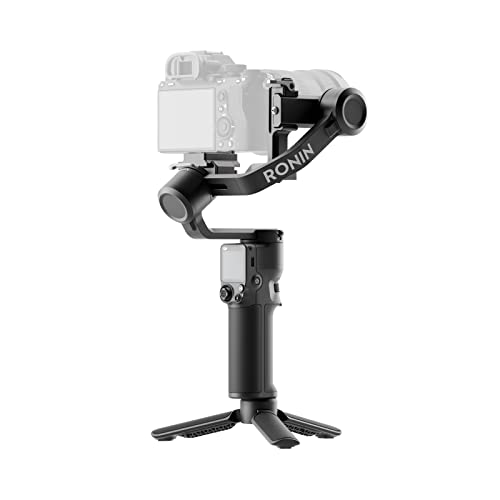
- Weighs 795g for easier handheld shooting
- Supports camera setups up to 2kg
- Offers vertical shooting and Bluetooth shutter control
Best For: Travel and social-video creators using compatible cameras
Compact Jib Pick

- Supports camera setups up to 8kg / 17.6lb
- Includes auto/manual tilt and LCD mounting
- Two-section aluminum design includes a carrying bag
Best For: Smaller productions needing a capable, more manageable jib
Best Compact Camera Crane Alternative for Solo Vlogging
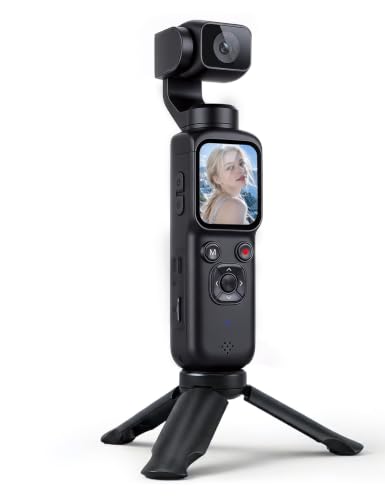
- AI horizontal face tracking for solo recording
- 330° rotating lens for flexible angles
- WiFi, autofocus, and 4K video in a compact body
Best For: Beginners and solo vloggers
Best Heavy-Duty Compact Camera Crane Setup

- Three-axis stabilization for DSLR and cinema cameras
- Listed 2,000 g maximum weight recommendation
- Built-in 10W fill light and portrait/landscape switching
Best For: Heavier DSLR and mirrorless camera kits
Best Lightweight Compact Camera Crane for Run-and-Gun Shooting

- 549-550 g body for portable shooting
- Three-axis stabilization with integrated 1,000-lumen light
- Quick-release plate for faster setup
Best For: Lightweight mirrorless camera and mobile filmmakers
Professional Carbon-Fiber Pick – IFOOTAGE M1 III Mini Jib Crane
For filmmakers comparing compact camera cranes, the IFOOTAGE M1 III combines an 85-inch reach with a carbon-fiber arm and a 33-pound maximum load. Its adjustable platform, quick-release options, and accessory threads make it a versatile choice for controlled camera movement.
Best For: Video shooters who need a compact jib for heavier camera setups, low-angle work, and smooth vertical or horizontal movement.
Pros:
- 20-layer carbon-fiber square tube provides rigidity and stability.
- Supports up to 33 pounds and reaches 85 inches.
- Offers adjustable tilt, low-profile and upside-down mounting options.
- Includes multiple quick-release plates and 1/4- and 3/8-inch accessory threads.
Cons:
- Weighs 13.2 pounds, so it is less convenient for lightweight travel kits.
- Its folded length is about 38.2 inches and it requires a stable support setup.
The M1 III is a strong all-around compact jib for creators who prioritize payload capacity and positioning flexibility over minimum weight. Its included water bag and broad mounting compatibility add practical value for production work.
Ultra-Compact Motion Pick – KONOVA DS3 Motorized Slider
Among compact camera cranes and motion tools, the KONOVA DS3 is designed for small cameras rather than traditional jib payloads. It combines a motorized slider, monopod, and selfie stick, with wireless control and up to 11.8 inches of powered extension.
Best For: DJI Pocket users, vloggers, and product creators who want repeatable motion in a lightweight travel setup.
Pros:
- Three-in-one design combines a slider, monopod, and selfie stick.
- Built-in motor provides up to 11.8 inches of smooth extension.
- Five speed settings support adjustable movement.
- Manual, Auto, and Timelapse modes enable repeatable shots.
Cons:
- Its compact extension is limited compared with a full-size jib crane.
- Designed primarily for DJI Pocket cameras, compatible action cameras, and smartphones.
The DS3 is a specialized choice for compact cameras and mobile content creation. Its small 1.3-pound form and built-in battery favor portability, while the remote and automatic modes simplify repeatable camera moves.
Value Refurbished Jib – IFOOTAGE M1 III 85-Inch Crane
This 90%-new IFOOTAGE M1 III gives compact camera cranes the same core specifications as the listed M1 III design: an 85-inch carbon-fiber arm, 33-pound capacity, adjustable tilt, and flexible mounting. It can suit creators seeking the platform at a potentially lower cost, but the product condition should be considered.
Best For: Budget-conscious filmmakers who want a high-capacity mini jib and are comfortable with a product described as 90% new.
Pros:
- 20-layer carbon-fiber construction is designed for rigidity and stability.
- Supports up to 33 pounds with an 85-inch reach.
- Supports low-angle, upside-down, pitch-tilt, and horizontal movement setups.
- Provides 1/4- and 3/8-inch accessory connections and multiple quick-release plates.
Cons:
- Listed as 90% new, with a creased box.
- Not water resistant according to the supplied details.
- At 85 inches, it still needs adequate space and support for operation.
Functionally, this version offers the M1 III’s substantial reach and payload capacity. The main tradeoff is condition rather than capability, making it worth considering only after checking the seller’s refurbishment and return details.
Beginner Pocket Camera Pick – 4K Vlogging Camera with Rotating Lens
Although it is not a crane, this pocket camera can complement compact camera cranes when you need a lightweight camera for simple vlogging or mounted shots. It records claimed 4K video, includes a 330-degree rotating lens, and comes with a mini tripod and travel accessories.
Best For: Beginners and solo vloggers who want a small camera for travel, self-recording, and basic tripod-mounted content.
Pros:
- Pocket-sized handheld design weighs 0.36 kg.
- 330-degree rotating lens helps with solo framing.
- Built-in Wi-Fi supports wireless transfers to a smartphone.
- Includes a 16GB microSD card, mini tripod, cable, strap, and carrying bag.
Cons:
- Digital image stabilization and 1x optical zoom limit stabilization and optical reach.
- Battery life is listed at approximately 1.5 hours.
- It is not water resistant and does not include a flash.
This is best viewed as an accessible companion camera rather than a professional crane camera. Its rotating lens, bundled tripod, and simple wireless workflow make it convenient for casual creators, while the modest battery and digital stabilization suit shorter, controlled shoots.
Long-Reach Pick – Proaim 14ft Camera Crane Jib
For filmmakers comparing compact camera cranes, the Proaim 14ft Camera Crane Jib offers adjustable reach for sweeping, elevated shots. Its modular design can be configured at 14 or 10 feet, while the two-arm structure and thrust roller bearings are built for smoother movement with rigs up to 8kg.
Best For: Productions needing long crane reach, flexible jib length, and support for heavier DSLR, mirrorless, gimbal, or pan-tilt setups.
Pros:
- Supports camera rigs up to 8kg / 17.6lb.
- Configures to either 14 feet or 10 feet for different spaces.
- Offers a 270-degree platform tilt range with auto and manual modes.
- Breaks into sections and includes carrying bags and an LCD mounting arm.
Cons:
- At 16kg, it is heavier than a small handheld stabilization system.
- Its full-length configuration requires substantial operating space and support.
This is the reach-focused choice in the group. Choose it when overhead perspectives and broad arcing moves matter more than minimizing setup weight.
Portable Stabilization Pick – DJI RS 3 Mini Gimbal
Among compact camera cranes and movement tools, the DJI RS 3 Mini is the most travel-friendly option for stabilized handheld footage. Weighing 795g and supporting camera-and-lens combinations up to 2kg, it adds native vertical shooting and a color touchscreen in a compact package.
Best For: Travel shooters, social-content creators, and filmmakers using compatible mirrorless or DSLR cameras who want lightweight three-axis stabilization.
Pros:
- Lightweight 795g design is easier to hold during extended shooting.
- Supports payloads up to 2kg / 4.4lb.
- Provides native vertical shooting for social media content.
- Includes Bluetooth shutter control and a 1.4-inch full-color touchscreen.
Cons:
- Its 2kg payload is lower than the Proaim jib options.
- DJI Ronin app activation and full functionality require downloading the app from DJI’s website because it is unavailable on Google Play.
The RS 3 Mini is not a long-arm crane, but it is the practical choice when portability and stabilized camera movement are more important than elevated jib shots.
Compact Jib Pick – Proaim 9ft Camera Crane
For buyers seeking compact camera cranes with a more manageable footprint, the Proaim 9ft Camera Crane Jib provides elevated movement without the reach of a full-size 14ft arm. It supports up to 8kg and accepts compatible gimbals, pan-tilt heads, and fluid heads for flexible camera setups.
Best For: Small production teams and locations that need controlled crane movement, LCD monitoring, and easier transport than a longer jib.
Pros:
- Supports DSLR, mirrorless, camcorder, and compact video-camera setups up to 8kg.
- Uses a reinforced two-arm structure and thrust-bearing central fork for controlled movement.
- Provides auto and manual platform tilt control.
- Separates into two sections and includes a carrying bag.
Cons:
- Its 9ft reach is less suited to very large sweeping shots than the 14ft model.
- The listed folded length is 7 feet, so transport still requires substantial space.
This jib balances capacity and reach for smaller setups. It is a sensible middle ground when an 8kg payload matters but a 14ft arm would be excessive for the location.
Best Compact Camera Crane Alternative for Solo Vlogging – HolyEye 4K Tracking Camera
For shoppers comparing compact camera cranes and solo-filming tools, this HolyEye camera focuses on portability and hands-free recording rather than mechanical camera movement. AI horizontal face tracking, a rotating lens, autofocus, WiFi, and 4K video make it practical for everyday vlogging and travel content.
Best For: Beginners, solo vloggers, travelers, and creators who want a compact self-recording camera.
Pros:
- AI face tracking helps keep solo presenters centered.
- 330° rotating lens supports selfie, low-angle, and overhead views.
- WiFi preview and file transfer simplify sharing.
- Compact design, autofocus, and 4K video suit everyday recording.
Cons:
- This is a compact camera, not a three-axis motorized crane or gimbal.
- The listed manufacturer warranty is 30 days.
- Its 1.72-inch screen is relatively small for framing.
Choose this model when convenience and solo framing matter more than cinematic camera movement. Its portable design and tracking features can reduce the need for a separate operator, tripod repositioning, or bulky equipment.
Best Heavy-Duty Compact Camera Crane Setup – ZHIYUN Crane 4 Combo
Among compact camera cranes and handheld stabilization systems, the ZHIYUN Crane 4 is the better fit for larger camera kits. Its three-axis stabilization, 2,000 g maximum weight recommendation, portrait and landscape switching, adjustable sling grip, and built-in fill light support more demanding production work.
Best For: DSLR and mirrorless filmmakers using heavier camera bodies who need stabilized handheld movement.
Pros:
- Supports DSLR and compact cinema cameras up to a listed 2,000 g.
- Quick-release structures enable landscape-to-portrait shooting changes.
- Adjustable sling grip and wrist rest help with movement control and fatigue.
- Built-in 10W fill light offers 2700K-5500K color adjustment and CRI 95+.
Cons:
- At 2,000 g, it is substantially heavier than lightweight gimbal options.
- It is not water resistant.
- Compatibility and performance still depend on proper camera balancing.
The Crane 4 is a strong choice when your definition of a compact camera crane includes professional stabilization for a heavier setup. Select it over a lightweight model when payload capacity, grip flexibility, and integrated lighting are higher priorities than minimal carry weight.
Best Lightweight Compact Camera Crane for Run-and-Gun Shooting – ZHIYUN Crane M2S
The ZHIYUN Crane M2S is a practical lightweight option for shoppers comparing compact camera cranes for mobile filmmaking. Its 549-550 g body, three-axis stabilization, integrated fill light, quick-release plate, and support for lightweight mirrorless cameras make it suited to run-and-gun work.
Best For: Mobile filmmakers using lightweight mirrorless cameras, action cameras, or phones.
Pros:
- Lightweight 549-550 g body is easy to carry for extended shoots.
- Three-axis brushless-motor stabilization supports smoother handheld footage.
- Integrated fill light provides 1,000 lumens with five brightness levels.
- Quick-release plate and small display support faster setup and monitoring.
Cons:
- It is designed for lightweight cameras and lenses, not heavy setups.
- Proper balancing is required before powering on for best performance.
- The built-in display is only 0.66 inches.
Pick the Crane M2S when portability is central to your compact camera crane setup. It offers useful stabilization and lighting without the weight of a larger gimbal, but buyers with heavy camera bodies or lenses should consider a higher-capacity model.
How We Picked These Compact Camera Cranes
We focused on the factors that matter most for real-world shooting: arm reach, supported payload, construction, portability, movement control, setup requirements, and compatibility with cameras, gimbals, and pan-tilt heads. The selection includes compact jib arms, full-length crane options, motorized motion tools, and gimbals because these products solve related camera-movement problems in different ways.
Product specifications and intended use should be checked carefully before purchase. Payload ratings are especially important: a crane must safely support the camera, lens, head, monitor, and any accessories mounted at the end of the arm.
Quick Comparison
| Type | Best For | Main Advantage | Watch Out For |
|---|---|---|---|
| Compact carbon-fiber jib | Controlled rises and reveals | Long reach with lower weight | Needs a sturdy tripod and counterbalance |
| Long camera crane | Large productions and wide moves | Greater height and sweep | More space, setup time, and support required |
| Motorized slider | Repeatable tabletop or product shots | Automated, consistent movement | Limited travel and payload |
| Handheld gimbal | Walking and operator-led movement | Fast, flexible stabilization | Not a substitute for a vertical jib move |
Key Buying Factors for Compact Camera Cranes
Payload and Balance
Start with the complete rig weight, not just the camera body. Leave a safety margin below the stated capacity, particularly when using a gimbal, long lens, external monitor, or wireless accessories. Counterweights and a secure mounting system are essential for safe, smooth operation.
Reach and Portability
Short carbon-fiber arms are easier to transport and suit small crews, interiors, events, and travel work. Longer arms provide more dramatic movement but need additional clearance, stronger support, and more time to assemble. Confirm both the packed length and the working footprint.
Movement Style and Control
Choose a jib for elevated arcs, push-ins, and reveals. Choose a motorized slider when repeatable linear motion matters for products, interviews, or time-lapse work. A gimbal is better for handheld tracking, walking shots, and fast repositioning. Some rigs can combine a jib with a gimbal, but that increases weight and balancing complexity.
Support and Compatibility
Check tripod-thread standards, mounting plates, head compatibility, and whether the arm is designed for a camera, gimbal, or pan-tilt head. A compact crane is only as stable as its base, so avoid pairing a heavy rig with an undersized tripod.
Who Should Buy Which Compact Camera Cranes?
Traveling creators and small crews: Choose a compact carbon-fiber jib or lightweight gimbal for manageable transport and quick setup.
Product and tabletop shooters: A motorized slider is usually the better fit when repeatability, close framing, and automated movement matter more than height.
Mirrorless and cinema-camera operators: Prioritize payload capacity, balance, and a rigid support system before choosing the longest arm.
Event and commercial filmmakers: A longer crane can deliver more dramatic sweeps, provided the location allows adequate clearance and the crew can manage the setup safely.