
Choosing a professional inverter home generator means balancing dependable backup power with fuel flexibility, manageable noise, safe operation, and practical installation requirements. This roundup compares 10 high-output options suited to home emergencies, workshops, RV use, and demanding jobsite applications.
Several models support multiple fuels and 120/240-volt output, while others prioritize quieter operation, portability, or easier remote starting. Use the buying guide below to narrow the list by your home’s electrical needs and backup-power plan.
Best 10 Professional Inverter Home Generators Picks for 2026
Whole-Home Tri-Fuel Powerhouse
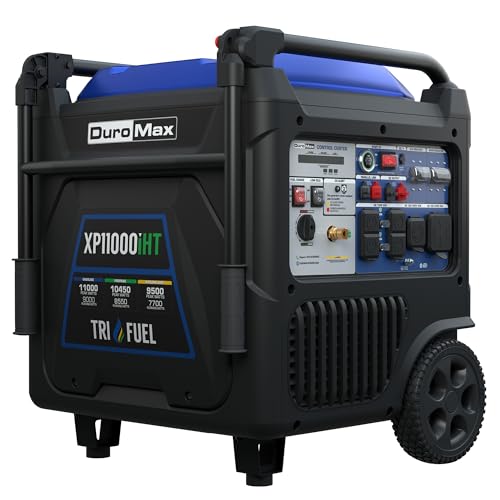
- 11,000 peak and 9,000 running watts
- Gasoline, propane, and natural gas operation
- Remote start and low-THD inverter output
Best For: High-output whole-home backup with flexible fuel options
Quiet High-Capacity Pick
Genkins 8000W Inverter Generator

- 8,000 peak and 6,500 rated watts
- Quiet operation rated at 62 dBA
- Pure sine-wave output under 2% THD
Best For: Quiet gasoline backup power with 240V capability
Smart Tri-Fuel Backup Choice

- 10,500 peak and 7,800 running watts
- Gasoline, LPG, and natural gas support
- ATS, 2-wire auto-start, and CO sensor
Best For: Feature-rich emergency backup and automatic-start systems
Portable Dual-Fuel Value
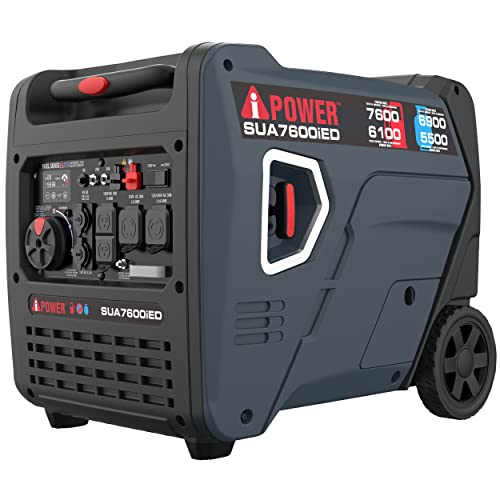
- 7,600 starting and 6,100 running watts
- Gasoline and propane operation
- Quiet, portable design with electric start
Best For: Portable home, RV, and camping backup with dual-fuel flexibility
Best Tri-Fuel Flexibility
Champion 10,000-Watt Inverter Generator

- Runs on gasoline, propane, or natural gas
- Electric start with Cold Start technology
- Less than 3% harmonic distortion
Best For: Homeowners needing flexible-fuel backup power
Best High-Output Dual-Fuel Backup
Westinghouse 13,500-Watt Generator

- 10,500 running watts on gasoline
- Up to 19 hours at 25% load
- Remote key-fob and electric start
Best For: Large home backup loads and extended runtime
Best 120/240V Tri-Fuel Inverter
WEN 13,000-Watt Tri-Fuel Inverter Generator

- Gasoline, propane, and natural-gas operation
- 120/240V transfer-switch-ready output
- CO Watchdog and electric start
Best For: Transfer-switch setups and Level 2 EV charging
Whole-Home Tri-Fuel Power
Westinghouse 14500W Tri-Fuel Generator

- 14,500 peak and 11,500 running watts
- Gasoline, propane, and natural gas support
- 50A outlet and up to 19-hour runtime
Best For: High-capacity residential backup with flexible fuel options
Quiet Electronics-Friendly Backup

- 5,000 peak and 3,900 running watts
- Less than 3% THD and as low as 52 dBA
- Dual fuel with remote start and RV outlet
Best For: Quieter RV, essential-load, and electronics backup
High-Output Inverter Backup

- 12,000 peak and 9,000 running watts
- Tri-fuel operation with 50A outlet
- 3% THD or less and up to 19-hour runtime
Best For: High-capacity, quieter whole-home backup
Whole-Home Tri-Fuel Powerhouse – DuroMax XP11000iHT
For shoppers comparing professional inverter home generators, the DuroMax XP11000iHT stands out with 9,000 running watts and tri-fuel flexibility. It can run on gasoline, propane, or natural gas, making it a strong option for extended outages and whole-home backup.
Best For: Homeowners needing high-output, transfer-switch-ready backup power with flexible fuel choices.
Pros:
- Provides 11,000 peak watts and 9,000 running watts.
- Supports gasoline, propane, and natural gas.
- Low-THD inverter power is designed for sensitive electronics.
- Remote electric start, CO alert technology, and a 5-year warranty add convenience and safety.
Cons:
- At 216 pounds, it is considerably heavier than many portable generators.
- Its large output may be more than smaller homes or basic camping setups require.
The XP11000iHT is a compelling professional-grade choice when capacity, fuel flexibility, and whole-home readiness matter more than lightweight portability.
Quiet High-Capacity Pick – Genkins 8000W Inverter Generator
The Genkins 8000W is a practical contender among professional inverter home generators for buyers who want substantial output without excessive noise. Its 6,500 rated watts, pure sine-wave power, electric start, and portable 112-pound design suit both home backup and outdoor use.
Best For: Users seeking quiet, movable gasoline backup power for household essentials, camping, or tailgating.
Pros:
- Delivers 8,000 peak watts and 6,500 rated watts.
- Runs at a stated 62 dBA from 23 feet away.
- Pure sine-wave output is rated at no more than 2% THD.
- Includes a 240V outlet, electric start, ESC fuel-saving mode, and digital display.
Cons:
- It uses gasoline only, unlike dual- or tri-fuel alternatives.
- The listed runtime is 8 hours at 50% load, so heavier loads require more frequent refueling.
- Its 2-year limited warranty is shorter than some competing options.
With a quiet operating profile and useful 240V connectivity, the Genkins offers a balanced mix of capacity, portability, and clean power for everyday backup needs.
Smart Tri-Fuel Backup Choice – GENMAX GM10500XiT
The GENMAX GM10500XiT combines 10,500 peak watts with tri-fuel operation and advanced start controls, making it a feature-rich option among professional inverter home generators. Its 7,800-watt running output, ATS compatibility, 50A connection, and low-THD inverter design support demanding backup scenarios.
Best For: Homeowners who want flexible fuel, automatic-start capabilities, and monitoring features for emergency backup.
Pros:
- Offers 10,500 peak watts and 7,800 running watts.
- Runs on gasoline, LPG, or natural gas.
- Includes remote start, one-button start, recoil start, and a 2-wire auto-start function.
- Provides inverter output rated at 3% THD or lower, plus CO sensing and a digital display.
Cons:
- The supplied notes do not specify the unit’s weight, dimensions, or runtime under typical loads.
- Its open-frame design may be less enclosure-friendly than fully enclosed inverter models.
The GM10500XiT is especially attractive for technically involved backup systems where automatic starting, fuel flexibility, and high output are priorities.
Portable Dual-Fuel Value – A-iPower 7600W Generator
The A-iPower 7600W is a versatile choice among professional inverter home generators for buyers who value manageable size, dual-fuel operation, and extended runtime. It produces up to 6,100 running watts on gasoline, includes electric start, and uses inverter technology for sensitive electronics.
Best For: Home backup, RV, camping, and tailgating users who want portable gasoline-and-propane flexibility.
Pros:
- Produces 7,600 starting watts and 6,100 running watts on gasoline.
- Supports both gasoline and propane, with Fuel Sense technology for extended combined runtime.
- Offers quiet operation as low as 62 dB and clean output rated at 3% THD.
- Telescoping handle, flat-free wheels, CO sensing, and electric start improve usability.
Cons:
- Its output is lower than the larger 9,000- and 10,000-watt-class models in this roundup.
- It does not support natural gas.
- The warranty is listed as 2 years.
The A-iPower is a well-rounded middle-capacity option for shoppers who need clean, quiet power and fuel flexibility without moving up to a much heavier whole-home unit.
Best Tri-Fuel Flexibility – Champion 10,000-Watt Inverter Generator
For shoppers comparing professional inverter home generators, the Champion 10,000-watt model stands out for its ability to run on gasoline, propane, or natural gas. Electric start, Cold Start technology, included fuel hoses, and low harmonic distortion make it a practical option for home backup, events, and sensitive electronics.
Best For: Homeowners who want broad fuel flexibility and portable backup power.
Pros:
- Runs on gasoline, propane, or natural gas, with propane and natural-gas hoses included.
- Electric start, battery, Cold Start technology, and a Fuel Select Dial simplify operation.
- Inverter power has less than 3% harmonic distortion for electronics and EV chargers.
- Includes a CO sensor, covered outlets, wheel kit, and a three-year limited warranty.
Cons:
- At 180.8 pounds, it is heavy for one person to move.
- Its 7,750 running watts are lower than its 10,000-watt starting rating.
- The open-frame design may be less compact than enclosed inverter generators.
The Champion is a well-rounded choice when natural-gas compatibility is important. Its included accessories and straightforward controls add convenience, while the lower-distortion output suits connected electronics.
Best High-Output Dual-Fuel Backup – Westinghouse 13,500-Watt Generator
Among professional inverter home generators and large portable backup units, this Westinghouse model emphasizes high output, long gasoline runtime, and convenient starting options. It delivers up to 10,500 running watts on gasoline, supports propane, and is ready to pair with compatible transfer equipment for home backup.
Best For: Homeowners who need substantial 120/240-volt backup power and extended gasoline runtime.
Pros:
- Produces 10,500 running and 13,500 peak watts on gasoline.
- Runs up to 19 hours at 25% load from its 9.5-gallon tank.
- Offers push-button electric start, remote key-fob start, and backup recoil starting.
- Includes 50A and 30A outlets, a CO sensor, low-oil shutdown, and a fuel gauge.
Cons:
- At 230 pounds, it is particularly heavy to position.
- The automatic transfer switch is sold separately.
- It supports gasoline and propane but not natural gas.
This Westinghouse is suited to users prioritizing output and runtime over lighter portability. Its remote start and transfer-switch compatibility make it especially practical for a prepared home backup setup, provided the required switching equipment is purchased separately.
Best 120/240V Tri-Fuel Inverter – WEN 13,000-Watt Tri-Fuel Inverter Generator
The WEN TF1300iX is a strong contender among professional inverter home generators for users who need 120/240-volt output, three fuel choices, and transfer-switch or EV-charging compatibility. Its electric start, bonded-neutral configuration, CO Watchdog sensor, and multiple outlet types support demanding residential and emergency-backup applications.
Best For: Users needing tri-fuel operation with 120/240-volt transfer-switch or Level 2 EV-charging capability.
Pros:
- Switches among gasoline, propane, and natural gas.
- Provides 10,500 running watts on gasoline and supports 120/240-volt operation.
- Bonded-neutral configuration works with transfer switches and Level 2 charging applications.
- Includes electric start, CO Watchdog shutdown, eight outlets, and a three-year warranty.
Cons:
- At 246.9 pounds, it is the heaviest generator in this group.
- Its listed half-load runtime is up to 7.7 hours, shorter than some gasoline-focused alternatives.
- The natural-gas output is lower than the gasoline output, at 8,000 running watts.
The WEN is a capable choice for buyers who value electrical flexibility over easy relocation. Its 120/240-volt configuration and tri-fuel capability make it well suited to integrated backup systems, though its weight and shorter runtime deserve consideration.
Whole-Home Tri-Fuel Power – Westinghouse 14500W Tri-Fuel Generator
For shoppers comparing professional inverter home generators, this Westinghouse model emphasizes high output, fuel flexibility, and transfer-switch compatibility. It delivers 11,500 running watts on gasoline, supports propane and natural gas, and offers less than 5% THD for phones, computers, and TVs.
Best For: Homeowners who need substantial backup capacity and the flexibility to use three fuel types.
Pros:
- Produces up to 14,500 peak watts and 11,500 running watts on gasoline.
- Supports gasoline, propane, and natural gas operation.
- Offers remote electric start, 50A and 30A outlets, and up to 19 hours of runtime at 25% load.
- Includes a CO sensor, low-oil shutdown, and a 3-year limited warranty.
Cons:
- At 230 pounds, it is considerably heavier than smaller portable models.
- The transfer switch and automatic transfer switch are sold separately.
- Its open-frame design may be less enclosed than some inverter generators.
This is a strong choice when whole-home backup capability matters more than compact size. Its tri-fuel design and 50A connection provide installation flexibility, while the pressure-lubricated engine is intended for longer service life.
Quiet Electronics-Friendly Backup – Westinghouse iGen5000DFc
This compact Westinghouse is a practical option among professional inverter home generators for smaller backup loads, RV use, and sensitive electronics. Its inverter system produces less than 3% THD, while dual-fuel operation, remote start, and a quiet 52 dBA rating add everyday convenience.
Best For: RV owners and households needing quieter, portable backup power for essential devices.
Pros:
- Delivers up to 5,000 peak and 3,900 running watts on gasoline.
- Runs on gasoline or propane and can operate up to 18 hours at 25% load.
- Produces less than 3% THD for sensitive electronics.
- Includes remote electric start, a CO sensor, RV-ready outlet, and parallel capability.
Cons:
- Its 120V output is less suited to larger 240V home-backup demands.
- The parallel kit needed to double output is sold separately.
- Its 3.4-gallon tank provides less fuel capacity than larger home generators.
The iGen5000DFc prioritizes low noise, portability, and clean power over whole-home capacity. It is a sensible fit for essential circuits, recreational vehicles, and users who value a smaller, easier-to-manage generator.
High-Output Inverter Backup – Westinghouse iGen12000TFc
For buyers seeking professional inverter home generators with substantial capacity, the Westinghouse iGen12000TFc combines 9,000 running watts with tri-fuel flexibility. Its inverter output is rated at 3% THD or less, and 50A and 30A connections support transfer switches or interlock kits for home backup.
Best For: Households wanting high-output, quieter inverter backup with gasoline, propane, and natural gas choices.
Pros:
- Provides up to 12,000 peak and 9,000 running watts on gasoline.
- Supports gasoline, propane, and natural gas, with up to 19 hours of runtime at 25% load.
- Offers 50A and 30A transfer-switch-ready outlets and parallel capability.
- Fully enclosed design, remote start, CO sensor, and digital data display improve convenience.
Cons:
- At 191 pounds, it remains a substantial portable unit.
- Its 7.9-gallon tank and larger engine contribute to a larger footprint.
- Transfer-switch or interlock-kit installation is required separately for connected home backup.
This model balances strong residential output with inverter benefits such as lower THD and quieter operation as low as 64 dBA. It is particularly compelling when a household needs more capacity than a midrange portable generator but still wants tri-fuel flexibility and electronic-friendly power.
How We Picked These Professional Inverter Home Generators
We focused on generators with enough capacity for substantial household loads, rather than small camping-oriented units. The selection includes inverter and inverter-style models with electric or remote starting, multiple fuel options, 120/240-volt capability, transfer-switch readiness, or RV-friendly outlets where applicable. We also considered practical ownership details such as portability, noise-conscious design, carbon-monoxide protection, display information, wheel kits, and maintenance access.
Because specifications and package contents can vary by retailer or production revision, verify the manual, outlet configuration, rated wattage, emissions certifications, and included accessories before purchasing.
Quick Comparison
| Priority | Look for | Best-fit options in this roundup |
|---|---|---|
| Maximum home capacity | High running wattage, 120/240V output, transfer-switch compatibility | DuroMax, WEN, Westinghouse 13,500W–14,500W models |
| Fuel flexibility | Tri-fuel support for gasoline, propane, and natural gas | DuroMax, GENMAX, Champion, WEN, Westinghouse tri-fuel models |
| Quieter, smaller backup | Lower output, inverter operation, remote start, RV-ready outlets | Westinghouse 5,000W model |
| Balanced capacity | Electric start, dual-fuel operation, and substantial household output | Genkins, A-iPower, Champion |
Key Buying Factors for Professional Inverter Home Generators
Rated Wattage Versus Peak Wattage
Size the generator by running watts first. Add the continuous draw of essential circuits, then account for startup surges from refrigerators, pumps, furnaces, compressors, and well equipment. Peak wattage is useful for short motor-start demands but should not be treated as sustained capacity.
Fuel and Runtime
Gasoline is widely available but has storage limitations. Propane stores longer and burns cleanly, while natural gas can support extended operation when a suitable utility connection is available. Compare each fuel’s rated output and runtime; a generator may produce less power on propane or natural gas.
Electrical Connection and Installation
For whole-home or large-load backup, prioritize 120/240-volt output, a compatible transfer switch, and professional installation. Never connect a portable generator directly to a wall outlet. Use a properly installed transfer switch or approved inlet, and follow local electrical and fuel regulations.
Safety, Noise, and Placement
Look for carbon-monoxide monitoring, automatic shutdown, overload protection, and clear digital status information. Operate the unit outdoors, far from doors, windows, and vents, with adequate clearance. Inverter operation can reduce electrical distortion and sometimes noise, but large generators can still be loud under heavy loads.
Who Should Buy Which Professional Inverter Home Generators?
Choose a high-output tri-fuel model if you need to run multiple household circuits and want gasoline, propane, and natural gas flexibility. A dual-fuel unit is a practical choice when you want simpler operation and reliable propane storage without paying for natural-gas capability. Buyers with moderate loads, RV needs, or tighter space constraints should consider the lower-output super-quiet option, provided its running wattage covers essential appliances.
For whole-home backup, have an electrician calculate your loads and confirm transfer-switch compatibility before ordering. For occasional outages, prioritize manageable size, remote or electric start, fuel storage, and accessible maintenance over headline peak wattage.