
Power interruptions can disrupt recording sessions, damage sensitive equipment, and make a small studio difficult to run. The right portable generator or power station can keep essential gear operating without adding excessive noise, fumes, or setup complexity.
This roundup compares ten compact backup-power options, from quiet inverter generators for longer runtimes to battery power stations suited to indoor use. Focus on output, battery or fuel capacity, noise, portability, and the equipment you need to protect.
Best 10 Portable Home Generators for Small Studios Picks for 2026
Quiet Gas Backup
2800W Portable Inverter Generator

- 2,000W running output and under 3% THD
- Under 58 dBA at 23 feet
- Up to 9 hours at 25% load
Best For: Small studios needing portable gasoline backup for sensitive electronics
Fast-Charging Battery Backup
EcoFlow DELTA 3 Classic 1024Wh
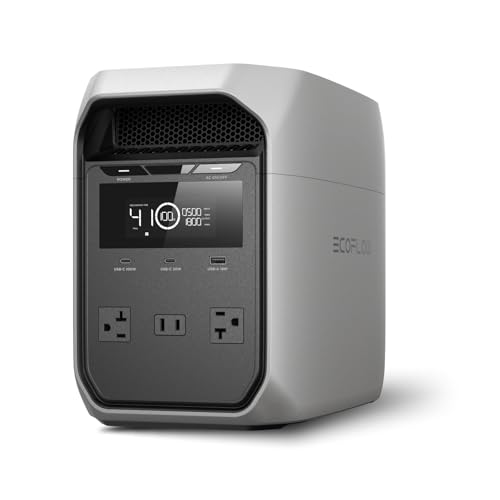
- 1,800W output with 3,600W surge
- Under-10ms UPS switching
- 0–80% charging in about 45 minutes
Best For: Quiet studio workstation and electronics backup
Higher-Capacity Gas Power
PowerSmart 4000W Inverter Generator

- 3,200W running and 4,000W starting output
- Under 3% THD for sensitive devices
- Below 59 dBA at 23 feet
Best For: Studios needing more output for multiple or higher-startup-load devices
Lightweight Silent Backup

- 1,500W output and 3,000W surge peak
- 23.8-pound portable design
- 1,070Wh LFP battery with 4,000+ cycles
Best For: Mobile studios and quiet backup for moderate electronic loads
Best Lightweight Gas Option
WEN 3600-Watt Inverter Generator

- 2,900 rated watts with clean inverter power
- Lightweight 46.3-pound enclosed design
- USB, DC, 120V, and RV-ready outputs
Best For: Portable gasoline backup for small-studio electronics
Best Compact Battery Station

- 292Wh capacity with 300W rated output
- Weighs about 7.1–7.5 pounds
- Silent battery power with optional solar charging
Best For: Quiet backup for laptops and low-wattage studio gear
Best Long-Run Gas Option
Westinghouse iGen2550 Inverter

- 1,900 rated watts with under 3% THD
- Up to 11 hours of listed runtime
- 43.2 pounds and as low as 52 dBA
Best For: Quiet, extended gasoline backup for studio essentials
Best Solar Backup

- 2,400W AC output with 15ms EPS switching
- Solar, car, and AC charging options
- Expandable LFP capacity up to 6,144Wh
Best For: Small studios seeking quiet, expandable battery backup
Best Heavy-Duty Pick
SIOKIUU 2500W Inverter Generator

- 1,900W running output with under 3% THD
- Up to 17 hours at 25% load
- 39.46-pound design with CO sensor
Best For: Portable, intermittent backup for modest studio loads
Best High-Output Backup
EDOG10 4400W Inverter Generator

- 3,400W running and 4,400W peak output
- Up to 14 hours at 25% load
- RV-ready outlet and fuel gauge included
Best For: Studios needing extra wattage for multiple devices
Quiet Gas Backup – 2800W Portable Inverter Generator
For shoppers comparing portable home generators for small studios, this compact gas inverter balances useful output with a relatively quiet operating profile. It provides 2,000 running watts, under 3% THD, and up to 9 hours of runtime at 25% load, making it suited to essential electronics and moderate backup needs.
Best For: Small studios needing portable, clean power for laptops, cameras, phones, and other sensitive electronics during outages or trips.
Pros:
- Produces 2,000 running watts and 2,800 peak watts with less than 3% THD.
- Runs under 58 dBA from 23 feet and includes ECO mode.
- Compact 40-pound design with a built-in handle, fuel gauge, USB, USB-C, AC, and DC ports.
- Can run up to 9 hours at 25% load and supports parallel operation.
Cons:
- Requires gasoline, ventilation, and routine engine maintenance.
- Its 2,000-watt running capacity may not cover several high-draw studio appliances at once.
- A high-altitude kit is recommended for frequent use above 4,000 feet and is not included.
Choose this model when portability and clean inverter power matter more than maximum capacity. Its fuel-powered design is practical for longer outages, but it must be operated safely outdoors and away from living spaces.
Fast-Charging Battery Backup – EcoFlow DELTA 3 Classic 1024Wh
The EcoFlow DELTA 3 Classic is a strong option for portable home generators for small studios when quiet, indoor-friendly battery backup is a priority. Its 1,024Wh capacity, 1,800W AC output, and under-10ms UPS switching can keep computers and other essential equipment running without gasoline or engine noise.
Best For: Small studios that need quiet backup for computers, networking equipment, appliances, and sensitive electronics.
Pros:
- Supplies 1,800W continuously with 3,600W surge capability and X-Boost support.
- Acts as a UPS, switching to battery in under 10ms to help prevent interruptions.
- Charges from 0% to 80% in about 45 minutes and supports optional 500W solar charging.
- Uses LiFePO4 cells rated for more than 10 years of daily use and includes app control.
Cons:
- The optional solar panel is not included.
- It is not compatible with the DELTA 2 Smart Extra Battery or Delta 3 Series Smart Extra Battery.
- Its 1,024Wh battery capacity limits how long high-wattage equipment can run.
For a studio workstation, the UPS function and silent battery operation are especially useful. This is the cleaner indoor-backup choice, while the relatively modest battery capacity makes load planning important during extended outages.
Higher-Capacity Gas Power – PowerSmart 4000W Inverter Generator
For studios with heavier startup loads, the PowerSmart offers more headroom than many portable home generators for small studios. It delivers 3,200 running watts, 4,000 starting watts, clean power below 3% THD, and an 8-hour stated runtime, while remaining rated below 59 dBA from 23 feet.
Best For: Small studios that may need to run multiple electronics or higher-startup-load equipment from one gasoline generator.
Pros:
- Provides 3,200 running watts and 4,000 starting watts with less than 3% THD.
- Includes a 120V duplex outlet, 30A twist-lock outlet, USB ports, DC output, and ECO mode.
- Operates below 59 dBA at 23 feet and offers an approximately 8-hour runtime.
- Supports parallel connection and includes a two-year limited warranty plus lifetime expert support.
Cons:
- At 50.7 pounds, it is less convenient to carry than smaller generators.
- Parallel operation requires a separately sold kit.
- Gasoline operation requires outdoor placement, fuel storage, and maintenance.
This model makes sense when studio equipment needs exceed the practical capacity of a 2,000-watt generator. Its extra output and 30A connection add flexibility, though the larger body and fuel requirement make it less convenient for occasional indoor-adjacent use.
Lightweight Silent Backup – Jackery Explorer 1000 v2
The Jackery Explorer 1000 v2 is a compact battery alternative for portable home generators for small studios. Weighing 23.8 pounds, it offers 1,500W of AC output, a 1,070Wh LFP battery, and app-controlled charging modes, making it convenient for quiet emergency power and mobile creative setups.
Best For: Small studios prioritizing lightweight, quiet backup for computers, monitors, chargers, cameras, and other moderate loads.
Pros:
- Delivers 1,500W continuously with a 3,000W surge peak.
- Lightweight 23.8-pound body with a foldable handle for easier transport.
- Includes three AC outlets, two USB-C ports, USB-A, a car port, and 100W USB-C charging.
- LFP battery is rated for over 4,000 cycles while retaining more than 70% capacity, with app control and optional solar charging.
Cons:
- It is battery-powered, so runtime depends on the 1,070Wh capacity and connected load.
- Solar charging is compatible only with Jackery solar panels.
- The one-hour full-charge mode must be enabled in the app; the default charge time is 1.7 hours.
This is one of the easiest options to move between a studio, vehicle, or remote workspace. It is quieter and simpler than a gas generator, but its lower output and finite battery capacity make it better for essential loads than extended high-power backup.
Best Lightweight Gas Option – WEN 3600-Watt Inverter Generator
For shoppers comparing portable home generators for small studios, the WEN 56360i offers a compact gasoline-powered option with 2,900 rated watts and clean inverter power for sensitive electronics. Its enclosed design, 46-pound weight, and RV-ready outlet make it practical when portability matters.
Best For: Small studios needing portable backup power for laptops, phones, and other electronics, with additional capacity for select higher-draw equipment.
Pros:
- Clean inverter output helps protect sensitive electronics.
- Lightweight 46.3-pound body is easier to move than many conventional generators.
- Includes two 120V outlets, an RV receptacle, DC output, and two USB ports.
- Fuel shutoff uses remaining carburetor fuel before shutdown to support long-term storage.
Cons:
- Gasoline operation requires fuel storage and outdoor use.
- Its listed runtime is about 5 hours, so extended outages may require refueling.
- Recoil start does not provide push-button ignition.
The WEN is a sensible fit when you want generator-level output in a relatively easy-to-carry package. Its clean power and varied connectivity suit studio electronics, though its short listed runtime favors occasional or planned backup use.
Best Compact Battery Station – Jackery Explorer 300
The Jackery Explorer 300 is a quiet, fuel-free choice among portable home generators for small studios. Its 292Wh battery, 300-watt rated output, and multiple charging ports are well suited to keeping laptops, cameras, phones, and other modest loads running without gasoline or engine noise.
Best For: Small studios prioritizing silent, lightweight backup power for computers, mobile devices, cameras, and other low-wattage equipment.
Pros:
- At about 7.1 to 7.5 pounds, it is highly portable.
- Offers two AC outlets, USB-C, two USB-A ports, and a 120W car port.
- LiFePO4 chemistry is rated for more than 4,000 charge cycles before reaching 70% capacity.
- Can recharge from compatible Jackery solar panels, with an optional panel reaching 80% in about 2.8 hours at 100W.
Cons:
- Its 300-watt output is not intended for high-draw studio equipment.
- Solar panels are optional rather than included.
- Battery capacity is limited compared with gasoline generators for long outages.
Choose the Explorer 300 when quiet operation and easy indoor portability matter more than maximum wattage. It is especially convenient for electronics-focused studios, but check each device’s startup and running requirements before relying on it as full backup.
Best Long-Run Gas Option – Westinghouse iGen2550 Inverter
For small studios that need longer gasoline runtime, the Westinghouse iGen2550 combines 1,900 rated watts with inverter output under 3% THD. It weighs 43 pounds, operates as quietly as 52 dBA, and includes an RV-ready outlet plus USB connections for practical emergency backup.
Best For: Small studios seeking quiet, fuel-efficient gasoline backup for essential electronics and moderate home loads.
Pros:
- Provides 1,900 running watts and 2,550 peak watts with less than 3% THD.
- Up to 11 hours of runtime is listed from its 1.16-gallon tank.
- Lightweight 43.2-pound design and 52 dBA low-noise rating improve portability and comfort.
- Includes two 120V outlets, two USB outlets, an RV-ready TT-30R outlet, and parallel capability.
Cons:
- Gasoline operation requires outdoor placement, ventilation, and fuel handling.
- Its 1,900 rated watts may not cover several high-draw studio appliances at once.
- It uses magneto ignition rather than a listed electric-start system.
The Westinghouse is a strong middle ground for buyers who want more endurance than a small battery station while keeping noise and weight manageable. Economy Mode and the fuel gauge help with operation, but load planning remains important for studio equipment.
Best Solar Backup – Growatt INFINITY 2000 Pro
For shoppers comparing portable home generators for small studios, the Growatt INFINITY 2000 Pro is a quiet, battery-powered alternative to gasoline models. It provides 2,400W of AC output, 13 outlets, and solar, car, or AC charging, making it practical for powering studio electronics and other essential devices indoors or outdoors.
Best For: Small studios needing clean, portable backup power with UPS/EPS capability and expandable battery capacity.
Pros:
- 2,400W output with a 15ms EPS switchover for supported backup applications.
- Solar-powered design operates without gasoline or engine noise.
- LFP battery cells are rated for 4,000+ cycles, with capacity expandable up to 6,144Wh.
- Cold Start technology supports operation in temperatures as low as -22°F.
Cons:
- The expansion battery must be connected to the main unit for charging.
- At 26 pounds, it is portable but less compact than a small plug-in battery bank.
Its combination of clean power, expandable storage, and rapid EPS switching makes this a strong fit for a small studio where noise and uninterrupted electronics matter. It is especially appealing if you want solar charging and longer-term battery durability instead of fuel storage.
Best Heavy-Duty Pick – SIOKIUU 2500W Inverter Generator
The SIOKIUU 2500W inverter generator is a practical choice among portable home generators for small studios when extended runtime and easy transport are priorities. Its 1,900 running watts, inverter output with less than 3% THD, and ECO mode are suited to common electronics, lighting, fans, and small tools.
Best For: Studio owners who want a lightweight gasoline generator for intermittent backup, outdoor work, or camping.
Pros:
- Produces 1,900 running watts and less than 3% THD for sensitive electronics such as laptops and cameras.
- Runs up to 17 hours at 25% load from a 1.06-gallon tank.
- Weighs 39.46 pounds and operates below 59 dBA from 23 feet away.
- CO sensor automatically shuts the generator down if carbon monoxide levels become too high.
Cons:
- Gasoline-powered operation requires fuel and should be used with appropriate ventilation.
- Recoil start is less convenient than an electric-start design.
- Its 1,900W running output may not cover higher-demand studio equipment simultaneously.
This model balances portability, runtime, and relatively quiet operation well. The clean inverter output is useful for studio electronics, while the lower continuous wattage means you should total your equipment loads before relying on it as a whole-studio backup.
Best High-Output Backup – EDOG10 4400W Inverter Generator
For small studios with several devices or occasional higher startup demands, the EDOG10 offers more headroom than compact generators. This gasoline-powered open-frame inverter generator delivers 3,400 running watts, 4,400 peak watts, an RV outlet, and up to 14 hours of runtime at 25% load.
Best For: Studios needing higher output for multiple electronics, equipment, or broader residential and RV backup use.
Pros:
- Provides 3,400 running watts and 4,400 peak watts for greater load capacity.
- Runs up to 14 hours at 25% load with ECO mode and a 2-gallon tank.
- Includes two 120V AC ports, a 12V DC port, and an RV-ready outlet.
- Fuel gauge, low-oil shutdown, and overload protection support easier operation.
Cons:
- At 56 pounds, it is substantially heavier than the SIOKIUU model.
- Its stated noise level is under 72 dBA from 23 feet, making it less suitable for noise-sensitive spaces.
- The one-year manufacturer warranty is shorter than the three-year warranty listed for the SIOKIUU generator.
The EDOG10 is the better match when wattage flexibility matters more than minimum size or noise. Its larger tank and higher output can support a wider range of backup needs, but studio users should plan placement carefully and operate it outdoors with proper separation from occupied spaces.
How We Picked These Portable Home Generators for Small Studios
We focused on portable models with practical output for studio essentials such as computers, monitors, interfaces, mixers, routers, and LED lighting. The selection includes gasoline inverter generators, open-frame inverter models, and battery power stations so you can match the power source to your workspace and operating environment.
Key considerations included continuous and peak wattage, portability, noise-conscious design, outlet variety, runtime potential, safety features, expandability, and suitability for emergency backup. Inverter generators and power stations are generally preferable for sensitive electronics because they can provide cleaner, more stable power than conventional generators, but you should still use surge protection or a suitable uninterruptible power supply where appropriate.
Quick Comparison
| Type | Best for | Main advantage | Important trade-off |
|---|---|---|---|
| Battery power station | Indoor studios and short outages | No exhaust and very low noise | Limited runtime and recharge time |
| Small inverter generator | Essential equipment and mobile use | Fuel-based runtime in a compact body | Must operate outdoors with ventilation |
| Mid-size inverter generator | Several devices or longer sessions | More headroom and useful outlets | Heavier, louder, and fuel-dependent |
| Open-frame inverter generator | Higher loads and emergency backup | Greater output for the price | Less studio-friendly portability |
Key Buying Factors for Portable Home Generators for Small Studios
Continuous Wattage and Startup Demand
Add the running wattage of every device you may power at once, then leave reserve capacity for startup surges from computers, speakers, external drives, and other equipment. Avoid choosing solely by peak wattage; continuous output is the more useful figure for sustained studio work.
Noise, Emissions, and Placement
Battery stations are the simplest indoor option because they produce no exhaust. Gas generators must remain outdoors, away from doors, windows, and vents. Look for inverter technology, an economy mode, and a published decibel rating if sound affects recording or monitoring.
Runtime, Recharging, and Connectivity
For battery models, watt-hours provide a rough capacity estimate: divide watt-hours by your actual load to estimate runtime, allowing for conversion losses. Check charging speed, solar compatibility, USB ports, AC outlets, and whether the unit supports pass-through or UPS-style operation.
Safety and Studio Protection
Prioritize carbon-monoxide detection, overload protection, low-oil or low-fuel shutdown, grounded operation, and reliable surge protection. Never connect a generator directly to household wiring without a properly installed transfer switch and qualified electrical guidance.
Who Should Buy Which Portable Home Generators for Small Studios?
Choose a compact battery power station if you work indoors, need silent backup, or only have to cover a computer, interface, router, and small monitor setup for a limited outage. A larger battery station makes more sense for longer sessions or higher combined loads, particularly when solar recharging is useful.
Choose a small gasoline inverter generator if you need extended runtime, portability, and enough output for essential equipment during a prolonged outage. Step up to a mid-size or open-frame inverter model when you need to run several studio devices, lighting, cooling, or other household loads simultaneously. Regardless of type, confirm your actual power requirements and operating restrictions before buying.