
Compact whole-home battery backup systems can keep essential appliances, networking gear, and electronics running when the grid fails—without requiring a large dedicated power room.
This roundup compares scalable home batteries, portable power stations, and UPS units so you can match backup capacity, output, and runtime to your priorities.
Best 10 Compact Whole Home Battery Backup Systems Picks for 2026
Best Whole-Panel Coverage
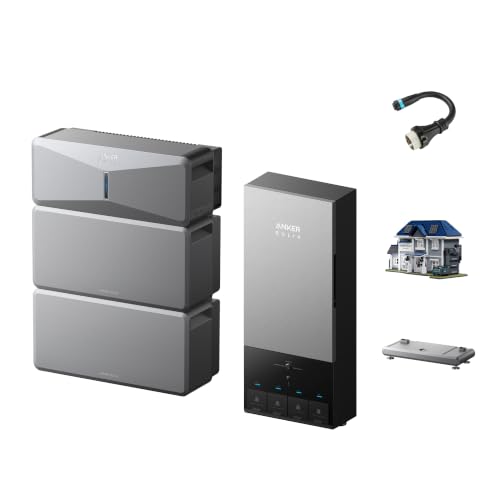
- 12kWh starting capacity, expandable to 90kWh
- 200A whole-home coverage with ≤20ms switchover
- 7.6kW continuous output and 9kW solar input
Best For: Homes needing expandable, automatic whole-panel backup
Best Portable Home Backup

- 3,584Wh capacity with 3,600W AC output
- Wheels and telescopic handle improve portability
- Solar, AC, hybrid, and generator charging options
Best For: Portable backup for flexible household use
Best Small-Electronics Backup

- 1,500VA/1,000W PFC sinewave UPS output
- Six battery-backed and six surge-only outlets
- AVR, LCD monitoring, and USB-A/USB-C charging
Best For: Computers, networking gear, and telecom equipment
Best Compact Starting Package

- 6kWh starting capacity expandable to 90kWh
- 200A whole-panel backup with ≤20ms switchover
- 7.6kW output and 9kW solar input per unit
Best For: Expandable whole-home backup with a smaller starting battery
Best High-Capacity UPS

- 1500VA/900W capacity
- 12 outlets plus USB charging
- LCD monitoring and AVR
Best For: Home offices and entertainment setups needing higher-capacity UPS protection
Best for Replaceable Batteries

- 1500VA/900W backup capacity
- User-replaceable battery
- LCD status monitoring with AVR
Best For: Home users wanting maintainable UPS protection for essential electronics
Best Compact Option
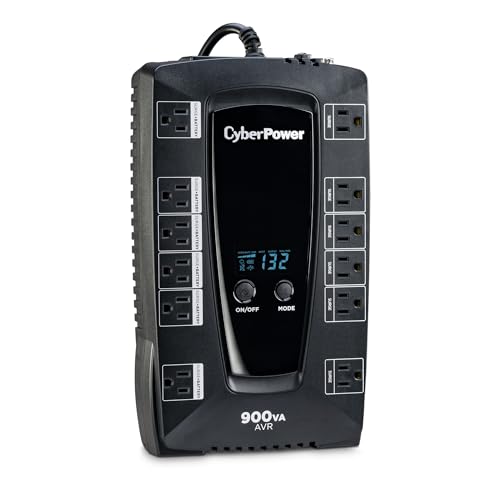
- Compact 480W design
- 12 outlets with six battery-backed
- AVR and LCD monitoring
Best For: Small desks and lighter home-office electronics setups
Long-Life Lithium UPS

- 800W pure sine wave output
- LiFePO4 battery rated for 5,000+ cycles
- Eight protected battery-backup outlets
Best For: Essential computers, networking, and telecom equipment
Energy-Saving Compact UPS

- 12 outlets with six battery-backup outlets
- ECO mode reduces peripheral power use
- LCD display and three-year battery warranty
Best For: Compact home-office and entertainment setups
Slim Profile Standby UPS

- Slim 900VA/500W design
- 12 outlets plus two USB charging ports
- GreenPower efficiency and UL certification
Best For: Computers, gaming consoles, routers, and home entertainment
Best Whole-Panel Coverage – Anker SOLIX E10 12kWh System
For shoppers comparing compact whole home battery backup systems, the Anker SOLIX E10 package stands out for combining 12kWh of starting capacity with whole-panel coverage. Its 7.6kW continuous output, 10kW turbo output, and expandable design suit homes that need substantial backup without starting with a large battery bank.
Best For: Homeowners who want automatic backup for every circuit, expandable storage, and outdoor installation flexibility.
Pros:
- 200A Power Dock provides automatic whole-home coverage rather than limiting backup to selected circuits.
- Starts at 12kWh and can expand to 90kWh, with 9kW solar input per unit.
- Offers ≤20ms automatic switchover and weather-resistant NEMA 4/NEMA 3R components.
- EV-class LFP batteries are rated for a 10-year lifespan.
Cons:
- The complete system weighs 60.6 pounds before considering additional battery modules.
- Professional installation may be preferable for homeowners unfamiliar with whole-panel electrical equipment.
This is a strong fit when whole-home coverage and future expansion matter more than the smallest possible installation. The included two battery modules provide a meaningful starting capacity, while the Power Dock and solar compatibility support longer-term outage planning.
Best Portable Home Backup – Jackery HomePower 3600 Plus
The Jackery HomePower 3600 Plus is a practical option among compact whole home battery backup systems for buyers who value portability and simple setup. It provides 3,600W of AC output, 3,584Wh of capacity, and can be expanded for larger household backup needs.
Best For: Households wanting a rollable battery station with solar charging and flexible temporary home backup.
Pros:
- Wheeled luggage-style design with a telescopic handle makes it easier to move around the home.
- Supports 120V and 240V operation in parallel, with output expandable to 7,200W.
- Offers four charging methods, including solar, AC, hybrid AC+DC, and a gas generator.
- LFP battery technology is rated for 6,000 cycles and a 10-year lifespan.
Cons:
- Its 3,584Wh starting capacity is smaller than the Anker whole-home packages in this roundup.
- Home integration uses a manual transfer switch, so it is not presented as an automatic whole-panel system.
The Jackery is particularly appealing when mobility and plug-and-play operation are priorities. Its expandable storage and dual-voltage parallel capability broaden its usefulness, but buyers should confirm that the transfer-switch arrangement matches their intended home circuits.
Best Small-Electronics Backup – CyberPower CP1500PFCLCD UPS
The CyberPower CP1500PFCLCD is a compact UPS rather than a whole-house battery system, but it can complement compact whole home battery backup systems by protecting computers, networking equipment, and other sensitive electronics. Its 1,000W capacity, sinewave output, and automatic voltage regulation target equipment-level protection.
Best For: Desktops, workstations, network devices, and telecom equipment that need short-term battery backup and surge protection.
Pros:
- PFC sinewave output supports active PFC and conventional power supplies.
- Provides 12 outlets, including six battery-backed and surge-protected outlets.
- Automatic voltage regulation corrects minor fluctuations without using battery power.
- Includes USB-A and USB-C charging ports, a color LCD, and a three-year battery-included warranty.
Cons:
- Its 1,500VA/1,000W design is intended for individual electronics, not whole-home circuits.
- Battery runtime depends on the connected load and is not specified in the supplied notes.
This CyberPower model is best viewed as a targeted companion for critical electronics, not a replacement for a residential energy-storage system. It makes sense where clean power, surge protection, and monitoring for a workstation or network setup are the main concerns.
Best Compact Starting Package – Anker SOLIX E10 6kWh System
For buyers seeking compact whole home battery backup systems with a lower initial storage package, the Anker SOLIX E10 6kWh system pairs a single B6000 battery module with a 7.6kW output module and 200A Power Dock. It is designed to back up the entire panel while leaving room to expand storage later.
Best For: Homeowners who want whole-panel backup now and the option to increase battery capacity over time.
Pros:
- 200A Power Dock covers every circuit and supports automatic ≤20ms switchover.
- 6kWh capacity can expand to 90kWh, while each unit supports up to 9kW of solar input.
- 7.6kW continuous output and 10kW starting output can support substantial household loads.
- NEMA 4 and NEMA 3R ratings support weatherproof outdoor installation without shelter.
Cons:
- The included 6kWh capacity provides less stored energy than the two-battery 12kWh package.
- Whole-panel installation may still require electrical planning or professional support.
This configuration is a sensible entry point for a whole-home system when expansion is part of the plan. Its electrical coverage and fast transfer capability are strong, while the single battery module keeps the initial package more compact than the larger version.
Best High-Capacity UPS – CyberPower CP1500AVRLCD3
For compact whole home battery backup systems used to protect a workstation, network gear, or entertainment setup, the CyberPower CP1500AVRLCD3 offers 900W of capacity in a mini-tower design. Its LCD panel, automatic voltage regulation, and multiple outlet types make it practical for monitoring and managing connected equipment during power interruptions.
Best For: Home offices and entertainment setups needing higher-capacity UPS protection, plenty of outlets, and USB charging.
Pros:
- 1500VA/900W capacity supports workstations, networking devices, and home entertainment equipment.
- Provides 12 outlets, including six battery-backed outlets and six surge-only outlets.
- Color LCD provides detailed battery and power-condition information.
- AVR corrects minor fluctuations without switching to battery power; warranty includes the battery.
Cons:
- Simulated sine wave output may not suit every sensitive or specialized device.
- Listed runtime is approximately three minutes.
- At 23.8 pounds, it is less convenient to move than smaller compact units.
The CP1500AVRLCD3 is a strong fit when outlet count and 900W capacity matter more than portability. It is designed for short-term backup and power conditioning rather than extended whole-home operation.
Best for Replaceable Batteries – APC BX1500M UPS
The APC BX1500M is a practical option for compact whole home battery backup systems focused on computers and essential electronics. It combines 900W of backup capacity with automatic voltage regulation, an LCD status display, and a user-replaceable battery for easier long-term maintenance.
Best For: Home users who want a 900W UPS with replaceable batteries, AVR, and protection for both power and data connections.
Pros:
- 1500VA/900W capacity provides short-term backup for essential devices.
- Five battery-backed outlets and five surge-only outlets accommodate a complete setup.
- User-replaceable battery supports zero-downtime battery swaps.
- LCD displays battery charge, estimated runtime, load, and input voltage.
Cons:
- Replacement battery is sold separately.
- Its 789-joule surge rating is lower than the other 1500VA unit listed here.
- It is a tower-style unit weighing 24.3 pounds.
With replaceable battery support and clear status information, the BX1500M is well suited to buyers planning to maintain their UPS over time. Like the other products here, it is intended for short-term backup rather than extended whole-home power.
Best Compact Option – CyberPower AVRG900LCD
When space is limited, the CyberPower AVRG900LCD is a compact choice for compact whole home battery backup systems protecting a desktop, network device, or entertainment component. Its 480W output, 12 outlets, LCD display, and automatic voltage regulation provide everyday backup and power conditioning in a smaller form factor.
Best For: Small desks, compact home offices, and lighter electronics setups that need many outlets without a larger tower UPS.
Pros:
- Compact 3.5-by-12.2-by-7-inch form factor weighs 14.2 pounds.
- Offers 12 outlets, including six battery-backed and six surge-only outlets.
- AVR corrects minor power fluctuations without using battery power.
- Includes data-line protection, a right-angle plug, and a three-year warranty including the battery.
Cons:
- 480W output is substantially lower than the 900W models in this roundup.
- Simulated sine wave technology may not be ideal for every sensitive device.
- It is intended for short-term backup, not prolonged whole-home operation.
The AVRG900LCD prioritizes manageable size and outlet flexibility over maximum capacity. It makes the most sense for lighter loads where a compact enclosure and practical monitoring features are more important than powering high-wattage equipment.
Long-Life Lithium UPS – LiFePO4 1000VA Battery Backup
For shoppers comparing compact whole home battery backup systems, the GOLDENMATE 1000VA/800W is a plug-and-play UPS designed for computers, workstations, network equipment, and telecom devices. Its LiFePO4 battery, pure sine wave output, eight outlets, LCD panel, and built-in protections make it a strong fit for protecting essential electronics rather than powering an entire home’s major appliances.
Best For: Users who want long battery life and reliable pure sine wave backup for office, networking, or telecom equipment.
Pros:
- LiFePO4 battery is rated for over 10 years and more than 5,000 charge cycles.
- Pure sine wave output and 800W capacity suit computers, workstations, and network devices.
- Eight outlets provide both surge protection and battery backup.
- LCD monitoring, BMS protection, cooling, and buzzer mute support easier operation.
Cons:
- It is intended for standard 110V household power and supports 90–140V AC input.
- The cooling fan can activate during heavy battery usage and may produce noise below 50 dB.
- Its 800W rating is not intended for whole-home loads or high-power appliances.
This model stands out for its long-life lithium chemistry and pure sine wave output. It is best viewed as a compact backup solution for selected essential electronics, not a substitute for a full home energy-storage installation.
Energy-Saving Compact UPS – CyberPower EC850LCD 850VA UPS
The CyberPower EC850LCD is a compact option for shoppers researching compact whole home battery backup systems for individual electronics and home-office setups. It provides 850VA/510W capacity, 12 total outlets, an LCD panel, and ECO-controlled outlets that can cut power to peripherals when a connected computer is off or sleeping.
Best For: Home-office users who want compact backup, outlet capacity, and automatic peripheral power savings.
Pros:
- Twelve outlets include six battery-backup and surge-protected outlets.
- Three ECO-controlled outlets can reduce energy use when a computer is off or asleep.
- LCD panel displays battery and power conditions.
- Includes a three-year warranty covering the battery and a $100,000 connected-equipment guarantee.
Cons:
- The 510W output is suited to electronics, not whole-home appliances.
- Its sealed lead-acid battery has an average life of about three years.
- Listed runtime is approximately two minutes, so it is primarily for short interruptions and orderly shutdowns.
With its slim 12.2-by-7-by-3.1-inch form factor and ECO mode, the EC850LCD is practical for desks and entertainment setups. Its lead-acid battery and short listed runtime make it less suitable for extended outages than a larger or lithium-based system.
Slim Profile Standby UPS – CyberPower ST900U 900VA UPS
The CyberPower ST900U offers a slim, compact way to protect computers, gaming consoles, routers, and other home electronics. For anyone comparing compact whole home battery backup systems, its 900VA/500W capacity and 12 outlets are useful for localized backup, while the standby design and GreenPower efficiency keep the focus on everyday home-office and entertainment equipment.
Best For: Users needing an affordable, space-conscious UPS for computers, consoles, routers, and broadband equipment.
Pros:
- Twelve outlets include six battery-backup and surge-protected outlets.
- Four widely spaced outlets accommodate larger plugs.
- GreenPower design helps reduce power consumption.
- Includes two USB charging ports, a three-year battery warranty, and UL certification.
Cons:
- Simulated sine wave output may be less suitable for equipment requiring pure sine wave power.
- The 500W capacity is not designed for whole-home or high-demand loads.
- Its lead-acid battery has an average life of about three years.
The ST900U is a straightforward choice when compact dimensions, ample outlets, and basic surge-and-battery protection matter most. It works well for localized backup, but shoppers seeking longer runtimes or cleaner power should consider a different UPS design.
How We Picked the Best Compact Whole Home Battery Backup Systems
We selected systems across three practical categories: expandable home battery platforms, portable power stations, and compact UPS units. We compared usable capacity, continuous output, recharge options, surge protection, monitoring features, form factor, and the type of equipment each system can realistically support. Because these products serve different roles, the best choice depends on whether you need whole-home essentials, selected appliances, or protected electronics.
Quick Comparison
- Best for scalable home backup: Anker SOLIX E10 configurations, with expandable storage and high output.
- Best for portable emergency power: Jackery HomePower 3600 Plus, particularly where solar charging and mobility matter.
- Best for computers and networking: CyberPower and APC UPS models with automatic voltage regulation, sine-wave output, or both.
- Best for smaller electronics: Compact standby and line-interactive UPS units that prioritize affordability and surge protection.
Key Buying Factors for Compact Whole-Home Battery Backup Systems
Capacity and Runtime
Watt-hours indicate how much energy a battery stores, while runtime depends on the actual load. Add the wattage of the devices you want to run, then allow headroom for startup surges and conversion losses. A UPS rated in VA and watts is usually designed for shorter-duration electronics protection rather than extended appliance backup.
Output and Load Compatibility
Check continuous wattage, surge capability, outlet types, and waveform. Sensitive computers, servers, audio equipment, and networking hardware may benefit from pure sine-wave output. Refrigerators, pumps, and other motor-driven appliances need enough startup capacity, even if their running wattage appears modest.
Recharge and Installation
Solar input can extend backup during long outages, but verify panel compatibility, maximum solar input, recharge time, and whether an electrician is required. A portable unit is simpler to deploy; a larger expandable battery may provide better household coverage but can require dedicated wiring, transfer equipment, and professional installation.
Safety and Management
Look for battery chemistry, thermal protections, overload safeguards, display information, mobile-app support, and warranty coverage. For UPS use, automatic voltage regulation and a replaceable battery can be more valuable than maximum capacity.
Who Should Buy Which Compact Whole Home Battery Backup Systems?
Choose an Anker SOLIX E10 setup if you want a more capable, expandable system for essential home circuits and future storage needs. Choose the Jackery if portability, solar charging, and flexible emergency use are more important than fixed whole-home integration. Select a CyberPower or APC UPS for a computer, modem, router, workstation, or home office. Smaller CyberPower and GOLDENMATE models suit individual electronics, while larger UPS units are better for higher-load desktop or networking setups.
Before buying, list the circuits or devices that must stay powered, calculate their combined wattage, and decide whether you need minutes of ride-through time or many hours of backup. That simple load plan will narrow the field more reliably than capacity alone.