
Whole-home battery backup systems can keep essential appliances, electronics, and safety equipment running when the grid goes down. The best choice depends on more than battery capacity: inverter output, 120V or 240V support, recharge options, and installation requirements all matter.
We selected 10 backup power options ranging from compact portable power stations and UPS units to high-capacity LiFePO4 systems designed for broader home coverage. Use the guide below to compare the specifications that matter most before buying.
Best 10 Whole Home Battery Backup Systems for Beginners Picks for 2026
Best Balanced Kit
ECO-WORTHY 5,000W Home Backup System

- 10,240Wh capacity with two LiFePO4 batteries
- 5,000W pure sine wave inverter with MPPT charging
- Expandable and app-monitorable
Best For: Homeowners building a scalable 48V backup system
Best Portable Option
OSCAL PowerMax 6000 Solar Generator

- 3,600Wh battery with 6,000W output
- Includes three 200W solar panels
- 120V/240V output with 5–8 ms EPS switchover
Best For: Portable emergency power and essential home loads
Best High-Output Kit
ECO-WORTHY 10,000W Home Backup System

- 10,240Wh storage with 10,000W output
- Supports 120V/240V split-phase power
- Dual MPPT controllers and broad expansion capacity
Best For: Larger fixed installations and higher-demand household loads
Best Beginner-Friendly Station
Jackery HomePower 2000 Plus v2

- 2,048Wh capacity with 2,400W AC output
- Expandable to 12kWh
- LFP battery rated for 6,000+ cycles
Best For: Simple essential-load backup that can grow over time
Best Budget UPS
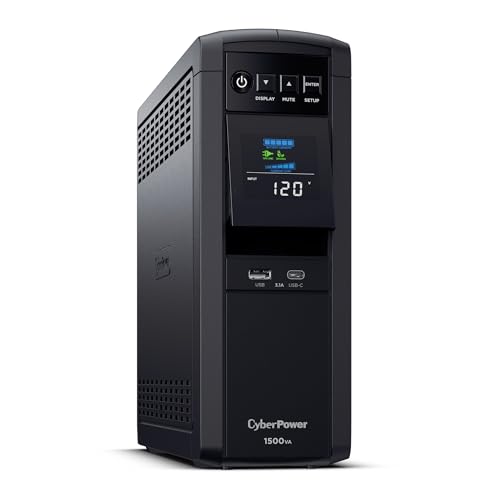
- 1500VA/1000W pure sine-wave UPS
- Six battery-backup and six surge-only outlets
- LCD monitoring, AVR, and USB charging
Best For: Home offices and networking equipment
Best Compact Power Station
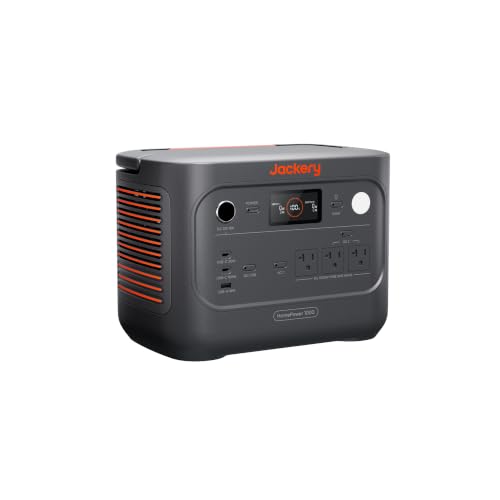
- 1,024Wh LiFePO4 capacity with 1,500W AC output
- 10ms UPS response for computers and network gear
- 6,000+ cycles and up to 400W solar input
Best For: Essential electronics and short outages
Best High-Capacity Portable Backup

- 3,840Wh capacity with 4,200W AC output
- Expandable up to 53.76kWh with 3,000W solar input
- 14 ports and 8–20ms UPS functionality
Best For: Extended residential backup and high-power appliances
Simple Starter Backup

- 600W output with 1,200W surge capacity
- 10ms UPS and pure sine wave inverter
- Eight ports and 1.5-hour AC recharge
Best For: Essential electronics, CPAP devices, short outages, and portable use
High-Capacity Choice
ABOK Ark3600 Expandable Power Station

- 3,600W output with 3,840Wh capacity
- Expandable to 11,520Wh
- 15 ports, app control, and solar charging
Best For: Longer outages, multiple appliances, RVs, and high-demand backup
Balanced Home Backup
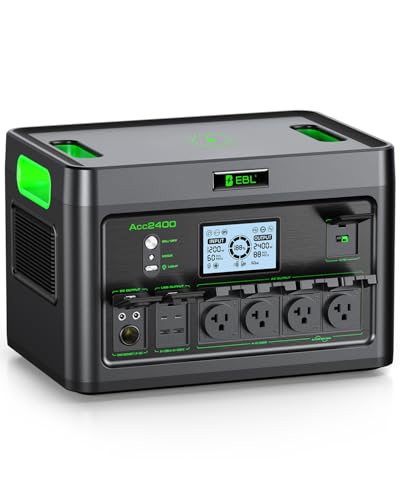
- 2,400W output with 1,843.2Wh capacity
- 12 ports for simultaneous device charging
- 0.1-second emergency power mode
Best For: Residential emergencies, small appliances, camping, and group use
Best Balanced Kit – ECO-WORTHY 5,000W Home Backup System
For beginners comparing whole home battery backup systems for beginners, this ECO-WORTHY kit offers a straightforward solar-and-battery foundation: two 51.2V 100Ah LiFePO4 batteries paired with a 5,000W pure sine wave inverter. Its 10,240Wh capacity is designed to keep basic household appliances operating during an outage.
Best For: Homeowners who want a scalable 48V backup system with integrated solar charging and app-based monitoring.
Pros:
- Includes two LiFePO4 batteries and a 5,000W inverter in one kit.
- Combines a pure sine wave inverter, 100A MPPT controller, and battery charger.
- Supports Bluetooth and Wi-Fi monitoring through the ECO-WORTHY app.
- Can expand to as many as six inverters and 32 batteries.
Cons:
- At about 236.9 pounds, it is not a portable setup.
- Parallel expansion and split-phase operation require additional equipment and installation planning.
- The kit ships as separate items.
This is a substantial off-grid-style system rather than a simple plug-in power station. Its certifications, communication features, and expansion capability make it appealing for a more permanent installation, but beginners should plan for careful setup and professional electrical guidance where required.
Best Portable Option – OSCAL PowerMax 6000 Solar Generator
The OSCAL PowerMax 6000 is a beginner-friendly alternative to permanently installed whole home battery backup systems for beginners. It combines a 3,600Wh LiFePO4 battery, 6,000W output, three 200W solar panels, and 14 outlets in a portable package for outages, outdoor work, or emergency use.
Best For: Users who want portable backup power with 120V/240V output, rapid charging, and automatic outage switchover.
Pros:
- Offers 6,000W output with up to 9,000W surge capacity.
- Supports 120V/240V dual-voltage output.
- Includes three 200W solar panels and supports up to 2,400W solar input.
- Provides 5–8 ms EPS switchover and app control.
Cons:
- Its 3,600Wh capacity is lower than the larger ECO-WORTHY kits.
- At 45.5 kg, it is portable but still heavy to move frequently.
- Solar panels are included, but the stated charging time depends on available input conditions.
With fast AC and solar charging, dual-voltage support, and EPS functionality, the PowerMax 6000 is easier to approach than a rack-battery installation. It is a strong choice for essential loads and flexible emergency use, though capacity planning remains important for longer outages.
Best High-Output Kit – ECO-WORTHY 10,000W Home Backup System
For beginners who need more output than a typical power station, this ECO-WORTHY system pairs two 51.2V 100Ah LiFePO4 batteries with a 10,000W inverter. Among whole home battery backup systems for beginners, it stands out for supporting larger loads and 120V/240V split-phase output while providing 10,240Wh of storage.
Best For: Homeowners planning a more capable fixed backup system for multiple household circuits or higher-demand appliances.
Pros:
- Delivers 10,000W rated output and up to 20,000W peak power.
- Supports 120V/240V split-phase or 120V single-phase output.
- Includes two independent MPPT controllers and a 200A charger.
- Can expand to six inverters and 32 batteries.
Cons:
- The approximately 265.5-pound system is intended for stationary installation.
- Its higher output and split-phase capabilities make setup more complex.
- Expansion components and installation are not included beyond the listed kit contents.
This kit is best viewed as a serious home energy-storage system, not a casual plug-and-play generator. Its high output and 240V capability offer considerable flexibility, but beginners should verify circuit requirements and obtain qualified installation help before connecting household wiring.
Best Beginner-Friendly Station – Jackery HomePower 2000 Plus v2
The Jackery HomePower 2000 Plus v2 is a compact, accessible starting point for people researching whole home battery backup systems for beginners. It provides 2,048Wh of storage and 2,400W AC output, with expansion up to 12kWh for users who want to begin small and add capacity later.
Best For: Beginners prioritizing an easy-to-install residential backup station for essential devices and circuits.
Pros:
- Offers 2,048Wh capacity and 2,400W AC output in a compact unit.
- Can expand to 12kWh as backup needs grow.
- Uses an LFP battery rated for more than 6,000 cycles.
- Includes smart energy management and priority routing for essential circuits.
Cons:
- Its 2,400W output is lower than the ECO-WORTHY and OSCAL options.
- Solar panels are optional rather than included.
- The supplied details do not specify 240V output.
This Jackery is the most approachable option for buyers who want a lighter, simpler starting point rather than a large rack-battery system. Its expandable design helps avoid overbuying, but users with high-demand appliances or 240V loads should consider a higher-output system.
Best Budget UPS – CyberPower CP1500PFCLCD
For beginners comparing whole home battery backup systems for beginners, the CyberPower CP1500PFCLCD is a straightforward choice for protecting individual computers, networking equipment, and other essential electronics. Its 1500VA/1000W capacity, pure sine-wave output, and automatic voltage regulation are designed for short-term backup and power conditioning rather than running household appliances.
Best For: Home offices, desktop computers, routers, workstations, and telecom equipment that need dependable UPS protection.
Pros:
- Pure sine-wave output supports active PFC and conventional power supplies.
- Six battery-backup outlets plus six surge-protected outlets provide flexible connectivity.
- LCD panel shows battery and power conditions, while AVR corrects minor fluctuations without using the battery.
- Includes USB-A and USB-C charging, a three-year warranty including the battery, and a connected-equipment guarantee.
Cons:
- Its 1000W capacity is intended for electronics, not whole-home or high-wattage appliance backup.
- At 24.9 pounds, it is less convenient to move than a compact battery bank.
The CP1500PFCLCD works best as an entry-level UPS for critical electronics. It can keep selected devices running during an outage and smooth minor voltage changes, but its outlet-based design is not a substitute for a large portable power station or professionally installed whole-home system.
Best Compact Power Station – Jackery HomePower 1000 v2
Beginners exploring whole home battery backup systems for beginners may appreciate the Jackery HomePower 1000 v2 as a portable way to keep essential electronics operating during short outages. It combines a 1,024Wh LiFePO4 battery, 1,500W pure sine-wave AC output, and a 10ms UPS response in a relatively compact unit.
Best For: Routers, desktop computers, gaming systems, phones, laptops, and other essential electronics in homes, apartments, or temporary setups.
Pros:
- 10ms UPS switching helps connected electronics remain powered during grid interruptions.
- LiFePO4 battery is rated for more than 6,000 cycles and over 70% retained capacity.
- Supports rapid 50-minute charging or a slower 1.25-hour charging mode.
- Offers 1,500W pure sine-wave AC power, USB-C charging up to 100W, and up to 400W of solar input.
Cons:
- Its 1,024Wh capacity and three AC outlets limit how many appliances it can support and how long they can run.
- The supplied notes describe residential and portable use, but not whole-home electrical-panel integration.
The HomePower 1000 v2 is a practical middle ground between a conventional UPS and a larger generator-style battery station. Its fast UPS response and long-cycle LiFePO4 battery suit essential electronics, while solar charging adds flexibility during longer interruptions.
Best High-Capacity Portable Backup – PECRON E3800 LFP
For beginners who need more than a small UPS, the PECRON E3800 LFP offers a substantial portable battery backup platform. Its 3,840Wh capacity and 4,200W AC output can support appliances and high-demand equipment, while expansion up to 53.76kWh and solar input up to 3,000W make it better suited to extended backup scenarios than smaller power stations.
Best For: Residential emergency backup, refrigerators, microwaves, CPAP machines, power tools, RV appliances, and off-grid use.
Pros:
- Large 3,840Wh capacity and 4,200W pure sine-wave output support demanding loads.
- LiFePO4 battery is rated for 3,500-plus cycles while retaining 80% capacity.
- Offers 14 output ports, including four AC outlets, a TT30-R RV outlet, USB-C, USB-A, and 12V outputs.
- Supports fast AC charging, up to 3,000W solar input, app control, and an 8–20ms UPS function.
Cons:
- At 87.3 pounds, it is considerably less portable than smaller battery stations.
- Its many charging modes, cable options, and app controls may require more setup for beginners.
- The supplied notes do not specify direct whole-home electrical-panel integration.
The E3800 LFP is the strongest option here for longer outages and higher-wattage equipment. Its large capacity, expansion capability, and solar support provide substantial flexibility, but buyers should plan for its weight and confirm how they will connect selected household loads safely.
Simple Starter Backup – Compact 640Wh Power Station
For beginners comparing whole home battery backup systems for beginners, this compact 640Wh power station is a straightforward option for keeping essential electronics running during short outages. Its 600W output, 1,200W surge capacity, 10ms UPS, and pure sine wave inverter suit devices such as routers, laptops, and CPAP machines, while the 1.5-hour AC recharge keeps it ready for repeat use.
Best For: Beginners who need portable backup for essential electronics, short outages, camping, or travel.
Pros:
- 10ms UPS helps switch connected devices to battery power quickly during outages.
- LiFePO4 battery is rated for 4,000+ cycles and includes a stated five-year warranty.
- Four AC outlets and additional USB ports can power up to eight devices.
- Pure sine wave output is designed for sensitive electronics and medical devices.
Cons:
- Its 640Wh capacity and 600W running output are better suited to essentials than major household appliances.
- The unit is labeled for indoor use only and must be protected from rain and moisture.
This is an approachable entry point for learning how battery backup works, especially if your priority is uninterrupted power for communications and small electronics rather than whole-house operation.
High-Capacity Choice – ABOK Ark3600 Expandable Power Station
For beginners seeking whole home battery backup systems for beginners with substantially more capacity, the ABOK Ark3600 offers 3,840Wh and 3,600W of rated output. It can expand to 11,520Wh, supports AC, solar, and car charging, and includes a Bluetooth app for monitoring performance during emergencies or everyday use.
Best For: Users who want high-output emergency backup for multiple household appliances, RV use, or longer outages.
Pros:
- 3,600W rated output and 7,200W peak power support a broad range of appliances.
- Capacity expands from 3,840Wh to as much as 11,520Wh.
- Fifteen output ports allow simultaneous charging and operation of many devices.
- LiFePO4 batteries are rated for more than 4,000 cycles and up to a 10-year lifespan.
Cons:
- At 92 pounds, it is considerably less convenient to move than compact power stations.
- The larger capacity and output may be more than beginners need for basic router or phone backup.
The Ark3600 is the most capable option in this group for extended backup and higher-demand loads. Its wheels, telescoping handle, app connectivity, and multiple charging methods help offset the size, but plan for dedicated storage and occasional repositioning.
Balanced Home Backup – EBL Acc2400 Power Station
For beginners evaluating whole home battery backup systems for beginners, the EBL Acc2400 provides a middle ground between compact emergency units and larger expandable systems. It combines 1,843.2Wh of capacity with 2,400W of output, twelve charging options, and a 0.1-second emergency power mode for computers and other connected devices.
Best For: Households needing portable backup for several devices, small appliances, camping equipment, or residential emergencies.
Pros:
- 2,400W output and 4,800W starting wattage accommodate both low- and higher-wattage equipment.
- Twelve output options include AC, USB-A, USB-C, DC, car, and wireless charging.
- Emergency power mode switches to backup in a stated 0.1 seconds.
- LiFePO4 battery is rated for more than 3,500 cycles and a 10+ year service life.
Cons:
- Its 54-pound weight makes it portable, but not especially light for frequent carrying.
- The stated two-year manufacturer warranty is shorter than the five-year warranty listed for the compact 640Wh model.
This unit is a practical compromise for beginners who want more appliance capability than a small power station offers without moving all the way to the Ark3600’s 92-pound design. Its broad port selection is particularly useful when several people need power at once.
How We Picked the Best Whole Home Battery Backup Systems for Beginners
For this roundup, we focused on usable battery capacity, continuous and surge output, battery chemistry, charging flexibility, portability, and suitability for common home backup needs. The selection includes compact units for networking equipment and essential electronics, as well as larger systems that can support refrigerators, lights, medical devices, and selected circuits.
We also considered whether a system offers solar charging, dependable LiFePO4 cells, clear power information, and useful AC-voltage support. A portable power station is not automatically a whole-home solution, so buyers should match each model to its intended loads and installation method.
Quick Comparison
| System type | Best suited for | Main advantage | Important limitation |
|---|---|---|---|
| UPS | Routers, computers, and network equipment | Fast automatic switchover | Usually limited runtime and capacity |
| Compact power station | Small appliances and essential electronics | Portable and simple to use | May not support high-wattage loads |
| Large portable power station | Refrigerators, tools, and several devices | High capacity without permanent installation | Often limited to 120V output |
| Home battery with inverter | Essential circuits or broader home coverage | Higher output and longer runtime | May require professional installation |
Key Buying Factors for Whole Home Battery Backup Systems for Beginners
Battery Capacity and Runtime
Capacity is measured in watt-hours. Estimate the combined wattage of the devices you want to run, then account for startup surges and inverter losses. A 2,000Wh unit may power communication equipment, lights, and a refrigerator for a limited period, while larger 10,000Wh systems are better for extended essential-load coverage.
Continuous and Surge Output
Continuous watts determine what a system can run normally; surge watts handle brief startup demands from compressors, pumps, and power tools. Check both figures rather than relying on the battery size alone.
Voltage, Outlets, and Installation
Most portable stations provide 120V power through standard outlets. Systems with 120V/240V capability can support more demanding equipment, but connecting a battery to household circuits may require a transfer switch and a licensed electrician. Never backfeed a home through a wall outlet.
Recharge Options and Battery Life
Solar input can extend outage runtime, while AC charging is usually faster and more predictable. LiFePO4 batteries generally offer long cycle life and strong thermal stability. Review charge times, solar-input limits, operating temperature, and warranty coverage.
Who Should Buy Which Whole Home Battery Backup Systems for Beginners?
Choose a UPS if your priority is keeping a modem, router, desktop computer, or other sensitive electronics online during short interruptions. Choose a compact portable power station for apartments, renters, camping, or a small emergency kit. A larger 3,000Wh-to-4,000Wh station is a better fit for refrigerators, medical equipment, tools, and several essential devices.
Buy a high-capacity 48V system with a powerful inverter if you need longer runtime or want to back up dedicated home circuits. These setups offer greater capability but deserve careful load planning, proper ventilation, and professional electrical installation. For beginners comparing Whole Home Battery Backup Systems for Beginners, the safest approach is to start with essential loads rather than attempting to power every appliance at once.